

Deploying long-range wireless links has always been a field engineering challenge.
For a Point-to-Point (PtP) wireless connection, performance depends heavily on antenna alignment.
A few degrees of misalignment can mean:
- Lower throughput
- Reduced link stability
- Poor signal quality
- More time spent on-site troubleshooting
Traditionally, engineers need to rely on:
- GPS devices
- Maps
- Compass tools
- Signal strength monitoring
- Multiple technicians communicating between two locations
But what if the wireless device itself could help you find the right direction?

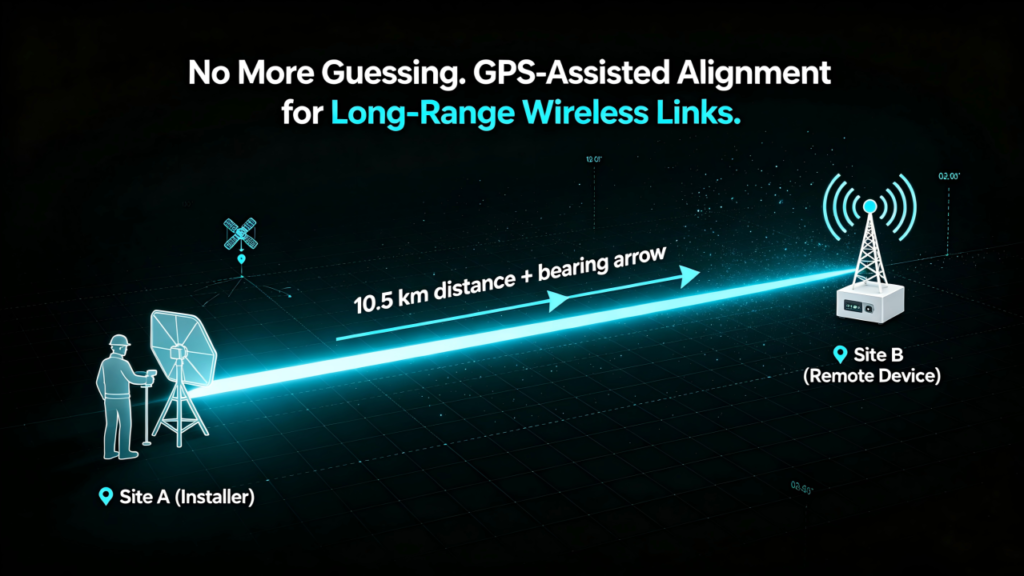
From GPS Location to Smart Alignment
Imagine this:
You install an AP at the local site.
After powering it on:
- The device automatically obtains its GPS coordinates.
- The remote site device shares its location information.
- The web interface calculates the optimal alignment direction.
- The system provides recommended:
- Horizontal rotation angle (Azimuth)
- Vertical tilt angle (Elevation)
Instead of asking:
“Which direction should I point this antenna?”
The system tells you:
“Rotate 127.5° horizontally and tilt 8.3° upward.”
Simplifying Long-Distance Wireless Deployment
For outdoor wireless networks, especially:
- WISP networks
- Rural broadband
- Industrial campuses
- Mining sites
- Smart agriculture
- Remote monitoring systems
deployment efficiency is critical.
GPS-assisted alignment can help engineers:
✅ Reduce installation time
✅ Minimize alignment errors
✅ Improve first-time connection success rate
✅ Simplify remote deployment and maintenance
How It Works
A GPS-enabled wireless platform combines:
1. Location Awareness
Each device knows its own:
- Latitude
- Longitude
- Position information
2. Remote Device Coordination
The AP exchanges location data with the remote endpoint.
3. Direction Calculation
Based on two GPS points, the system calculates:
- Distance between sites
- Direction angle
- Antenna pointing recommendation
4. Web-Based Guidance
Engineers can view the recommended installation angle directly through the device management interface.

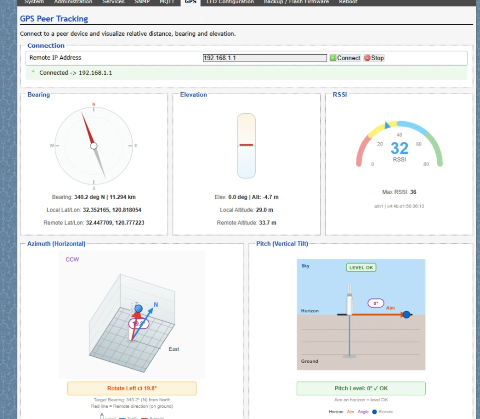
No additional measurement tools required.
Designed for Next-Generation Outdoor Connectivity
524WiFi and Wallys have integrated GPS capability into selected industrial wireless platforms, including:
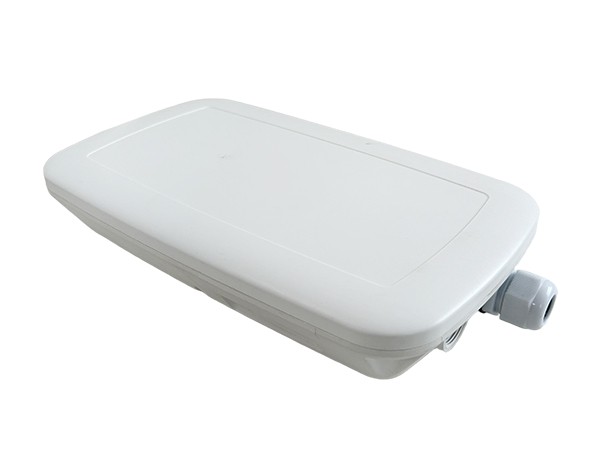
524WiFI WiFi 6 Long Range Kit
DRWAVE-1000 Built around Qualcomm IPQ5018 platform, designed for industrial networking applications requiring reliable wireless connectivity.

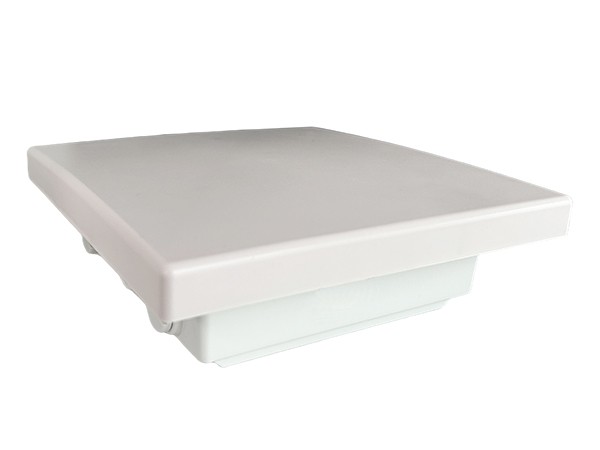
524WiFi WiFi 7 Long Range Kit
Powered by Qualcomm IPQ9574, supporting next-generation high-performance wireless applications.
With GPS integration, these platforms enable smarter deployment possibilities for long-range wireless networks.