Posted on

QCN6224 Wi-Fi 7 2×2 Module Overview for Cost-Optimized APs

Introduction

As Wi-Fi 7 (IEEE 802.11be) transitions from cutting-edge innovation to mainstream deployment, device manufacturers increasingly look for wireless solutions that balance performance, cost, and energy efficiency. The QCN6224 Wi-Fi 7 2×2 module delivers exactly that balance. It brings next-generation connectivity into cost-optimized access points (APs), routers, CPEs, and industrial gateways, without significantly increasing system complexity or bill-of-materials (BOM) costs.


What Is the QCN6224 Wi-Fi 7 Module?

The QCN6224 is a 2×2 MU-MIMO Wi-Fi 7 module designed for embedded networking equipment. Supporting dual-band or tri-band operation depending on design, the module introduces major Wi-Fi 7 enhancements such as higher throughput, improved spectral efficiency, and greater link reliability — all within a compact and power-efficient form factor. Compared with many high-end Wi-Fi 7 chipsets, the QCN6224 focuses on value-driven performance, making it ideal for mainstream devices rather than premium flagship systems.


Key Wi-Fi 7 Features of QCN6224

✔ 320 MHz Channel Support

The QCN6224 supports ultra-wide 320 MHz channels, enabling dramatically higher peak data rates. This capability reduces latency and improves user experience in applications such as HD and 4K video streaming, VR/AR, cloud gaming, and high-density enterprise networks.

✔ Multi-Link Operation (MLO)

MLO allows Wi-Fi devices to transmit data across multiple frequency bands at the same time. This improves reliability by minimizing interruption risks and delivers smoother, faster data transfers — especially valuable in congested wireless environments.

✔ 4K-QAM Modulation

With 4K-QAM support, the QCN6224 significantly increases spectral efficiency, packing more data into every transmission. This is ideal for environments with many users, such as offices, campuses, hotels, and public Wi-Fi deployments.

✔ 2×2 MU-MIMO Architecture

The 2×2 design provides the optimal balance between speed, power consumption, and hardware cost. It enables fast performance without requiring the more complex RF layouts or higher component costs seen in larger 4×4 or 8×8 systems.


Why the QCN6224 Is Ideal for Cost-Optimized APs
Manufacturers of cost-optimized access points face several key design requirements. They need low BOM cost, compact hardware, and efficient power consumption — without sacrificing network performance. The QCN6224 meets all these criteria.

Because it uses a 2×2 architecture, the module footprint is smaller and integration is simpler. At the same time, Wi-Fi 7-level features such as MLO and 4K-QAM ensure clear performance gains over Wi-Fi 6. Its low-power operation makes it especially suitable for PoE-powered APs and always-on devices. In addition, the QCN6224 is compatible with popular networking software ecosystems such as OpenWrt and QSDK (depending on vendor implementation), helping device makers bring products to market more quickly.


Typical Application Scenarios

The QCN6224 Wi-Fi 7 2×2 module is well-suited for:

  • Enterprise and SMB access points
  • Mid-range Wi-Fi 7 routers
  • ONT / FTTH gateway devices
  • Industrial networking equipment
  • Smart building and IoT controllers
  • Wireless video transmission systems

Its compact size and stable performance make it highly attractive for embedded and industrial environments where reliability and cost efficiency are critical.


QCN6224 vs. Higher-End Wi-Fi 7 Solutions

Compared with 4×4 and 8×8 Wi-Fi 7 chipsets, the QCN6224 focuses on value rather than maximum throughput. High-end chipsets deliver higher data rates but also require more complex RF layouts, significantly higher power consumption, and greater BOM costs — making them ideal for premium enterprise or carrier-class APs.

By contrast, the QCN6224 is optimized for mainstream Wi-Fi 7 devices. It delivers strong performance upgrades over Wi-Fi 6 while keeping both power and hardware costs at practical levels. This makes it an excellent choice for large-scale deployments, SMB networking, consumer broadband devices, and mid-range enterprise APs where cost-performance balance is essential.

In short, if your design goal is reliability, efficiency, and affordability, rather than extreme bandwidth, the QCN6224 stands out as a perfect match.


Benefits for OEMs and Device Manufacturers

Selecting QCN6224 brings multiple advantages:

  • Reduced BOM cost compared with larger Wi-Fi 7 solutions
  • Faster product development cycles
  • Lower thermal and power-supply requirements
  • Compatibility with established software stacks
  • Strong Wi-Fi 7 marketing value for product positioning

Manufacturers can upgrade Wi-Fi 6 designs to Wi-Fi 7 with minimal redesign effort — accelerating time-to-market.


Conclusion

The QCN6224 Wi-Fi 7 2×2 module is a powerful, efficient, and cost-optimized solution for next-generation wireless devices. Featuring MLO, 320 MHz channel support, 4K-QAM, and 2×2 MU-MIMO, it enables manufacturers to deliver Wi-Fi 7-class performance at highly competitive price points.

If your goal is to build compact, power-efficient, and scalable access points or gateways, the QCN6224 offers the ideal balance between technology advancement and commercial practicality.

Posted on

QCN6224 Wi-Fi 7 2×2 Module Overview for Cost-Optimized APs

Introduction

As Wi-Fi 7 (IEEE 802.11be) transitions from cutting-edge innovation to mainstream deployment, device manufacturers increasingly look for wireless solutions that balance performance, cost, and energy efficiency. The QCN6224 Wi-Fi 7 2×2 module delivers exactly that balance. It brings next-generation connectivity into cost-optimized access points (APs), routers, CPEs, and industrial gateways, without significantly increasing system complexity or bill-of-materials (BOM) costs.


What Is the QCN6224 Wi-Fi 7 Module?

The QCN6224 is a 2×2 MU-MIMO Wi-Fi 7 module designed for embedded networking equipment. Supporting dual-band or tri-band operation depending on design, the module introduces major Wi-Fi 7 enhancements such as higher throughput, improved spectral efficiency, and greater link reliability — all within a compact and power-efficient form factor. Compared with many high-end Wi-Fi 7 chipsets, the QCN6224 focuses on value-driven performance, making it ideal for mainstream devices rather than premium flagship systems.


Key Wi-Fi 7 Features of QCN6224

✔ 320 MHz Channel Support

The QCN6224 supports ultra-wide 320 MHz channels, enabling dramatically higher peak data rates. This capability reduces latency and improves user experience in applications such as HD and 4K video streaming, VR/AR, cloud gaming, and high-density enterprise networks.

✔ Multi-Link Operation (MLO)

MLO allows Wi-Fi devices to transmit data across multiple frequency bands at the same time. This improves reliability by minimizing interruption risks and delivers smoother, faster data transfers — especially valuable in congested wireless environments.

✔ 4K-QAM Modulation

With 4K-QAM support, the QCN6224 significantly increases spectral efficiency, packing more data into every transmission. This is ideal for environments with many users, such as offices, campuses, hotels, and public Wi-Fi deployments.

✔ 2×2 MU-MIMO Architecture

The 2×2 design provides the optimal balance between speed, power consumption, and hardware cost. It enables fast performance without requiring the more complex RF layouts or higher component costs seen in larger 4×4 or 8×8 systems.


Why the QCN6224 Is Ideal for Cost-Optimized APs

Manufacturers of cost-optimized access points face several key design requirements. They need low BOM cost, compact hardware, and efficient power consumption — without sacrificing network performance. The QCN6224 meets all these criteria.

Because it uses a 2×2 architecture, the module footprint is smaller and integration is simpler. At the same time, Wi-Fi 7-level features such as MLO and 4K-QAM ensure clear performance gains over Wi-Fi 6. Its low-power operation makes it especially suitable for PoE-powered APs and always-on devices. In addition, the QCN6224 is compatible with popular networking software ecosystems such as OpenWrt and QSDK (depending on vendor implementation), helping device makers bring products to market more quickly.


Typical Application Scenarios

The QCN6224 Wi-Fi 7 2×2 module is well-suited for:

  • Enterprise and SMB access points
  • Mid-range Wi-Fi 7 routers
  • ONT / FTTH gateway devices
  • Industrial networking equipment
  • Smart building and IoT controllers
  • Wireless video transmission systems

Its compact size and stable performance make it highly attractive for embedded and industrial environments where reliability and cost efficiency are critical.


QCN6224 vs. Higher-End Wi-Fi 7 Solutions

Compared with 4×4 and 8×8 Wi-Fi 7 chipsets, the QCN6224 focuses on value rather than maximum throughput. High-end chipsets deliver higher data rates but also require more complex RF layouts, significantly higher power consumption, and greater BOM costs — making them ideal for premium enterprise or carrier-class APs.

By contrast, the QCN6224 is optimized for mainstream Wi-Fi 7 devices. It delivers strong performance upgrades over Wi-Fi 6 while keeping both power and hardware costs at practical levels. This makes it an excellent choice for large-scale deployments, SMB networking, consumer broadband devices, and mid-range enterprise APs where cost-performance balance is essential.

In short, if your design goal is reliability, efficiency, and affordability, rather than extreme bandwidth, the QCN6224 stands out as a perfect match.


Benefits for OEMs and Device Manufacturers

Selecting QCN6224 brings multiple advantages:

  • Reduced BOM cost compared with larger Wi-Fi 7 solutions
  • Faster product development cycles
  • Lower thermal and power-supply requirements
  • Compatibility with established software stacks
  • Strong Wi-Fi 7 marketing value for product positioning

Manufacturers can upgrade Wi-Fi 6 designs to Wi-Fi 7 with minimal redesign effort — accelerating time-to-market.


Conclusion

The QCN6224 Wi-Fi 7 2×2 module is a powerful, efficient, and cost-optimized solution for next-generation wireless devices. Featuring MLO, 320 MHz channel support, 4K-QAM, and 2×2 MU-MIMO, it enables manufacturers to deliver Wi-Fi 7-class performance at highly competitive price points.

If your goal is to build compact, power-efficient, and scalable access points or gateways, the QCN6224 offers the ideal balance between technology advancement and commercial practicality.
Posted on

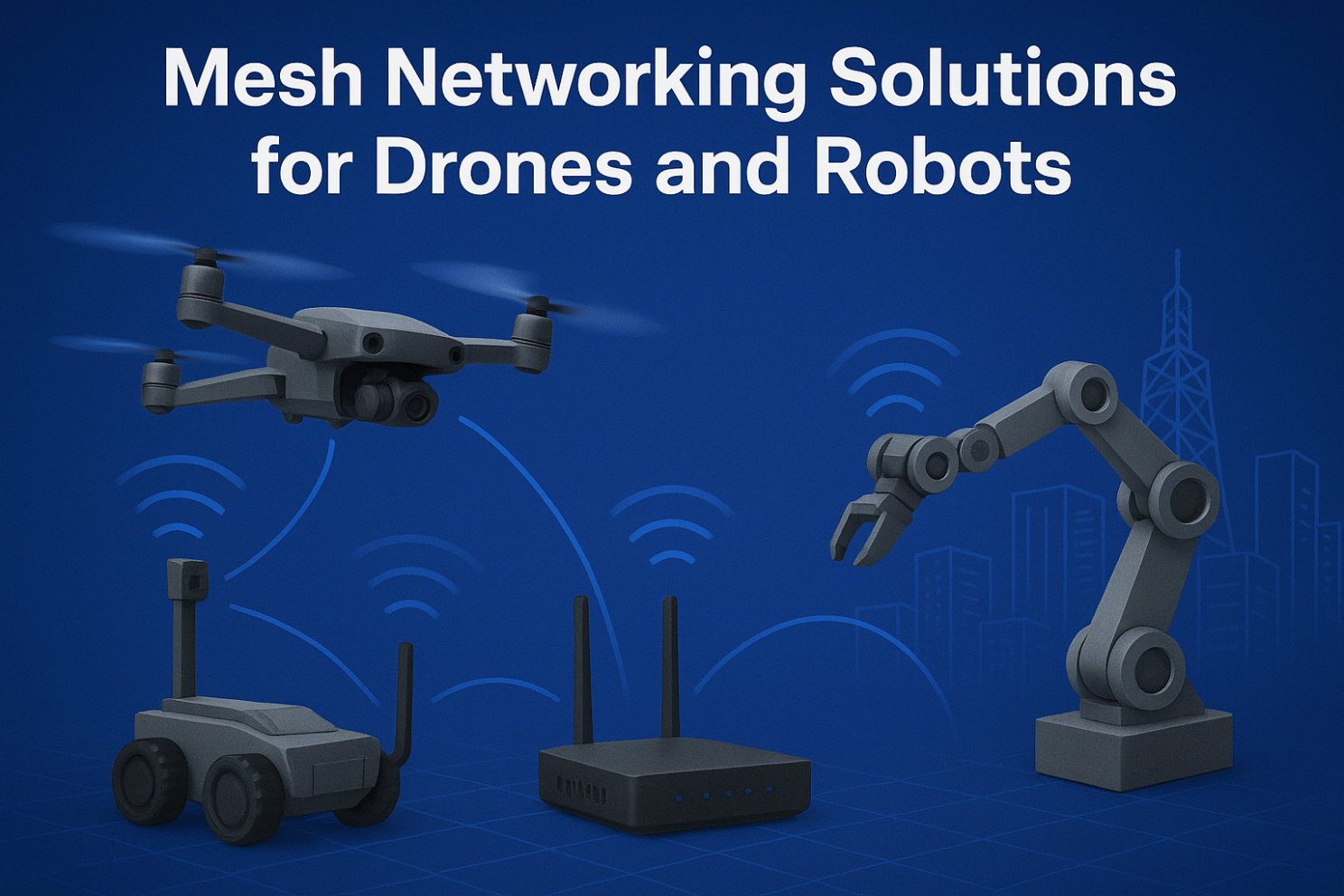
Mesh Networking Solutions for Drones and Robots

Mesh Networking Solutions for Drones and Robots

1. Introduction: Why Mesh for Drones and Robots?

Traditional wireless setups (AP + client) often fail in dynamic, mobile, and large-scale environments. Drones and robots require:

  • Low-latency links for real-time control
  • Resilient communication when nodes move or fail
  • Flexible scalability for adding new devices instantly

This is where Mesh networking shines — offering self-healing, self-configuring, and adaptive connectivity.


2. Mesh Networking for Drones

  • Formation Flying & Swarm Operations Drones in formation need constant synchronization of GPS, sensor, and video feeds. Mesh ensures each drone acts as a node, maintaining real-time links.
  • Emergency Response & Disaster Recovery In areas without cellular coverage, drones can instantly deploy a Mesh network, relaying data back to the command center for faster rescue operations.
  • Beyond Line-of-Sight Missions Mesh allows drones to extend their communication range via relays, enabling operators to control them far beyond visual range.

3. Mesh Networking for Robots

  • Smart Warehouses & Industrial Automation Robots need to stay connected across large spaces with moving inventory. Mesh avoids single-point AP failures and supports seamless roaming.
  • Security & Patrol Robots Continuous connectivity is essential for live video streaming and real-time threat detection. Mesh keeps robots online without service drops.
  • Collaborative Swarm Robots Multiple robots can share sensory data, distribute tasks, and adapt dynamically using Mesh as their backbone.

4. Key Technical Aspects of Drone & Robot Mesh

  • Dynamic Routing Protocols (OLSR, B.A.T.M.A.N, HWMP) ensure optimal paths in mobile networks.
  • Frequency Bands:
  • 2.4 GHz for longer range
  • 5 GHz / 6 GHz for high throughput
  • Wi-Fi 6/7 with MLO for ultra-stable multi-link performance
  • Security: WPA3, AES encryption, and private protocols protect mission-critical data.
  • Low Latency Optimization: Necessary for navigation and collision avoidance in autonomous systems.

5. Real-World Use Cases

  • Drone Relay Networks for Search & Rescue
  • Mesh-Enabled Warehouse Robots for Amazon-like Logistics
  • Hybrid Mesh + 5G Networks for Smart City Patrols

6. Future Trends

  • Wi-Fi 7 with Multi-Link Operation (MLO): Brings reliability and speed to swarms of robots and drones.
  • Integration with 6G & Edge AI: Mesh networks will work hand-in-hand with edge computing for local decision-making.
  • Larger-Scale Autonomous Systems: From 5 drones to 500 robots, Mesh will scale efficiently.

Mesh networking is transforming how drones and robots communicate in real time. Whether for industrial automation, emergency missions, or smart city deployments, Mesh provides the backbone for reliability and scalability.

👉 At 524WiFi and Wallys, we design industrial-grade router boards and network cards (IPQ5018, IPQ9574, QCN9074, etc.) that support advanced Mesh networking. Our hardware enables drone and robotics developers to build custom, robust, and scalable Mesh solutions.

Article content
Posted on

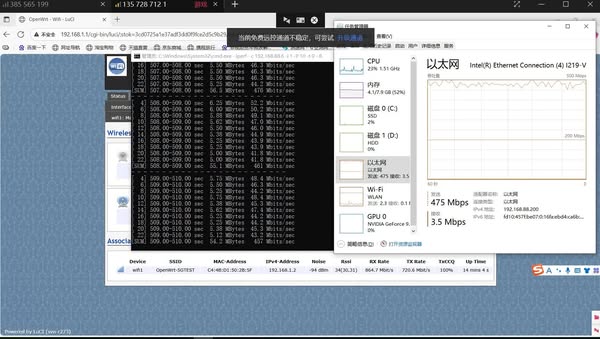
The DR5018S-AP crushed a 14 km 5 GHz link test – hitting 475 Mbps unidirectional throughput!

Wallystech DR5018S-AP crushed a 14 km 5 GHz link test in Dongbei at 50 m high — hitting 475 Mbps unidirectional throughput! We prepare more detailed test report.

Posted on

IPQ5018 Chipset-Powered DR5018S: A Tri-Band Network Device with GPS and CE/UKCA/FCC Certifications

IPQ 5018 DR5018S: A Powerful Network Device with 2.4G, 5G, and 6G Support, CE-UKCA-FCC Certifications

The router board DR5018S is an innovative network device based on Qualcomm’s IPQ5018 SOC chipset, designed to meet the high demands of various commercial and industrial applications. With its powerful performance and multifunctional configuration, it stands out as one of the leading Wi-Fi 6 solutions in the industry. Below, we provide a detailed analysis of the DR5018S’s features and advantages, offering a comprehensive understanding of this exceptional device.

Core Hardware: IPQ5018 SOC Chipset

The DR5018S is powered by Qualcomm’s IPQ5018 chipset, a leader in Wi-Fi 6 technology. This chipset delivers higher transmission speeds, lower latency, and more stable connections, excelling at handling multi-device connections and high-bandwidth demands. It is ideal for both commercial and industrial environments, managing a large number of simultaneous device connections while maintaining network stability and performance.

Multi-Band Support: 2.4G, 5G, and 6G

A standout feature of the DR5018S is its support for three frequency bands: 2.4GHz, 5GHz, and 6GHz. This tri-band support provides a flexible network solution for various application scenarios. In crowded Wi-Fi environments, selecting the right frequency band helps avoid interference, ensuring faster speeds and higher stability.

  • 2.4GHz: Ideal for wider coverage, though with lower speeds. Best for devices with low bandwidth needs.
  • 5GHz: Offers higher speeds, making it suitable for modern devices requiring higher bandwidth and low latency.
  • 6GHz: As part of Wi-Fi 6E, 6GHz offers clearer channels with less interference, perfect for high-density environments and bandwidth-intensive applications.

This tri-band support allows the DR5018S to deliver outstanding performance, addressing different connection needs across various environments.

Available Versions for Customization

The DR5018S is available in multiple versions to meet your specific project needs:

  1. DR5018S-5G:Supports 5G;1G Ethernet & POE;No GPS
  2. DR5018S:2.4GHz, 5GHz, 6GHz support;2.5G + 1G Ethernet & POE;Includes GPS
  3. DR5018-DB:2.4GHz, 5GHz support;1G Ethernet & POE;No GPS

GPS Functionality

The DR5018S is equipped with built-in GPS functionality, making it ideal for applications requiring precise location tracking. This feature is especially useful in asset management, fleet tracking, and location-based services. Whether in smart transportation, logistics, or other industries that require accurate positioning, the DR5018S provides robust support.

Global Certifications: CE, UKCA, FCC

The DR5018S holds multiple global certifications, including CE (European Union), UKCA (United Kingdom), and FCC (United States), ensuring compliance with regulatory standards across major international markets. These certifications guarantee that the DR5018S meets high-performance and safety standards, allowing seamless use across regions without legal or regulatory issues.

  • CE Certification: Complies with health, safety, and environmental standards for the European market.
  • UKCA Certification: Meets UK market requirements, ensuring smooth access to the UK market.
  • FCC Certification: Ensures compliance with wireless communication requirements in the U.S., preventing excessive wireless interference.

These certifications are essential for the sale and use of electronic products globally, allowing the DR5018S to be easily promoted and deployed in international markets.

Comprehensive Advantages

  • Powerful Processing Capability: The IPQ5018 chipset offers strong network processing, handling high volumes of device connections with ease.
  • Tri-Band Support: Supports 2.4GHz, 5GHz, and 6GHz frequency bands for flexible and efficient network services.
  • Built-In GPS Functionality: Strong support for location-based applications, expanding use cases.
  • Global Certifications: With CE, UKCA, and FCC certifications, the DR5018S meets regulatory requirements for global markets.
  • Stability and Compatibility: Wi-Fi 6 technology ensures excellent performance in high-density environments, offering greater adaptability.

Conclusion

The DR5018S is a highly integrated, high-performance network device that combines Wi-Fi 6 technology, tri-band support, built-in GPS functionality, and global certifications, making it suitable for a wide range of applications. Whether for commercial offices, industrial networks, or smart device applications requiring precise location tracking, the DR5018S ensures stable, reliable network connections and accurate positioning services. With its global certifications, it can be deployed confidently across international markets, expanding your business reach.

The DR5018S is not just a technologically advanced product; it’s a standout solution in the global network connectivity space.

Posted on

Access Controller + AP vs. Mesh Networking: Which Offers Better Coverage for Your Industrial Setup?

AC+AP Networking vs. Mesh Networking

In today’s rapidly advancing wireless technologies, networking has evolved significantly to meet the growing demand for faster and more reliable internet connectivity. Two popular methods for expanding Wi-Fi coverage in various environments are AC+AP and Mesh networking. While both methods aim to improve the coverage and performance of wireless networks, they differ in their architecture and functionality.

What is AC+AP Networking?

AC+AP Networking refers to a traditional approach in which an Access Point (AP) is connected to a central device, such as a router or a wireless controller (AC). This setup is often used in larger environments where multiple APs are deployed to extend Wi-Fi coverage, particularly in enterprise settings.

  • Access Point (AP): An AP is a device that allows wireless devices to connect to a wired network. It acts as a bridge between the wired network and wireless clients.
  • Access Controller (AC): The AC is a centralized device that manages multiple APs, providing a single point of control for wireless network configuration, security settings, and performance optimization.

The AC+AP solution works well for environments where there is a need for extensive control over the network, such as in large office buildings, campuses, or industrial sites. However, the key challenge with this setup is that the coverage area might be limited by the range of each individual AP, and users may experience interruptions when moving between APs.

What is Mesh Networking?

On the other hand, Mesh Networking is a more modern approach that involves multiple wireless nodes working together as a network. Each node in a Mesh network communicates with the others to create a seamless, self-healing Wi-Fi coverage area. This method is particularly effective in environments where extended coverage is required, such as homes, large enterprises, or industrial spaces with complex layouts.

  • Nodes: Mesh networks consist of multiple nodes (which can function as both APs and routers) that collaborate with one another to extend coverage.
  • Self-Healing: One of the key benefits of a Mesh network is that if one node fails, the others can automatically adjust to maintain network stability without interruptions.
  • Seamless Roaming: Mesh networks offer seamless connectivity, allowing users to move freely between nodes without experiencing connectivity drops or network handoffs.

Mesh networks are ideal for environments with complex, large-scale spaces, and they are particularly useful in overcoming dead zones that traditional Wi-Fi setups may fail to cover.

Wallys’ Mesh and AC+AP Solutions

At Wallys, we understand the need for high-performance wireless solutions that cater to diverse networking environments. Whether you’re looking for robust connectivity for industrial environments or home office setups, our solutions can meet your needs.

  • Wallys AC+AP Solutions: Our AC+AP systems are designed for large-scale, enterprise-level networks where centralized control and extensive coverage are essential. With features like high-speed throughput, efficient roaming, and seamless integration, our AC+AP solutions offer a reliable, cost-effective way to expand network coverage without compromising performance.
  • Wallys Mesh Solutions: Wallys’ Mesh networking solutions offer flexibility, ease of setup, and seamless connectivity across large, complex spaces. Our Mesh systems are designed to handle high-density environments, ensuring stable connections across multiple devices. These solutions are ideal for industrial settings, smart cities, large homes, and office networks. With Wallys’ Mesh solutions, you can ensure consistent performance, even in challenging environments with multiple obstructions.

Both AC+AP and Mesh solutions are fully customizable to meet your specific needs, whether you’re deploying them in industrial, commercial, or residential environments.

Contact Us for Testing

We invite you to explore the power and flexibility of Wallys’ networking solutions. Our team is ready to assist you with testing our AC+AP and Mesh products to ensure they meet your requirements. For more information and to schedule a test, please get in touch with us

Posted on

How AP Controllers Simplify Industrial Wireless Network Management

In industrial environments, managing a wireless network is no small feat. The complex layout, high device density, and diverse use cases make ensuring seamless connectivity a challenging task. Fortunately, AP (Access Point) Controllers offer a centralized solution to manage, optimize, and secure industrial wireless networks efficiently.


The Complexity of Industrial Wireless Network Management

Industrial wireless networks must contend with a host of challenges, including:

  • High Device Density: Hundreds or even thousands of devices may need to connect simultaneously.
  • Dynamic Environments: Equipment relocation and layout changes require adaptive network configurations.
  • Security Risks: Critical operations demand robust security to prevent unauthorized access.

Manual management of individual APs becomes impractical in such scenarios. This is where AP controllers come in, providing a centralized and intelligent approach to network management.


Core Features of AP Controllers

AP controllers revolutionize network management with the following key functionalities:

1. Centralized Management

AP controllers enable administrators to manage multiple APs from a single interface.

  • Configure SSIDs, encryption settings, and channels simultaneously.
  • Simplify large-scale network deployments and reduce manual effort.

2. Wireless Optimization

Enhancing performance and reliability is a priority in industrial networks. AP controllers achieve this through:

  • Automatic Channel Selection: Reduces interference by dynamically assigning optimal channels.
  • Power Adjustment: Optimizes coverage by adjusting transmission power based on environmental conditions.
  • Load Balancing: Distributes devices evenly across APs to prevent overloads.(concept feature)

3. Enhanced Security Management

Industrial operations require stringent security protocols. AP controllers deliver:

  • Access Control: Employ whitelists, blacklists, or MAC-based ACLs to restrict access.
  • VLAN Isolation: Separate production, monitoring, and management traffic to ensure data integrity.
  • Wireless Firewalls: Detect and block unauthorized attempts to access the network.

Applications of AP Controllers

The versatility of AP controllers makes them essential in various industrial scenarios:

Factory Floors and Production Lines

  • Support seamless connectivity for IoT devices, sensors, and automated machinery.
  • Ensure low-latency communication for real-time monitoring and control.

Smart Cities and Public WiFi

  • Manage high-density user connections in public areas.
  • Optimize performance for diverse applications like public safety and urban planning.

Video Surveillance and Security Systems

  • Enable stable connections for high-resolution cameras.
  • Facilitate quick data transmission for immediate threat detection and response.

Why Wallystech’s AP Controllers Stand Out

Wallystech offers industry-leading AP controllers that excel in performance and adaptability:

1. Powered by IPQ6010

Our AP controllers leverage the Qualcomm IPQ6010 platform, providing robust performance and scalability for demanding industrial applications.

2. Simplified Expansion

With plug-and-play capabilities, new APs can be quickly integrated into the existing network. This reduces the time and cost associated with network upgrades.

3. Proactive Monitoring and Fault Management

Real-time monitoring detects and addresses AP issues promptly. Automatic fault recovery ensures network resilience in case of failures.