Posted on

Qualcomm QCN6224 vs QCN6274 vs QCN9274: Which Wi-Fi 7 Chipset Should You Design With?

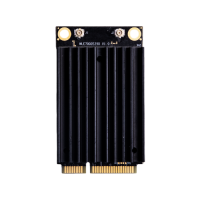
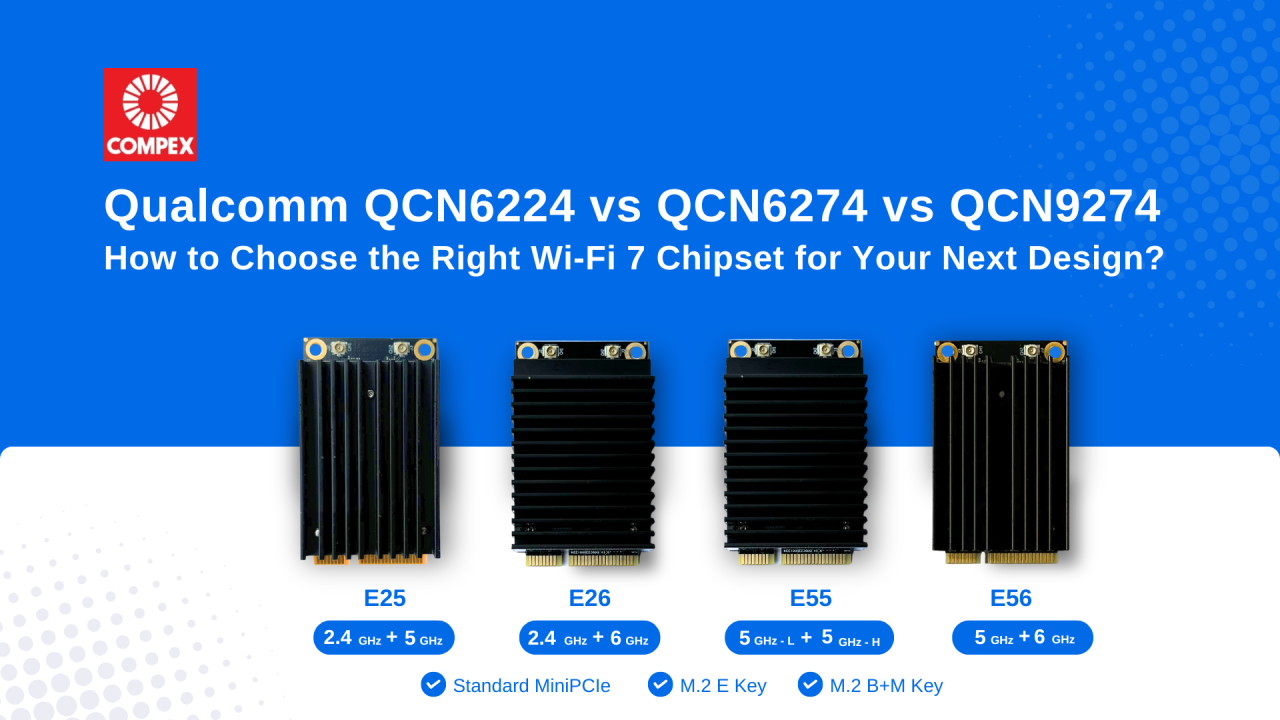
Wi-Fi 7 is rapidly becoming the standard for enterprise networking, industrial IoT, Edge AI and next-generation wireless infrastructure. When choosing between Qualcomm’s QCN6224, QCN6274, and QCN9274, engineering teams often ask us which one is “best.” The real question is: Which one fits your application’s capacity, thermal and cost?

Here is a quick breakdown to guide your next design:

Qualcomm QCN6224

It is designed for applications where cost efficiency and reliable Wi-Fi 7 performance are priorities, well suited for embedded systems and entry-level enterprise networking products. Supporting up to 128 concurrent clients, it offers reliable wireless performance for applications that do not require extremely high connection density. For many OEMs/ ODMs, QCN6224 offers an excellent balance between performance and affordability.

Qualcomm QCN6274

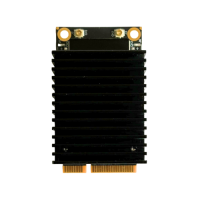
The Qualcomm QCN6274 targets enterprise-class networking. With support for the 6 GHz spectrum, wider channel bandwidth and up to 256 clients, it is well suited for enterprise access points, smart manufacturing, healthcare and campus networks where higher capacity is required.

Qualcomm QCN9274

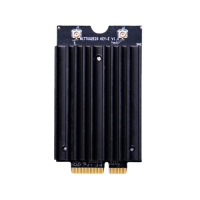
The Qualcomm QCN9274 is Qualcomm’s flagship Wi-Fi 7 networking chipset for demanding enterprise and industrial applications. Supporting up to 512 concurrent clients, it is ideal for high-density enterprise deployments, mission-critical wireless infrastructure and industrial applications that demand maximum wireless capacity and low latency.
Article content
ChipsetNo of ClientsBest ForKey Advantages
QCN6224Up to 128 clientsSmall-Medium Business NetworkingCost-effective Wi-Fi 7 performance
QCN6274Up to 256 clientsEnterprise Access PointsHigher throughput, 6 GHz support, enterprise scalability
QCN9274Up to 512 clientsHigh-density Enterprise, Mission-critical NetworksMaximum capacity, advanced RF performance, premium enterprise features

Rather than asking which chipset is “better,” a more important question is: Which chipset is the right fit for your application requirements?

Choose Qualcomm QCN6224 when cost efficiency and dependable Wi-Fi 7 performance are your priorities.

Choose Qualcomm QCN6274 when your product needs higher throughput, 6 GHz support and greater client capacity.

Choose Qualcomm QCN9274 when you are designing high-density wireless infrastructure where scalability, low latency and high concurrent client capacity are critical.

Looking Beyond the Chipset

Selecting the right chipset is only one part of developing a successful Wi-Fi 7 product. RF front-end design, thermal dissipation and host platform integration can add months to your development cycle.

At 524WiFi and Compex, our Wi-Fi 7 Module Family supports single and dual-band configuration with both commercial grade and industrial grade chipset. Available in standard MiniPCIe form factor and M.2 variants, the module family are compatible with Qualcomm platforms as well as various third-party industrial CPU platforms, including Intel x86, NVIDIA and ARM-based processors such as NXP and Marvell, helping OEMs/ ODMs reduce integration risk and accelerate product development.

To learn more about Compex Wi-Fi 7 Standard MiniPCIe and M.2 Qualcomm-based Wi-Fi 7 module, contact us directly !
Posted on

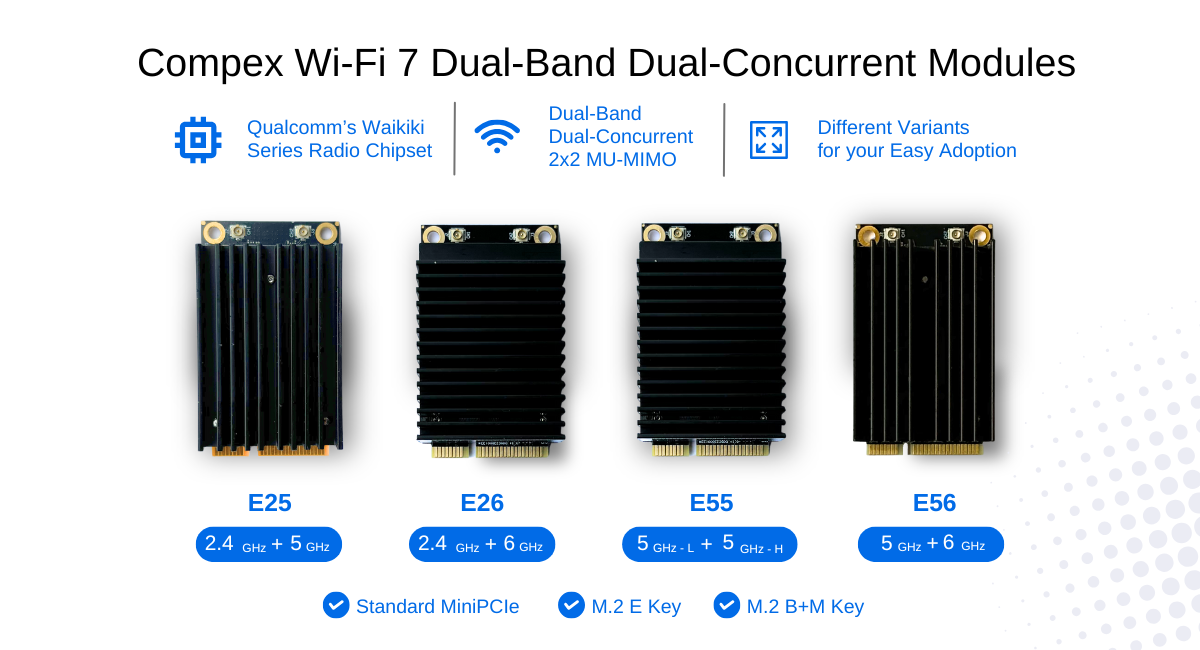
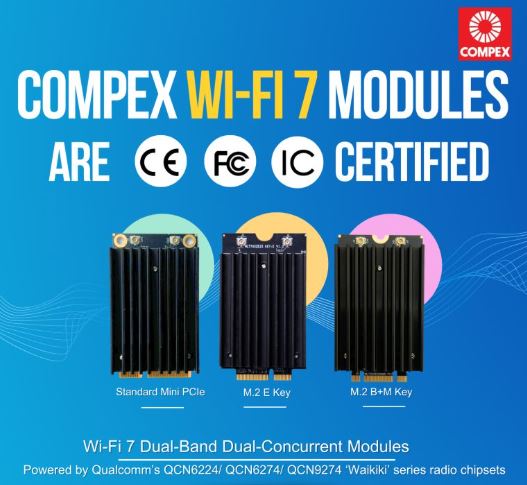
Compex Wi-Fi 7 Dual-Band Dual-Concurrent Modules are CE, FCC and IC certified and Ready for the World

𝗖𝗲𝗿𝘁𝗶𝗳𝗶𝗲𝗱 𝗮𝗻𝗱 𝗥𝗲𝗮𝗱𝘆 𝗳𝗼𝗿 𝘁𝗵𝗲 𝗪𝗼𝗿𝗹𝗱.

Compex Wi-Fi 7 Dual-Band Dual-Concurrent Modules are CE, FCC and IC certified, bringing together global compliance and industry-leading performance. Available in Standard MiniPCIe form factor and M.2 variants, our Qualcomm-powered modules deliver reliable and high-performance wireless connectivity for markets worldwide.

✅Powered by Qualcomm’s QCN6224 / QCN6274 / QCN9274 “Waikiki” series chipsets
✅Comes with band options: 2.4+5GHz, 2.4+6GHz, 5+5GHz and 5+6GHz
✅Multi-Link Operation (MLO) for higher throughput, lower latency and improved reliability
✅Diplexer Design to reduce the need for multiple Wi-Fi antennas for transmission
✅Open Source Ath12k Support

📩 Reach out to us at info@524wifi dot net or com to explore how we can power your next project.

Posted on

Ath11k Linux and OpenWRT driver for WiFi 6 QCN 9074 COMPEX WLE3002HX card

Hello Linux and OpenWRT users,

Last time we described  the reference guide how to run QCN 9024 / 9074 DR9074-Triband module with our ath11k driver on Rockship board with Ubuntu.

Today we share a guide how to make COMPEX WLE3002HX module work well under Linux 6.1.99 and OpenWRT

LINUX:

1 – Use Linux 6.1.99 kernel version and add ath11k related drivers

2 – Use QCN9074/hw1.0/2.7.0.1/WLAN.HK.2.7.0.1-01744-QCAHKSWPL_SILICONZ-1 firmware version

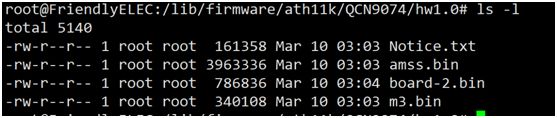
3 – Copy the firmware to the directory/lib/firmware/ath11k/QCN9074/hw1.0/directory, as shown in the following figure

4. Load the ath11k driver successfully, and the kernel prints as follows.

5. Use ifconfig to check that wlan0 has been recognized.

6.Scan external WiFi using the WPA_CLI scan and WPA_CLI scan_desult commands, only 5G band WiFi can be scanned

7.Connect to the scanned 5G frequency band WIFI for normal communication.

8. According to the previously provided document, replace the relevant firmware. The document content is as follows, please use serial console:

1.cd /lib/firmware
2.mkdir ath11k && cd ath11k
3.mkdir QCN9074 && cd QCN9074
4.mkdir hw1.0 && cd hw1.0
5.cp /directory/of/bdf.bin ./ (repeat this step for all above files)
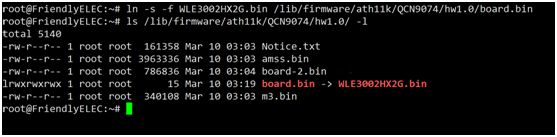
6.ln -s WLE3002HX_SPF11_4_2G.bin board.bin (for first attempt on symbolic link)

To change board data files after first attempt:
Change to 2G: ln -s -f WLE3002HX_SPF11_4_2G.bin board.bin
Change to 5G: ln -s -f WLE3002HX_SPF11_4_5G.bin board.bin

Please replace DBF completely, the file name needs to be changed to the name in your system as described in this file.

Please contact us and we will sned these files to our customers by email.

9. According to the understanding, WLE3002HX_SFP11_4_2G.bin needs to be soft connected to

/lib/firmware/ath11k/QCN9074/hw1.0/board.bin

OpenWRT:

Ultimately what we did was:

1. Deactivate ath11k-firmware from my openwrt custom builds

2. Get the verified firmware version from git – WLAN.HK.2.7.0.1-01744-QCAHKSWPL_SILICONZ-1 e.g. 2 files amss.bin and m3.bin

3. Never download/use board-2.bin from qualcomm firmware

4. cp WLE3002HX5G.bin /lib/firmware/ath11k/QCN9074/hw1.0/board.bin (instead of symlinking)

bonus – cron to recreate the fw folder with files from backup location if missin

so the /lib/firmware/ath11k/QCN9074/hw1.0 folder contains only 3 files: amss.bin   board.bin  m3.bin

bonus – startup cron to recreate the fw folder with files from backup location if missing

This way the adapter works fine.

Thank you for reading. Hope that this can help you too.

Posted on

Compex Systems Expands Dual-Band Wi-Fi 7 Family – Now with M.2 Variants!

Wi-Fi 7 is here, ushering in a new era of wireless connectivity that promises to transform the way we experience the internet. At Compex, we are excited to introduce the new M.2 variants to our popular dual-band Wi-Fi 7 module lineup. Meet the new WLTB7002E25 with a M.2 B+M Key and the WLTE7002E25 with a M.2 E Key — both designed to complement our existing WLE7002E25, which features the popular standard miniPCIe form factor. Together, these Wi-Fi 7 modules offer a comprehensive solutions with enhanced performance, flexibility and compatibility — all at competitive Wi-Fi 6 prices!

Powered by Qualcomm’s QCN6224, QCN6274 and QCN9274 Waikiki series radio chipsets, the WLE/WLTE/WLTB7002E25 are dual-band concurrent 2.4+5GHz Wi-Fi 7 (802.11be) modules, offering wider signal coverage by transmitting both bands concurrently, reducing latency with Multi-Link Operation (MLO) support, featuring OFDMA and 4096 QAMs. Delivering up to 20dBm per chain, these 2×2 MU-MIMO models are ideal for enterprise, industrial, cybersecurity, transportation and SMB applications.

What are the features of the Compex Wi-Fi 7 Modules WLE/WLTE/WLTB7002E25?

  • Dual-Band Dual-Concurrent Operation: Support both 2.4GHz and 5GHz bands simultaneously.
  • Variants for Easy Adoption: WLE7002E25 features a MiniPCIe interface with PCIe 3.0, while the WLTE7002E25 and WLTB7002E25 both have M.2 connectors, supporting E Key and B+M Key respectively.
  • MLO: All Compex Wi-Fi 7 modules support Multi-Link Operation, a key performance advantage of Wi-Fi 7, which increases throughput, lowers latency and enhances reliability.
  • Open Source Ath12k Support: Compatible with Qualcomm and third-party platforms such as Marvell, NXP and x86 platform.
Posted on

QCA9880 or QCA9882: The Wi-Fi Showdown You Need to Know

QCA9880 vs QCA9882: A Comprehensive Comparison of Qualcomm-Atheros Wi-Fi Chipsets for Industrial and Enterprise Applications

In today’s rapidly evolving wireless communication landscape, selecting the right Wi-Fi chipset can make a significant difference in the performance and reliability of a network. Qualcomm-Atheros, a leader in wireless technology, offers a range of Wi-Fi chipsets tailored for different applications. Among these, the QCA9880 and QCA9882 are two highly-regarded chipsets known for their strong performance and versatility. But which one is the best fit for your needs? In this article, we will break down the key differences between these two chipsets, their technical features, and their ideal applications.

1. Introduction to QCA9880 and QCA9882

  • QCA9880: This high-end Wi-Fi chipset supports the 802.11ac standard and features 3×3 MIMO technology, enabling higher throughput and broader coverage. It is ideal for applications where performance and robust connectivity are critical, such as enterprise-grade routers, access points, and wireless gateways.
  • QCA9882: Positioned as a cost-effective solution, the QCA9882 also supports the 802.11ac standard but uses a 2×2 MIMO configuration. While offering slightly lower throughput than the QCA9880, its compact design and energy-efficient operation make it suitable for embedded systems, industrial devices, and smaller-scale networking applications.

2. Key Technical Specifications

Key Technical Specifications

3. Performance Comparison: QCA9880 vs QCA9882

MIMO Technology

  • QCA9880 is equipped with 3×3 MIMO (Multiple Input Multiple Output) technology, allowing it to transmit and receive data on three spatial streams simultaneously. This setup is especially useful in environments with high device density, such as large office buildings or public spaces, where the demand for reliable, high-speed Wi-Fi is constant. The ability to handle multiple streams means greater bandwidth and less interference, which translates into a superior user experience.
  • QCA9882, on the other hand, uses a 2×2 MIMO configuration. While this is more than adequate for smaller networks or embedded devices, it does not offer the same level of performance as the QCA9880. However, its reduced complexity makes it ideal for environments where cost, power consumption, and space are more critical considerations, such as in IoT devices or compact industrial gateways.

Dual-band Operation

Both QCA9880 and QCA9882 support dual-band operation on the 2.4GHz and 5GHz frequency bands. The 2.4GHz band is commonly used for longer-range communications, while the 5GHz band provides faster data transfer speeds over shorter distances. This flexibility ensures that both chipsets can be used in a variety of scenarios, allowing devices to switch between frequency bands based on network demand and interference.

Data Rates

  • QCA9880 supports data rates of up to 1.3 Gbps, making it an excellent choice for high-bandwidth applications such as video streaming, online gaming, or large data transfers. The 3×3 MIMO configuration ensures that it can handle multiple simultaneous connections without a dip in performance, making it ideal for enterprise-level networks.
  • QCA9882, with its 2×2 MIMO configuration, supports data rates of up to 867 Mbps, which is still a significant improvement over older Wi-Fi standards but not quite as fast as the QCA9880. For smaller-scale applications, such as smart industrial devices or IoT gateways, this data rate is more than sufficient.

4. Core Applications and Use Cases

QCA9880: High-performance Wireless Networking

Due to its powerful 3×3 MIMO capabilities and high data rates, QCA9880 is well-suited for environments that require robust, high-speed wireless communication, including:

  • Enterprise networks: QCA9880 is ideal for use in enterprise-level access points (APs) and wireless gateways where multiple devices need to connect simultaneously without compromising speed or reliability.
  • Public Wi-Fi hotspots: Its ability to manage high-density device environments makes it perfect for deployment in public spaces like shopping malls, airports, and stadiums.
  • Video streaming and gaming: With its high throughput, the QCA9880 can handle bandwidth-heavy applications such as 4K video streaming and online gaming with minimal latency.

QCA9882: Embedded Systems and Industrial IoT

The QCA9882 is designed for more specialized use cases where power efficiency and space optimization are critical. Some typical applications include:

  • Industrial IoT (IIoT): In environments such as factories or remote sensor networks, the QCA9882’s compact design and reliable performance are perfect for maintaining stable wireless connections across devices in challenging conditions.
  • Embedded systems: For products like industrial gateways or compact routers, the QCA9882 offers a cost-effective, low-power solution that still delivers high-speed 802.11ac Wi-Fi performance.
  • Small and medium businesses (SMBs): QCA9882 can be integrated into networking products for SMBs that require a balance between performance and cost, ensuring reliable Wi-Fi without the need for enterprise-grade features.

5. Choosing the Right Chipset for Your Needs

When choosing between QCA9880 and QCA9882, the decision ultimately depends on the specific requirements of your application:

  • QCA9880 is the better choice for high-performance, enterprise, or high-density networking environments. Its 3×3 MIMO configuration and high data rates make it a powerful solution for demanding use cases.
QCA9880 VS QCA9882
  • QCA9882 is ideal for applications where space, power consumption, and cost are critical considerations, such as in industrial IoT and embedded systems.
QCA9880 VS QCA9882

6. Conclusion

Both the QCA9880 and QCA9882 from Qualcomm-Atheros are excellent Wi-Fi chipsets that cater to different market segments. The QCA9880 excels in high-performance networking scenarios, while the QCA9882 is a perfect fit for cost-conscious applications with lower power requirements. Whether you’re building a cutting-edge enterprise network or integrating Wi-Fi into an industrial IoT device, Qualcomm’s chipsets offer reliable, scalable, and future-proof solutions for every need.

524WiFi 600VX / 900VX modules for industrial applications :

Posted on

Wi-Fi 7 The Next Generation of Connectivity from COMPEX wireless

Wi-Fi 7, also known as IEEE 802.11be, is the next-generation Wi-Fi standard that supports 2.4GHz, 5GHz, and 6GHz all three frequency bands. This advanced technology introduces innovative features that provide wider signal coverage, reduced latency and seamless connectivity. Wi-Fi 7 is set to revolutionize the way we connect, redefining the standards of wireless communication and rewriting your connectivity experiences. For Linux users, recommended is Linux krenel 6.5 and in kernel ath12k driver.

Unlock the Full Possibilities of Wi-Fi 7

320-bandwidth

320MHz Bandwidths

Wi-Fi 7 introduces 320MHz channel bandwidths, significantly expanding data transmission capacity. This allows for higher data rates and improved performance, ideal for bandwidth-intensive applications like streaming, gaming, and large file transfers.

4k-qam-3

4096 QAM

WiFi 7 uses 4K QAM to enhance data capacity, enabling higher speeds and efficiency. This improves performance for 4K streaming, online gaming, and large file downloads, delivering superior connectivity for modern applications.

mlo

Multi-Link Operation

Wi-Fi 7 debuts Multi-Link Operation (MLO), enabling devices to connect to the same access point across multiple channels and frequency bands simultaneously. MLO increases throughput, reduces latency, and enhances reliability.

Compex Wi-Fi 7 Solutions

The new Compex’s Wi-Fi 7 Dual-Band Dual-Concurrent Modules are designed to take your connectivity to the next level with seamless adoption, power efficiency and enhanced wireless performance. Ideal for enterprise, industrial, cybersecurity, transportation, and SMB applications or appliances, our Wi-Fi 7 Dual-Band Dual-Concurrent Modules set a new standard in performance and reliability.

Compex Wi-Fi 7 Solutions Product Matrix

WLE7000 Standard MiniPCIe Series

wle7002e25d

WLE7002E25

2×2 2.4+5GHz DBDC WiFi 7
with 2.4/5GHz Diplexer
MiniPCIe Interface with PCIe 3.0
wle7002e56_wifi-7

WLE7002E56

2×2 5+6GHz DBDC WiFi 7
with 5/6GHz Diplexer
MiniPCIe Interface with PCIe 3.0

WLT7000 M.2 Series

wlt7002e25d-e

WLTE7002E25

2×2 2.4+5GHz DBDC WiFi 7
with 2.4/5GHz Diplexer
M.2 E Key Interface with PCIe 3.0
wltb7002e25_wifi-7

WLTB7002E25

2×2 2.4+5GHz DBDC WiFi 7
with 2.4/5GHz Diplexer
M.2 B+M Key Interface with PCIe 3.0

WLW7000 High-Power M.2 Series

wlw7000e25

WLW7002E25

2×2 2.4+5GHz DBDC WiFi 7
M.2 E Key Interface with PCIe 3.0
wlw7000e25

WLW7002E56

2×2 5+6GHz DBDC WiFi 7
M.2 E Key Interface with PCIe 3.0
wlw7000e2e5e6

WLW7000E2

4×4 2.4GHz WiFi 7
M.2 E Key Interface with PCIe 3.0
wlw7000e2e5e6

WLW7000E5

4×4 5GHz WiFi 7
M.2 E Key Interface with PCIe 3.0
wlw7000e2e5e6

WLW7000E6

4×4 5GHz WiFi 7
M.2 E Key Interface with PCIe 3.0
Posted on

WI-Fi 7 module news: Everything you need to know about Compex WLE7002E25D

The future of connectivity is here with Compex! Wi-Fi 7 is set to revolutionize wireless connectivity with its lightning-fast speeds and seamless connectivity. The launch of Compex WLE7002E25D Wi-Fi 7 Dual-Band Dual Concurrent Module delivers enhanced wireless performance and reliability — all at Wi-Fi 6 prices!

Here’s a closer look on what you need to know about this new Wi-Fi Modules:

1. Dual- Band Dual-Concurrent Wi-Fi 7 Module

The new Compex WLE7002E25D is a Dual-Band Concurrent 2.4+5GHz WiFi 7 (802.11be) module, powered by Qualcomm’s QCN6224, QCN6274 or QCN9274 ‘Waikiki’ series radio chipsets, offering 2X2 MU-MIMO.

2. Stardard miniPCIe form factor

The new WLE7002E25D comes in a standard miniPCIe form factor. This means it is readily compatible with existing systems, particularly those devices that use Wi-Fi 4 or Wi-Fi 5 standard miniPCIe modules. This simplifies integration, reduces development costs and accelerates time-to-market.

3. Multi-Link Operation (MLO)

The new WLE7002E25D supports up to 4096 QAMs and features OFDMA and MLO. The new MLO allows devices to connect to the same access point (AP) across multiple channels and different frequency bands simultaneously, increasing throughput, lowering latency and enhancing reliability.

4. Cost-efficient diplexer design

Combines the 2.4GHz and 5GHz signals into a single dual-band antenna, reducing the need for multiple antennas and enhancing the performance and reliability of wireless devices.

5. Open Source Ath12K support

Compatible with Qualcomm and third-party platforms such as Marvell, NXP and x86 platform.

6. Enhanced wireless performance and reliability at Wi-Fi 6 prices

Ideal for enterprise, industrial, cybersecurity, transportation and SMB applications, offering enhanced wireless performance and reliability at competitive prices.

Key Takeaways for the Future

The new WLE7002E25D is an investment in the future. With its cutting-edge technology, comprehensive features and diverse application potential, it is set to redefine the standards of wireless connectivity.

The module is now available for order on our eshop. 

Posted on

Get Wi-Fi 7 Ready: Introducing Compex New Wi-Fi 7 Dual-Band Dual Concurrent Modules

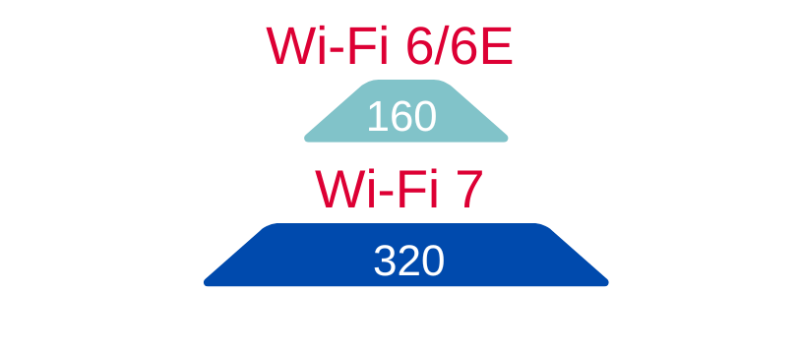
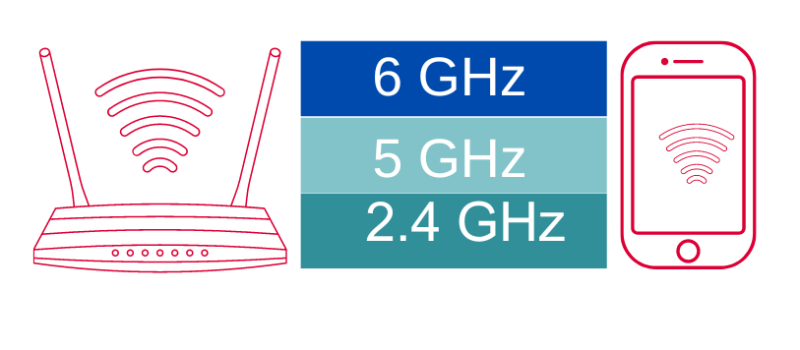
Wi-Fi 7 is set to revolutionize connectivity by supporting all three frequency bands—2.4GHz, 5GHz, and 6GHz—with 320MHz channels. With greater bandwidth and higher data density at 4096 Quadrature Amplitude Modulation (QAM), Wi-Fi 7 delivers lightning-fast speeds and seamless connectivity, enhancing wireless performance to redefine the user experience.

Beyond the significant leaps in speed and bandwidth that set Wi-Fi 7 apart from Wi-Fi 6/6E, Wi-Fi 7 introduces Multi-Link Operation (MLO). This powerful innovation allows devices to connect to the same access point (AP) across multiple channels and different frequency bands simultaneously. The all-new MLO increases throughput, lowers latency, and enhances reliability where speed and network stability matter.

Compex offers a comprehensive lineup of Wi-Fi 7 solutions, promising enhanced wireless performance and reliability at Wi-Fi 6 prices. By making advanced technology more accessible, we provide excellent value to ensure our customers stay ahead in an ever-evolving market.

Introducing: Two All-New Wi-Fi 7 Modules from Compex – WLE7002E25D and WLT7002E25D-E

WLE7002E25D

Powered by Qualcomm’s QCN6224, QCN6274, and QCN9274-I Waikiki series radio chipsets, the new WLE7002E25D is one of the first in the industry to feature a standard miniPCIe form factor offering dual-band dual-concurrent 2.4+5GHz. The module incorporates a cost-efficient diplexer design that combines the 2.4GHz and 5GHz signals into a single dual-band antenna, reducing the need for multiple antennas.

WLT7002E25D-E

The new WLT7002E25D-E is also a dual-band concurrent 2.4+5GHz Wi-Fi 7 (802.11be) module in M.2 E Key, powered by Qualcomm’s QCN6224, QCN6274, and QCN9274-I Waikiki series radio chipsets. This 2×2 MU-MIMO model also incorporates a diplexer design.

Designed to meet the growing demand for high-speed and reliable wireless communication, both modules are compatible with Qualcomm and third-party platforms, ideal for enterprise, industrial, cybersecurity, transportation and SMB applications.

Posted on

Wi-Fi 7 module : 5 Things to Know about Compex WLE7002E25

In today’s hyper-connected world, reliable and high-speed wireless connectivity is no longer a luxury, but a necessity. WiFi standards have evolved rapidly. WiFi 6, which has been around for only a few years, is now being replaced by WiFi 7 or IEEE 802.11be. Equipment manufacturers are now rushing to phase in WiFi 7 products. Compex has released its latest WiFi 7 module WLE7002E25 to help shorten time to market. The Compex WLE7002E25 is a dual band concurrent 2×2 2.4GHz and 2×2 5GHz radio based on Qualcomm’s Waikiki high performance WiFi 7 chipset which is capable of over 10Gbps raw data rate. It is in a stardard miniPCIe form factor.

1. Standard MiniPCIe Form Factor

The standard miniPCIe footprint means that WLE7002E25 is readily compatible with existing systems and designs, particularly customers whose devices have been using WiFi 4 or WiFi 5 standard miniPCIe module. This simplifies integration since device manufacturers do not need to make modifications on their hardware to support a new generation WiFi module, thus reduces development costs and accelerates time-to-market.

Below diagram shows the dimension difference between Qualcomm’s high performance Waikiki M.2 E-key reference design and Compex’s standard size miniPCIe module using the same Waikiki chipset:

2. Lower Power Consumption, Impressive Transmit Power

Compex’s RF engineers set themselves the twin targets of condensing the Qualcomm reference design by about 50% to an industrial standard form factor, as well as reducing its power consumption significantly. Compared with the high performance Qualcomm reference design, Compex is able to achieve the size and consumption targets with a little loss in performance. The following is a comparison of the RF power outputs and consumption between Compex WLE7002E25 and QualcommWK03.2 reference board.

3. Multi-Link Operation (MLO)

An Important differentiator of WiFi 7 to WiFi 6 is MLO (Multi Link Operation). This allows a client to connect to the AP through multiple bands simultaneously. This has significant advantage in reducing latency. Latency is of critical importance to interactive applications such as games, robotics, real-time translation, teleconferencing and etc.

Compex’s WLE7002E25 supports MLO between its 2.4GHz and 5GHz bands. It also implements MLO signals between adapters to support MLO between the WLE7002E25 and other WiFi 7 modules such as Compex’s 4×4 6GHz module WLE7000E6.

4. Open Source Ath12k Support on Foreign Platform

Compex Systems recognize the importance of supporting customers’ products integration with open source ath12k. Ath12k integration support for non-Qualcomm platforms such as x86 embedded boards is also available.

5. Competitive Pricing

Compex’s WLE7002E25 is only marginally more expensive than WiFi 6 products of similar configurations. This is to encourage direct migration from WiFi 4 and WiFi 5 to WiFi 7, skipping the WiFi 6 development time and costs.

Investing in the Future

The Compex WLE7002E25 represents more than just a Wi-Fi module; it’s an investment in the future. With its cutting-edge technology, comprehensive features, and diverse application potential, the Compex WLE7002E25 stands poised to rewrite the rules of wireless connectivity.

Posted on

Do you need COMPEX WLE 3002HX / 3000HX QCN 6024 / 9024 Linux driver ?

Our customers all use ATH11k drivers or QSDK factory drivers
Different LINUX platforms require you to provide platform chip and driver printing information, and then COMPEX will provide customers with how to make patches to meet their needs.

Maybe you can refer to this article for QCA wifi6  modules from different manufacturer, but the process is similar.

https://www.524wifi.com/qcn9074-linux-guide

Thank you