Posted on

Stop Using Unencrypted WiFi: Secure Your Network with WPA3

In today’s hyperconnected world, WiFi has become essential for work, entertainment, and daily communication. However, many networks are still operating on outdated or unencrypted protocols, leaving them highly vulnerable to cyber threats. If your network security is not up to date, it’s time to consider upgrading to WPA3, the latest and most secure WiFi encryption standard available.

The Risks of Unencrypted WiFi

Using unencrypted or weakly encrypted WiFi opens your network to a variety of threats, including:

  • Data Interception: Without proper encryption, hackers can easily capture sensitive information such as passwords, bank details, and private messages.
  • Man-in-the-Middle Attacks: In unprotected networks, attackers can insert themselves between your device and the network to spy on your activity or modify the information being exchanged.
  • Unauthorized Network Access: Attackers can infiltrate your network and exploit connected devices, leaving them vulnerable to malware or ransomware attacks.

WPA3 encryption prevents these attacks by securing the data transmitted over your network, ensuring that only authorized users have access.

What Makes WPA3 More Secure?

WPA3 (Wi-Fi Protected Access 3) represents the most advanced WiFi security protocol to date. It is designed to address the weaknesses of earlier standards like WPA2, providing more robust encryption and additional layers of protection.

Here’s why WPA3 is the best choice for securing your WiFi:

  1. Stronger Encryption: WPA3 uses 192-bit encryption for enterprise environments and 128-bit encryption for personal use, making it much harder for attackers to break into your network.
  2. Simultaneous Authentication of Equals (SAE): This replaces the pre-shared key (PSK) system used by WPA2, significantly enhancing protection against brute-force attacks.
  3. Forward Secrecy: Even if a hacker intercepts data in the future, they cannot decrypt previously captured traffic, thanks to forward secrecy.
  4. Improved Protection for IoT Devices: WPA3’s Easy Connect feature simplifies the process of securely adding IoT devices, which are often a weak link in network security.
  5. Enhanced Safeguards for Public Networks: WPA3 improves protection on open networks, such as those in public places, by encrypting individual connections, preventing eavesdropping and data theft.

Benefits of Upgrading to WPA3

Upgrading to WPA3 provides numerous benefits that protect your network and enhance your user experience:

  • Peace of Mind: With WPA3, you know that your network is protected by the latest encryption standards, keeping your data secure from unauthorized access.
  • Future-Proof Security: As cyber threats continue to evolve, WPA3 is designed to provide long-term protection, ensuring that your network stays secure even as new vulnerabilities emerge.
  • Better IoT Security: With the growing number of smart devices in homes and businesses, WPA3’s improved security features for IoT devices reduce the risk of these devices being exploited.
  • Easier Network Management: WPA3 allows for easier management of network devices while maintaining high security standards, making it ideal for both personal and enterprise use.

How to Upgrade to WPA3

To upgrade your network to WPA3, follow these steps:

  1. Check Your Router’s Compatibility: Ensure that your router supports WPA3. Many newer models include WPA3 support, but older routers may need a firmware update or replacement.
  2. Update Router Firmware: If your router supports WPA3, update its firmware to enable the latest security features.
  3. Configure WPA3 Settings: Access your router settings and enable WPA3 encryption. Most routers have this option under the wireless security or network settings tab.
  4. Device Compatibility: Ensure that your devices (laptops, smartphones, tablets) support WPA3. Many devices released after 2019 are WPA3-compatible.
  5. Mixed Mode for Legacy Devices: If you have older devices that don’t support WPA3, you can use WPA2/WPA3 mixed mode, which maintains backward compatibility while improving security for newer devices.

524WiFi WPA3-Enabled Routerboards

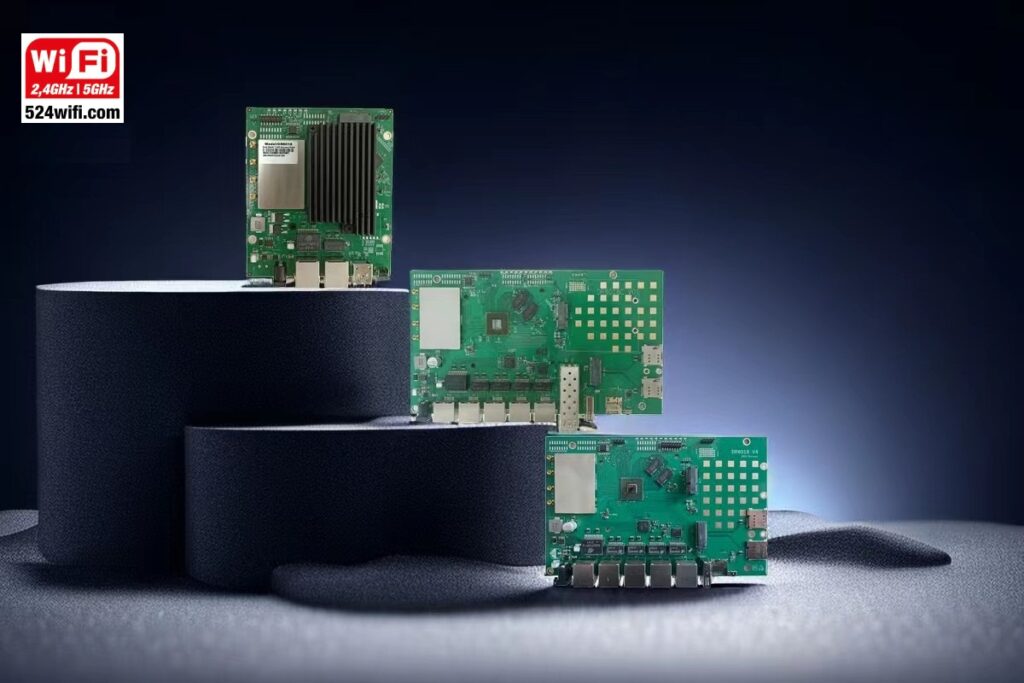
524WiFi and WallysTech offer a range of high-performance routerboards that support WPA3, making them ideal for industrial and extreme usage scenarios where network security is critical. 524WiFi specializes in industrial wireless communication products, ensuring that their hardware is optimized for even the most demanding environments. Here are a few of their top routerboards that support WPA3:

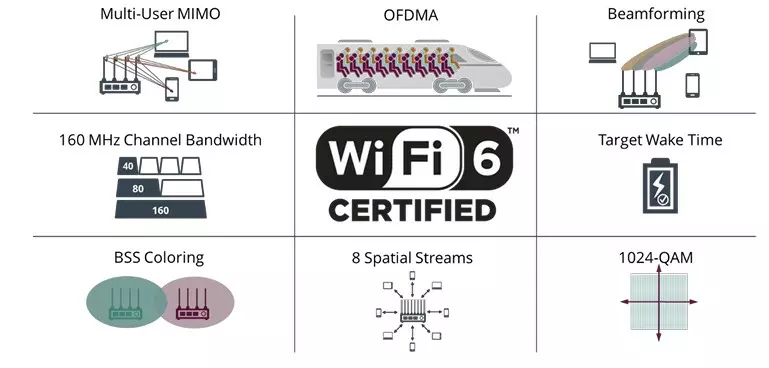
  • DR5018S (IPQ5018) This tri-band routerboard supports 2.4GHz, 5GHz, and 6GHz WiFi 6 bands with MU-MIMO and OFDMA, providing exceptional speed and security, including WPA3 encryption. Ideal for high-traffic networks.
  • DR8072 (IPQ8072) Powered by the Qualcomm IPQ8072A chipset, this board supports OpenWRT, WiFi 6, and WPA3 encryption. Its 10GE port and 10G SFP make it a great choice for data-heavy applications.
  • DR9574 (IPQ9574) A WiFi 7-ready routerboard, the DR9574 delivers top-of-the-line performance with WPA3 support and multiple high-speed Ethernet ports, making it a future-proof option for businesses.
  • DR5332 (IPQ5332) Featuring WiFi 7 and the IPQ5332 chipset, this routerboard offers 10G SFP connectivity, WPA3 encryption, and exceptional processing power for demanding industrial applications.
Posted on

In-Depth Comparison of Qualcomm Miami WiFi 7 SoCs: IPQ5332, IPQ5322, IPQ5312, and IPQ5302

In-Depth Comparison of Qualcomm Miami WiFi 7 SoCs

Qualcomm’s Miami series of WiFi 7 SoCs represents the cutting edge in wireless networking technology. Let’s delve into an in-depth comparison of these powerful chips:

IPQ5332

– Processor: ARM Cortex-A53 Quad Core @ 1.5 GHz with 1x NPU @ 1.5GHz

– Streams: 4×4 MU-MIMO, 10-stream (2x 2.4GHz/5GHz/6GHz)

– Key Features: Wi-Fi 7, MU-MIMO, 4K QAM, MLM, WPA3, OFDMA

– Connectivity: 1x 2.5GbE, 1x 10GbE, 2x PCIe 3.0, DDR3L/4, USX/SGMII+, eMMC

– Performance: 20.7Gbps

IPQ5322

– Processor: ARM Cortex-A53 Quad Core @ 1.5 GHz with 1x NPU @ 1.5GHz

– Streams: 4×4 MU-MIMO, 6-stream (2x 2.4GHz/5GHz/6GHz)

– Key Features: Wi-Fi 7, MU-MIMO, 4K QAM, MLM, WPA3, OFDMA

– Connectivity: 1x 2.5GbE, 1x 10GbE, 2x PCIe 3.0, DDR3L/4, USX/SGMII+, eMMC

– Performance: 10.6Gbps

IPQ5312

– Processor: ARM Cortex-A53 Quad Core @ 1.1 GHz with 1x NPU @ 1.0GHz

– Streams: 2×2 MU-MIMO, 6-stream (2x 2.4GHz/5GHz/6GHz)

– Key Features: Wi-Fi 7, MU-MIMO, 4K QAM, MLM, WPA3, OFDMA

– Connectivity: 1x 2.5GbE, 1x 10GbE, 2x PCIe 3.0, DDR3L/DDR4, 2x SGMII+, USB 3.0

– Performance: 8.6Gbps

IPQ5302

– Processor: ARM Cortex-A53 Quad Core @ 1.1 GHz with 1x NPU @ 1.0GHz

– Streams: 2×2 MU-MIMO, 4-stream (2x 2.4GHz/5GHz)

– Key Features: Wi-Fi 7, MU-MIMO, 4K QAM, MLM, WPA3, OFDMA

– Connectivity: 1x 1GbE, 1x 2.5GbE, PCIe 3.0, 256MB DDR3L, 2x SGMII+, USB 3.0

– Performance: 6.5Gbps

Conclusion

The Qualcomm Miami WiFi 7 SoCs offer a range of options catering to diverse networking needs. From high-performance multi-stream setups to more compact and efficient configurations, these chips deliver unparalleled speed, reliability, and feature-rich connectivity options. Whether for home, office, or industrial applications, Qualcomm’s Miami series sets the standard for next-generation wireless networking.

News

Following the successful launch of Wallys’ DR9574 based on the IPQ9574 SoC last year, a new IPQ5322-based routerboard is on the horizon! This addition to Wallys’ lineup will offer expanded options for industrial and home wireless networks. Stay tuned for updates!

Posted on

What is WPA3?

WiFi Protected Access 3 (WPA3) represents the latest security protocol for Wireless Networks, offering heightened protection against cyber threats. A notable feature of WPA3 is Simultaneous Authentication of Equals (SAE), a robust authentication method that replaces the outdated pre-shared key system. This advancement significantly mitigates security risks, particularly when dealing with vulnerable passwords.

For individuals seeking to harness the 6 GHz band with WiFi 6E devices, WPA3 adoption is imperative. Therefore, if you possess devices capable of supporting WiFi 6E and wish to utilize the 6 GHz band for connectivity, transitioning to WPA3 encryption is crucial.

Wallys offers a comprehensive range of products equipped with WPA3 support, catering to various user requirements. Some noteworthy offerings include:

  1. DR5018-IPQ5018 WiFi 6 Routerboard with 2.4GHz and BT5.1 Support:Tailored for high-bandwidth applications in demanding environmentsIntegration of BT5.1 Radio moduleDual-core ARM 64bit A53 processorOnboard 2.4GHz radio supporting up to 573Mbps data ratesM.2 card slots for 5G modules and WiFi 6E cardsOpenwifi support for enhanced flexibility
  2. DR6018-IPQ6010 WiFi 6 Routerboard with Dual-Band Support:Equipped with Qualcomm-Atheros IPQ6010 chipsetQuad-core ARM 64bit A53 processorSupports Dynamic Frequency Selection (DFS) for optimized wireless performanceCompatibility with 5G connectivity and WiFi 6E cardsQSDK support for development and customization
  3. DR8072-IPQ8072 Dual-Band WiFi 6 Routerboard:Powered by Qualcomm Atheros IPQ8072A AR Quad Core CPUSupports 11ax TX Beamforming, MU-MIMO DL and UL, and OFDMA DL and ULDynamic Frequency Selection (DFS) support for improved spectrum utilization
  4. DR8074-IPQ8074 WiFi 6 Routerboard with 2.4GHz Support:Features Qualcomm Atheros IPQ8074A AR Quad Core CPUSupports 11ax TX Beamforming and MU-MIMO DL and ULTri-band support for versatile connectivity options

In addition to WiFi 6 offerings, 524WiFi also provides WiFi 7 solutions tailored to meet evolving wireless networking demands. Notable offerings in this category include:

  1. DR9274-QCN9274|QCN6274 WiFi7 Single Band 5G:Customized for single-band 5G applicationsSupports up to 4×4 MU-MIMO and 4096-QAMWide temperature operating range for industrial and commercial grades
  2. DR9274-QCN9274|QCN6274 WiFi7 Single Band 6G:Specifically designed for single-band 6G requirementsBoasts a 4T4R (4×4) MU-MIMO 6GHz solution
  3. DR9274-QCN9274|QCN6274 WiFi7 Dual Band Dual Concurrent-2.4G&5G:Ideal for dual-band, dual-concurrent operation in both 2.4G and 5G frequencies
  4. DR9274-QCN9274|QCN6274 WiFi7 Dual Band Dual Concurrent-5G&6G:Tailored for dual-band, dual-concurrent operation in 5G and 6G frequencies
  5. WiFi7 Platform DR9574-IPQ9574:A robust platform featuring the Qualcomm IPQ9574, designed specifically for industrial WiFi 7 router applications
  6. Mediatek WiFi6 and 6E MT AW 7915 and MT AW 7916 also support WPA 3 – please have a look at https://524wifi.net/best-selling-mediatek-wi-fi-6-6e-module/
Posted on

Best Selling MEDIATEK Wi-Fi 6 6E Module

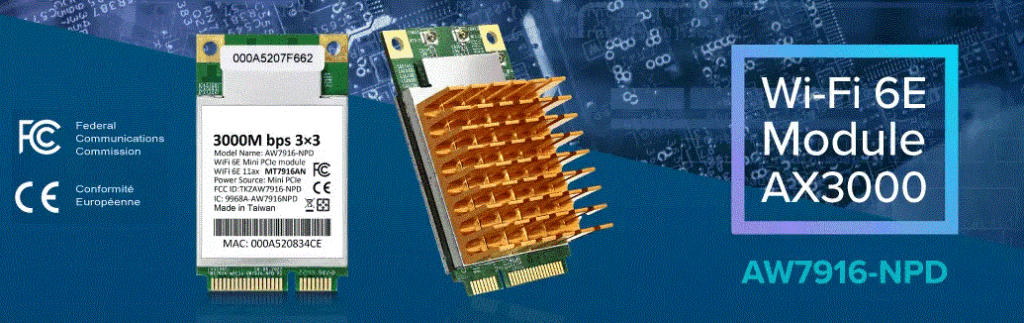
The Wi-Fi 6E Module AW7916-NPD is a highly advanced Mini PCIe module with Wi-Fi 6E 3000 capabilities. It features G-band 2T2R + A-band 3T3R 2ss dual-band concurrent technology, providing a transmission efficiency of 3000 Mbps. With support for Wi-Fi 6E, even in densely crowded environments, the Wi-Fi 6E Module AW7916-NPD delivers efficient network performance while accommodating a greater number of Wi-Fi users. Its wider spectrum and increased capacity ensure smooth operations, reducing latency and interruptions.

Features:

  • BUS Interface: Mini PCIe / M.2 AE Key
  • IEEE 802.11 a/b/g/n/ac/ax compliant
  • High-Performance Dual-Band Connectivity: G-band 2T2R + A-band 3T3R 2ss,  Dual-band concurrent with PHY rate up to 3000Mbps 
  • Flexible Bandwidth Support: Support 20/40MHz bandwidth in G-band, and 20/40/80/160MHz bandwidth in A-band
  • Robust Security Features: Security support for WFA WPA/WPA2/WPA3 personal, WPS2.0
  • Support MU-OFDMA TX/RX
  • Support MU-MIMO TX/RX
  • Compatibility with Diverse Modes: Support greenfield, mixed mode, legacy modes
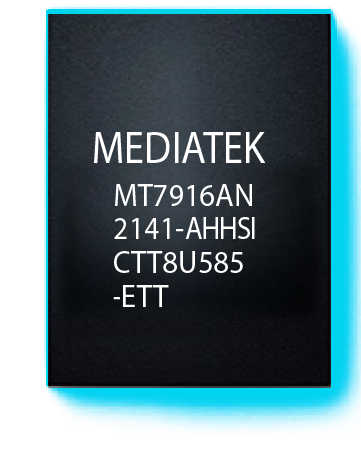
  • Based on Mediatek MT7916AN.

The expanded spectrum delivers astonishing performance.

The Wi-Fi 6E Module AW7916-NPD provides a more powerful experience for high-bandwidth applications. By utilizing up to 14 additional 80MHz channels or 7 extra ultra-wide 160MHz channels in the 6GHz frequency band, it supports smooth and high-definition video calls and can handle large-scale data transmission.

Wi-Fi 6E moudle AW7916-NPD Mesh+Security

A mesh system can provide offices and enterprises with a more reliable network connection, covering a wide area, and allowing numerous devices to connect to the network, offering better performance in densely populated device areas. Even as users move to different areas, their devices can smoothly switch to the strongest Wi-Fi access point without the need for manual reconnection or experiencing disconnection.

The Wi-Fi 6E Module AW7916-NPD adopts the latest WPA3 security protocol, safeguarding users from unauthorized access and data breaches, addressing security threats in modern wireless networks.

Accurate and fast remote operation

Compared to the past, Wi-Fi 6E enables remote operations with higher precision. This advancement is expected to drive the progress of remote medical services and open up possibilities for practical applications of remote surgeries in the medical field. With Wi-Fi 6E, healthcare professionals can perform surgeries with greater precision and less invasiveness, marking a significant breakthrough in the field of medical services. Additionally, in manufacturing and logistics, technologies such as robotic arms and drones can execute tasks more swiftly and accurately, reducing the likelihood of errors. This technology also fosters progress in smart and automated systems, bringing forth more innovations and efficiency for businesses.

At the end of 2022, the University of Michigan in the United States underwent a revolutionary change by deploying over 16,000 Wi-Fi access points across 225 buildings and outdoor areas on campus. This remarkable achievement allowed the university to support up to 70,000 device connections simultaneously. Through this extensive Wi-Fi infrastructure, the University of Michigan can meet the growing data demands, enhance teaching and campus management efficiency, and foster the application and development of smart devices on campus. This will have a positive impact on various aspects of academic research, student learning, and campus life.

Wi-Fi 6E is a significant trend in the current wireless network market. With continuous technological advancements and increasing data demands, Wi-Fi 6E has become the representation of the next-generation wireless network technology and is gaining widespread attention and adoption in the market.

Comparison Chart

 MM610X-001AW7916-AEDAW7916-NPDAW7915-NP1AW7915-NPDAW7915-AE1AW7915-AEDAW7915-BMD
Wi-Fi
Generation
Wi-Fi HaLowWi-Fi 6EWi-Fi 6EWi-Fi 6Wi-Fi 6Wi-Fi 6Wi-Fi 6Wi-Fi 6
Communication
Protocol
11ah11ax11ax11ax11ax11ax11ax11ax
Number of
Connectors
1T1RG-band 2T2R
A-band 2T3R
G-band 2T2R
A-band 3T3R
4T4R2T2R4T4R2T2R2T2R
BUS
Interface
SDIO/SPIM.2 AE KeyMini PCIeMini PCIeMini PCIeM.2 AE KeyM.2 AE KeyM.2 BM Key
Baseband
IC
MM6108 RF SOCMT7916ANMT7916ANMT7915ANMT7915DANMT7915ANMT7915DANMT7915DAN
Transfer
Rate
20 Mbps3000 Mbps3000 Mbps2400 Mbps1800 Mbps2400 Mbps1800 Mbps1800 Mbps
Frequency
Bands
850-950MHzDual Bands
2.4 GHz & 5/6GHz
Dual Bands
2.4 GHz & 5/6GHz
Dual Bands
Selectable
2.4GHz or 5GHz
DBDC
2.4GHz & 5GHz
Dual Bands
Selectable
2.4GHz or 5GHz
DBDC
2.4GHz & 5GHz
DBDC
2.4GHz & 5GHz
Size of
SIM Card
17 X 22 mm30 X 52 mm30 X 51 mm30 X 51 mm30 X 51 mm30 X 52 mm30 X 52 mm30 X 52 mm
CertificatiingFCC ID:
TKZXXXXXX-XXX
IC:
996XX-XXXXXXXXX
NCC, RCM: Approved
CE
TELEC:
217-XXXXXX
Coming soonFCC ID:
TKZXXXXXX-XXX
IC:
996XX-XXXXXXXXX
CE:
Certification Approved
FCC ID: TKZXXXXXX-XXX
IC:
996XX-XXXXXXXXX
CE: Certification Approved
FCC ID:
TKZXXXXXX-XXX
IC:
996XX-XXXXXXXXX
NCC ID : CCAXXXXXXXXXXX
CE: Certification Approved
Coming soonComing soonComing soon