Posted on

DRiver DR6018S 3.3km Outdoor Test Results

🚀IPQ6018 router board DR6018S 3.3km Test Results🚀

We are excited to share the impressive performance of our 524WiFi WiFi6 solution:DR6018S!

Test Devices:
🔹Routerboard: DR6018S
🔹Antenna: DR5G17

Throughput Test:
🔸Speed: 572 Mbps
🔸RSSI: 34
🔸 RX: 854.7 Mbps
🔸 TX: 432.4 Mbps

These results highlight the exceptional capabilities of the DR6018S, making it a top choice for high-performance, long-range applications. With its robust throughput and reliable signal strength, this solution is ideal for a wide range of commercial and industrial projects.


Ready to elevate your connectivity? Contact us to learn more about the DR6018S and how it can meet your project needs!

DRiver IPQ 6018 Products : https://www.524wifi.com/index.php/catalogsearch/result/?q=6018

Posted on

MT7915 vs QCN9074:What’s the Performance Differences in WiFi 6 SoCs?

In the realm of WiFi 6 SoCs (System on Chips), two prominent players stand out: MediaTek’s MT7915 and Qualcomm’s QCN9074. Both offer advanced features catering to various wireless networking needs, but discerning the performance differences between them is crucial for making informed decisions.

### Overview of MT7915

MediaTek’s MT7915 is a WiFi 6 SoC designed to deliver robust wireless connectivity with a focus on cost-effectiveness. It boasts support for the latest WiFi 6 standard, promising enhanced speeds, capacity, and coverage compared to its predecessors. The MT7915 is often favored for its affordability, making it a popular choice for budget-conscious applications.

### Overview of QCN9074

On the other hand, Qualcomm’s QCN9074 represents a premium offering in the WiFi 6 SoC landscape. Renowned for its exceptional performance and stability, the QCN9074 is equipped with advanced features tailored for demanding networking environments. It supports MU-MIMO (Multi-User, Multiple Input, Multiple Output) technology, enabling simultaneous data transmission to multiple devices, thus ensuring seamless connectivity in high-density scenarios.

### Performance Comparison

When comparing the performance of MT7915 and QCN9074, several factors come into play:

1. **Speed and Throughput**: While both SoCs support WiFi 6 standards, the QCN9074 typically outperforms the MT7915 in terms of raw speed and throughput. With its advanced signal processing capabilities and optimized architecture, the QCN9074 can deliver faster data rates and lower latency, ideal for bandwidth-intensive applications such as video streaming and online gaming.

2. **Coverage and Range**: The QCN9074 often excels in providing extended coverage and range compared to the MT7915. Its superior radio frequency performance and beamforming technology contribute to better signal penetration and wider coverage areas, making it suitable for large-scale deployments in industrial settings or expansive office spaces.

3. **Stability and Reliability**: While both SoCs are designed to deliver reliable wireless connectivity, the QCN9074 is renowned for its stability and robustness in challenging RF (Radio Frequency) environments. Its advanced interference mitigation techniques and dynamic channel selection algorithms ensure optimal performance even in crowded wireless networks, minimizing packet loss and network disruptions.

4. **Cost and Affordability**: One area where the MT7915 holds an advantage is in cost-effectiveness. As a more budget-friendly option, it offers compelling performance at a lower price point, making it a viable choice for applications where budget constraints are a primary concern.

### Conclusion

In summary, while both MT7915 and QCN9074 are capable WiFi 6 SoCs catering to different market segments, their performance differences are evident. The MT7915 excels in affordability, making it a practical choice for cost-conscious deployments, whereas the QCN9074 stands out for its superior performance, stability, and reliability, particularly in demanding networking environments. Ultimately, the choice between the two SoCs depends on the specific requirements of the deployment, balancing performance, cost, and scalability to meet the needs of the intended application.

524WiFi DRiver MT 7915

DR 7915, incorporating the MT7915 and MT7975 Chipset, stands as an enterprise wireless module. It seamlessly integrates a 2×2 2.4G high-power Radio module alongside a 2×2 5G high-power Radio module. Engineered with a precise focus, it aims to furnish users with mobile access, catering to high-bandwidth requirements encompassing video streaming, voice communication, and data transmission. Its application scope extends to offices and challenging RF environments found in factories and warehouse establishments.

– Chipset: MT7915 + MT7975

– Host Interface: Mini PCI Express 2.1

– Antenna Connector: 2 x UF.L

– Frequency Range:

– 2.4GHz: 2.412GHz to 2.472GHz

– 5GHz: 5.180GHz to 5.825GHz

– Operating Voltage: 3.3 Volts (V) Direct Current (DC)

– Power Consumption: To Be Determined (TBD)

– Modulation Techniques: Orthogonal Frequency-Division Multiplexing (OFDM): Binary Phase Shift Keying (BPSK), Quadrature Phase Shift Keying (QPSK), Differential BPSK (DBPSK), Differential QPSK (DQPSK), 16-Quadrature Amplitude Modulation (QAM), 64-QAM, 256-QAM

– Environmental Temperature:

– Operating: -40°C to 70°C

– Storage: -40°C to 90°C

– Environmental Humidity, non-condensing:

– Operating: 5% to 95%

– Storage: Maximum 90%

– ROHS Compliance: YES

– Dimensions (Width x Height xDepth): 51mm x 30mm x 5.8mm

524WiFi DRiver 9074-Triband

DR9074-Triband based on QCN9024 Chipset is an enterprise wireless module integrated with 4×4 MU-MIMO Dual Band Wireless Module designed specifically to provide users with mobile access to high-bandwidth video streaming, voice, and data transmission for office and challenging RF environment in factories, warehouses establishment.

– Chipset: Qualcomm Atheros QCN9024

– WLAN Host Interface: PCI Express 3.0 Interface

– System Memory: 2 Megabits (Mbit) serial I²C bus EEPROM

– Standard Operating Voltage: 5 Volts (V)

– Operating Systems: QSDK

– Host Interface: M.2 E Key

– Antenna Cable / Port: 4 x ufl Connectors, 4 Transmit, 4 Receive (4T4R)

– Frequency Range: 2.412 Gigahertz (GHz) to 2.472 GHz & 5.18 GHz to 5.825 GHz & 5.925 GHz to 7.125 GHz

– Data Rates: Maximum 23 Decibel-milliwatts (dBm) per chain, up to 4804 Megabits per second (Mbps)

– Channel Spectrum Widths: Support 20/40/80/160 Megahertz (MHz)

– Modulation Techniques: Orthogonal Frequency-Division Multiple Access (OFDMA): Binary Phase Shift Keying (BPSK), Quadrature Phase Shift Keying (QPSK), Differential BPSK (DBPSK), Differential QPSK (DQPSK), 16-QAM, 64-QAM, 256-QAM, 1024-QAM

– Temperature Range: Operating: -20°C to 70°C, Storage: -40°C to 90°C

– Humidity: Operating: 5% to 95% (non-condensing), Storage: Maximum 90% (non-condensing)

– Certification: To Be Determined (TBD)

– Reference Design: PN02 .7

– Dimensions (Width x Height x Depth): 57 millimeters (mm) x 63 mm x 6 mm

https://www.524wifi.com/index.php/catalogsearch/result/?q=7915

https://www.524wifi.com/index.php/catalogsearch/result/?q=9074

Posted on

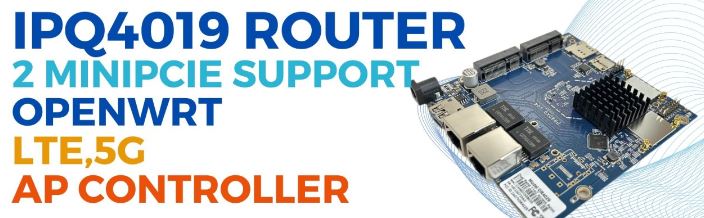
DR4x19 | IPQ4x19 – Based Industrial Board: Multifunctional with 2 MiniPCIe Support, OpenWRT LTE, WIFI 5G, MT7915, and QCN9074 Platform

Empowering Customization and Connectivity: The IPQ4019-Based Industrial Board

In the realm of industrial connectivity, adaptability reigns supreme. Introducing the IPQ4019-based industrial board, a versatile solution engineered to offer unparalleled customization and connectivity options. Let’s explore its key features:

Tailored Dual LTE Support

– This board supports customizable configurations for dual LTE support, allowing for routerboard/baseboard+SOM setups tailored to specific requirements. Whether it’s optimizing bandwidth or ensuring redundancy, users can fine-tune their connectivity solutions with ease.

Efficient Network Segmentation via VLANs

– Recognizing the importance of network segmentation, this board seamlessly integrates VLAN support. Users can create distinct virtual networks within a single physical infrastructure, enhancing security and efficiency.

Customized LUCI Interface

– Elevate brand identity and user experience with a customized LUCI interface featuring the customer’s logo. This personalized touch adds a professional flair while maintaining familiarity for end-users.

Extended Range Firmware Customization

– Break through geographical barriers with custom firmware designed for long-distance transmission, reaching up to 20km. Whether it’s remote installations or expansive deployments, rest assured that firmware updates will reach even the most remote endpoints.

Seamless Integration with Leading Controllers

– Integrate effortlessly into existing network architectures with support for Wallys AP Controller and TIP Cloud Controller. Benefit from centralized management, configuration, and monitoring capabilities, enhancing operational efficiency and scalability.

Conclusion: Unmatched Flexibility for Industrial Connectivity

In conclusion, the IPQ4019-based industrial board stands as a beacon of innovation and adaptability in industrial connectivity. With its support for customizable LTE configurations, VLANs, branded interfaces, long-distance firmware transmission, and integration with leading management controllers, this board offers unparalleled flexibility and connectivity options. Whether optimizing performance, enhancing security, or streamlining operations, this versatile solution is poised to revolutionize industrial connectivity challenges.

DR4019

Featuring with industrial-grade IPQ4019/IPQ4029 chipset

Integrated with 2x 2 5G high power Radio module and 2×2 2.4G high power Radio module

Support 4.940GHz to 5.825GHz Frequency Range

Support 2.400GHz to 2.482GHz

Support 2 x 5G MMCX Connectors and 2×2.4G MMCX

Support 5MHz/10MHz/20MHz/40MHz/80MHz Bandwidth

Support 11ABGN/AC

Support fixed data rate

RoHS compliance ensure a high level protection of human health and the environment from risks that can be posed by chemicals

Our Firmware supports all the modules of Quectel

Support Openwifi

Support QSDK

Support Openwrt

https://www.524wifi.com/index.php/catalogsearch/result/?q=4029

Openwrt Supported and 6E support

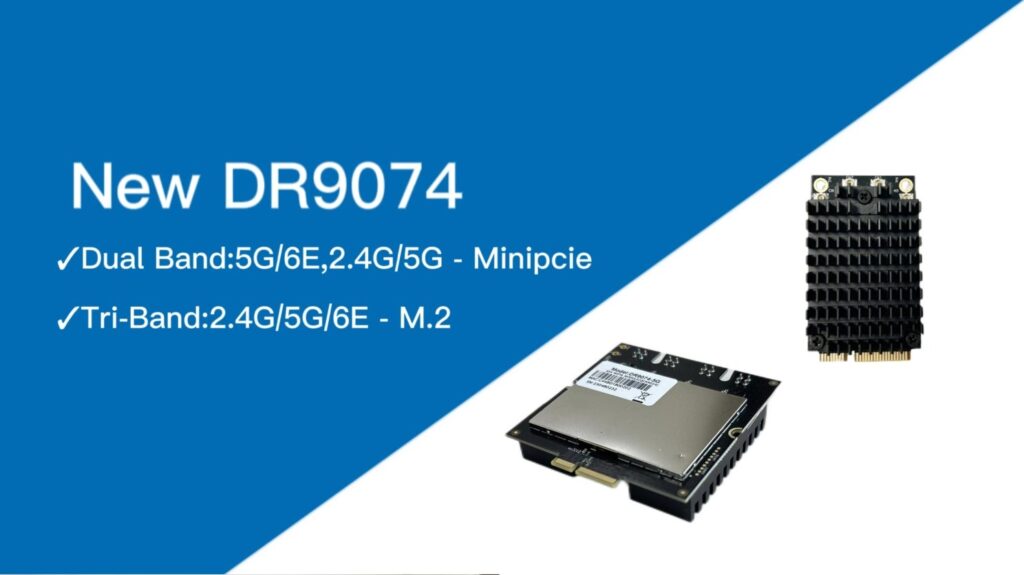
With QCN9074 QCN9024 DR9074-6E card

With MT7915 DR7915

Posted on

Discovering Wi-Fi 6: What is Target Wake Time ( TWT )?

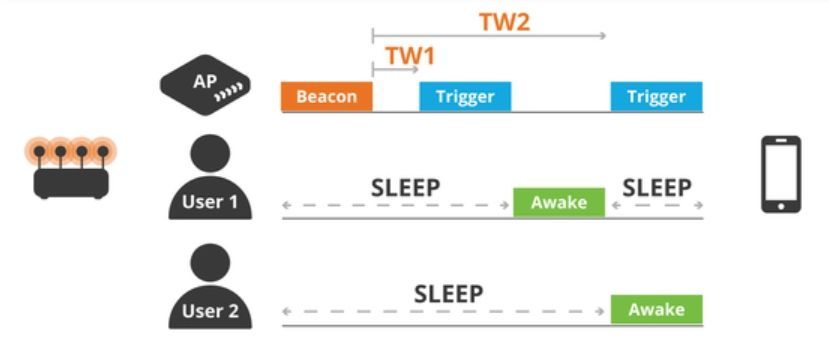
Wi-Fi 6 is making waves with its groundbreaking features, and Target Wake Time (TWT) is one of the highlights. Imagine a smarter way for Access Points (APs) and stations to synchronize their wake-up times for data transmission. It’s like setting alarms for a family living in different rooms, ensuring everyone wakes up at the most convenient time.

Here’s the deal: Without TWT, stations constantly listen for data transmissions, draining battery life unnecessarily. But with TWT, they negotiate specific wake-up times with the AP, conserving power and extending battery life significantly.

So, why does TWT matter? Well, in a nutshell, it’s the key to efficient energy management and improved network performance in Wi-Fi 6 devices. As enterprises embrace this new standard, understanding TWT becomes crucial for maximizing the benefits of Wi-Fi 6 technology.

Ready to dive deeper into the world of Wi-Fi 6? Stay tuned for more insights into its revolutionary features! 💻🚀

Posted on

Wi-Fi 7 low power consumption cards DRiver series DR9274

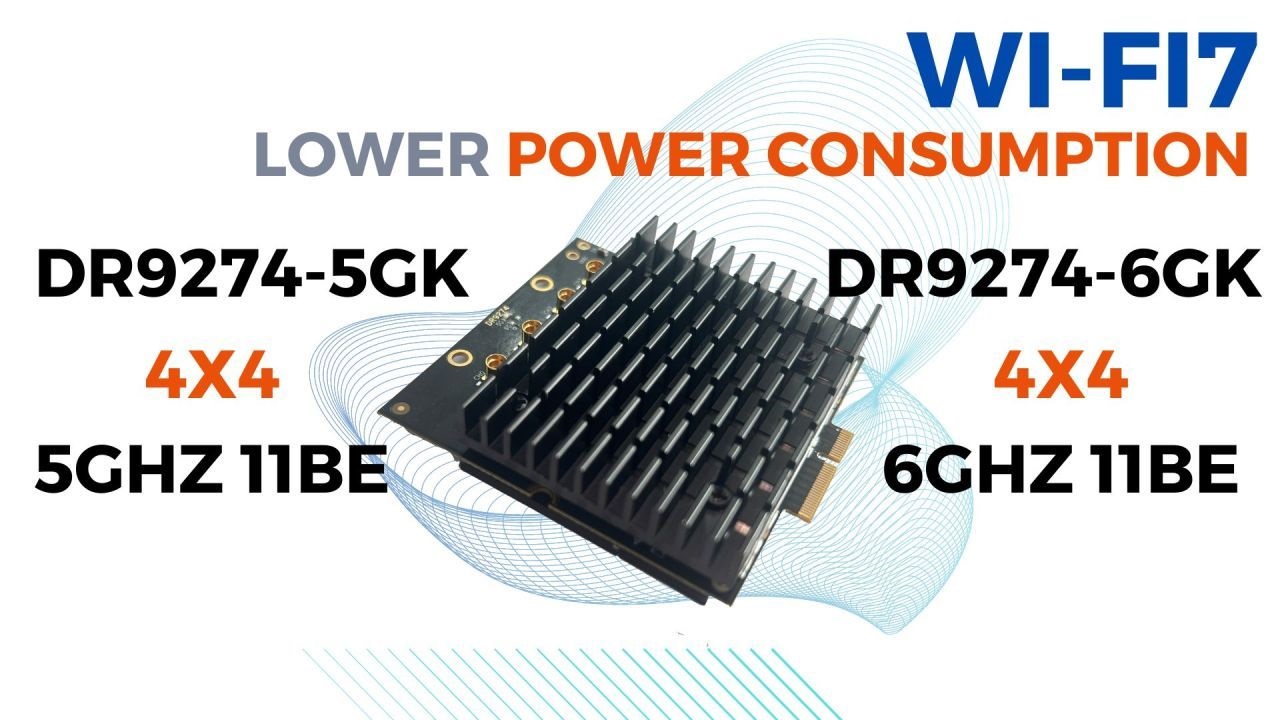
Upgrade your IIoT devices with 524WiFi’ NEW wifi7 Network cards – DR9274-5GK and DR9274-6GK! 📶🔌

Experience better performance and save energy with just 7W power consumption! ⚡️

Power usage is crucial for IIoT devices. Excessive power can harm device functionality and user experience. 😔

Industries like oil and gas, agriculture, healthcare, wildlife conservation, forestry, and water monitoring need IoT devices with long-lasting battery life.⏱️🔋

No more battery worries! Optimize your devices with 524WiFi’ power-efficient wifi7 Network cards for an efficient IIoT setup

Test now and revolutionize your IIoT experience! 💡✨

Posted on

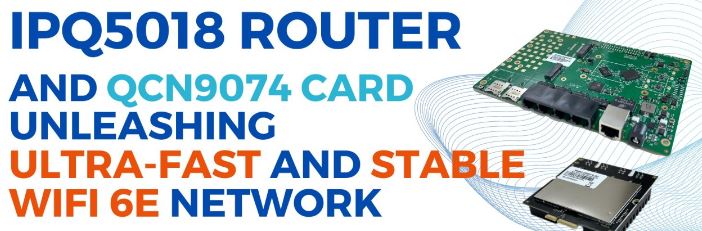
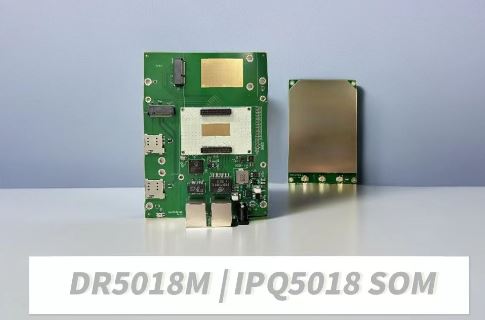
IPQ5018 Router and QCN9074 Card: Ultra-Fast and Stable WiFi 6E Network

Experience the Power of WiFi 6E with IPQ5018 Router and QCN9074 Card Duo

Get ready to experience unparalleled speed and stability with the IPQ5018 Router and QCN9074 Card duo. Designed for high-performance wireless networking, the IPQ5018 boasts integrated 802.11ax Wi-Fi/Bluetooth 5.1 subsystems, delivering cost-effective and efficient connectivity.

IPQ5018

The IPQ5018 is a highly integrated System-on-Chip (SoC) designed and manufactured for high-performance and efficient wireless network applications, including home routers, mesh nodes, and gateways. It features integrated 802.11ax Wi-Fi/Bluetooth 5.1 subsystems, providing high efficiency and cost-effectiveness.

Key Features:

– Wi-Fi subsystem supports IEEE802.11ax, incorporating a wireless radio operating in the 2.4 GHz band with 2 antennas (2×2/40).

– Network subsystem:

– Low-power PCIe interface with L1 sub-states.

– Two Ethernet ports:

– One integrated GbE PHY.

– One SerDes supporting 3.125/1.25 Gbps Ethernet ports for external 2.5/1 GbE PHY. This SerDes operates in SGMII+ or SGMII mode to connect to 2.5 GbE PHY or single-port GbE PHY.

In today’s fast-paced digital world, a reliable and lightning-fast internet connection is essential for seamless connectivity. With the advent of WiFi 6E technology, users can now enjoy unprecedented speed, stability, and coverage. The combination of the IPQ5018 Router and QCN9074 Card delivers an unparalleled WiFi 6E experience, setting new standards for home and business networks.

The IPQ5018 Router is a powerhouse in the world of networking, equipped with advanced features and cutting-edge technology to provide ultra-fast and stable connectivity. Its robust hardware ensures maximum performance, while its intelligent software optimizes network traffic for an uninterrupted online experience.

Paired with the QCN9074 Card, this duo takes WiFi 6E to new heights. The QCN9074 Card is designed to maximize the capabilities of WiFi 6E, offering higher speeds, lower latency, and increased capacity compared to previous generations. With its advanced beamforming and MU-MIMO technology, the QCN9074 Card ensures optimal signal strength and coverage throughout your home or office.

Together, the IPQ5018 Router and QCN9074 Card create a WiFi 6E network that is not only blazing fast but also incredibly stable. Whether you’re streaming 4K videos, gaming online, or video conferencing with colleagues, you can count on a seamless and lag-free experience.

But the benefits don’t stop there. The IPQ5018 Router and QCN9074 Card also prioritize security, with robust encryption protocols and built-in firewalls to protect your network from cyber threats. Additionally, advanced parental controls and network management tools allow you to customize and monitor your network with ease.

In conclusion, the IPQ5018 Router and QCN9074 Card combination is the ultimate solution for those seeking a high-performance WiFi 6E network. Experience the future of connectivity today with unparalleled speed, stability, and coverage.

Router board DRiver 5018

DR5018 based on IPQ5018 chipset is an enterprise wireless module integrated with BT5.1 Radio module and 2×2 2.4G high power Radio module designed specifically to provide users with mobile access to high-bandwidth video streaming, voice, and data transmission for office and challenging RF environment in factories, warehouses establishment.

CPU: Qualcomm-Atheros IPQ5018

CPU Frequency: Dual-core ARM 64-bit A53 @1.0 GHz processor

System Memory: 512MB DDR3L 16-bit interface with 32-bit memory bus design (Optional support for 1G)

Ethernet Port: 4 x 1Gbps Ethernet Ports or 1 x 1Gbps Ethernet Port & PoE

NGFF Slot: M.2 Card Slot for 5G (QUECTEL RM 500Q-GL); M.2 Card Slot for QCN9074 WIFI 6E Card

PoE: Support

DC Jack: 12V power supply

LED Header: LED for power, WiFi strength

Serial Port: Support

Wireless: On-board 2×2 2.4GHz MU-MIMO OFDMA 802.11b/802.11g/802.11n/802.11ax, max 23dBm per chain; 2x IPEX Connectors

Bluetooth: BT5.1 (optional)

Nor Flash: 8MB

Nand Flash: 128 MB

DDR: 512MB

Dimension: 170mm x 120mm x 15mm

WiFi6 module DRiver 9074

Chipset: Qualcomm Atheros QCN9074

WLAN Host Interface: PCI Express 3.0 Interface

System Memory: 2Mbit serial I²C bus EEPROM

Standard Operating Voltage: 5V

Operating Systems: QSDK

Host Interface: M.2 E Key

Antenna Cable / Port: 4 x MMCX Connectors, 4T4R

Frequency Range: 5.925GHz-7.125GHz

Data Rates: 6GHz, max 23dBm per chain, up to 4804Mbps

Channel Spectrum Widths: Support 20/40/80/160MHz at 6GHz

Modulation Techniques: OFDMA: BPSK, QPSK, DBPSK, DQPSK, 16-QAM, 64-QAM, 256-QAM, 1024-QAM

Temperature Range: Operating: -20°C to 70°C, Storage: -40°C to 90°C

Humidity: Operating: 5% to 95% (non-condensing), Storage: Max. 90% (non-condensing)

Certification: TBD

Power Consumption: TBD

Reference Design: PN02.7

Dimensions (WxHxD): 57mm x 63mm x 6mm

Posted on

DRiver series 4019 IPQ4019 Based Industrial Board: Multifunctional with 2 MiniPCIe Support, OpenWRT LTE, 5G, MT7915, and QCN9074 Platform

Empowering Customization and Connectivity: The IPQ4019-Based Industrial Board

In the realm of industrial connectivity, adaptability reigns supreme. Introducing the IPQ4019-based industrial board, a versatile solution engineered to offer unparalleled customization and connectivity options. Let’s explore its key features:

Tailored Dual LTE Support

– This board supports customizable configurations for dual LTE support, allowing for routerboard/baseboard+SOM setups tailored to specific requirements. Whether it’s optimizing bandwidth or ensuring redundancy, users can fine-tune their connectivity solutions with ease.

Efficient Network Segmentation via VLANs

– Recognizing the importance of network segmentation, this board seamlessly integrates VLAN support. Users can create distinct virtual networks within a single physical infrastructure, enhancing security and efficiency.

Customized LUCI Interface

– Elevate brand identity and user experience with a customized LUCI interface featuring the customer’s logo. This personalized touch adds a professional flair while maintaining familiarity for end-users.

Extended Range Firmware Customization

– Break through geographical barriers with custom firmware designed for long-distance transmission, reaching up to 20km. Whether it’s remote installations or expansive deployments, rest assured that firmware updates will reach even the most remote endpoints.

Seamless Integration with Leading Controllers

– Integrate effortlessly into existing network architectures with support for Wallys AP Controller and TIP Cloud Controller. Benefit from centralized management, configuration, and monitoring capabilities, enhancing operational efficiency and scalability.

Conclusion: Unmatched Flexibility for Industrial Connectivity

In conclusion, the IPQ4019-based industrial board stands as a beacon of innovation and adaptability in industrial connectivity. With its support for customizable LTE configurations, VLANs, branded interfaces, long-distance firmware transmission, and integration with leading management controllers, this board offers unparalleled flexibility and connectivity options. Whether optimizing performance, enhancing security, or streamlining operations, this versatile solution is poised to revolutionize industrial connectivity challenges.

DR4019 / DR4029

Featuring with industrial-grade IPQ4019/IPQ4029 chipset

Integrated with 2x 2 5G high power Radio module and 2×2 2.4G high power Radio module

Support 4.940GHz to 5.825GHz Frequency Range

Support 2.400GHz to 2.482GHz

Support 2 x 5G MMCX Connectors and 2×2.4G MMCX

Support 5MHz/10MHz/20MHz/40MHz/80MHz Bandwidth

Support 11ABGN/AC

Support fixed data rate

RoHS compliance ensure a high level protection of human health and the environment from risks that can be posed by chemicals

Our Firmware supports all the modules of Quectel

Support Openwifi

Support QSDK

Support Openwrt

Openwrt and 6E support

With QCN9074 QCN9024 DR9074-6E card

With MT7915 DR7915

Openwrt and 5Ghz support

With QCA9880/QCA9882 DR900VX DR600VX DR882

Posted on

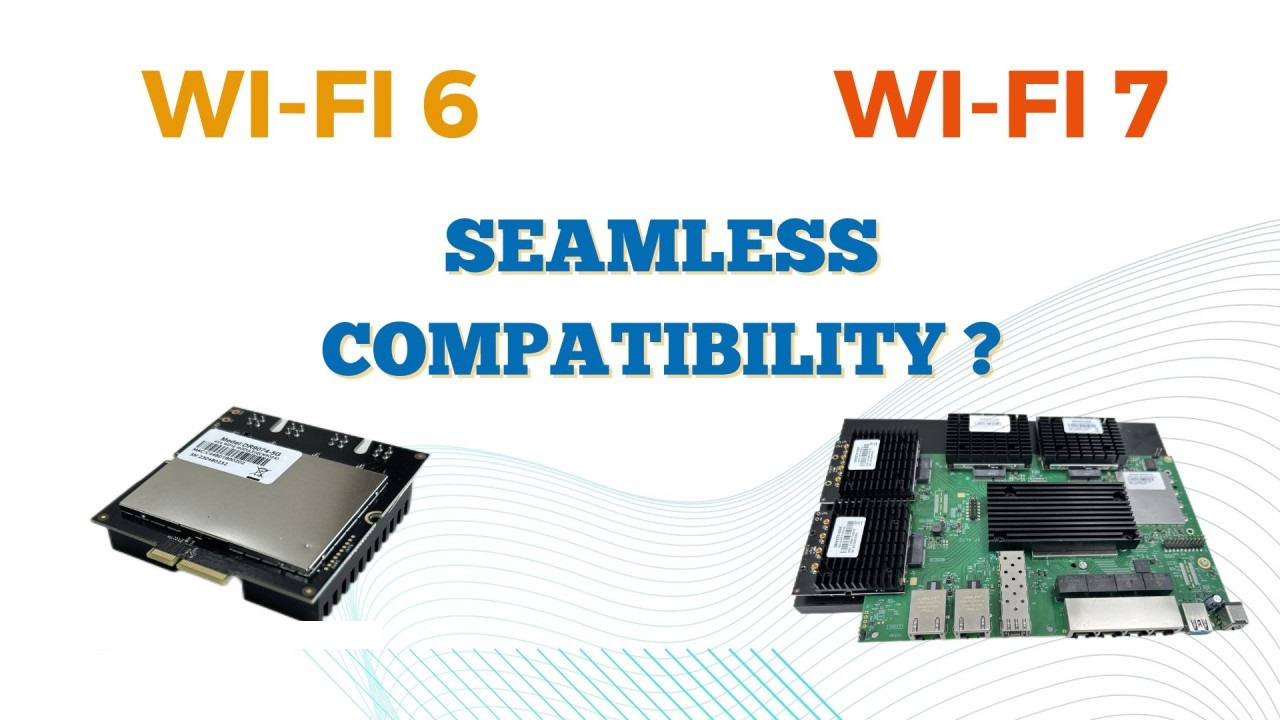
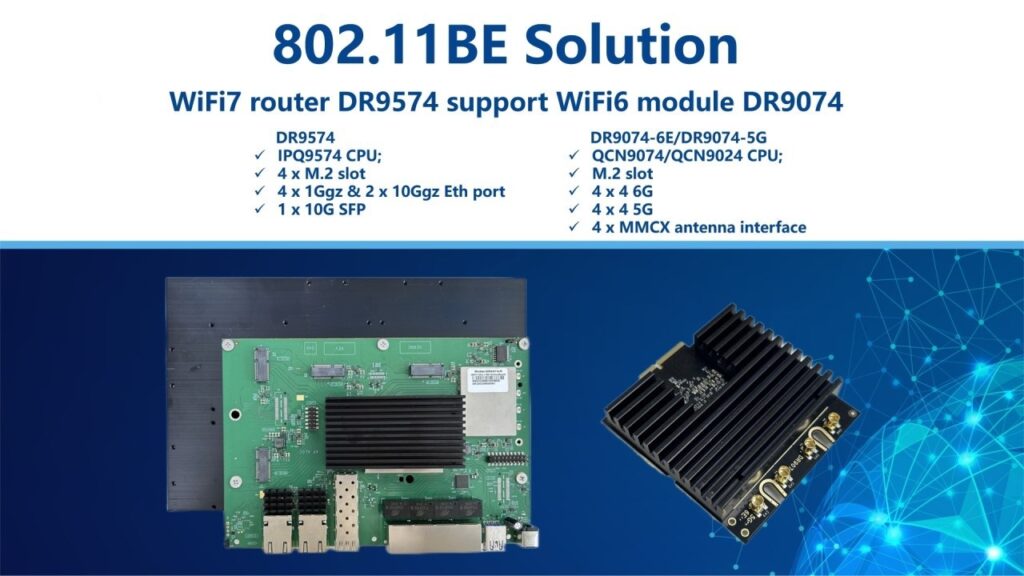
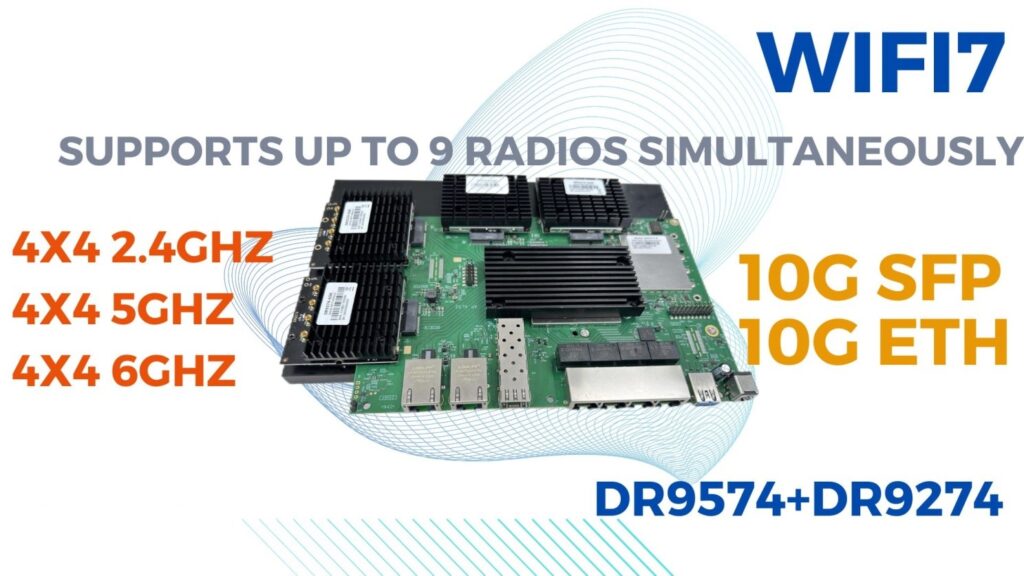
Wi-Fi 7 IPQ9574 QCN9074 Does the WiFi 7 IPQ 9574 Platform Support WiFi6 QCN 9074 Card?

In the realm of wireless networking, compatibility is key to ensuring smooth transitions and optimal performance. With the emergence of the WiFi7 platform DR9574 featuring the powerful IPQ9574 chipset alongside the versatile QCN9074, many wonder: does this cutting-edge platform support backward compatibility with WiFi6 cards like the DR9074? Let’s delve into this compatibility aspect.

Exploring Compatibility with WiFi6 Card DR9074

The DR9574 WiFi7 platform by Wallys, powered by the robust IPQ9574 chipset and complemented by the QCN9074, represents a pinnacle of wireless technology innovation. But what about its compatibility with WiFi6 cards such as the DR9074?

524WiFi engineering prowess ensures that the DR9574 WiFi7 platform seamlessly integrates with WiFi6 cards like the DR9074. Through meticulous optimization and firmware enhancements, Wallys’ software team has facilitated backward compatibility, allowing customers to leverage existing WiFi6 infrastructure alongside the latest WiFi7 advancements.

By supporting backward compatibility with WiFi6 cards like the DR9074, the DR9574 WiFi7 platform empowers customers with unparalleled versatility and flexibility in their network deployments. Whether upgrading to WiFi7 or expanding existing WiFi6 networks, customers can seamlessly integrate both technologies to meet their evolving connectivity needs.

With the DR9574 WiFi7 platform’s backward compatibility with WiFi6 cards like the DR9074, Wallys enables customers to unlock new capabilities and possibilities in their wireless networks. Whether it’s enhancing throughput, extending coverage, or improving network efficiency, the seamless integration of WiFi6 and WiFi7 technologies opens doors to new opportunities for innovation and growth.

How to configure the DR9074(QCN9074) card on DR9574(IPQ9574) platform?

Kindly note DR9074 only used on pcie3 slot

If you want use DR9074-5G, you can under uboot:

setenv machid 8050001

setenv bootargs ‘console=ttyMSM0,115200n8 ubi.mtd=rootfs root=mtd:ubi_rootfs rootfstype=squashfs rootwait cnss2.bdf_pci3=0xa0’

saveenv

than reset, you can use DR9074-5G;

if you want use DR9074-6G, should change 0xa0 to 0xa2.

In the ever-evolving landscape of wireless networking, seamless compatibility between different generations of technology is essential. With the DR9574 WiFi7 platform’s backward compatibility with WiFi6 cards like the DR9074, Wallys reaffirms its commitment to providing customers with cutting-edge solutions that seamlessly integrate with existing infrastructure while embracing the advancements of tomorrow.

524WiFi is dedicated to continuous innovation, constantly pushing the boundaries of WiFi technology. In addition to its hardware products, Wallys also offers a range of ODM/OEM services, including:

Customization: Wallys can customize its WiFi 5/6/7 products and embedded boards to meet the specific needs of its customers.

Engineering support

Testing and certification

Posted on

Wi-Fi 6 and Wi-Fi 7: Pioneering a New Era in Industrial Communication

IPQ9574 with QCN9274 Solution in Industrial Communication | Wi-Fi 6 and Wi-Fi 7: Leading the Way in Industrial Communication Innovation

As the demand for efficient and reliable communication in the industrial sector continues to grow, wireless communication technology is evolving rapidly. Wi-Fi 6 and Wi-Fi 7, as the latest generations of wireless communication standards, bring about a series of revolutionary changes, offering new possibilities for industrial communication applications.

Innovations of Wi-Fi 6 and Wi-Fi 7

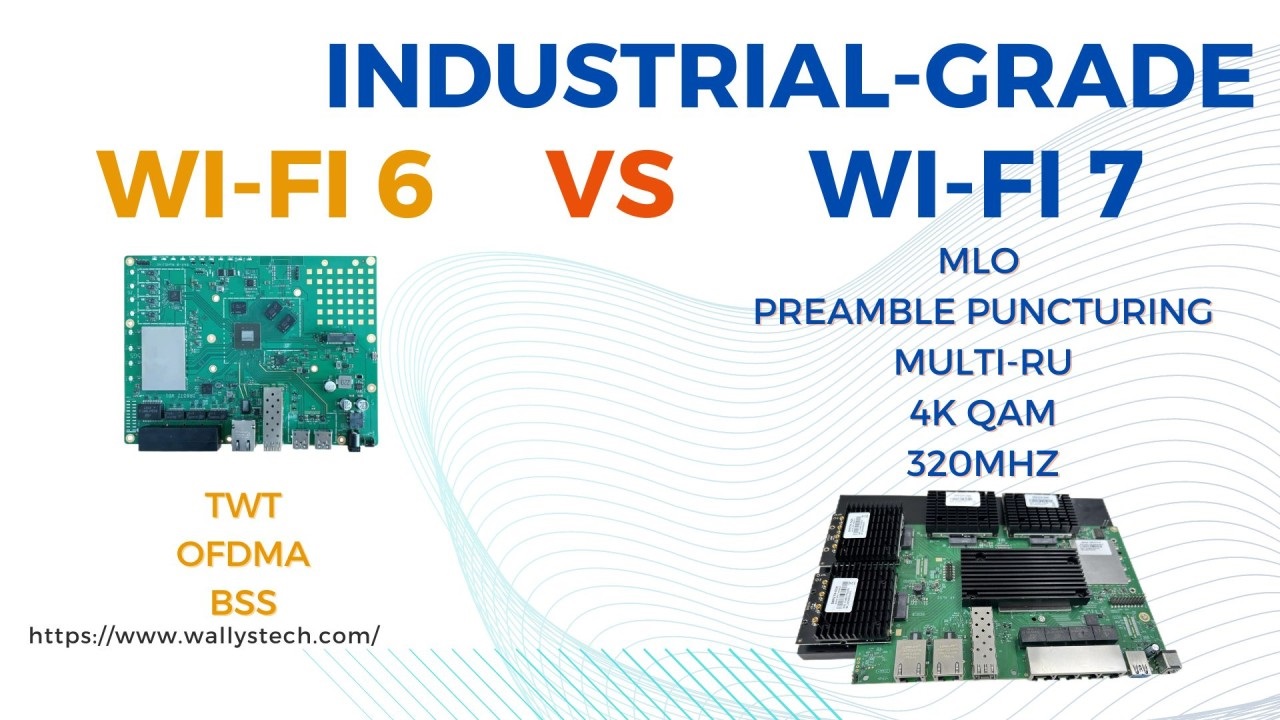
The Wi-Fi 6 standard (802.11ax) and Wi-Fi 7 standard (802.11be) have made significant advancements in the field of wireless communication. Compared to previous Wi-Fi standards, they deliver higher data transfer rates, lower latency, and increased network capacity. Specifically:

– Wi-Fi 6 supports data transfer rates of up to 9.6 Gbps, nearly 50% faster than its predecessor Wi-Fi 5. It introduces numerous new features such as OFDMA (Orthogonal Frequency Division Multiple Access), BSS Color, TWT (Target Wake Time), significantly enhancing network performance and stability.

– Wi-Fi 7 represents a groundbreaking leap forward. With a theoretical maximum data transfer rate of 46 Gbps, it surpasses Wi-Fi 6 by several folds. Additionally, Wi-Fi 7 reduces latency to 1/100th of Wi-Fi 6, offering greater network capacity and enhanced connectivity stability.

New Possibilities for Industrial Communication

The emergence of Wi-Fi 6 and Wi-Fi 7 brings forth a multitude of new possibilities for industrial communication applications. Firstly, the high-speed, low-latency connectivity enables efficient data exchange and control in industrial automation systems, IoT devices, and smart manufacturing applications.

Moreover, the increased network capacity and improved connectivity stability allow industrial sensors and monitoring devices to transmit data more reliably, facilitating smarter production and management. For instance, in smart warehousing and logistics systems, Wi-Fi 6 and Wi-Fi 7 enable real-time data monitoring and control, enhancing warehouse efficiency and logistics accuracy.

Future Outlook

In the future, as Wi-Fi 6 and Wi-Fi 7 technologies mature and become more widespread, we can anticipate further innovations and developments in industrial communication applications. For example, smart manufacturing systems will achieve more efficient production process control, smart logistics systems will realize more accurate inventory management, and smart building systems will implement more intelligent energy management.

Wallys’ Wi-Fi 5, 6, 7 Solutions

As a leading provider of wireless communication solutions, Wallys is committed to offering advanced Wi-Fi technology and services. Our Wi-Fi 5, 6, 7 solutions not only deliver leading performance and stability but also support a wide range of industrial applications, providing reliable communication connections and intelligent solutions for our customers.

At Wallystech, we specialize in software, hardware, and antenna development. We believe we can assist clients in achieving their electronic product development and manufacturing needs comprehensively.

DR5018-IPQ5018 WiFi 6 Routerboard with 2.4GHz and BT5.1 Support:

Tailored for high-bandwidth applications in demanding environments Integration of BT5.1 Radio moduleDual-core ARM 64bit A53 processor On board 2.4GHz radio supporting up to 573Mbps data ratesM.2 card slots for 5G modules and WiFi 6E cards Openwifi support for enhanced flexibility

DR6018-IPQ6010 WiFi 6 Routerboard with Dual-Band Support:

Equipped with Qualcomm-Atheros IPQ6010 chipsetQuad-core ARM 64bit A53 processor Supports Dynamic Frequency Selection (DFS) for optimized wireless performance Compatibility with 5G connectivity and WiFi 6E cards QSDK support for development and customization

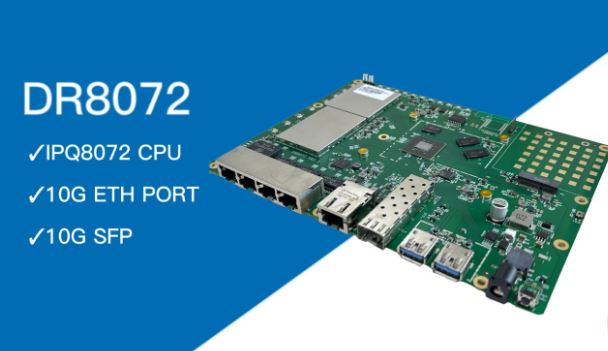
DR8072-IPQ8072 Dual-Band WiFi 6 Routerboard:

Powered by Qualcomm Atheros IPQ8072A AR Quad Core CPU Supports 11ax TX Beamforming, MU-MIMO DL and UL, and OFDMA DL and UL Dynamic Frequency Selection (DFS) support for improved spectrum utilization

DR8074-IPQ8074 WiFi 6 Routerboard with 2.4GHz Support:

Features Qualcomm Atheros IPQ8074A AR Quad Core CPUSupports 11ax TX Beamforming and MU-MIMO DL and ULTri-band support for versatile connectivity options

In addition to WiFi 6 offerings, Wallys also provides WiFi 7 solutions tailored to meet evolving wireless networking demands. Notable offerings in this category include:

DR9274-QCN9274|QCN6274 WiFi7 Single Band 5G:

Customized for single-band 5G applications Supports up to 4×4 MU-MIMO and 4096-QAMWide temperature operating range for industrial and commercial grades

DR9274-QCN9274|QCN6274 WiFi7 Single Band 6G:

Specifically designed for single-band 6G requirementsBoasts a 4T4R (4×4) MU-MIMO 6GHz solution

DR9274-QCN9274|QCN6274 WiFi7 Dual Band Dual Concurrent-2.4G&5G:

Ideal for dual-band, dual-concurrent operation in both 2.4G and 5G frequencies

DR9274-QCN9274|QCN6274 WiFi7 Dual Band Dual Concurrent-5G&6G:

Tailored for dual-band, dual-concurrent operation in 5G and 6G frequencies

WiFi7 Platform DR9574-IPQ9574/IPQ9554:

A robust platform featuring the Qualcomm IPQ9574, designed specifically for industrial WiFi 7 router applications

As the need for high-bitrate streaming and online gaming continues to rise, Wi-Fi 7 is increasingly becoming a necessity, particularly for those seeking top-notch wireless networking performance.

Posted on

5 Things to Know about Compex WiFi 7 WLE7002E25

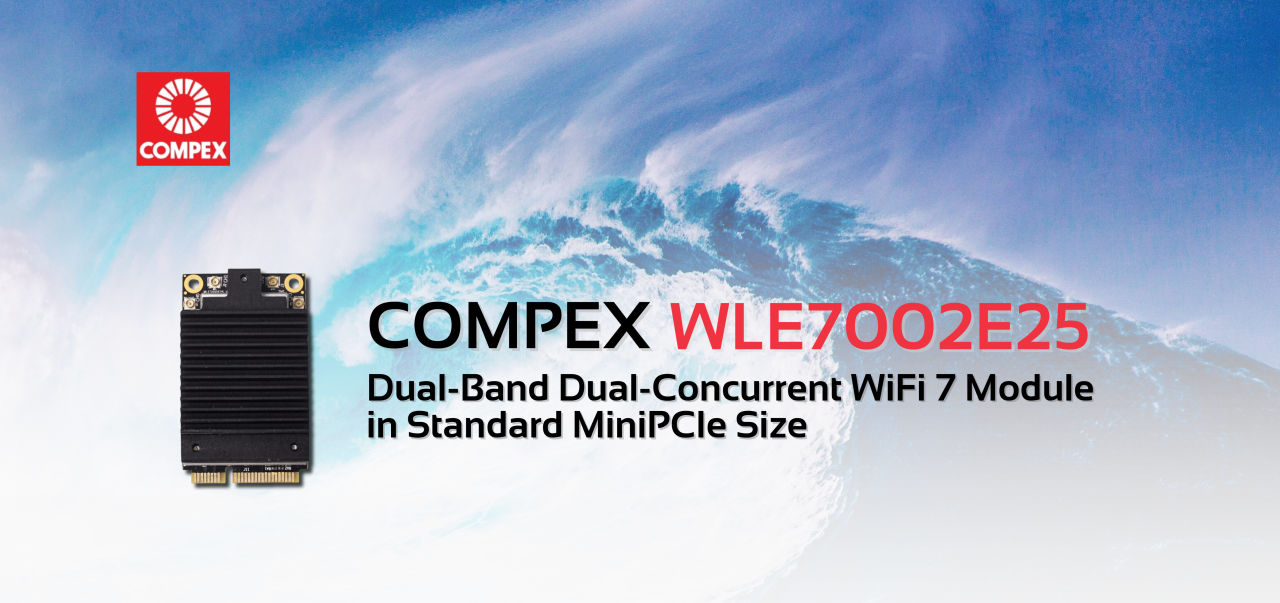
In today’s hyper-connected world, reliable and high-speed wireless connectivity is no longer a luxury, but a necessity. WiFi standards have evolved rapidly. WiFi 6, which has been around for only a few years, is now being replaced by WiFi 7 or IEEE 802.11be. Equipment manufacturers are now rushing to phase in WiFi 7 products. Compex has released its latest WiFi 7 module WLE7002E25 to help shorten time to market. The Compex WLE7002E25 is a dual band concurrent 2×2 2.4GHz and 2×2 5GHz radio based on Qualcomm’s Waikiki high performance WiFi 7 chipset which is capable of over 10Gbps raw data rate. It is in a stardard miniPCIe form factor.

1. Standard MiniPCIe Form Factor

The standard miniPCIe footprint means that WLE7002E25 is readily compatible with existing systems and designs, particularly customers whose devices have been using WiFi 4 or WiFi 5 standard miniPCIe module. This simplifies integration since device manufacturers do not need to make modifications on their hardware to support a new generation WiFi module, thus reduces development costs and accelerates time-to-market.

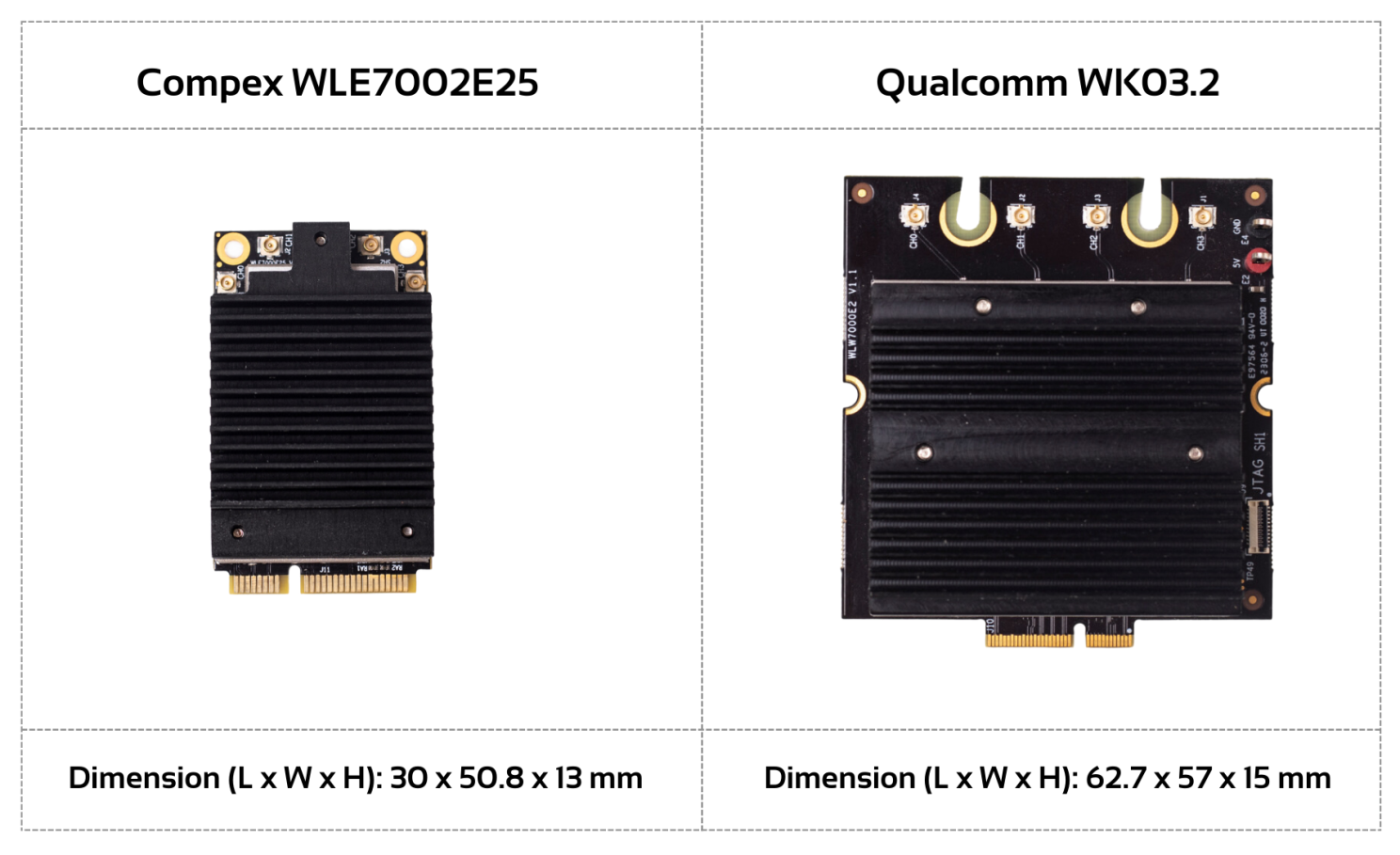
Below diagram shows the dimension difference between Qualcomm’s high performance Waikiki M.2 E-key reference design and Compex’s standard size miniPCIe module using the same Waikiki chipset:

2. Lower Power Consumption, Impressive Transmit Power

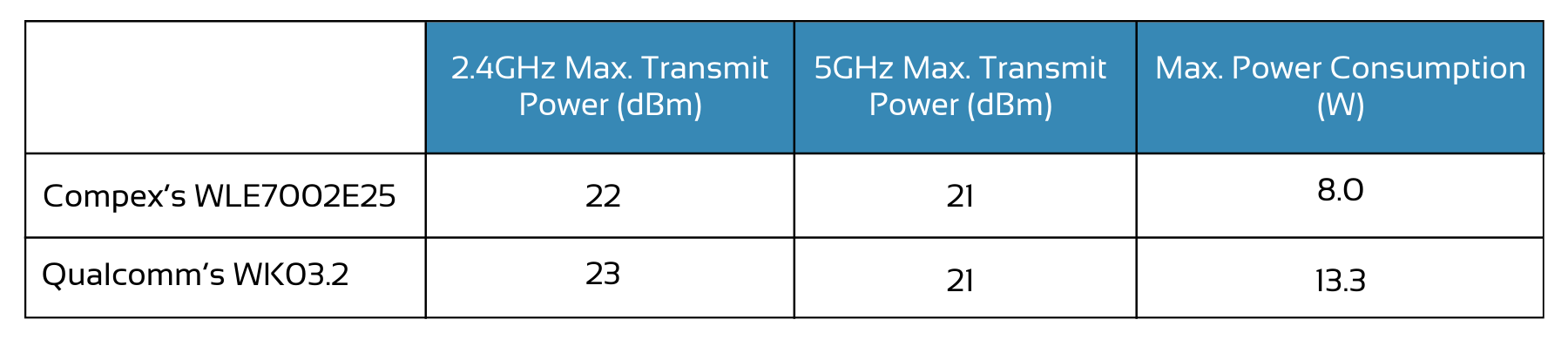
Compex’s RF engineers set themselves the twin targets of condensing the Qualcomm reference design by about 50% to an industrial standard form factor, as well as reducing its power consumption significantly. Compared with the high performance Qualcomm reference design, Compex is able to achieve the size and consumption targets with a little loss in performance. The following is a comparison of the RF power outputs and consumption between Compex WLE7002E25 and QualcommWK03.2 reference board.

3. Multi-Link Operation (MLO)

An Important differentiator of WiFi 7 to WiFi 6 is MLO (Multi Link Operation). This allows a client to connect to the AP through multiple bands simultaneously. This has significant advantage in reducing latency. Latency is of critical importance to interactive applications such as games, robotics, real-time translation, teleconferencing and etc.

Compex’s WLE7002E25 supports MLO between its 2.4GHz and 5GHz bands. It also implements MLO signals between adapters to support MLO between the WLE7002E25 and other WiFi 7 modules such as Compex’s 4×4 6GHz module WLE7000E6.

4. Open Source Ath12k Support on Foreign Platform

Compex Systems recognize the importance of supporting customers’ products integration with open source ath12k. Ath12k integration support for non-Qualcomm platforms such as x86 embedded boards is also available.

5. Competitive Pricing

Compex’s WLE7002E25 is only marginally more expensive than WiFi 6 products of similar configurations. This is to encourage direct migration from WiFi 4 and WiFi 5 to WiFi 7, skipping the WiFi 6 development time and costs.

Investing in the Future

The Compex WLE7002E25 represents more than just a Wi-Fi module; it’s an investment in the future. With its cutting-edge technology, comprehensive features, and diverse application potential, the Compex WLE7002E25 stands poised to rewrite the rules of wireless connectivity.