Posted on

Struggling with High-Density Networks? WiFi 7 on Ubuntu Has the Answer

How WiFi 7 Network Cards on Ubuntu Can Future-Proof Your Networking Needs

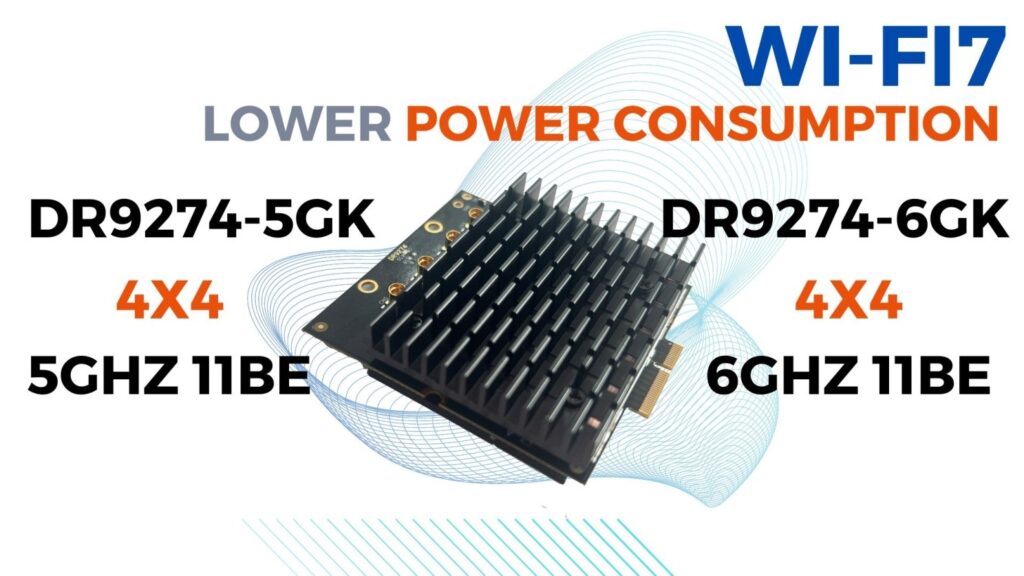
In the fast-evolving world of wireless technology, staying ahead means embracing innovation. WiFi 7, the latest generation of wireless networking, is not just an incremental upgrade—it’s a game changer. Combined with the flexibility and reliability of Ubuntu, deploying WiFi 7 network cards can open doors to unparalleled performance, adaptability, and security. Let’s explore how this powerful duo can address the growing demands of modern networks.

Meeting High-Performance Networking Demands

  1. High-Speed Local Area Networks (LANs) Enterprises require robust and ultra-fast LANs to handle data-intensive operations. WiFi 7’s Multi-Link Operation (MLO) and wider channel bandwidths deliver a seamless, high-speed experience for local connections.
  2. High-Speed Wireless Bridging Connecting remote sites without sacrificing performance is a critical challenge. WiFi 7 enables stable, high-speed wireless bridges, making it ideal for industries like smart cities, ports, and remote offices.
  3. Optimizing Networks in High-Density Scenarios Managing heavy traffic in environments like stadiums, campuses, and smart factories demands superior technology. WiFi 7’s advanced features, such as improved spectral efficiency and enhanced MU-MIMO capabilities, ensure optimal performance even under peak loads.

Why Ubuntu?

Ubuntu, as an open-source operating system, offers unparalleled flexibility for developers and enterprises. Its active community support, security features, and adaptability make it the ideal platform for integrating WiFi 7 network cards. Together, they create an ecosystem where innovation thrives and networks operate at their full potential.

Advantages of WiFi 7 Network Cards on Ubuntu

  • Performance: Exceptional speeds and reduced latency redefine network efficiency.
  • Flexibility: Open-source compatibility allows tailored solutions for unique use cases.
  • Security: Enhanced encryption and network integrity to protect sensitive data.

Why 524WiFi?

For 23 years, 524WiFi and Wallys R&D teams have specialized in WiFi protocols, continuously innovating to meet the needs of industrial and enterprise clients. Whether you’re building cutting-edge WiFi 7 solutions or optimizing existing networks, our team is here to support your goals.

Posted on

Exploring Temperature Resilience in Wi-Fi 7: IPQ5322 vs IPQ9574 for Industrial Use

As Wi-Fi 7 becomes a key component in next-generation networking, choosing the right chipset for enterprise and industrial applications goes beyond performance — it also involves environmental considerations, especially temperature tolerance. Here, we’ll compare Qualcomm’s IPQ5322 and IPQ9574 in terms of their environmental temperature ranges and explore how these specifications align with their applications in Wi-Fi 7 networks.

Environmental Temperature Specifications

Both the IPQ5322 and IPQ9574 support Wi-Fi 7, bringing the latest in high-speed, low-latency connectivity. Their environmental temperature specifications make them resilient options for various climates, ensuring dependable operation in both controlled indoor environments and some semi-industrial outdoor settings.

IPQ5322 Temperature Specifications:

  • Operating Temperature: -20°C to 70°C
  • Storage Temperature: -40°C to 90°C

IPQ9574 Temperature Specifications:

  • Operating Temperature: -20°C to 70°C
  • Storage Temperature: -40°C to 90°C

Both chipsets offer robust environmental specifications, allowing them to withstand moderate temperature fluctuations and support reliable operation across various application settings.

Practical Applications and Environmental Considerations

With Wi-Fi 7 as a standard feature, the IPQ5322 and IPQ9574 are both optimized for high-demand connectivity. Here’s how they differ in terms of ideal use cases:

Indoor Enterprise Environments

  • Applications: Corporate offices, education centers, and healthcare facilities.
  • Why IPQ5322?: With its reliable temperature range and balanced performance, the IPQ5322 is perfect for indoor enterprise networks that demand Wi-Fi 7 speed and efficiency without the need for additional industrial-grade resilience. It’s cost-effective for large deployments while supporting high-speed connectivity in controlled indoor environments.

Outdoor and Semi-Industrial Environments

  • Applications: Warehouses, transit stations, and smart cities.
  • Why IPQ9574?: The IPQ9574’s Wi-Fi 7 capabilities and processing power make it ideal for demanding environments that experience variable conditions. For semi-industrial or outdoor applications where data throughput and robust connectivity are essential, the IPQ9574 ensures high performance alongside temperature resilience.

Key Differences Beyond Temperature Range

Although they share similar environmental specs, these chipsets have additional distinctions:

Wi-Fi 7 Capabilities

  • Both Chipsets: Support for Wi-Fi 7 delivers faster speeds, lower latency, and improved device handling.
  • Performance Edge: The IPQ9574’s enhanced processing power and high data throughput make it better suited to data-heavy applications in dense environments.

Optimized for Varying Environments

  • IPQ5322: Geared toward cost-effective deployments where indoor temperature control is standard.
  • IPQ9574: Ideal for applications requiring added resilience and top-tier performance in semi-industrial and outdoor environments.

524WiFi Solutions for Wi-Fi 7 Deployments

524WiFi and Wallys offers router boards featuring both IPQ5322 and IPQ9574 chipsets, providing options for tailored Wi-Fi 7 solutions:

  • DR5322: Built around the IPQ5322, this board is a cost-effective solution for enterprise Wi-Fi 7 networks. It ensures smooth operation within standard indoor temperature conditions, making it ideal for large-scale enterprise applications with Wi-Fi 7 performance.
  • DR9574: Equipped with the IPQ9574, this board is optimized for data-intensive tasks. With multiple M.2 slots and 10G Ethernet ports, it excels in environments requiring robust Wi-Fi 7 connectivity and higher data handling, such as smart cities and industrial IoT setups.

Conclusion

While both the IPQ5322 and IPQ9574 offer Wi-Fi 7 and the same temperature tolerances, their unique performance capabilities make them ideal for different applications. For indoor, enterprise-grade connectivity, the IPQ5322 is the economical choice, while the IPQ9574 is suited for high-performance needs in semi-industrial or outdoor installations.

Posted on

IPQ 9574: Does DR9574 Router Powered by Qualcomm IPQ9574 Support MLO?

524WiFi Wi-Fi 7 Router Powered by Qualcomm IPQ9574 and QCN9274: Enhanced Network Experience with MLO Technology

MLO (Multi-Link Operation) is a key technology in Wi-Fi 7 that allows data to be transmitted across multiple wireless links simultaneously, significantly improving network performance, stability, and efficiency. Specifically, MLO enables devices to transmit and receive data on multiple frequency bands (2.4GHz, 5GHz, and 6GHz) at the same time, rather than being limited to a single band.

Key Roles of MLO in Wi-Fi 7:

  • Increased Throughput: MLO allows devices to utilize multiple links for data transmission, greatly boosting bandwidth and data transfer speeds, especially for high-bandwidth applications like 4K/8K streaming, cloud gaming, and VR/AR.
  • Reduced Latency: Parallel transmission across multiple links accelerates data transfer, lowering latency, which is crucial for real-time applications like online gaming and video conferencing.
  • Enhanced Reliability: MLO can automatically switch to other links if one experiences interference or congestion, ensuring connection stability, especially in crowded environments or when devices are far from the router.
  • More Efficient Spectrum Usage: MLO dynamically distributes traffic across different links, improving spectrum resource utilization and reducing wireless congestion.

Why Many Applications Need MLO:

  • High Bandwidth Demands: As 4K/8K video and immersive media become more prevalent, applications increasingly require higher bandwidth. MLO’s multi-link capability meets these demands.
  • Low Latency Requirements: Applications like cloud gaming and video conferencing require very low latency. MLO can significantly reduce latency through parallel transmission.
  • Reliability: Smart home and industrial automation applications need stable connections. MLO’s multi-link mechanism ensures stability even if one link fails.

About IPQ9574 and QCN9274:

  • Qualcomm IPQ9574: This powerful SoC (System on Chip) is designed for high-performance networking applications, providing robust processing power and advanced features to support next-gen Wi-Fi 7 capabilities. Its architecture is optimized for handling multiple data streams, ensuring seamless connectivity and improved network efficiency.
  • Qualcomm QCN9274: Qualcomm Wi-Fi 7 ‘Waikiki’ series radio solution.

In summary, MLO is a core technology in Wi-Fi 7 that enhances network experience by providing higher throughput, lower latency, and greater reliability, making it essential for modern high-performance applications.

524WiFi Solution:

524WiFI and Wallystech’s Wi-Fi 7 router DR9574 supports MLO functionality with the DR9274 Wi-Fi 7 card, fulfilling diverse Wi-Fi project needs:

  • DR9574 supports 3 DR9274 single cards: 2.4G, 5G, and 6G can operate simultaneously.
  • DR9574 supports one DBDC card: DR9274-5G6G
Posted on

Wi-Fi 7 Unleashed: Explore Qualcomm’s 4×4 Tri-Band Powerhouse!

Exploring Wi-Fi 7 4×4 Qualcomm Triband Solutions

Wi-Fi 7, also known as 802.11be, marks a significant leap forward in wireless networking technology, offering enhanced performance, higher throughput, and lower latency compared to its predecessors. With features like 320 MHz channel bandwidth, 4K-QAM modulation, and Multi-Link Operation (MLO), it is poised to deliver speeds up to 46 Gbps, ideal for the ever-increasing demands of modern networks.

This article explores several Qualcomm-based Wi-Fi 7 4×4 triband solutions from 524WiFi and Wallys Communications, highlighting their key features and applications.

1. DR9574: Tri-Band Routerboard with Qualcomm IPQ9574

  • Overview: The DR9574 routerboard is equipped with the Qualcomm IPQ9574 chipset and features 4×4 MU-MIMO technology, offering robust performance across three bands (2.4 GHz, 5 GHz, and 6 GHz). It supports four M.2 slots, which provides significant flexibility for module integration and customization.
  • Specifications:
  • Chipset: Qualcomm IPQ9574 and QCN9274
  • Bands: Tri-band (2.4 GHz, 5 GHz, 6 GHz)
  • Ports: 2x 10G Ethernet and 4x 1G Ethernet ports
  • Applications: Suitable for high-performance networking applications such as routers, access points, and enterprise-level solutions, the DR9574 is designed for environments where both speed and reliability are critical.
  • Use Case: It is ideal for deployment in offices, large homes, or enterprise environments that demand simultaneous high-speed connections across multiple devices.

More about DR9574

IPQ9574 QCN9274

2. DR9274 Series: Single-Band Wi-Fi 7 M.2 Modules

  • Overview: The DR9274 series consists of three single-band Wi-Fi 7 cards—each catering to a different frequency band (2.4 GHz, 5 GHz, and 6 GHz). These M.2 modules provide high-speed 4×4 MU-MIMO functionality, enabling better coverage and increased data throughput in densely populated environments.
  • Key Models:
  • DR9274-2G: Focuses on the 2.4 GHz band, which is ideal for devices requiring long-range connectivity with moderate data requirements.
  • DR9274-5G: Optimized for the 5 GHz band, offering a balance between range and speed, perfect for most modern devices.
  • DR9274-6G: Leverages the 6 GHz band, providing ultra-fast connectivity with minimal interference, designed for future-proofing wireless networks.
  • Specifications:
  • Chipset: Qualcomm QCN9274 and QCN6274
  • Form Factor: M.2 slot, ensuring easy integration into a wide range of devices.
  • 4×4 MU-MIMO: Delivers enhanced performance for demanding applications, such as streaming, gaming, and large file transfers.
  • Use Case: The DR9274 series is ideal for laptops, embedded systems, and other devices requiring high-performance wireless modules in specialized applications.

More about DR9274-2G

More about DR9274-5G

More about DR9274-6G

3. DR5332: Qualcomm IPQ5332 Dual-Band Routerboard

  • Overview: The DR5332 is a dual-band routerboard that comes with a Qualcomm IPQ5332 chipset, offering support for 2.4 GHz and 5 GHz bands. It is designed for network solutions that require fast, stable, and efficient connections.
  • Specifications:
  • Chipset: Qualcomm IPQ5332
  • Ports: 10G SFP for high-speed fiber connections, making it ideal for data-heavy applications.
  • Memory: 1 GB DDR4, enhancing performance for processing-intensive tasks.
  • Use Case: This model is well-suited for small- to medium-sized business environments, especially where high data throughput and fiber connectivity are crucial.

More about DR5332

IPQ5332 4×4 Solution

Conclusion

The Qualcomm Wi-Fi 7 4×4 triband solutions provide a comprehensive range of products tailored to meet the needs of high-performance networking applications. From single-band M.2 modules to advanced routerboards supporting multiple frequencies, 524WiFi’ lineup offers flexibility and scalability for various industries and use cases.

Posted on

WiFi 7 Chips IPQ 5332 and 9574: In-Depth comparison

In-Depth Analysis of IPQ5332 and IPQ9574: Technical Specifications and Applications of WiFi 7 Chips

Introduction

The advent of WiFi 7 represents a significant leap forward in wireless communication technology. As leading WiFi 7 chip solutions, the IPQ5332 and IPQ9574 are at the forefront of this technological revolution. This article will provide an in-depth analysis of these two chips’ technical specifications and their advantages in real-world applications, helping you understand how they are driving the future of wireless networks.

Overview of IPQ5332 and IPQ9574

IPQ5332 and IPQ9574 are high-performance WiFi 7 chipsets designed to deliver exceptional speed, coverage, and connectivity stability. Each chip is optimized for different application scenarios and needs, making them crucial components for achieving next-generation wireless network performance.

Technical Specifications

1. IPQ5332

  • Frequency Bands: Supports 2.4GHz, 5GHz, and 6GHz bands to meet all WiFi 7 frequency requirements.
  • Channel Bandwidth: Supports up to 320MHz channel bandwidth for higher data transfer rates.
  • Multi-User MIMO (MU-MIMO): Features 8×8 MU-MIMO technology for efficient simultaneous data transfer with multiple devices.
  • OFDMA (Orthogonal Frequency Division Multiple Access): Enhances spectral efficiency, reduces latency, and improves performance in multi-user environments.
  • TWT (Target Wake Time): Supports TWT technology to extend battery life, especially beneficial for IoT devices.
WIFI7 FEATURE:MLO

2. IPQ9574

  • Frequency Bands: Also supports 2.4GHz, 5GHz, and 6GHz bands for comprehensive coverage.
  • Channel Bandwidth: Provides up to 320MHz channel bandwidth for ultra-fast data transfer.
  • Multi-Link Operation (MLO): Utilizes MLO technology for simultaneous connections across multiple frequency bands, increasing bandwidth and stability.
  • Enhanced OFDMA: Improves the efficiency of OFDMA, optimizing network capacity and latency performance.
  • Low Latency Features: Designed for low-latency applications such as AR/VR and high-frequency trading systems.
DR9574 INDOOR AP-524WIFI7

Application Scenarios

1. Enterprise Network Solutions

The high-performance characteristics of IPQ5332 and IPQ9574 make them ideal for enterprise network environments. Enterprises require stable, high-speed wireless connections to support numerous concurrent devices and data-intensive applications. IPQ5332’s high bandwidth and MU-MIMO capabilities effectively handle high-density device environments, while IPQ9574’s MLO and low-latency features ensure exceptional performance for enterprise applications.

2. Smart Home

In smart home scenarios, IPQ5332 and IPQ9574 can support numerous smart devices simultaneously, ensuring reliable operation. IPQ5332’s TWT functionality is crucial for extending battery life of smart home devices, while IPQ9574’s high throughput and low latency features enhance user experience, allowing smart home devices to process data efficiently and respond promptly to user commands.

3. Internet of Things (IoT)

IoT devices require stable connectivity in diverse environments. IPQ5332’s efficient OFDMA technology and TWT features make it an ideal choice for IoT devices, effectively managing multiple device connections while extending battery life. IPQ9574 excels in applications requiring ultra-low latency, such as smart monitoring and real-time data collection.

4. High-Density Wireless Environments

In high-density environments such as large public venues, conference centers, or sports arenas, IPQ5332 and IPQ9574’s high bandwidth and multi-user support features address network congestion issues. IPQ5332’s MU-MIMO and IPQ9574’s MLO technology ensure that users experience stable, high-speed network performance even during peak times.

Conclusion

The IPQ5332 and IPQ9574 represent the cutting edge of WiFi 7 technology, offering superior speed, broader coverage, and reduced latency. Whether for enterprise networks, smart homes, IoT applications, or high-density environments, these chipsets provide outstanding performance.

Posted on

Network Deployment in Industrial Parks: Comparative Analysis of IPQ9574 and IPQ4029

Introduction

As industrial parks evolve into smart, interconnected hubs, the demand for robust and reliable wireless networks has never been greater. Two prominent chipsets that have emerged as frontrunners in this space are Qualcomm’s IPQ9574 and IPQ4029. This article delves into a comparative analysis of these two chipsets, focusing on their application in industrial parks.

Overview of IPQ9574 and IPQ4029

IPQ9574 is a high-performance chipset designed for WiFi 7 solutions, offering advanced features such as higher throughput, improved latency, and enhanced multi-device connectivity. It is particularly suitable for demanding environments where performance and reliability are critical.

IPQ4029, on the other hand, is a versatile chipset that caters to WiFi 5 applications. While it does not boast the latest features of WiFi 7, it remains a solid choice for many industrial applications due to its proven stability and cost-effectiveness.

Performance and Throughput

One of the key differentiators between the IPQ9574 and IPQ4029 is performance. The IPQ9574, with its support for WiFi 7, offers significantly higher throughput, making it ideal for high-density environments commonly found in industrial parks. It can handle multiple high-bandwidth applications simultaneously, ensuring seamless operation of various industrial processes.

In contrast, the IPQ4029, while capable, does not match the throughput levels of the IPQ9574. It is more suited for environments where the demand for data bandwidth is moderate. This makes it a cost-effective solution for less demanding applications.

Latency and Reliability

Latency is a critical factor in industrial applications where real-time communication is essential. The IPQ9574 excels in this regard, providing lower latency compared to the IPQ4029. This translates to faster response times and more reliable communication between devices, which is crucial for automated systems and real-time monitoring.

The IPQ4029, although reliable, has higher latency compared to the IPQ9574. For applications where real-time performance is not as critical, the IPQ4029 remains a viable option.

Scalability and Flexibility

Industrial parks often require scalable network solutions that can grow with their needs. The IPQ9574, with its advanced features, offers greater scalability, supporting a larger number of connected devices without compromising performance. This makes it ideal for large-scale deployments where future-proofing is a priority.

The IPQ4029 offers adequate scalability for smaller to medium-sized deployments. Its flexibility and cost-effectiveness make it a suitable choice for industrial parks that do not foresee rapid expansion in their network requirements.

Power Efficiency

Power efficiency is another crucial consideration in industrial settings. The IPQ9574, despite its high performance, is designed to be power-efficient, ensuring that devices can operate for extended periods without excessive energy consumption. This is particularly important in environments where power availability may be limited.

The IPQ4029 is also known for its power efficiency, though it does not match the levels of the IPQ9574. For applications where power efficiency is a critical factor but extreme performance is not required, the IPQ4029 offers a balanced solution.

Cost Considerations

Cost is always a factor in network deployment decisions. The IPQ9574, with its advanced features and superior performance, comes at a higher price point compared to the IPQ4029. For industrial parks with demanding network requirements and the budget to match, the IPQ9574 represents a sound investment.

The IPQ4029, being more affordable, offers excellent value for industrial parks where budget constraints are a primary concern. It provides reliable performance at a lower cost, making it an attractive option for cost-sensitive deployments.

Wallys Solutions: IPQ9574 and IPQ4029

Wallys offers advanced solutions based on both IPQ9574 and IPQ4029 chipsets, catering to various industrial needs. The DR9574 board leverages the power of the IPQ9574 chipset, providing unparalleled performance and scalability for high-demand environments. It features 4×4 2.4G, 4xM.2 slots, and multiple Ethernet ports, making it a versatile choice for industrial applications. More details can be found here.

For those seeking a cost-effective solution without compromising on reliability, the DR40X9 board based on the IPQ4029 chipset is an excellent choice. It supports dual-band 802.11AC Wave2 MU-MIMO and onboard WiFi radio, and can be embedded with LTE. This makes it a suitable option for industrial parks with moderate network demands. More information is available here.

For inquiries and custom solutions, contact the 524WiFi sales team please

Conclusion

In summary, both the IPQ9574 and IPQ4029 have their merits when it comes to network deployment in industrial parks. The IPQ9574 is the clear choice for high-performance, scalable, and future-proof networks, suitable for environments with demanding applications and high device density. The IPQ4029, while less powerful, offers a cost-effective and reliable solution for industrial parks with moderate network demands and tighter budgets.

Choosing between these two chipsets ultimately depends on the specific needs and priorities of the industrial park in question. By carefully considering factors such as performance, scalability, power efficiency, and cost, industrial parks can make an informed decision that best meets their current and future networking requirements.

Posted on

IPQ9574 vs. IPQ4019 in Real-World Applications

Interconnectivity of Industrial Equipment: IPQ9574 vs. IPQ4019 in Real-World Applications

In the rapidly evolving landscape of industrial automation and the Industrial Internet of Things (IIoT), robust and reliable network connectivity is crucial. The choice of a network chipset can significantly impact the performance, scalability, and reliability of industrial equipment. This article compares two popular Qualcomm chipsets, the IPQ9574 and IPQ4019, examining their suitability for various industrial applications.

Overview of IPQ9574 and IPQ4019

IPQ9574: The Qualcomm IPQ9574 is a high-performance chipset designed for advanced networking applications, particularly Wi-Fi 7. It features a quad-core Cortex-A53 processor clocked at 2.2 GHz, supporting Wi-Fi 7 (802.11be) with tri-band capabilities, including the new 6 GHz band. It offers enhanced throughput, low latency, and high capacity, making it ideal for dense environments with numerous connected devices.

IPQ4019: The Qualcomm IPQ4019 is a more mature chipset, featuring a quad-core ARM Cortex-A7 processor clocked at 717 MHz. It supports dual-band Wi-Fi 5 (802.11ac) and is widely used in various networking applications due to its balance of performance and cost-effectiveness.

Application 1: High-Performance Industrial Gateways

Industrial gateways act as the central hub for communication between field devices and cloud services. The IPQ9574, with its powerful processing capabilities and tri-band Wi-Fi 7 support, excels in environments requiring high throughput and low latency. It can handle multiple simultaneous connections and data-intensive applications more efficiently than the IPQ4019, which, while reliable, may struggle with high data loads due to its lower processing power and Wi-Fi 5 limitations.

Application 2: Smart Manufacturing

In smart manufacturing, real-time data processing and communication are vital. The IPQ9574’s advanced features enable seamless connectivity and faster data exchange between machines, sensors, and control systems. Its support for Wi-Fi 7 reduces congestion and interference, ensuring reliable performance in a crowded industrial environment. The IPQ4019, while adequate for less demanding applications, may not provide the same level of performance in high-density settings.

Application 3: Factory Automation

Factory automation relies heavily on reliable network connectivity to synchronize operations and improve efficiency. The IPQ9574’s superior processing power and advanced Wi-Fi capabilities offer a significant advantage in these scenarios, ensuring smooth and uninterrupted communication between automated systems. The IPQ4019, though capable, may face challenges in handling the increased data traffic and connectivity demands of a fully automated factory.

Application 4: Warehouse Management

In warehouse management, robust and scalable network solutions are essential to support inventory tracking, automated guided vehicles (AGVs), and other smart systems. The IPQ9574’s high throughput and low latency are beneficial for real-time inventory management and AGV navigation. The IPQ4019 can support basic warehouse operations but may not deliver the same performance in a high-traffic, dynamic environment.

Application 5: Industrial Robotics

Industrial robots require reliable and low-latency connectivity to perform precise operations. The IPQ9574, with its enhanced Wi-Fi 7 support, ensures stable and fast communication, reducing downtime and improving productivity. The IPQ4019, while suitable for less complex robotic applications, may not provide the same level of performance in environments with multiple robots and high data exchange requirements.

Application 6: Smart City Infrastructure

Smart city infrastructure demands robust and scalable network solutions to support various applications, from traffic management to public safety. The IPQ9574’s advanced capabilities make it ideal for handling the high data loads and numerous connections required in smart city deployments. The IPQ4019 can support smaller-scale applications but may struggle with the extensive connectivity and performance demands of a fully developed smart city infrastructure.

Application 7: Remote Industrial Monitoring

Remote monitoring of industrial sites requires reliable and secure network connectivity to ensure continuous data transmission. The IPQ9574’s enhanced processing power and tri-band support provide robust performance for remote monitoring applications, even in harsh environments. The IPQ4019, while reliable, may not offer the same level of performance and scalability for remote monitoring over large areas or multiple sites.

Application 8: High-Density Client Environments

In high-density client environments, such as industrial plants with numerous connected devices, the IPQ9574’s advanced Wi-Fi 7 capabilities and high processing power provide a significant advantage. It can manage more connections simultaneously with lower latency compared to the IPQ4019, which may experience performance bottlenecks in such demanding settings.

Application 9: Interconnectivity of Industrial Equipment

Interconnecting various industrial equipment requires a network solution that can handle diverse communication protocols and high data volumes. The IPQ9574’s superior performance and advanced features make it well-suited for this task, ensuring seamless communication between different types of equipment. The IPQ4019, while capable of supporting basic interconnectivity, may not deliver the same level of performance in more complex and data-intensive environments.

Application 10: Real-World Performance and Scalability

In real-world applications, the scalability and performance of the network solution are critical. The IPQ9574, with its high processing power and advanced Wi-Fi capabilities, offers better scalability and performance for growing industrial networks. The IPQ4019, though cost-effective, may require more frequent upgrades and optimizations to meet the evolving demands of industrial applications.

Wallys Solutions: IPQ9574 and IPQ4029

Wallys offers advanced solutions based on both IPQ9574 and IPQ4029 chipsets, catering to various industrial needs. The DR9574 board leverages the power of the IPQ9574 chipset, providing unparalleled performance and scalability for high-demand environments. It features 4×4 2.4G, 4xM.2 slots, and multiple Ethernet ports, making it a versatile choice for industrial applications. More details can be found here.

For those seeking a cost-effective solution without compromising on reliability, the DR40X9 board based on the IPQ4029 chipset is an excellent choice. It supports dual-band 802.11AC Wave2 MU-MIMO and onboard WiFi radio, and can be embedded with LTE. This makes it a suitable option for industrial parks with moderate network demands. More information is available here.

For inquiries and custom solutions, contact the Wallys sales team at [email protected].

Conclusion

Both the IPQ9574 and IPQ4019 have their strengths and are suited for different types of industrial applications. The IPQ9574, with its advanced features and higher performance, is ideal for demanding environments requiring robust and scalable network solutions. The IPQ4019, on the other hand, provides a reliable and cost-effective solution for less demanding applications. When choosing between the two, it’s essential to consider the specific requirements and constraints of your industrial environment to ensure optimal performance and connectivity.

Posted on

IPQ9574 vs. IPQ6010 in Smart Manufacturing: Which Chipset Leads the Way?

In the rapidly evolving landscape of smart manufacturing, the choice of a chipset can significantly impact the efficiency, reliability, and scalability of industrial applications. Two contenders, Qualcomm’s IPQ9574 and IPQ6010, offer distinct features and capabilities that cater to the demanding needs of modern manufacturing environments. This article delves into a comparative analysis of these two chipsets to determine which one leads the way in smart manufacturing.

Performance and Processing Power

IPQ9574:

  • The IPQ9574 boasts a powerful architecture designed to handle high data throughput and complex processing tasks. With its advanced multi-core CPU and high clock speeds, this chipset ensures seamless performance even under heavy workloads.
  • It supports Wi-Fi 7 (802.11be), which provides significantly higher data rates, improved capacity, and reduced latency compared to previous Wi-Fi generations. This makes the IPQ9574 an ideal choice for applications requiring real-time data processing and high-speed connectivity.

IPQ6010:

  • The IPQ6010, while not as powerful as the IPQ9574, still offers robust performance suitable for many industrial applications. It features a quad-core ARM 64-bit A53 processor clocked at 1.8 GHz, providing sufficient processing power for various tasks.
  • Supporting Wi-Fi 6 (802.11ax), the IPQ6010 ensures reliable and efficient wireless communication, which is crucial for maintaining seamless operations in a smart manufacturing setup.

Connectivity and Network Management

IPQ9574:

  • With its Wi-Fi 7 support, the IPQ9574 offers enhanced network performance, including wider channels, higher capacity, and improved efficiency in dense environments. This is particularly beneficial in manufacturing settings where numerous devices and sensors are connected simultaneously.
  • The chipset also supports advanced network management features, enabling better control and optimization of network resources, which is critical for maintaining smooth operations and minimizing downtime.

IPQ6010:

  • The IPQ6010’s Wi-Fi 6 capabilities provide reliable and efficient connectivity, though it may not match the sheer performance and capacity of Wi-Fi 7. However, for many manufacturing environments, Wi-Fi 6 offers ample performance to handle the required data traffic.
  • It also includes essential network management features, ensuring stable and efficient network operations. While it may not have the advanced capabilities of the IPQ9574, it still provides solid performance for a range of industrial applications.

Scalability and Future-Proofing

IPQ9574:

  • One of the key advantages of the IPQ9574 is its future-proofing potential. With support for the latest Wi-Fi 7 standard, this chipset ensures compatibility with future advancements in wireless technology, making it a long-term investment for smart manufacturing.
  • Its high processing power and advanced features also provide scalability, allowing manufacturers to expand and upgrade their operations without worrying about outgrowing their network infrastructure.

IPQ6010:

  • While the IPQ6010 is based on the older Wi-Fi 6 standard, it still offers a degree of future-proofing for many applications. Wi-Fi 6 is widely adopted and will continue to be relevant for several years, ensuring a stable investment for manufacturers.
  • The chipset’s performance and connectivity features are sufficient for most current manufacturing needs, though it may require upgrades sooner than the IPQ9574 as technology advances.

Application Suitability

IPQ9574:

  • The IPQ9574 is best suited for high-performance, data-intensive applications where real-time processing and ultra-fast connectivity are critical. Examples include advanced robotics, real-time quality control systems, and extensive sensor networks.

IPQ6010:

  • The IPQ6010, while less powerful, is suitable for a broad range of industrial applications that do not require the highest levels of performance. It is ideal for standard automation tasks, basic sensor networks, and other applications where Wi-Fi 6’s capabilities are sufficient.

Conclusion

In the realm of smart manufacturing, the choice between the IPQ9574 and IPQ6010 depends largely on the specific needs and future plans of the operation. The IPQ9574, with its superior performance, advanced features, and future-proofing potential, is the clear leader for high-demand applications and long-term scalability. On the other hand, the IPQ6010 offers reliable and efficient performance for current needs, making it a cost-effective solution for many standard industrial applications.

For tailored solutions incorporating these chipsets, Wallys offers advanced router boards that leverage the strengths of both IPQ9574 and IPQ6010:

  • DR9574 WiFi 7 Router Board: Featuring the Qualcomm IPQ9574 chipset, this board is designed for high-performance applications with support for Wi-Fi 7, multiple M.2 slots, and high-speed Ethernet ports.
  • DR6018-S V02 WiFi 6 Router Board: Utilizing the Qualcomm IPQ6010 chipset, this board offers reliable performance with Wi-Fi 6 support, dual GE ports, and MU-MIMO/OFDMA capabilities.
Posted on

IPQ9574 vs. IPQ6018 Network Performance Comparison for Industrial Automation Systems

Network Performance Comparison for Industrial Automation Systems: IPQ9574 vs. IPQ6018

Introduction

In the rapidly evolving field of industrial automation, the choice of network processors plays a critical role in determining system performance. Two prominent contenders in this domain are the Qualcomm IPQ9574 and the IPQ6018. Both processors offer advanced networking capabilities, but they cater to different requirements and applications. This article delves into the network performance comparison between IPQ9574 and IPQ6018, focusing on their suitability for industrial automation systems.

1. Overview of IPQ9574 and IPQ6018

IPQ9574 is a high-performance, quad-core processor from Qualcomm’s Networking Pro series. It is designed to handle complex networking tasks with ease, leveraging its high clock speeds and advanced processing capabilities. This processor is well-suited for applications requiring significant data throughput and low latency.

IPQ6018, on the other hand, is also a Qualcomm product, but it targets a different segment of networking requirements. It is designed to offer a balanced performance with a focus on efficiency and cost-effectiveness. While it may not match the IPQ9574 in raw performance, it provides robust capabilities suitable for various industrial applications.

2. Processing Power and Speed

The IPQ9574 boasts a higher processing power with its quad-core architecture running at higher clock speeds compared to the IPQ6018. This allows the IPQ9574 to handle more simultaneous connections and complex data processing tasks, making it ideal for industrial automation systems that demand high throughput and minimal latency.

In contrast, the IPQ6018 features a dual-core setup, which provides sufficient performance for less demanding tasks. While it may not match the IPQ9574 in raw speed, its processing power is adequate for many industrial applications where cost and power efficiency are crucial.

3. Data Throughput and Bandwidth

Data throughput is a critical factor in industrial automation, where large amounts of data are exchanged between devices. The IPQ9574 excels in this area, supporting higher bandwidths and faster data transfer rates due to its advanced architecture and optimized network protocols. This makes it suitable for systems that require high-speed data exchanges, such as real-time monitoring and control systems.

The IPQ6018, while not as fast as the IPQ9574, still offers commendable data throughput for its class. It is capable of handling moderate data loads efficiently, making it a viable option for applications where extreme data rates are not a necessity.

4. Latency and Responsiveness

Low latency is essential for industrial automation systems that require real-time responses. The IPQ9574’s high processing speed and advanced networking features contribute to lower latency, enabling quicker response times in critical applications. This is particularly advantageous in scenarios where immediate feedback and control are essential.

The IPQ6018, with its comparatively lower processing power, may exhibit slightly higher latency. However, for many industrial applications, this latency is within acceptable limits and does not significantly impact overall system performance.

5. Power Efficiency and Thermal Management

Power efficiency and thermal management are important considerations in industrial settings, where devices often operate continuously. The IPQ6018 is designed with power efficiency in mind, offering a balance between performance and energy consumption. This can result in lower operating costs and extended device longevity in environments where power availability is a concern.

The IPQ9574, while offering superior performance, may consume more power due to its high processing capabilities. Effective thermal management is required to ensure stable operation in industrial systems, which may necessitate additional cooling solutions.

6. Integration and Compatibility

Integration with existing industrial systems is a key factor in selecting a network processor. The IPQ9574’s advanced features and high performance may require more sophisticated integration efforts, especially in legacy systems. However, its capabilities can significantly enhance system performance once integrated.

The IPQ6018 offers easier integration due to its more straightforward feature set and lower performance requirements. It is well-suited for upgrading existing systems where high performance is not the primary concern.

7. Cost Considerations

Cost is often a decisive factor in industrial automation system design. The IPQ6018 is typically more cost-effective, making it an attractive option for applications with budget constraints. Its balanced performance and lower price point can provide a good return on investment for many industrial scenarios.

The IPQ9574, being a high-performance processor, comes with a higher price tag. It is best suited for applications where the additional cost is justified by the need for superior performance and capabilities.

8. Reliability and Durability

In industrial environments, reliability and durability are paramount. Both IPQ9574 and IPQ6018 are built to meet rigorous standards, but their suitability may vary based on the specific demands of the application. The IPQ9574’s robust performance makes it suitable for high-demand environments, while the IPQ6018’s efficiency and cost-effectiveness provide reliable operation for less demanding tasks.

Conclusion

Choosing between the IPQ9574 and IPQ6018 for industrial automation systems depends on the specific requirements of the application. The IPQ9574 offers superior performance, higher data throughput, and lower latency, making it ideal for high-demand scenarios. In contrast, the IPQ6018 provides a cost-effective solution with sufficient performance for many industrial applications.

Evaluating factors such as processing power, data throughput, latency, power efficiency, and cost will help determine the most suitable processor for a given industrial automation system. Both processors have their strengths, and the choice will ultimately depend on the balance between performance needs and budget constraints.

Posted on

IPQ9574 vs. IPQ4019 in Real-World Applications

Interconnectivity of Industrial Equipment: IPQ9574 vs. IPQ4019 in Real-World Applications

In the rapidly evolving landscape of industrial automation and the Industrial Internet of Things (IIoT), robust and reliable network connectivity is crucial. The choice of a network chipset can significantly impact the performance, scalability, and reliability of industrial equipment. This article compares two popular Qualcomm chipsets, the IPQ9574 and IPQ4019, examining their suitability for various industrial applications.

Overview of IPQ9574 and IPQ4019

IPQ9574: The Qualcomm IPQ9574 is a high-performance chipset designed for advanced networking applications, particularly Wi-Fi 7. It features a quad-core Cortex-A53 processor clocked at 2.2 GHz, supporting Wi-Fi 7 (802.11be) with tri-band capabilities, including the new 6 GHz band. It offers enhanced throughput, low latency, and high capacity, making it ideal for dense environments with numerous connected devices.

IPQ4019: The Qualcomm IPQ4019 is a more mature chipset, featuring a quad-core ARM Cortex-A7 processor clocked at 717 MHz. It supports dual-band Wi-Fi 5 (802.11ac) and is widely used in various networking applications due to its balance of performance and cost-effectiveness.

Application 1: High-Performance Industrial Gateways

Industrial gateways act as the central hub for communication between field devices and cloud services. The IPQ9574, with its powerful processing capabilities and tri-band Wi-Fi 7 support, excels in environments requiring high throughput and low latency. It can handle multiple simultaneous connections and data-intensive applications more efficiently than the IPQ4019, which, while reliable, may struggle with high data loads due to its lower processing power and Wi-Fi 5 limitations.

Application 2: Smart Manufacturing

In smart manufacturing, real-time data processing and communication are vital. The IPQ9574’s advanced features enable seamless connectivity and faster data exchange between machines, sensors, and control systems. Its support for Wi-Fi 7 reduces congestion and interference, ensuring reliable performance in a crowded industrial environment. The IPQ4019, while adequate for less demanding applications, may not provide the same level of performance in high-density settings.

Application 3: Factory Automation

Factory automation relies heavily on reliable network connectivity to synchronize operations and improve efficiency. The IPQ9574’s superior processing power and advanced Wi-Fi capabilities offer a significant advantage in these scenarios, ensuring smooth and uninterrupted communication between automated systems. The IPQ4019, though capable, may face challenges in handling the increased data traffic and connectivity demands of a fully automated factory.

Application 4: Warehouse Management

In warehouse management, robust and scalable network solutions are essential to support inventory tracking, automated guided vehicles (AGVs), and other smart systems. The IPQ9574’s high throughput and low latency are beneficial for real-time inventory management and AGV navigation. The IPQ4019 can support basic warehouse operations but may not deliver the same performance in a high-traffic, dynamic environment.

Application 5: Industrial Robotics

Industrial robots require reliable and low-latency connectivity to perform precise operations. The IPQ9574, with its enhanced Wi-Fi 7 support, ensures stable and fast communication, reducing downtime and improving productivity. The IPQ4019, while suitable for less complex robotic applications, may not provide the same level of performance in environments with multiple robots and high data exchange requirements.

Application 6: Smart City Infrastructure

Smart city infrastructure demands robust and scalable network solutions to support various applications, from traffic management to public safety. The IPQ9574’s advanced capabilities make it ideal for handling the high data loads and numerous connections required in smart city deployments. The IPQ4019 can support smaller-scale applications but may struggle with the extensive connectivity and performance demands of a fully developed smart city infrastructure.

Application 7: Remote Industrial Monitoring

Remote monitoring of industrial sites requires reliable and secure network connectivity to ensure continuous data transmission. The IPQ9574’s enhanced processing power and tri-band support provide robust performance for remote monitoring applications, even in harsh environments. The IPQ4019, while reliable, may not offer the same level of performance and scalability for remote monitoring over large areas or multiple sites.

Application 8: High-Density Client Environments

In high-density client environments, such as industrial plants with numerous connected devices, the IPQ9574’s advanced Wi-Fi 7 capabilities and high processing power provide a significant advantage. It can manage more connections simultaneously with lower latency compared to the IPQ4019, which may experience performance bottlenecks in such demanding settings.

Application 9: Interconnectivity of Industrial Equipment

Interconnecting various industrial equipment requires a network solution that can handle diverse communication protocols and high data volumes. The IPQ9574’s superior performance and advanced features make it well-suited for this task, ensuring seamless communication between different types of equipment. The IPQ4019, while capable of supporting basic interconnectivity, may not deliver the same level of performance in more complex and data-intensive environments.

Application 10: Real-World Performance and Scalability

In real-world applications, the scalability and performance of the network solution are critical. The IPQ9574, with its high processing power and advanced Wi-Fi capabilities, offers better scalability and performance for growing industrial networks. The IPQ4019, though cost-effective, may require more frequent upgrades and optimizations to meet the evolving demands of industrial applications.

524WiFi and Wallys Solutions: IPQ9574 and IPQ4029

524WiFi offers advanced solutions based on both IPQ9574 and IPQ4029 chipsets, catering to various industrial needs. The DR9574 board leverages the power of the IPQ9574 chipset, providing unparalleled performance and scalability for high-demand environments. It features 4×4 2.4G, 4xM.2 slots, and multiple Ethernet ports, making it a versatile choice for industrial applications. More details can be found here.

For those seeking a cost-effective solution without compromising on reliability, the DR40X9 board based on the IPQ4029 chipset is an excellent choice. It supports dual-band 802.11AC Wave2 MU-MIMO and onboard WiFi radio, and can be embedded with LTE. This makes it a suitable option for industrial parks with moderate network demands. More information is available here.

Conclusion

Both the IPQ9574 and IPQ4019 have their strengths and are suited for different types of industrial applications. The IPQ9574, with its advanced features and higher performance, is ideal for demanding environments requiring robust and scalable network solutions. The IPQ4019, on the other hand, provides a reliable and cost-effective solution for less demanding applications. When choosing between the two, it’s essential to consider the specific requirements and constraints of your industrial environment to ensure optimal performance and connectivity.