Posted on

A Smarter Drone Still Needs a Stronger Wireless Link

The future of drones is no longer only about flying.

Modern drones are becoming intelligent platforms equipped with:

  • AI vision systems
  • Autonomous navigation
  • Real-time data processing
  • Advanced sensors
  • Edge AI computing capabilities

But behind every smart drone, there is one critical infrastructure that is often overlooked:

Reliable wireless connectivity.

Because even the most advanced AI system becomes limited when the connection is unstable.


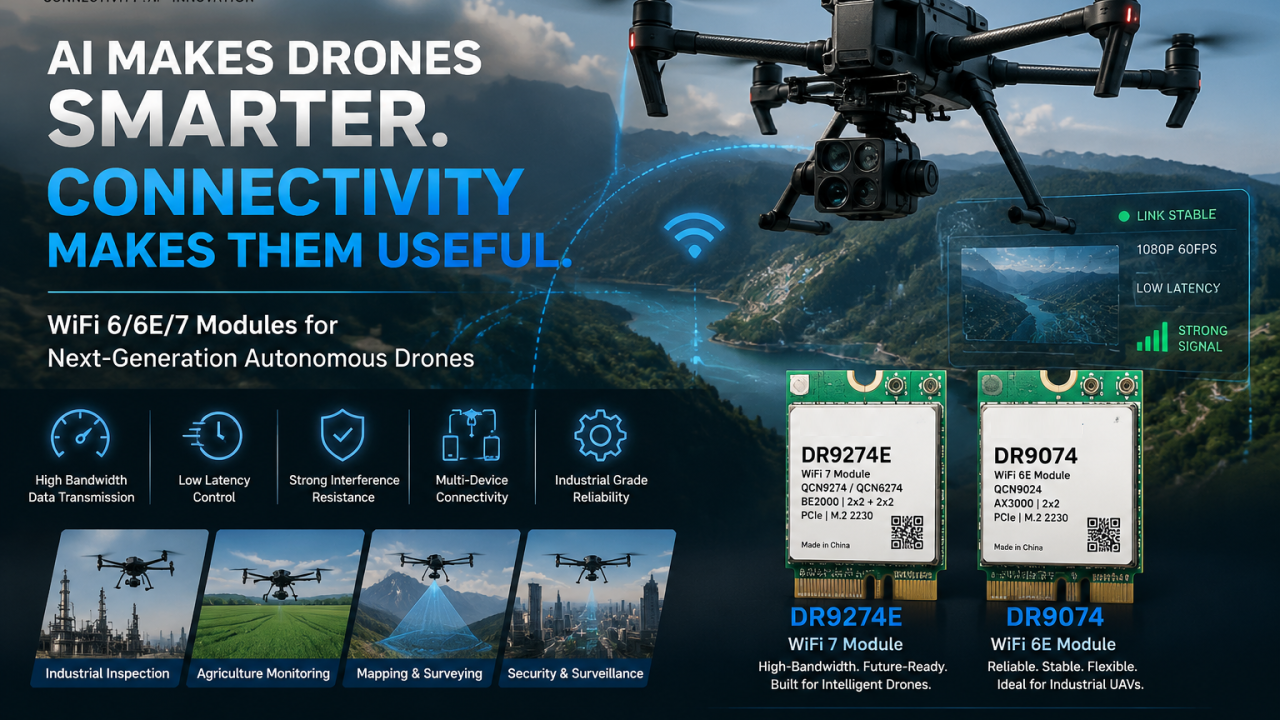
AI Makes Drones Smarter. Connectivity Makes Them Useful.

A drone performing industrial inspection, mapping, agriculture monitoring, or security missions needs to continuously exchange large amounts of data.

It needs to:

  • Stream high-resolution video in real time
  • Transfer sensor and vision data
  • Maintain low-latency control communication
  • Stay connected during high-speed movement

The wireless link is no longer just a communication channel.

It becomes the nervous system of an autonomous flying machine.


Why Drone Applications Need More Than Traditional Wireless Connectivity

Many UAV applications operate in challenging environments:

  • Long-range communication
  • High-speed mobility
  • Complex RF environments
  • Multiple drones working simultaneously
  • High-bandwidth AI data transmission

For these scenarios, peak speed alone is not enough.

A professional drone platform requires:

  • Stable connectivity
  • Low-latency response
  • Strong interference resistance
  • Reliable performance during long operation cycles

WiFi 6 and WiFi 7: Building the Wireless Foundation for Next-Generation UAVs

As drones become more intelligent, wireless technology must evolve to support higher demands.

Advanced WiFi platforms enable:

High-bandwidth AI applications

Real-time video streaming, multi-camera systems, and edge AI processing require fast and reliable data transmission.

Low-latency autonomous control

Faster response helps support autonomous navigation and mission-critical operations.

Multi-device communication

Future drone fleets and collaborative robotic systems will require efficient wireless networking.


524WiFi Industrial WiFi Modules for Intelligent Drone Platforms

For drone developers, selecting a wireless module is not only about maximum throughput.

Important considerations include:

  • Industrial-grade chipset platform
  • Driver and software support
  • Thermal stability
  • Flexible integration options
  • Long-term supply availability

Based on Qualcomm wireless platforms, Wallys provides WiFi solutions designed for industrial and AI-driven applications.


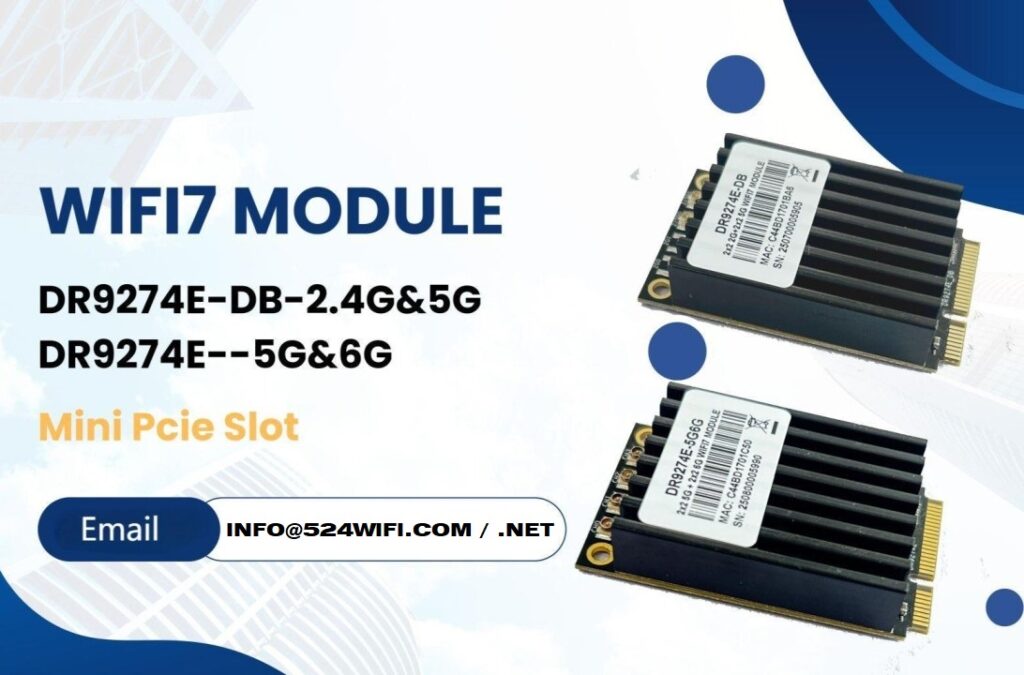
DR9274E WiFi 7 Module: Enabling Next-Generation Autonomous Drones

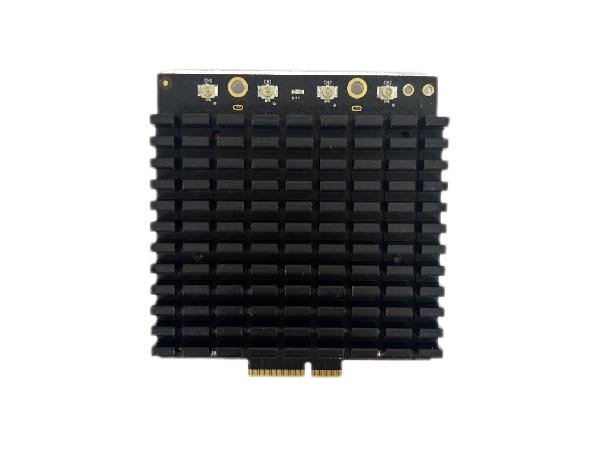
Powered by Qualcomm QCN9274 and QCN6274 platforms, the DR9274E WiFi 7 module is designed for applications requiring higher bandwidth, advanced connectivity, and future-ready wireless performance.

Potential applications include:

  • AI vision drones
  • Autonomous aerial robots
  • Industrial inspection UAVs
  • High-resolution video transmission systems

With WiFi 7 capabilities, it provides a powerful wireless foundation for intelligent devices requiring faster data exchange and more reliable connections.

DR9074 WiFi 6E Module: Reliable Connectivity for Industrial UAV Applications

Based on Qualcomm QCN9024, the DR9074 supports Tri-Band WiFi 6E operation across 2.4GHz, 5GHz, and 6GHz.

It is designed for applications requiring:

  • Stable wireless links
  • High-performance data transmission
  • Flexible frequency selection
  • Industrial deployment reliability

Suitable for:

  • Inspection drones
  • Mapping systems
  • Smart agriculture UAVs
  • Edge AI devices
Article content

Connecting the Future of Autonomous Flight

The future of drones will not only depend on better AI algorithms.

It will depend on the complete technology ecosystem:

AI provides intelligence. Sensors provide perception. Wireless connectivity enables action.

A smarter drone still needs a stronger wireless link.

At 524WiFi and Wallys, we are committed to providing Qualcomm-based WiFi 6 and WiFi 7 platforms for the next generation of drones, robotics, and edge AI applications.

The future of autonomous flight will not only be smarter.

It will be better connected.
Posted on

Physical AI Connectivity – AI Robots Don’t Run on AI Alone. They Run on Connectivity.

Every week, we see exciting breakthroughs in robotics.

Smarter vision models. Faster inference. More powerful edge AI hardware.

But when robots leave the lab and enter factories, warehouses, farms, or outdoor environments, something interesting happens.

The biggest challenge often isn’t AI.  It’s connectivity !

An autonomous robot may have enough computing power to understand its surroundings, but it still needs to:

  • Receive sensor data in real time
  • Stream video reliably
  • Exchange information with other robots
  • Connect to edge servers and cloud platforms
  • Roam seamlessly across large facilities without interruption

If the wireless network becomes unstable, even the most advanced AI model can’t perform as intended.

In real-world deployments, we’ve learned that customers rarely complain about TOPS or benchmark scores.

Instead, they ask questions like:

• Can the connection stay stable after days or weeks of continuous operation?

• Will roaming interrupt navigation?

• How does the network perform in environments with heavy RF interference?

• Can hundreds of devices operate simultaneously without impacting latency?

These are deployment questions—not benchmark questions.

As Physical AI continues to evolve, networking is no longer just supporting the system.

It is becoming part of the AI infrastructure itself.

The future of intelligent robots won’t be built by AI alone.

It will be built by the combination of:

  • AI Computing
  • Reliable Wireless Connectivity

⚡ Edge Networking

  • Seamless Mobility

The industry has spent years optimizing AI models.

Perhaps it’s time we give the same attention to the networks that keep those models connected.

AI may be the brain.  Connectivity is the nervous system.

I’d love to hear your perspective:

What has been the biggest networking challenge in your robotics or Edge AI deployments?

Posted on

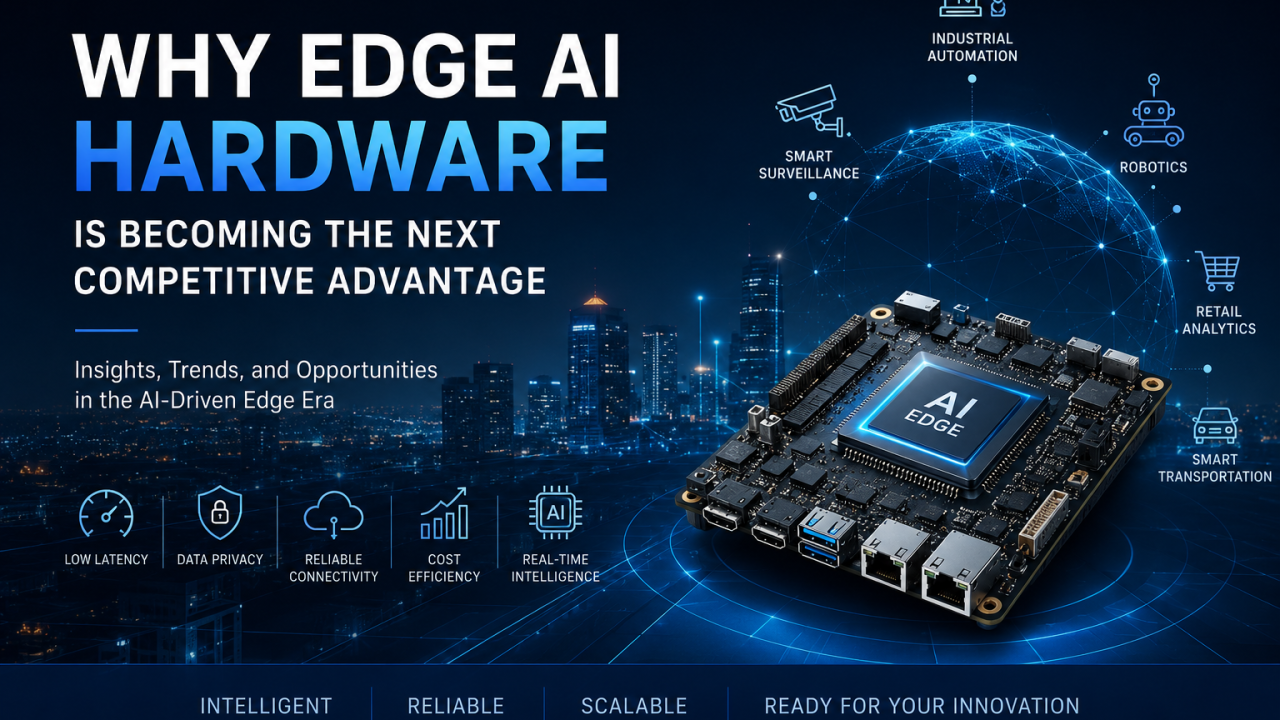
Why Edge AI Hardware Is Becoming the Next Competitive Advantage

Artificial Intelligence has evolved at an incredible pace over the past few years. From large language models to computer vision and predictive analytics, AI software has become increasingly powerful and accessible.

But as AI adoption accelerates, I’ve noticed a shift in conversations with customers and partners.

The discussion is no longer just about models.

It’s about deployment.

AI Doesn’t Create Value Until It Reaches the Edge

Training an AI model is only part of the journey. Real business value is created when AI runs where decisions need to be made—inside factories, warehouses, vehicles, retail stores, hospitals, and smart cities.

For many applications, relying entirely on cloud computing creates several challenges:

  • High latency
  • Expensive bandwidth
  • Privacy concerns
  • Unstable network connectivity
  • Ongoing cloud operating costs

This is why Edge AI has become one of the fastest-growing segments of the AI industry.

Processing data locally enables faster responses, better reliability, and greater control over sensitive information.

The New Bottleneck Isn’t Software

Five years ago, companies asked:

“Which AI framework should we use?”

Today they ask:

“Which hardware platform should we build on?”

Many AI startups have exceptional software teams, yet hardware development often delays commercialization.

Designing an embedded AI system involves far more than selecting a processor. Teams must address thermal management, power optimization, connectivity, storage, operating system support, long-term component availability, manufacturing, and certification.

For companies whose core strength lies in AI algorithms or industry expertise, developing custom hardware from scratch may not be the best use of resources.

Why OEM and ODM Partnerships Matter More Than Ever

Instead of reinventing the hardware platform, many companies are choosing to collaborate with experienced OEM and ODM manufacturers.

This approach allows engineering teams to focus on what truly differentiates their products:

  • AI applications
  • Software platforms
  • User experience
  • Industry-specific solutions

Meanwhile, hardware partners provide mature platforms that reduce development risk and shorten time-to-market.

In today’s competitive environment, launching six months earlier can be more valuable than achieving marginal improvements in hardware performance.

Flexibility Is Becoming More Important Than Raw Performance

The AI industry often focuses on TOPS, GPU cores, and benchmark scores.

While computing power certainly matters, customers increasingly ask different questions:

  • Can this platform be customized?
  • Does it support industrial environments?
  • Can wireless connectivity be added?
  • Is storage expandable?
  • Will the platform still be available in three years?
  • Can it scale from prototype to mass production?

These practical considerations often determine whether a product succeeds in the market.

Performance attracts attention.

Flexibility wins projects.

Looking Ahead

Edge AI is no longer an emerging trend—it is becoming the standard architecture for many intelligent devices.

Whether it’s machine vision, robotics, industrial automation, transportation, or smart retail, demand for reliable, customizable AI hardware continues to grow.

I believe the next wave of innovation won’t come solely from more powerful AI models.

It will come from making AI easier to deploy in real-world environments.

Companies that can combine intelligent software with reliable, scalable hardware will be best positioned to deliver practical AI solutions.

As someone working closely with Edge AI platforms, it’s exciting to see how quickly the industry is evolving.

I’m curious to hear your perspective.

What do you think will become the biggest challenge for Edge AI over the next five years—computing power, deployment, cost, or something else?

Let’s discuss.

Posted on

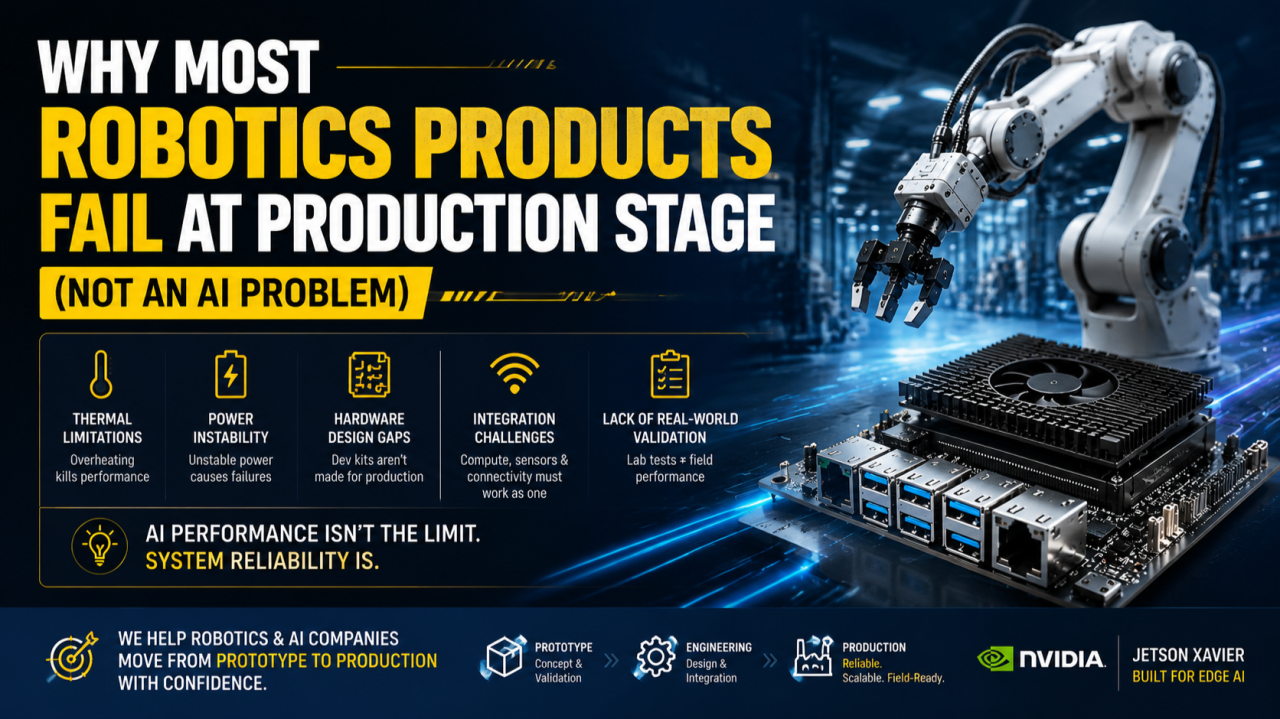
Why most robotics products fail at production stage (not an AI problem)

Introduction

In the robotics and edge AI industry, there is a common assumption:

If the AI model works, the product is ready.

But in reality, many robotics products fail not because of AI algorithms — but because of system-level engineering challenges that only appear in real-world deployment.

After working with industrial wireless systems and edge AI hardware platforms, we consistently observe the same pattern:

The gap between prototype and production is where most products break.


1. The real problem is not AI — it is system engineering

Most robotics teams are strong in:

  • Computer vision
  • Deep learning models
  • Path planning / autonomy algorithms

However, production environments introduce constraints that are often underestimated:

  • Continuous workload (not short demos)
  • Temperature variations
  • Power fluctuations
  • Mechanical constraints
  • Interference in wireless environments

These are not AI problems — they are system integration problems.


2. Why Jetson-based systems still fail in production

Even with powerful platforms like Jetson Xavier, many teams encounter issues when scaling:

❌ Thermal limitations

AI workloads in production run continuously, not intermittently like in lab tests.

❌ Power instability

Robotics platforms often operate in environments with fluctuating power conditions.

❌ Carrier board limitations

Development kits are not designed for enclosure integration or mass manufacturing.

❌ System integration gaps

Compute, sensors, and wireless modules are often designed separately, leading to instability.

❌ Lack of production validation

Many systems are never tested under real industrial conditions before deployment.

Article content

3. Prototype vs Production gap

In prototype stage:

  • Functionality is the focus
  • Short test cycles
  • Controlled environment

In production stage:

  • Reliability becomes critical
  • Continuous operation
  • Real-world environmental stress

This transition is where many robotics products fail.


4. The missing layer: system-level engineering

Successful robotics products require more than AI models.

They require:

✔ Production-grade hardware design

✔ Thermal and power system engineering

✔ Embedded system optimization

✔ Wireless + compute integration

✔ Field deployment validation

Without these, even the most advanced AI system will struggle in real-world environments.


5. Key insight

Robotics success is not determined by AI capability alone, but by how well the entire system is engineered for reality.


6. How we approach this problem

We work with robotics and AI vision companies to help bridge the gap between prototype and production by supporting:

  • Edge AI hardware platform design
  • Carrier board development
  • System integration for industrial deployment
  • Wireless + embedded system architecture optimization
  • Production readiness engineering

Our focus is on helping teams move from concept validation to scalable real-world products.


Conclusion

The future of robotics will not be defined only by better AI models.

It will be defined by systems that are:

  • Reliable
  • Scalable
  • Deployable in real environments

Because in the real world:

AI that works in demo is not enough — it must work in production.

Article content
Posted on — Leave a comment

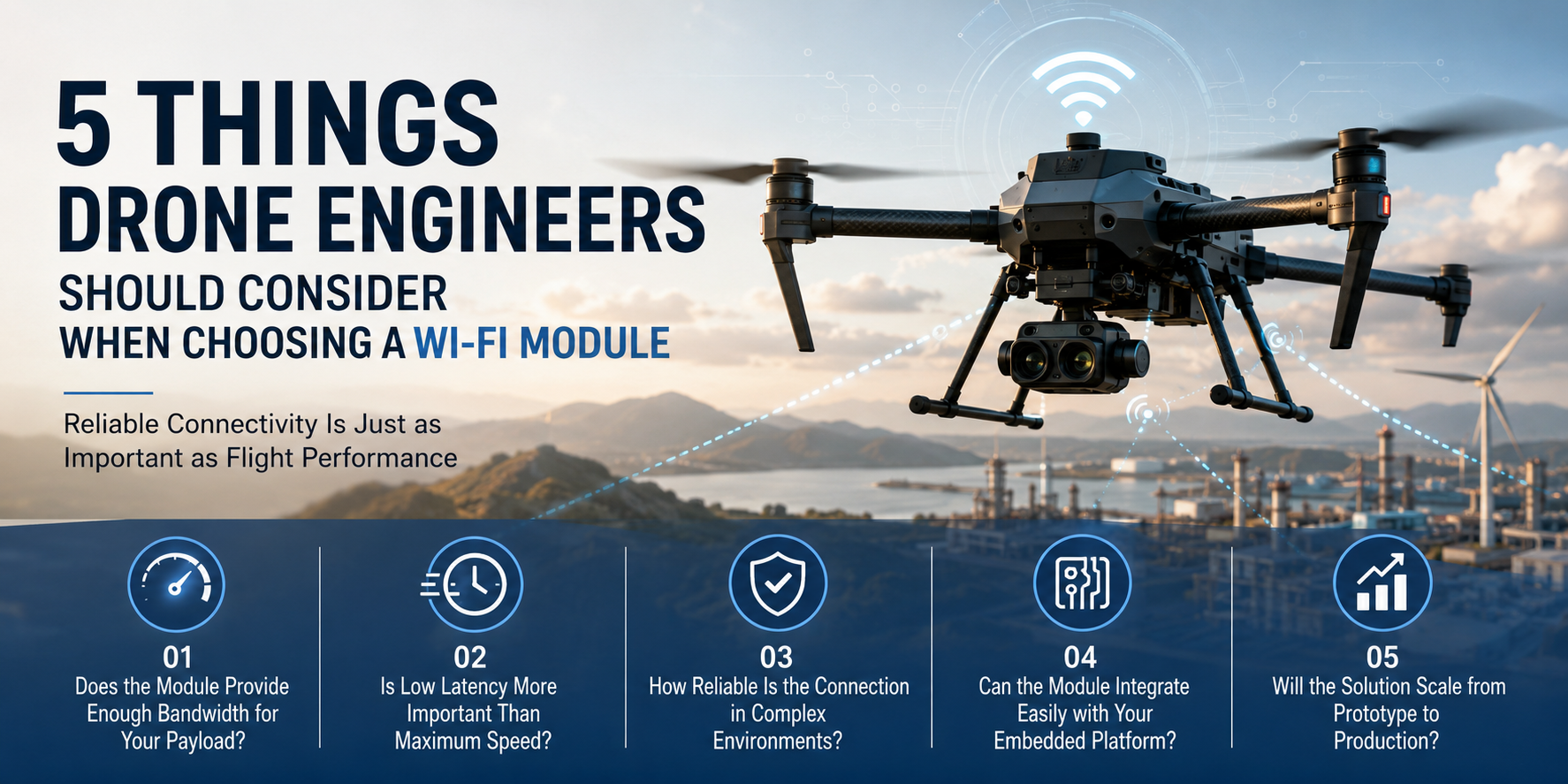
5 Things Drone Engineers Should Consider When Choosing a Wi-Fi Module

Reliable Connectivity Is Just as Important as Flight Performance

Modern drones are becoming far more than flying cameras.

Today, drones are used for:

  • Infrastructure inspection
  • Precision agriculture
  • Public safety
  • Mapping and surveying
  • Warehouse inventory
  • Mining operations
  • Industrial monitoring

At the same time, onboard computing is evolving rapidly. AI processors, multiple cameras, LiDAR, thermal imaging, and edge computing are becoming standard components of professional UAV platforms.

While engineers often spend months selecting flight controllers, sensors, and AI hardware, one component is frequently underestimated:

The wireless communication module.

Article content

A poorly chosen Wi-Fi module can become the bottleneck of an otherwise excellent drone design.

Here are five key factors every drone engineer should evaluate before selecting a wireless communication solution.


1. Does the Module Provide Enough Bandwidth for Your Payload?

Not every drone transmits the same type of data.

A basic inspection drone may only send telemetry and compressed video.

An AI-powered drone may simultaneously transmit:

  • Multiple HD video streams
  • AI inference results
  • Telemetry data
  • Sensor information
  • Remote control commands

As payloads become more sophisticated, wireless bandwidth quickly becomes a limiting factor.

When evaluating a Wi-Fi module, consider:

  • Maximum throughput
  • Number of spatial streams
  • Channel bandwidth
  • Support for Wi-Fi 6 or Wi-Fi 7

Higher bandwidth doesn’t simply improve video quality—it also creates more capacity for future upgrades.


2. Is Low Latency More Important Than Maximum Speed?

Many engineers focus on peak data rates.

However, drones often benefit more from consistent low latency than from maximum theoretical throughput.

For applications such as:

  • Remote piloting
  • Autonomous navigation
  • AI-assisted obstacle avoidance
  • Real-time monitoring

Stable communication is far more valuable than occasional bursts of high speed.

Look beyond the headline specifications and evaluate how the wireless solution performs under continuous, real-world workloads.


3. How Reliable Is the Connection in Complex Environments?

Drones rarely operate in ideal radio environments.

They may fly near:

  • Buildings
  • Metal structures
  • Industrial equipment
  • Trees
  • Utility infrastructure

These environments introduce interference, signal reflections, and changing link conditions.

A reliable Wi-Fi module should support features that help maintain stable communication under challenging conditions.

Modern technologies such as Wi-Fi 6 and Wi-Fi 7 introduce significant improvements in efficiency, interference management, and overall reliability compared with earlier generations.

For industrial UAVs, connection stability is often more important than achieving the highest benchmark speeds.


4. Can the Module Integrate Easily with Your Embedded Platform?

Selecting a Wi-Fi module is not only about radio performance.

Engineers should also consider integration.

Questions worth asking include:

  • Does it support Linux or OpenWrt?
  • Are software drivers actively maintained?
  • Is the hardware interface compatible with your design?
  • Is documentation readily available?
  • Can the module integrate with NVIDIA Jetson or other edge AI platforms?

Reducing development complexity can significantly shorten time-to-market.

Choosing a well-supported platform often saves more engineering time than selecting a module based solely on specifications.


5. Will the Solution Scale from Prototype to Production?

Many wireless solutions perform well during prototyping.

Production introduces different challenges:

  • Long-term availability
  • Industrial reliability
  • Certification requirements
  • Thermal performance
  • Supply chain stability

Choosing a communication platform with a clear product roadmap helps avoid redesigns later in the project lifecycle.

Engineers should think beyond the first prototype and evaluate whether the wireless solution can support future production volumes and product evolution.


Connectivity Is Becoming Part of the Drone Architecture

Modern drones are evolving into flying edge computing platforms.

A typical professional UAV now combines:

  • Flight control systems
  • AI processors
  • Vision sensors
  • Navigation systems
  • High-speed wireless communication

Each subsystem depends on the others.

Even the most advanced AI algorithms become less effective if communication is unstable.

Reliable wireless connectivity is no longer just another hardware component.

It has become part of the overall system architecture.


Looking Ahead

The next generation of drones will continue to demand:

  • Higher bandwidth
  • Lower latency
  • More reliable wireless links
  • Better support for AI workloads
  • Faster integration with embedded computing platforms

Selecting the right Wi-Fi module today is not simply about improving communication performance.

It is about building a platform that can support the future of autonomous aerial systems.

As drones become smarter, wireless connectivity will play an increasingly important role in enabling safe, efficient, and scalable operations.

Because in autonomous systems, intelligence may guide the mission—but connectivity keeps it flying.


What factors matter most when your team selects a wireless communication solution for UAV projects?

I’d be interested to hear how other drone engineers approach this decision.

Posted on

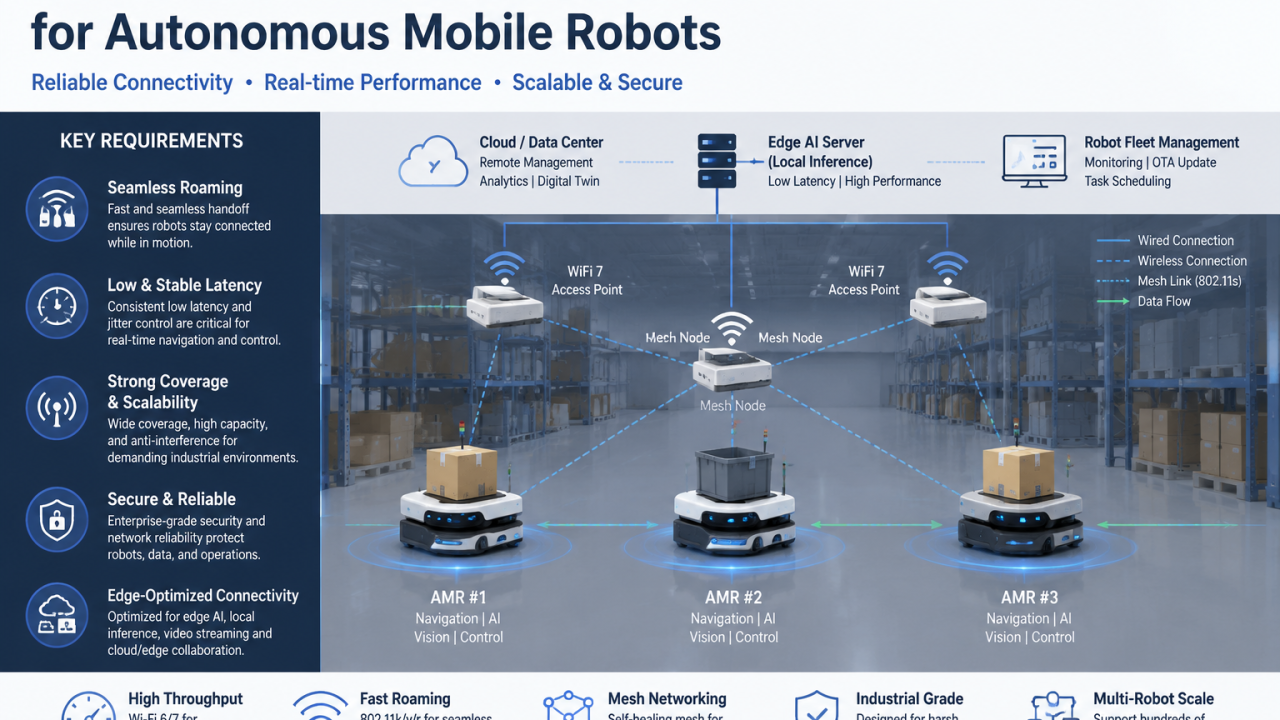
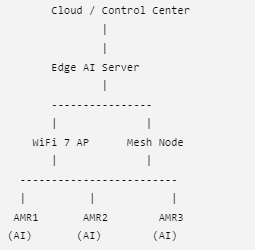
How to Build Reliable Wireless Infrastructure for Autonomous Mobile Robots?

When companies deploy autonomous mobile robots (AMRs) in real environments, the biggest challenge is often not the robot itself.

It is the network that keeps the robot connected.

An AMR depends on continuous communication for:

– Real-time navigation

  • Vision data transmission

⚡ Edge AI inference

– Fleet coordination

☁️ Cloud and remote management

A short network interruption may result in:

  • Navigation delays
  • Video stream drops
  • Task interruptions
  • Reduced operational efficiency

So, what does a reliable wireless infrastructure for AMRs require?

1. Seamless Roaming

AMRs continuously move through different areas.

A reliable network must allow robots to switch between access points without interrupting communication.

2. Low and Stable Latency

For autonomous systems, average speed is not enough.

What matters is consistent response time.

Network jitter and packet loss can directly impact robot performance.

3. Strong Coverage and Scalability

Factories and warehouses often have:

  • Large areas
  • Metal structures
  • RF interference
  • Hundreds of connected devices

A scalable wireless architecture is essential.

4. Edge-Optimized Connectivity

Modern robots combine:

– AI computing – Wireless communication – Sensors ⚙️ Real-time control

Email: [email protected] or [email protected]

The wireless network is no longer just an access layer.

It becomes part of the AI system.

As Physical AI moves from laboratories into factories, warehouses, and outdoor environments, reliable connectivity will become a key factor determining whether autonomous systems can scale.

AI gives robots intelligence.

Connectivity gives robots the ability to operate.

What challenges have you experienced when deploying wireless networks for autonomous robots?

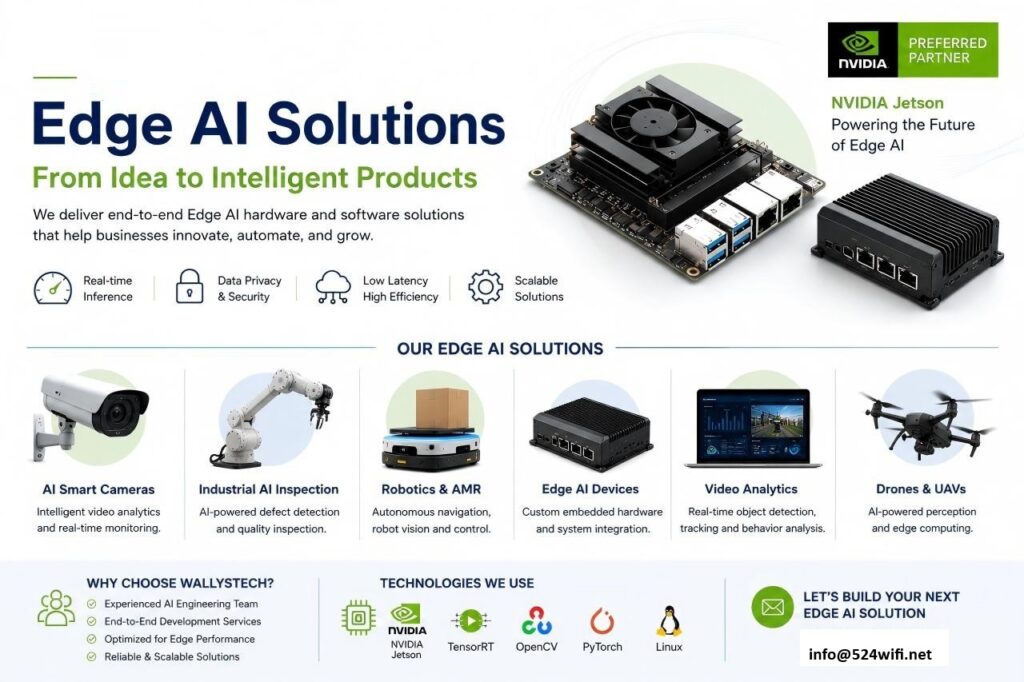
Building the next generation of AI-powered edge devices requires reliable connectivity. Explore how WallysTech helps robotics, AI vision, and industrial applications achieve stable wireless performance.

Article content
Posted on

Wi-Fi 7 for AIoT: How IPQ9574 and QCN9274 Enable Real-Time Edge AI

When we talk about Wi-Fi 7 (802.11be), most discussions focus on its impressive speed upgrades — and rightly so. But beneath the surface, Wi-Fi 7 is quietly becoming a critical enabler for Artificial Intelligence (AI) and AIoT (Artificial Intelligence of Things). It’s not just about faster wireless — it’s about making intelligent devices truly efficient, real-time, and scalable.

🚀 What Makes Wi-Fi 7 Different?

Wi-Fi 7 introduces groundbreaking features like:

  • Multi-Link Operation (MLO) — enabling devices to connect across multiple bands simultaneously, improving reliability and reducing latency.
  • Higher throughput — supporting up to 46 Gbps, ideal for high-data AI workloads.
  • Lower latency — essential for real-time AI inference.
  • Improved concurrency — allowing more smart devices to communicate simultaneously without congestion.

These capabilities make Wi-Fi 7 a natural fit for the AI revolution — both in the cloud and at the edge.


🧠 AI + Wi-Fi 7: A Perfect Match

1. Faster Real-Time Inference at the Edge

Edge AI devices like smart cameras, traffic sensors, or inspection drones require:

  • Constant data streams
  • Real-time decision-making
  • High connection reliability

Wi-Fi 7 ensures ultra-low latency and high bandwidth — perfect for AI models processing data in real time, directly on edge devices.

📍 Example: In smart manufacturing, a defect detection system running AI vision models can send high-resolution images instantly over Wi-Fi 7 for sub-second inference.


2. Scalable AIoT Networks

AIoT means connecting and managing hundreds or thousands of smart devices, often with edge AI capabilities.

Wi-Fi 7 supports:

  • Massive device concurrency
  • Dynamic bandwidth allocation
  • Superior QoS (Quality of Service)

This allows factories, campuses, or smart buildings to scale up their AIoT systems without overloading the network.

📍 Example: A smart office can deploy hundreds of AI-enabled occupancy sensors and environmental monitors — all reporting in real time — without lag.


3. Wireless Edge AI Gateways

Many AIoT systems use a local AI gateway that:

  • Aggregates data from various sensors
  • Runs local AI models
  • Connects wirelessly to the cloud or central system

Wi-Fi 7’s multi-band capabilities ensure that these gateways maintain stable, high-speed connections — even in noisy RF environments.

📍 Example: In a hospital, an AI-powered patient monitoring system can use a Wi-Fi 7-enabled gateway to transmit continuous multi-sensor data with minimal delay or risk of interruption.


🌐 AI-Powered Devices Need a Smarter Network — That’s Wi-Fi 7

As AI models become more complex and real-time applications more common, the network needs to evolve as well. Wi-Fi 7 is not just keeping up — it’s paving the way forward.

Whether it’s in:

  • Retail analytics
  • Autonomous vehicles
  • Healthcare monitoring
  • Smart agriculture
  • or Industrial robotics…

AI + Wi-Fi 7 is the new power couple for connected intelligence.


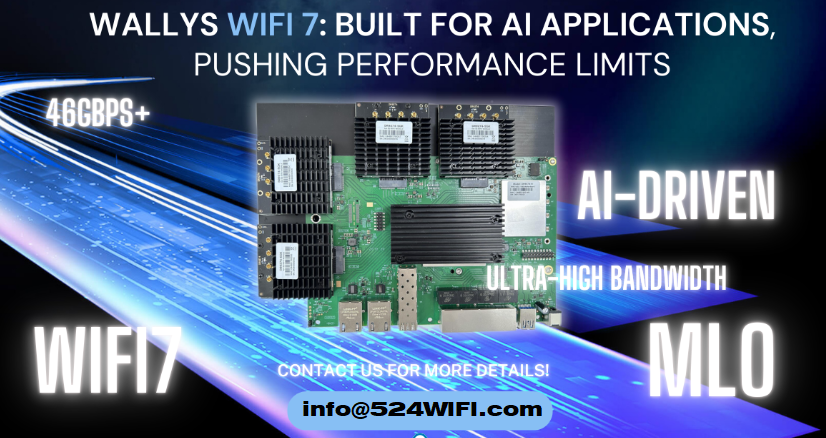
🔧 524WiFi and Wallys Wi-Fi 7 Hardware: Designed for AI and AIoT Deployments

At 524WiFi and Wallys, we offer industrial-grade Wi-Fi 7 solutions based on Qualcomm platforms such as IPQ9574 and QCN9274. Our high-performance router boards and wireless modules are ideal for:

  • AI-enabled edge computing devices
  • Custom AIoT gateways
  • High-bandwidth data streaming systems

🔹 DR9574 Router Board – (CPU:Qualcomm IPQ9574) Perfect for AI gateways with multiple high-speed interfaces

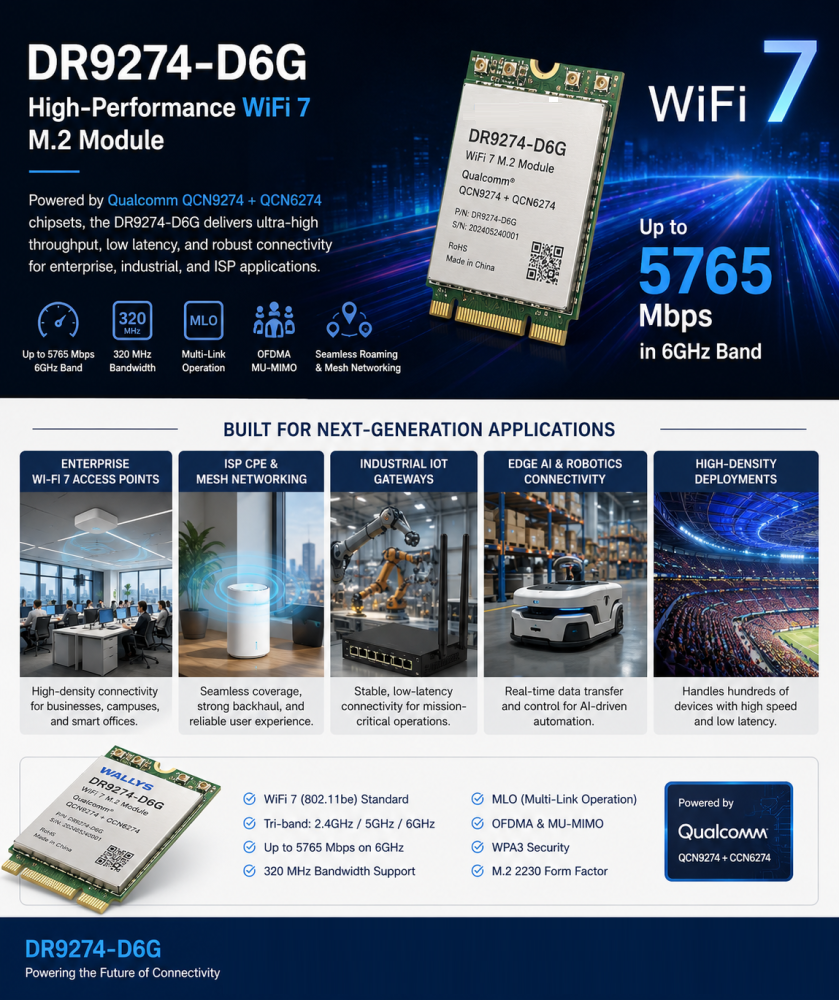
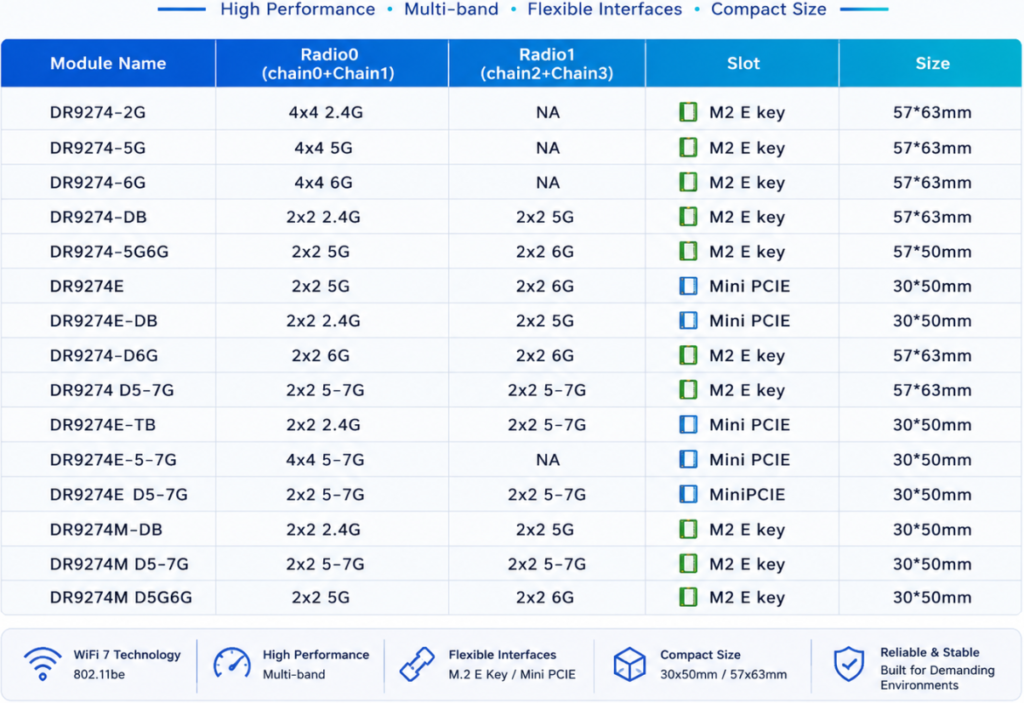
🔹 DR9274 Mini PCIe Module – (CPU:Qualcomm QCN9274/QCN6274) Compact and powerful Wi-Fi 7 module for embedded AI system

🔹 Custom ODM/OEM support – Tailor-made solutions for your AI product roadmap

👉 Contact our team at info@524wifi dor net or com to discuss your AI project and how Wi-Fi 7 can help you scale it smarter and faster.

Posted on

IPQ5018, IPQ9574 WiFi 6/7 Modules for AIoT and Autonomous Robotics

Unlocking High-Performance Wireless Connectivity for Next-Gen Intelligent Systems

Introduction

As AIoT ( Artificial Intelligence of Things ) and autonomous robotics continue to transform industries — from smart factories to unmanned logistics and surveillance systems — high-performance wireless connectivity has become a mission-critical requirement. Advanced machines need real-time data exchange, seamless remote control, and ultra-reliable low-latency communication (URLLC). This is exactly where WiFi 6 and WiFi 7 modules powered by Qualcomm’s IPQ5018 and IPQ9574 shine.


Why Wireless Connectivity Matters for AIoT & Autonomous Robots

1. Real-Time Sensor Fusion

Robots in smart warehouses, delivery drones, and autonomous patrol vehicles rely on multiple sensors, including cameras, LiDAR, and radar. These sensors generate vast amounts of data that need to be transmitted to central controllers or edge processing nodes in real time.

2. Collaborative Operations

Swarm robotics (groups of robots working together) demand synchronized communication to coordinate movements, object handling, and obstacle avoidance — requiring high bandwidth and low latency.

3. Mobile AI Processing

For AIoT devices in industrial and outdoor environments, real-time data streaming between edge AI processors and cloud systems is crucial to optimize performance using advanced analytics and machine learning models.


Meet the Power Duo: IPQ5018 and IPQ9574

📡 IPQ5018 — Optimized WiFi 6 Solution for Cost-Effective Performance

Ideal for Mid-Range AIoT and Autonomous Devices

Feature Specification : Wireless StandardWiFi 6 802.11ax Bands 2.4GHz + 5GHz Dual-band Data Rate Up to 3Gbps CPU Dual-core ARM Cortex A53 Security WPA3, Secure Boot, Trusted Execution Environment (TEE)Target Applications Drones, AGVs, Smart Cameras, Industrial Sensors

🚀 IPQ9574 — High-Performance WiFi 7 Solution for Next-Level Intelligence

Designed for High-End Robotics and AIoT Hubs

Feature Specification: Wireless StandardWiFi 7 802.11be Bands Tri-band (2.4GHz + 5GHz + 6GHz) Data Rate Up to 21Gbps CPU Quad-core ARM Cortex A73 MLO (Multi-Link Operation)✅ Supported Target Applications Autonomous Vehicles, Smart Manufacturing, Large-Scale Sensor Networks


Key Benefits for AIoT and Autonomous Robotics

✅ Ultra-Low Latency Control

With OFDMA and MLO (in WiFi 7), these modules significantly reduce wireless communication delays, which is essential for real-time remote control and mission-critical data feedback.

✅ High Throughput for AI Workloads

AI-driven devices, particularly those with onboard vision processing or collaborative SLAM (Simultaneous Localization and Mapping), generate vast streams of data. WiFi 6/7 ensures uninterrupted, high-bandwidth transmission.

✅ Interference Mitigation in Dense Environments

AIoT ecosystems often operate in challenging RF environments — factories, ports, or urban areas — where multiple devices compete for bandwidth. Features like BSS Coloring and MU-MIMO (in both WiFi 6 & 7) guarantee efficient channel sharing.

✅ Future-Proof Connectivity

With WiFi 7’s 320 MHz channels and 4096-QAM, autonomous robots and AIoT nodes can benefit from unprecedented wireless speeds, supporting emerging workloads like real-time AI inference streaming or collaborative deep learning updates.


Application Scenarios

Use Case WiFi Module Recommendation Autonomous Mobile Robots (AMR) IPQ5018 Smart Drones IPQ5018 High-Speed AGVs in Warehouses IPQ9574 Remote AI Surveillance Towers IPQ9574 AIoT Sensor Networks in Smart Cities IPQ5018 Large-Scale Robotic Fleets IPQ9574


Why Choose DR5018S & DR9574 Modules

At 524WiFi and Wallys Communications, we specialize in developing cutting-edge wireless hardware tailored for industrial applications. Our DR5018S (IPQ5018) and DR9574 (IPQ9574) modules offer:

✅ Industrial-grade durability for harsh environments

✅ Full support for OpenWRT and customizable firmware

✅ Compact form factors perfect for integration into AIoT devices

✅ Strong RF performance with advanced antenna design support

✅ Flexible customization — from hardware interfaces to security features


Final Thoughts

As AIoT and autonomous robots become smarter and more connected, choosing the right wireless solution becomes a strategic decision. Whether you’re building the next-gen delivery robot or deploying a real-time AI sensor network in a smart factory, 524WiFi’s IPQ5018 and IPQ9574-based modules ensure your devices communicate reliably and efficiently — today and into the future.

Posted on

Mediatek Unveils the New Wi-Fi 7 Platform AP7988-002, Delivering High-Performance Wireless Solutions for the AI Era

As AI development and the IoT market continue to mature, Wi-Fi has become one of the most universal and indispensable transmission methods in everyday life. However, with the growing demand for data traffic, existing networking technologies are facing challenges. To address these needs, 524WiFi proudly introduces its latest generation Wi-Fi 7 router development board, the AP7988-002. Designed to provide exceptional performance and seamless connectivity in the wireless communications field, the AP7988-002 is powered by the four-core ARM Cortex-A73 MediaTek MT7988A processor, making it the ideal choice for AI-driven communication and high-bandwidth applications.

In terms of wireless performance, the AP7988-002 is equipped with the MediaTek MT7996 Wi-Fi chipset, supporting Wi-Fi 7 technology and offering ultra-high-speed connectivity of up to 19,000 Mbps. This ensures ultra-low latency and outstanding data transmission capabilities, providing the perfect solution for next-generation network applications. To further enhance wireless signal coverage, the AP7988-002 features a high-power amplifier front-end module, significantly boosting signal strength and transmission range. This makes it especially suitable for large-scale infrastructure and environments requiring stable connections, positioning it as an essential networking device for both enterprise and residential applications.

The AP7988-002 is built around versatility, combining Tri-Band Triple Concurrent (TBTC) technology with 10G PHY high-speed wired connectivity. This allows it to handle substantial data transmissions simultaneously, ensuring optimal performance in multi-device connected environments and providing a stable network foundation for high-bandwidth applications.

Additionally, the product comes with an integrated M.2 B Key slot, supporting 4G/5G WWAN modules to offer flexible mobile network connectivity options. The M.2 M Key slot enables storage expansion, making it especially suitable for data-intensive applications such as large-scale data processing needed by small to medium-sized businesses. An integrated GPS module further enhances the device’s positioning capabilities, broadening its adaptability in modern network environments.

The launch of the AP7988-002 solidifies Mediatek’s leadership in wireless connectivity solutions, demonstrating the company’s commitment to technological innovation and laying a solid foundation for IoT applications. 524WiFi continues to drive advancements in wireless technology, striving to improve the performance and ease of use of IoT technologies, expanding the ways people live and work.

This product’s release marks a new milestone for Mediatek in the wireless technology field. With its exceptional performance and flexible application options, it brings an unprecedented network experience to both industries and individual users. For more information, please visit the 524WiFi official website for the latest updates and technical support.

Posted on

Industrial Wi-Fi with AI: Opportunities and Challenges Brought by DeepSeek

The integration of AI into industrial Wi-Fi networks is revolutionizing how industries operate, creating smarter, more efficient systems that can process data in real-time, automate processes, and enhance security. One notable advancement in AI technology is DeepSeek, an AI-powered solution leveraging deep learning models to accelerate data processing. As these technologies make their way into industrial networks, they present both exciting opportunities and unique challenges. In this article, we explore how DeepSeek can benefit industrial Wi-Fi networks, the advantages it offers, and the hurdles businesses must overcome to successfully implement these systems.

1. Opportunities: Enhancing Industrial Wi-Fi with AI

AI technologies, such as DeepSeek, are significantly improving how industrial systems handle and analyze data. Here’s a look at how DeepSeek can unlock new possibilities in industrial Wi-Fi networks:

1.1. Improved Network Efficiency and Real-Time Data Processing

With DeepSeek AI models, industrial Wi-Fi networks can process massive amounts of data generated by IoT devices, sensors, and cameras in real-time. Platforms like the Rockchip RK3588, which integrates a 6 TOPS NPU, offer the perfect environment for running these AI models. According to a recent post on CNX Software, DeepSeek running on the RK3588 achieves up to 15 tokens per second, which significantly accelerates real-time data analysis and decision-making. This performance boost is especially important in industries like smart manufacturing and security, where low latency and rapid data processing are essential.

AI-powered networks can reduce delays, boost decision-making speed, and improve operational efficiency by quickly analyzing large data sets. For industries that rely on real-time decision-making, this can translate into faster responses to changing conditions.

1.2. Predictive Maintenance and Automation

Predicting machine malfunctions before they occur is another advantage of integrating AI into industrial Wi-Fi systems. By analyzing data from machines, sensors, and connected devices, DeepSeek can detect patterns and predict potential failures. This is known as predictive maintenance—a key element of Industry 4.0.

The ability to identify early warning signs of equipment issues reduces the risk of costly downtime and improves overall equipment efficiency. Moreover, AI automation powered by DeepSeek can enhance processes like inventory management, quality control, and production scheduling, all while reducing human error.

1.3. Enhanced Security and Surveillance

Security is a major concern for industries that rely on connected systems and devices. AI enables smarter surveillance systems that are capable of face recognition, license plate detection, and anomaly detection in real time. When integrated into industrial Wi-Fi networks, DeepSeek models can significantly enhance security systems by processing video feeds and sensor data quickly and accurately.

AI-powered surveillance is especially useful in smart cities and sensitive industrial environments, where constant monitoring is crucial to prevent unauthorized access or security breaches.

2. Challenges: Barriers to AI Integration in Industrial Wi-Fi

While the advantages of integrating AI into industrial Wi-Fi systems are clear, there are several challenges that organizations must address to make the most of these technologies.

2.1. Hardware Compatibility and Performance

To run AI models like DeepSeek effectively, industrial systems need powerful hardware. In many cases, this means upgrading legacy infrastructure to include AI-capable hardware and ensuring compatibility between existing Wi-Fi equipment and AI acceleration platforms like Rockchip RK3588. These advanced NPU systems, capable of handling complex computations, are crucial for enabling real-time AI workloads.

As mentioned in the CNX Software article, the RK3588 platform’s AI acceleration allows for high-speed data processing, achieving up to 15 tokens per second, an impressive feat for industrial applications. However, organizations need to ensure that their systems can support these platforms and leverage their full potential.

2.2. Power Consumption and Thermal Management

AI workloads are energy-intensive, and the increased power consumption of AI systems can be a concern in industrial environments. High-performance AI accelerators, such as those using NPUs, generate substantial heat, which requires efficient thermal management systems to prevent overheating.

In industries where equipment runs continuously, managing the power consumption and heat generated by AI-enabled devices is critical. Companies must factor in these needs when implementing AI solutions like DeepSeek.

2.3. Data Security and Privacy

As AI systems process vast amounts of data, especially sensitive operational or security data, data security becomes a significant concern. Industrial Wi-Fi networks must ensure that AI models like DeepSeek are deployed with strong security frameworks in place.

Ensuring data privacy and compliance with regulatory standards is essential to avoid breaches or misuse of sensitive information. As AI models become more integrated into industrial systems, companies must adopt robust encryption and data protection protocols.

2.4. High Initial Costs and Complexity

The cost of upgrading infrastructure to support AI models can be prohibitively high for some businesses, especially small and medium-sized enterprises. Integrating advanced hardware, such as Rockchip RK3588 with NPU support, along with AI software like DeepSeek, requires a significant financial and resource investment. Additionally, these systems often require specialized personnel to implement and manage them.

The complexity of deploying and maintaining AI-powered industrial networks, combined with the need for specialized skills and hardware, can be a barrier to entry for many organizations.

3. 524WiFi’ Solutions for Optimizing Industrial Wi-Fi with AI

To address these challenges, 524WiFi and Wallys provide tailored solutions that integrate AI acceleration into industrial Wi-Fi networks. Products such as the DR9574 Router Board and the DR9074-triband module are designed to support high-performance AI applications, ensuring that companies can leverage AI-powered networks without sacrificing security, performance, or energy efficiency.

Wallys’ customized hardware and software support make it easier for industries to adopt AI technologies like DeepSeek, enabling seamless integration and efficient operation.

4. Conclusion

The integration of AI into industrial Wi-Fi networks brings remarkable opportunities for industries such as smart manufacturing, surveillance, and smart cities. With solutions like DeepSeek, powered by platforms like Rockchip RK3588, businesses can enhance network efficiency, enable predictive maintenance, and improve security.

However, the implementation of these technologies comes with its own set of challenges, such as hardware compatibility, energy consumption, data security, and cost. By addressing these issues with customized solutions from companies like 524WiFi or Wallys, industries can unlock the full potential of AI in their Wi-Fi networks, driving innovation and operational efficiency.