Posted on

Why Your Next Edge AI Platform Needs a Tri-Band WiFi 7 Module, Not Just Dual-Band

Wireless is usually the last spec finalized on an edge AI hardware design and the first thing that becomes a bottleneck in the field. Worth a closer technical look before your next carrier board revision locks in.

The RF problem, precisely

Dual-band designs (2.4GHz + 5GHz) share spectrum with every consumer device, AP, and IoT sensor in range. In dense deployments — multi-robot fleets, factory floors, warehouses — this shows up as elevated retransmission rates, unpredictable jitter, and tail latency spikes under contention. For a control loop or a real-time inference pipeline streaming sensor data upstream, tail latency is what actually breaks the system, not average throughput.

WiFi 7 (802.11be) addresses this at the PHY/MAC level in three ways relevant to edge AI hardware:

  • 6GHz band access — largely unlicensed spectrum with far lower device density than 2.4/5GHz today, meaning lower channel contention and more predictable airtime
  • 320MHz channel bandwidth (vs. 160MHz max on WiFi 6) — higher raw throughput ceiling per link
  • Multi-Link Operation (MLO) — the ability to aggregate or fail over across bands simultaneously, so a device isn’t fully dependent on the health of a single channel

For an edge AI box pushing multi-camera streams, sensor fusion data, and periodic model/OTA updates concurrently, MLO plus 6GHz access is the difference between throughput that holds up under real RF load and throughput that only looks good on an open-air bench test.

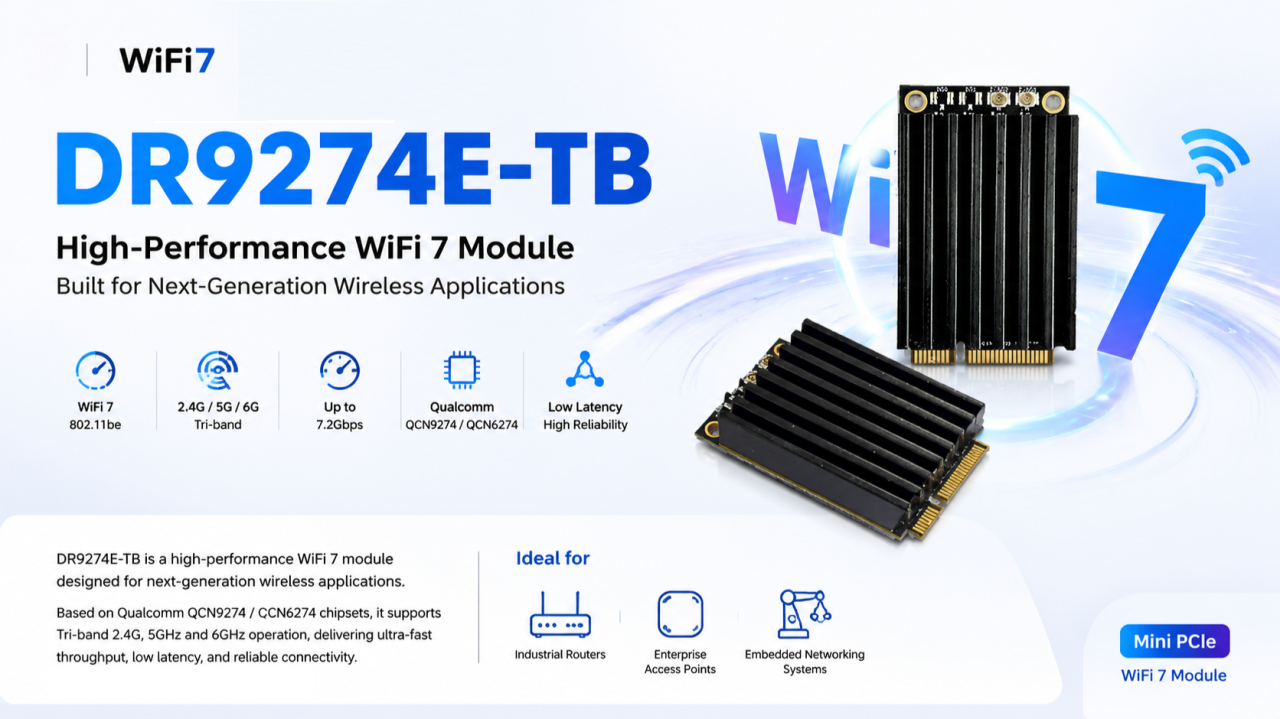
Module-level implementation: DR9274E-TB

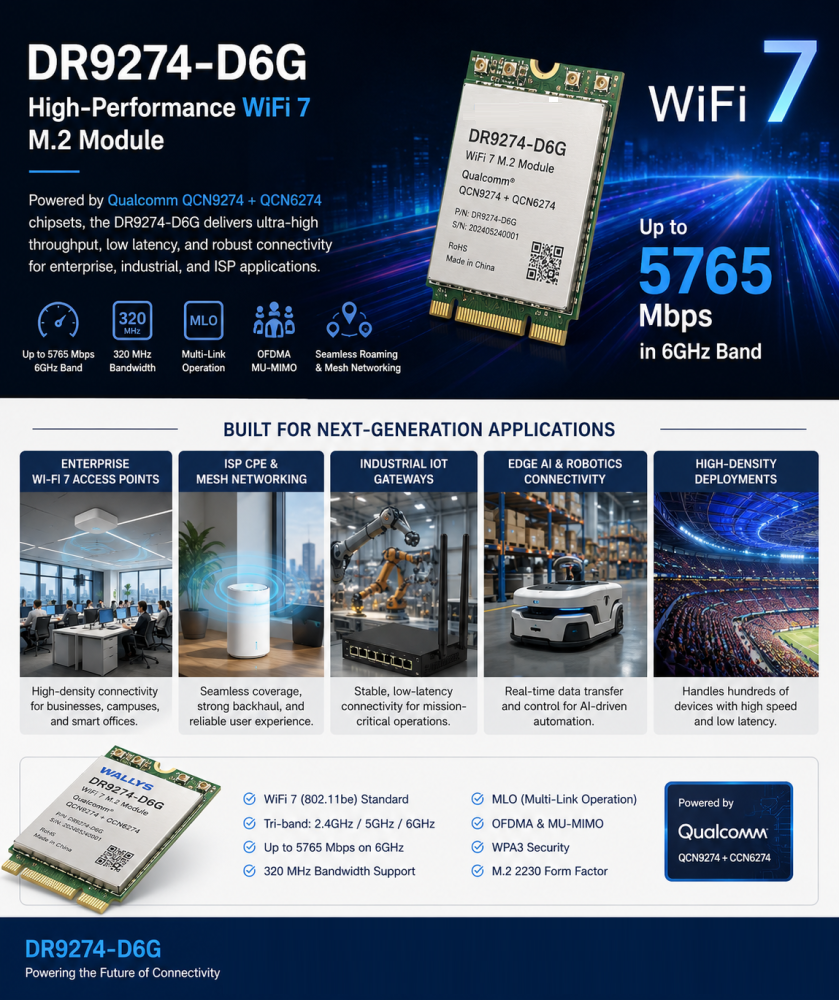
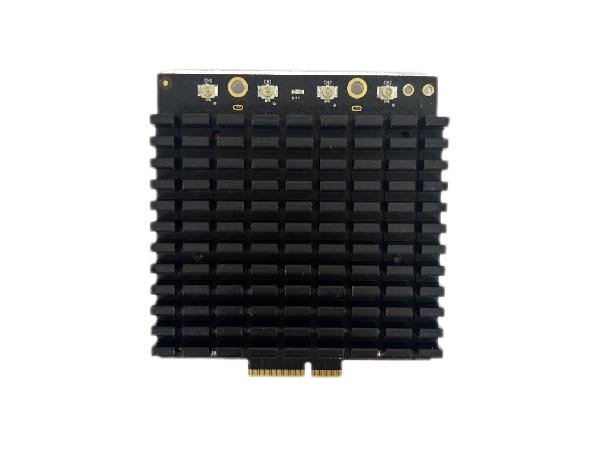
We built the DR9274E-TB around this exact requirement — a Mini PCIe WiFi 7 module for teams integrating wireless into embedded and industrial platforms rather than designing RF from scratch.

Specs:

  • Chipset: Qualcomm QCN9274 (5G/6G radio) + QCN6274 (2.4GHz radio) — Qualcomm’s WiFi 7 platform, not a rebadged WiFi 6E part
  • Band support: Tri-band, 2.4GHz / 5GHz / 6GHz
  • Antenna config: 2×2 MIMO
  • Interface: Mini PCIe — integrates without a carrier board redesign on most existing embedded platforms
  • OS support: Linux-compatible — relevant if your stack runs on JetPack, Yocto, or a custom embedded distro
  • Build: Industrial-grade components rated for continuous operation, not consumer-grade parts pushed into an industrial enclosure

Where the tri-band architecture actually matters

Not every application needs 6GHz. It matters specifically where you have:

  • High device density (multi-robot fleets, dense AP deployments)
  • Latency-sensitive control or telemetry loops
  • Concurrent high-bandwidth streams (multi-camera vision, sensor fusion payloads)
  • Environments where 2.4/5GHz spectrum is already saturated by other systems

That covers most edge AI computing platforms, industrial routers/IoT gateways, enterprise APs in high-density environments, outdoor CPE/wireless bridges, and mesh networking nodes.

The engineering takeaway

Specifying wireless the way you did for a WiFi 5/6 design — pick a dual-band module, move on — leaves latency and reliability headroom on the table that your compute stack has already outgrown. Tri-band WiFi 7 with MLO isn’t a marketing checkbox; it’s a direct answer to the contention and jitter problems that show up specifically under production RF conditions, not lab conditions.

Happy to go deeper on channel planning, MLO configuration, or driver-level integration for teams currently specifying wireless for a Jetson-based or other edge AI carrier board.

📩 Reach out to 524WiFi for datasheets, samples, or OEM customization.
Posted on

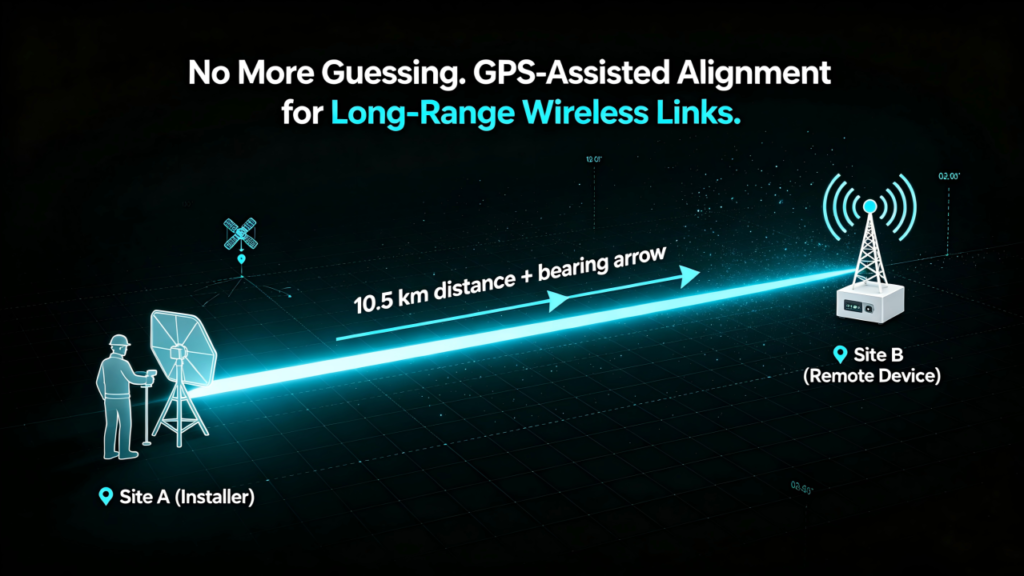
GPS Smart Deployment for Long-Range WiFi PtP: What If Your AP Could Tell You Where to Point?

Deploying long-range wireless links has always been a field engineering challenge.

For a Point-to-Point (PtP) wireless connection, performance depends heavily on antenna alignment.

A few degrees of misalignment can mean:

  • Lower throughput
  • Reduced link stability
  • Poor signal quality
  • More time spent on-site troubleshooting

Traditionally, engineers need to rely on:

  • GPS devices
  • Maps
  • Compass tools
  • Signal strength monitoring
  • Multiple technicians communicating between two locations

But what if the wireless device itself could help you find the right direction?


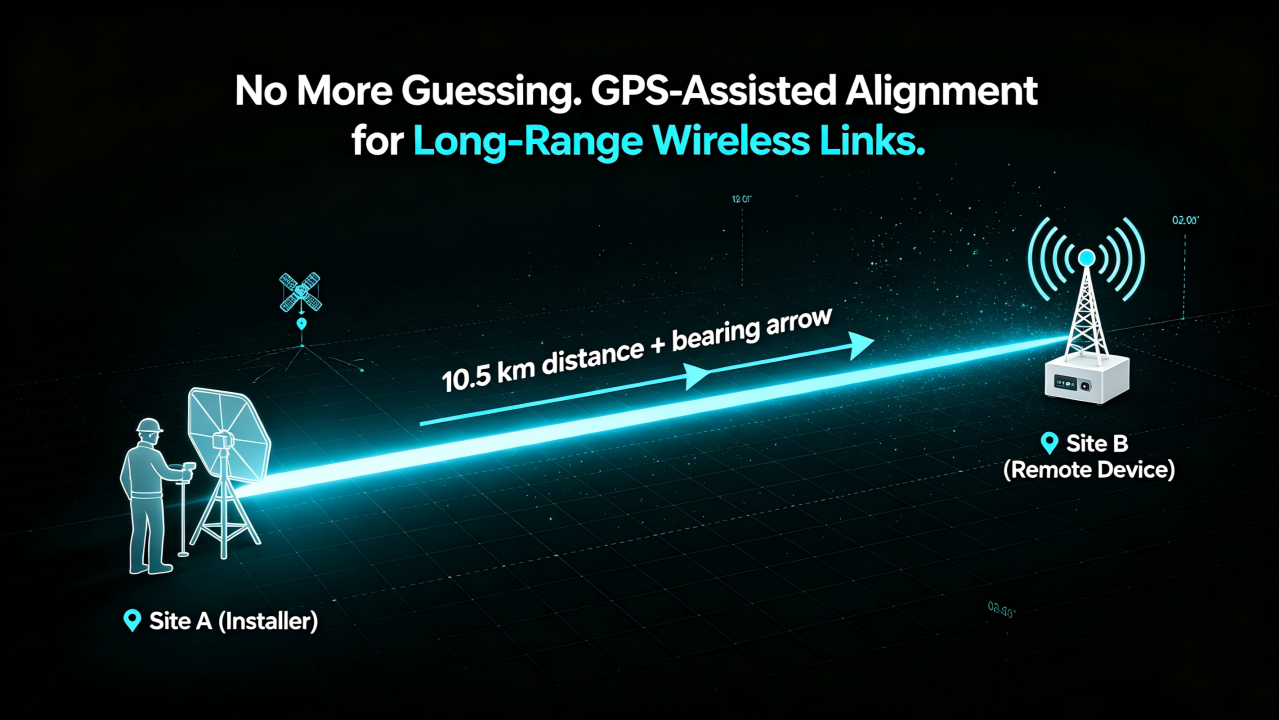
From GPS Location to Smart Alignment

Imagine this:

You install an AP at the local site.

After powering it on:

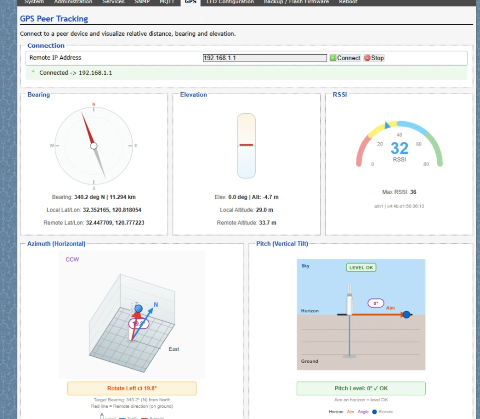
  1. The device automatically obtains its GPS coordinates.
  2. The remote site device shares its location information.
  3. The web interface calculates the optimal alignment direction.
  4. The system provides recommended:
  • Horizontal rotation angle (Azimuth)
  • Vertical tilt angle (Elevation)

Instead of asking:

“Which direction should I point this antenna?”

The system tells you:

“Rotate 127.5° horizontally and tilt 8.3° upward.”


Simplifying Long-Distance Wireless Deployment

For outdoor wireless networks, especially:

  • WISP networks
  • Rural broadband
  • Industrial campuses
  • Mining sites
  • Smart agriculture
  • Remote monitoring systems

deployment efficiency is critical.

GPS-assisted alignment can help engineers:

✅ Reduce installation time

✅ Minimize alignment errors

✅ Improve first-time connection success rate

✅ Simplify remote deployment and maintenance


How It Works

A GPS-enabled wireless platform combines:

1. Location Awareness

Each device knows its own:

  • Latitude
  • Longitude
  • Position information

2. Remote Device Coordination

The AP exchanges location data with the remote endpoint.

3. Direction Calculation

Based on two GPS points, the system calculates:

  • Distance between sites
  • Direction angle
  • Antenna pointing recommendation

4. Web-Based Guidance

Engineers can view the recommended installation angle directly through the device management interface.

Article content

No additional measurement tools required.


Designed for Next-Generation Outdoor Connectivity

524WiFi and Wallys have integrated GPS capability into selected industrial wireless platforms, including:

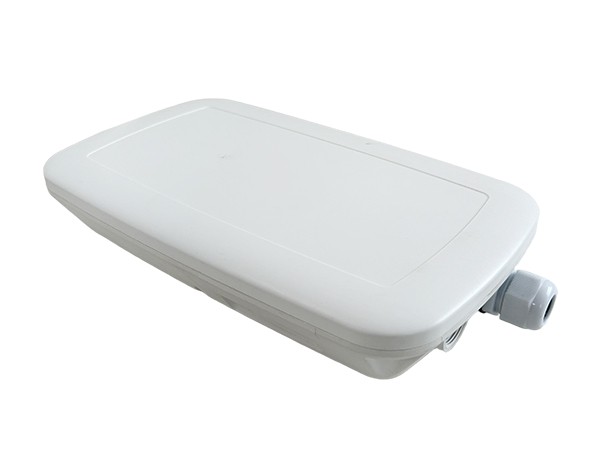
524WiFI WiFi 6 Long Range Kit

DRWAVE-1000 Built around Qualcomm IPQ5018 platform, designed for industrial networking applications requiring reliable wireless connectivity.

Article content

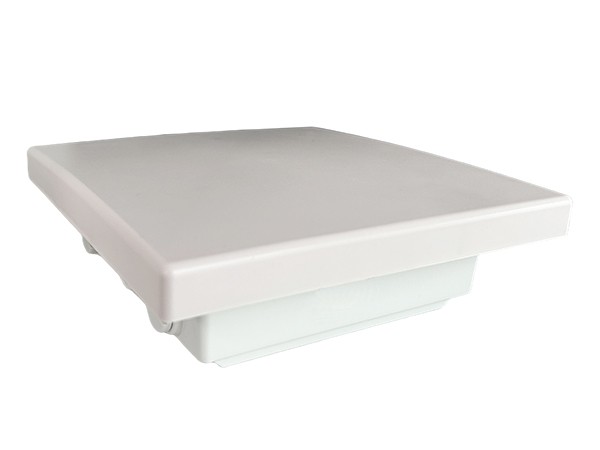
524WiFi WiFi 7 Long Range Kit

Powered by Qualcomm IPQ9574, supporting next-generation high-performance wireless applications.

Article content

With GPS integration, these platforms enable smarter deployment possibilities for long-range wireless networks.

Posted on

A Smarter Drone Still Needs a Stronger Wireless Link

The future of drones is no longer only about flying.

Modern drones are becoming intelligent platforms equipped with:

  • AI vision systems
  • Autonomous navigation
  • Real-time data processing
  • Advanced sensors
  • Edge AI computing capabilities

But behind every smart drone, there is one critical infrastructure that is often overlooked:

Reliable wireless connectivity.

Because even the most advanced AI system becomes limited when the connection is unstable.


AI Makes Drones Smarter. Connectivity Makes Them Useful.

A drone performing industrial inspection, mapping, agriculture monitoring, or security missions needs to continuously exchange large amounts of data.

It needs to:

  • Stream high-resolution video in real time
  • Transfer sensor and vision data
  • Maintain low-latency control communication
  • Stay connected during high-speed movement

The wireless link is no longer just a communication channel.

It becomes the nervous system of an autonomous flying machine.


Why Drone Applications Need More Than Traditional Wireless Connectivity

Many UAV applications operate in challenging environments:

  • Long-range communication
  • High-speed mobility
  • Complex RF environments
  • Multiple drones working simultaneously
  • High-bandwidth AI data transmission

For these scenarios, peak speed alone is not enough.

A professional drone platform requires:

  • Stable connectivity
  • Low-latency response
  • Strong interference resistance
  • Reliable performance during long operation cycles

WiFi 6 and WiFi 7: Building the Wireless Foundation for Next-Generation UAVs

As drones become more intelligent, wireless technology must evolve to support higher demands.

Advanced WiFi platforms enable:

High-bandwidth AI applications

Real-time video streaming, multi-camera systems, and edge AI processing require fast and reliable data transmission.

Low-latency autonomous control

Faster response helps support autonomous navigation and mission-critical operations.

Multi-device communication

Future drone fleets and collaborative robotic systems will require efficient wireless networking.


524WiFi Industrial WiFi Modules for Intelligent Drone Platforms

For drone developers, selecting a wireless module is not only about maximum throughput.

Important considerations include:

  • Industrial-grade chipset platform
  • Driver and software support
  • Thermal stability
  • Flexible integration options
  • Long-term supply availability

Based on Qualcomm wireless platforms, Wallys provides WiFi solutions designed for industrial and AI-driven applications.


DR9274E WiFi 7 Module: Enabling Next-Generation Autonomous Drones

Powered by Qualcomm QCN9274 and QCN6274 platforms, the DR9274E WiFi 7 module is designed for applications requiring higher bandwidth, advanced connectivity, and future-ready wireless performance.

Potential applications include:

  • AI vision drones
  • Autonomous aerial robots
  • Industrial inspection UAVs
  • High-resolution video transmission systems

With WiFi 7 capabilities, it provides a powerful wireless foundation for intelligent devices requiring faster data exchange and more reliable connections.


DR9074 WiFi 6E Module: Reliable Connectivity for Industrial UAV Applications

Based on Qualcomm QCN9024, the DR9074 supports Tri-Band WiFi 6E operation across 2.4GHz, 5GHz, and 6GHz.

It is designed for applications requiring:

  • Stable wireless links
  • High-performance data transmission
  • Flexible frequency selection
  • Industrial deployment reliability

Suitable for:

  • Inspection drones
  • Mapping systems
  • Smart agriculture UAVs
  • Edge AI devices
Article content

Connecting the Future of Autonomous Flight

The future of drones will not only depend on better AI algorithms.

It will depend on the complete technology ecosystem:

AI provides intelligence. Sensors provide perception. Wireless connectivity enables action.

A smarter drone still needs a stronger wireless link.

At 524WiFi and Wallys, we are committed to providing Qualcomm-based WiFi 6 and WiFi 7 platforms for the next generation of drones, robotics, and edge AI applications.

The future of autonomous flight will not only be smarter.

It will be better connected.

Posted on — Leave a comment

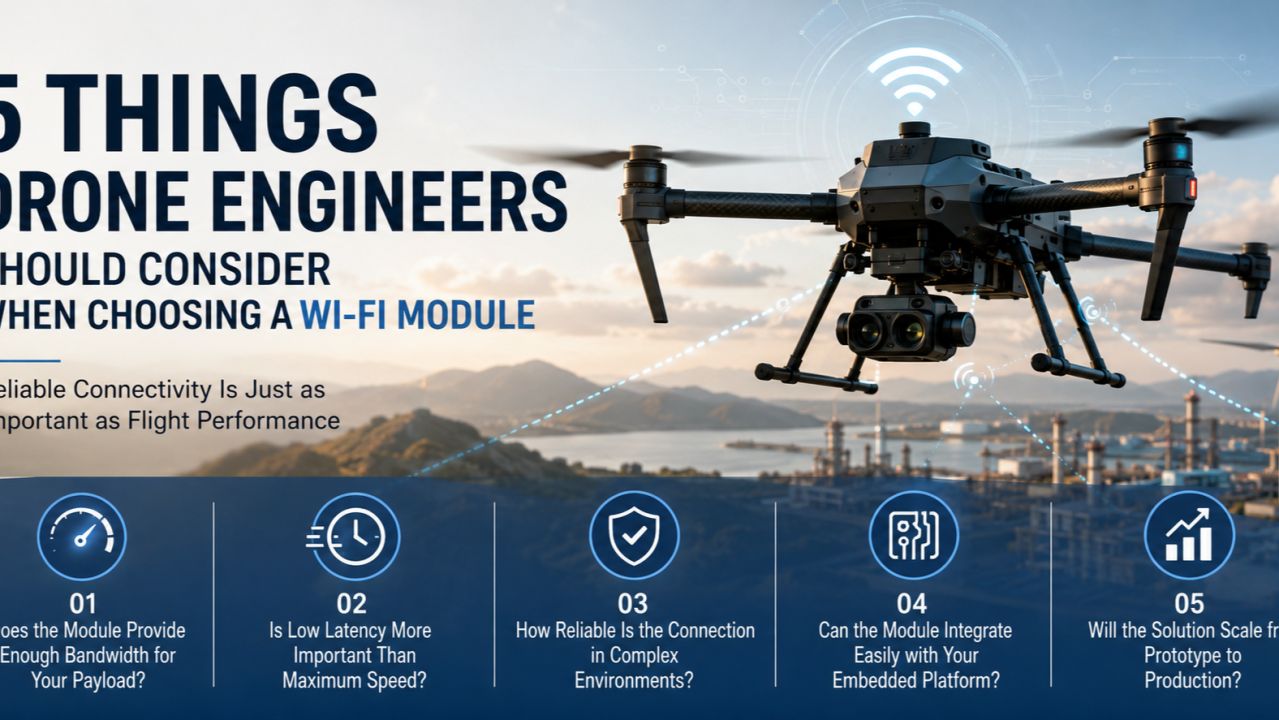
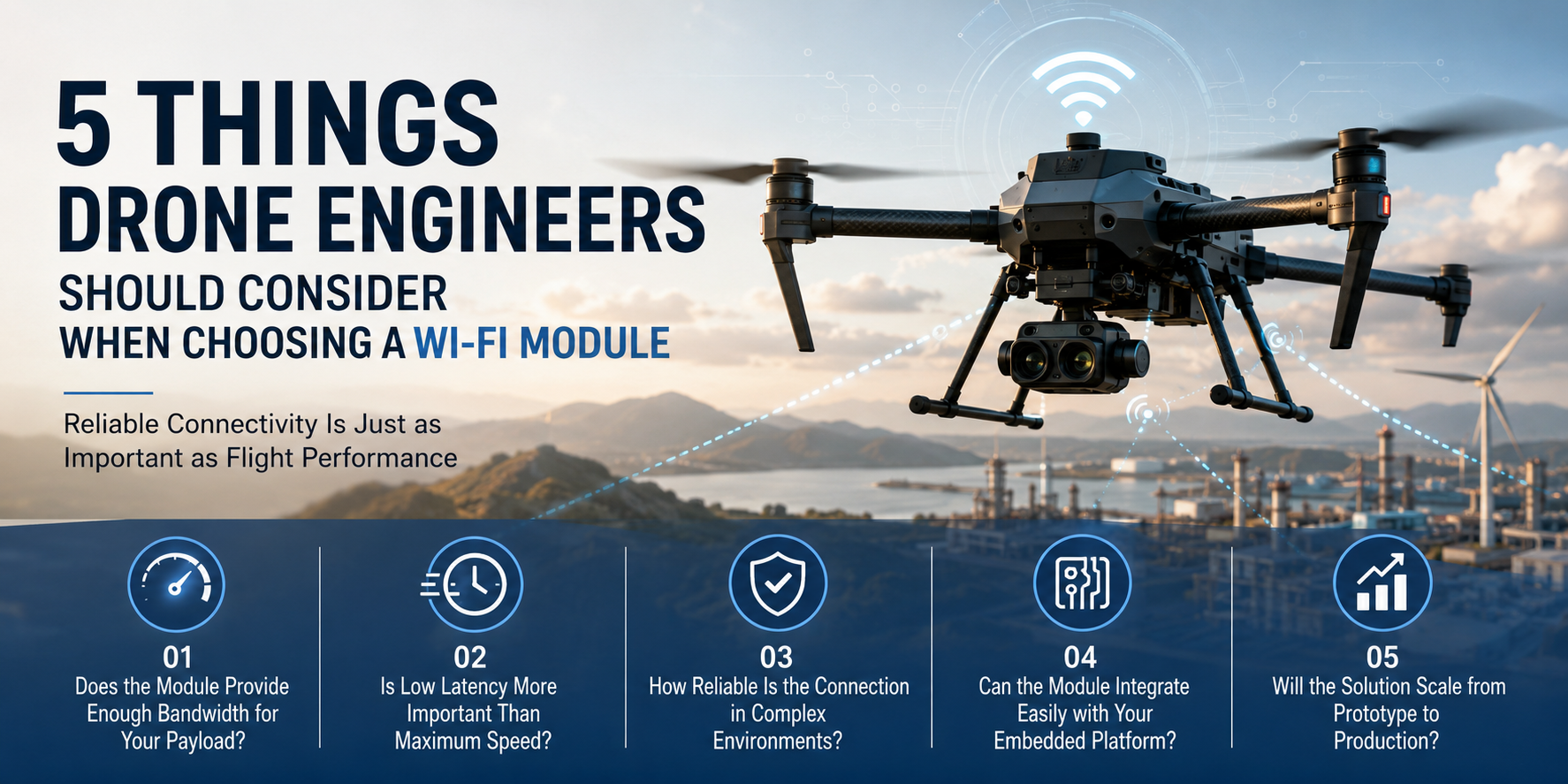
5 Things Drone Engineers Should Consider When Choosing a Wi-Fi Module

Reliable Connectivity Is Just as Important as Flight Performance

Modern drones are becoming far more than flying cameras.

Today, drones are used for:

  • Infrastructure inspection
  • Precision agriculture
  • Public safety
  • Mapping and surveying
  • Warehouse inventory
  • Mining operations
  • Industrial monitoring

At the same time, onboard computing is evolving rapidly. AI processors, multiple cameras, LiDAR, thermal imaging, and edge computing are becoming standard components of professional UAV platforms.

While engineers often spend months selecting flight controllers, sensors, and AI hardware, one component is frequently underestimated:

The wireless communication module.

Article content

A poorly chosen Wi-Fi module can become the bottleneck of an otherwise excellent drone design.

Here are five key factors every drone engineer should evaluate before selecting a wireless communication solution.


1. Does the Module Provide Enough Bandwidth for Your Payload?

Not every drone transmits the same type of data.

A basic inspection drone may only send telemetry and compressed video.

An AI-powered drone may simultaneously transmit:

  • Multiple HD video streams
  • AI inference results
  • Telemetry data
  • Sensor information
  • Remote control commands

As payloads become more sophisticated, wireless bandwidth quickly becomes a limiting factor.

When evaluating a Wi-Fi module, consider:

  • Maximum throughput
  • Number of spatial streams
  • Channel bandwidth
  • Support for Wi-Fi 6 or Wi-Fi 7

Higher bandwidth doesn’t simply improve video quality—it also creates more capacity for future upgrades.


2. Is Low Latency More Important Than Maximum Speed?

Many engineers focus on peak data rates.

However, drones often benefit more from consistent low latency than from maximum theoretical throughput.

For applications such as:

  • Remote piloting
  • Autonomous navigation
  • AI-assisted obstacle avoidance
  • Real-time monitoring

Stable communication is far more valuable than occasional bursts of high speed.

Look beyond the headline specifications and evaluate how the wireless solution performs under continuous, real-world workloads.


3. How Reliable Is the Connection in Complex Environments?

Drones rarely operate in ideal radio environments.

They may fly near:

  • Buildings
  • Metal structures
  • Industrial equipment
  • Trees
  • Utility infrastructure

These environments introduce interference, signal reflections, and changing link conditions.

A reliable Wi-Fi module should support features that help maintain stable communication under challenging conditions.

Modern technologies such as Wi-Fi 6 and Wi-Fi 7 introduce significant improvements in efficiency, interference management, and overall reliability compared with earlier generations.

For industrial UAVs, connection stability is often more important than achieving the highest benchmark speeds.


4. Can the Module Integrate Easily with Your Embedded Platform?

Selecting a Wi-Fi module is not only about radio performance.

Engineers should also consider integration.

Questions worth asking include:

  • Does it support Linux or OpenWrt?
  • Are software drivers actively maintained?
  • Is the hardware interface compatible with your design?
  • Is documentation readily available?
  • Can the module integrate with NVIDIA Jetson or other edge AI platforms?

Reducing development complexity can significantly shorten time-to-market.

Choosing a well-supported platform often saves more engineering time than selecting a module based solely on specifications.


5. Will the Solution Scale from Prototype to Production?

Many wireless solutions perform well during prototyping.

Production introduces different challenges:

  • Long-term availability
  • Industrial reliability
  • Certification requirements
  • Thermal performance
  • Supply chain stability

Choosing a communication platform with a clear product roadmap helps avoid redesigns later in the project lifecycle.

Engineers should think beyond the first prototype and evaluate whether the wireless solution can support future production volumes and product evolution.


Connectivity Is Becoming Part of the Drone Architecture

Modern drones are evolving into flying edge computing platforms.

A typical professional UAV now combines:

  • Flight control systems
  • AI processors
  • Vision sensors
  • Navigation systems
  • High-speed wireless communication

Each subsystem depends on the others.

Even the most advanced AI algorithms become less effective if communication is unstable.

Reliable wireless connectivity is no longer just another hardware component.

It has become part of the overall system architecture.


Looking Ahead

The next generation of drones will continue to demand:

  • Higher bandwidth
  • Lower latency
  • More reliable wireless links
  • Better support for AI workloads
  • Faster integration with embedded computing platforms

Selecting the right Wi-Fi module today is not simply about improving communication performance.

It is about building a platform that can support the future of autonomous aerial systems.

As drones become smarter, wireless connectivity will play an increasingly important role in enabling safe, efficient, and scalable operations.

Because in autonomous systems, intelligence may guide the mission—but connectivity keeps it flying.


What factors matter most when your team selects a wireless communication solution for UAV projects?

I’d be interested to hear how other drone engineers approach this decision.

Posted on

Why IPQ5322 is the Ideal Choice for Wi-Fi 7 IoT Networks

As the demand for faster, more reliable wireless connectivity continues to grow, the need for advanced networking solutions has never been greater. One of the standout solutions for next-generation wireless networks is the IPQ5322 chip, which supports Wi-Fi 7 (802.11be). Developed by Qualcomm, the IPQ5322 is optimized to deliver exceptional performance, efficiency, and scalability, making it the perfect choice for IoT (Internet of Things) applications that require high-speed, low-latency connections. In this article, we’ll explore why the IPQ5322 is the ideal solution for Wi-Fi 7 IoT networks.

1. Wi-Fi 7: The Future of Connectivity

The IPQ5322 is built to support Wi-Fi 7, the latest Wi-Fi standard offering several key enhancements over its predecessors. Wi-Fi 7 introduces wider channels, faster data transfer speeds, and lower latency, providing a significantly better user experience. With Wi-Fi 7, the IPQ5322 is capable of supporting multi-gigabit speeds and seamless, stable connections even in high-demand environments. This is particularly crucial for IoT devices that need to transfer large amounts of data quickly and reliably.

2. High-Speed Data Transfer for IoT Devices

One of the main advantages of Wi-Fi 7, and by extension the IPQ5322, is its ability to handle higher bandwidth and support more devices simultaneously. This is essential for IoT networks where devices like sensors, cameras, and smart devices are constantly communicating with each other. The increased data transfer rates provided by Wi-Fi 7 enable faster communication between devices, which is crucial for time-sensitive applications like industrial automation, smart cities, and healthcare monitoring.

With the IPQ5322, IoT networks can experience high-speed data transfer without sacrificing reliability, allowing devices to operate smoothly and efficiently even in crowded environments with many connected devices.

3. Low Latency for Real-Time IoT Applications

Latency is a critical factor for many IoT applications that require real-time communication. The IPQ5322 supports low-latency operation thanks to the improvements in Wi-Fi 7, ensuring that data is transmitted with minimal delay. This makes the chip ideal for mission-critical IoT applications, such as autonomous vehicles, remote surgery, or smart grids, where milliseconds matter.

The low latency offered by the IPQ5322 ensures that data is transmitted quickly, helping to reduce any potential delays that could compromise the performance of these real-time systems.

4. Efficient Use of Spectrum with Multi-Link Operation (MLO)

Wi-Fi 7 introduces Multi-Link Operation (MLO), a feature that enables devices to use multiple frequency bands simultaneously, improving throughput, reliability, and reducing interference. The IPQ5322 fully supports MLO, making it possible to aggregate 2.4GHz, 5GHz, and 6GHz bands for more efficient and flexible use of the wireless spectrum.

This feature is particularly valuable in IoT environments where devices may be spread across large areas, or where interference from other networks can degrade performance. MLO ensures that devices stay connected and operate at optimal speeds, no matter where they are located within the network.

5. Enhanced Network Efficiency and Scalability

IoT networks are typically large-scale systems consisting of many interconnected devices. The IPQ5322 excels in supporting large, scalable IoT networks by enabling devices to operate with optimal efficiency. With Wi-Fi 7’s advanced modulation techniques, the chip can handle high-density environments, where a large number of devices are simultaneously transmitting and receiving data.

The increased capacity of Wi-Fi 7 ensures that IoT networks can grow without sacrificing performance. Whether it’s a smart home with hundreds of devices or an industrial setting with thousands of sensors and machines, the IPQ5322 can scale to meet the needs of the network.

6. Improved Security for IoT Applications

Security is a top priority in IoT networks, where devices often handle sensitive data. The IPQ5322 integrates advanced security features to protect IoT devices from threats. Wi-Fi 7 includes enhanced encryption protocols and more secure authentication methods, ensuring that data transmitted over the network remains safe from unauthorized access.

The IPQ5322’s security features are critical for industries that require high levels of data integrity, such as healthcare, finance, and critical infrastructure. With the IPQ5322, IoT devices can communicate securely, safeguarding both user data and network integrity.

7. Energy Efficiency for Long-Lasting IoT Devices

While Wi-Fi 7 provides superior performance, it also maintains energy efficiency, which is crucial for IoT devices that run on batteries or need to minimize power consumption. The IPQ5322’s power-efficient design ensures that devices can operate for longer periods without frequent charging, making it ideal for battery-powered IoT devices deployed in remote or hard-to-reach locations.

8. Cost-Effective for Mass Deployment

Despite its high-end performance, the IPQ5322 offers a cost-effective solution for deploying Wi-Fi 7 IoT networks at scale. The chip’s affordability, combined with its advanced capabilities, makes it an attractive choice for businesses and organizations looking to deploy large-scale IoT solutions without exceeding their budgets.

DR5322 Product Information

The DR5322 is a powerful wireless solution based on the Qualcomm IPQ5322 chip, designed to meet the growing demands of modern IoT networks. Here are some key features and applications of the DR5322:

DR5322 Features

  • Qualcomm IPQ5322 Quad-Core Cortex-A53 @ 1.5GHz processor for robust performance.
  • 2×2 on-board 2.4GHz radio, offering up to 573Mbps physical data rate for reliable connectivity.
  • Supports 2×2 5GHz & 2×2 6GHz QCN9274/QCN6274 Wi-Fi 7 modules, delivering up to 5764Mbps physical data rate for high-speed wireless transmission.
  • Equipped with 4 x 2.5Gbps Ethernet ports and 1x 10Gbps SFP port, providing fast and flexible wired connectivity options.

Applications

  • 802.11be MU-MIMO OFDMA Access Point: Ideal for high-demand wireless environments with multiple devices.
  • Internet of Things (IoT): Perfect for large-scale IoT networks that require high-speed, low-latency connectivity.
  • HD Streaming and Gaming: Supports high-definition content streaming and low-latency gaming, making it suitable for entertainment applications.

The DR5322 is a versatile, high-performance solution for IoT, smart homes, industrial applications, and more, offering next-generation Wi-Fi 7 capabilities with advanced features for seamless connectivity and optimal performance.

Posted on

Can WiFi 7 Meet the Growing Demands of Modern Manufacturing?

WiFi 7: Redefining the Game of Industrial Connectivity

As industries across the globe continue to evolve, the need for robust and efficient connectivity solutions has never been more critical. Enter WiFi 7, the latest advancement in wireless technology, which promises to transform industrial connectivity like never before. With its unparalleled speed, low latency, and ability to support a vast number of devices, WiFi 7 is set to redefine the landscape of industrial applications.

Unmatched Speed and Low Latency

One of the standout features of WiFi 7 is its ability to deliver incredibly high data rates. With potential speeds reaching up to 46 Gbps, WiFi 7 enables real-time data transmission that is essential for modern industrial operations. This speed is particularly beneficial for applications such as automated manufacturing processes, where quick communication between machines is crucial. Additionally, the low latency characteristic of WiFi 7 ensures that commands and data packets are transmitted almost instantaneously, enhancing the responsiveness of industrial systems.

Multi-Link Operation (MLO): The Game Changer

WiFi 7 introduces a groundbreaking feature known as Multi-Link Operation (MLO). This allows devices to connect to multiple frequency bands simultaneously, optimizing network performance and reliability. In environments where interference is a common issue, MLO provides a solution by seamlessly switching between channels to maintain a stable connection. This is particularly important in industrial settings, where equipment operates in close proximity and reliable communication is essential for safety and efficiency.

Increased Device Connectivity

The Internet of Things (IoT) is rapidly becoming a cornerstone of industrial operations, with countless devices needing to connect and communicate. WiFi 7 excels in this area, supporting a significantly higher number of simultaneous connections compared to its predecessors. This capability allows factories and warehouses to deploy a wide array of smart sensors, cameras, and other devices without the fear of overwhelming the network. As a result, businesses can gather more data, monitor performance in real time, and optimize operations based on actionable insights.

Efficient Spectrum Utilization

WiFi 7 employs advanced technologies that enable more efficient spectrum utilization, reducing congestion and enhancing overall network performance. By utilizing wider channels and advanced modulation techniques, WiFi 7 can maximize throughput while minimizing interference. This is especially beneficial in complex industrial environments where multiple devices compete for bandwidth. With WiFi 7, manufacturers can ensure their networks remain agile and efficient, even as demands increase.

Supporting Edge Computing

As industries shift toward data-driven decision-making, edge computing is becoming increasingly important. WiFi 7’s capabilities align perfectly with this trend, enabling data processing to occur closer to the source. This reduces the need for constant communication with centralized servers, decreasing latency and improving response times. In applications such as predictive maintenance, where timely data analysis can prevent costly downtimes, WiFi 7 provides the necessary infrastructure for effective edge computing.

Future-Proofing Industrial Connectivity

Investing in WiFi 7 not only addresses current connectivity challenges but also prepares industries for the future. As technologies evolve, and the demand for faster, more reliable connections grows, WiFi 7 is positioned to meet these needs. Its compatibility with existing WiFi standards ensures a smooth transition, allowing businesses to upgrade their networks without significant disruptions.

Conclusion

WiFi 7 is more than just a technological upgrade; it is a paradigm shift that will redefine industrial connectivity. With its high speed, low latency, multi-link capabilities, and increased device support, WiFi 7 empowers businesses to embrace the future of smart manufacturing and IoT integration. As industries continue to navigate the complexities of modernization, WiFi 7 stands ready to lead the way, transforming how we connect, communicate, and innovate in the industrial realm. Embrace the change, and prepare for a new era of connectivity with WiFi 7!

Posted on

Which IoT Network Is Right for You: Wi-Fi 7, LoRa, or NB-IoT?

Exploring the Differences Between Wi-Fi 7, LoRa, and NB-IoT in IoT Applications

As the Internet of Things (IoT) continues to expand, more specialized networking solutions have emerged to meet various connectivity requirements. Among them, Wi-Fi 7, LoRa, and NB-IoT are prominent technologies with unique attributes. While each technology offers specific benefits, understanding their differences helps businesses and developers choose the best fit for their IoT applications. This article examines how Wi-Fi 7 compares to LoRa and NB-IoT, focusing on coverage, data speed, power consumption, and typical applications.

1. Overview of Wi-Fi 7, LoRa, and NB-IoT

  • Wi-Fi 7 is the latest iteration of the Wi-Fi standard, offering ultra-high-speed connectivity with significant improvements in latency, capacity, and efficiency over its predecessors. It is optimized for data-intensive, low-latency applications and operates primarily within high-frequency bands.
  • LoRa (Long Range) is a low-power, long-range wireless protocol designed for battery-operated devices over large areas. It is part of the LoRaWAN standard and operates in unlicensed sub-GHz frequency bands, making it ideal for low data-rate applications in rural or urban areas.
  • NB-IoT (Narrowband IoT) is a cellular IoT standard under LTE networks, focused on low-power, wide-area network (LPWAN) technology. It provides excellent penetration and coverage, especially in hard-to-reach indoor areas, with a focus on efficient energy use and long-term battery life.

2. Frequency Bands and Coverage

  • Wi-Fi 7 operates in the 2.4GHz, 5GHz, and 6GHz bands, giving it significant bandwidth and high data speeds but limiting its range compared to LPWAN technologies. It is best suited for areas with a high density of devices, such as homes, offices, and industrial sites with robust infrastructure.
  • LoRa uses sub-GHz bands (typically 915 MHz in the Americas, 868 MHz in Europe) to achieve longer-range coverage, with signal reach often extending up to 15 km in rural settings. Its lower frequency allows it to penetrate buildings and other obstacles effectively, ideal for both urban and rural IoT deployments.
  • NB-IoT operates in licensed LTE bands, giving it excellent coverage and allowing it to reach deep indoors and across extensive areas. As a cellular technology, NB-IoT can leverage existing cellular infrastructure, providing broader coverage even in remote locations.

3. Data Speed and Latency

  • Wi-Fi 7 is built for ultra-fast data speeds, theoretically up to 46 Gbps with 320MHz channels, enabling low-latency, high-bandwidth applications like real-time video streaming, AR/VR, and smart home automation. It is optimized for situations where large volumes of data need rapid processing.
  • LoRa supports lower data rates, generally between 0.3 to 50 kbps. This slower speed makes it unsuitable for high-data applications but perfect for applications that transmit small amounts of data sporadically, like temperature or air quality sensors.
  • NB-IoT offers moderate data speeds of up to 250 kbps, which, while significantly lower than Wi-Fi 7, is still sufficient for many IoT applications such as smart metering and environmental monitoring. NB-IoT has moderate latency, generally between 1.5 to 10 seconds, which suits non-real-time applications.

4. Power Consumption

  • Wi-Fi 7 requires more power than LoRa or NB-IoT, making it best suited for applications with continuous power sources, such as AC-powered devices or rechargeable systems. Its high data throughput demands substantial power, and thus it is less ideal for battery-powered IoT devices.
  • LoRa is highly efficient in terms of power consumption, designed to support low-power, battery-operated devices with lifespans of up to 10 years. Its low transmission rate and periodic data transmission keep energy use minimal, making it a popular choice for remote or hard-to-reach sensors.
  • NB-IoT also focuses on low power consumption, using a simplified communication protocol that allows devices to stay in sleep mode for extended periods. Devices using NB-IoT can often operate for several years on a single battery, making it well-suited for battery-powered applications like water meters and smart agriculture.

5. Security and Reliability

  • Wi-Fi 7 builds on Wi-Fi 6’s robust security protocols, including WPA3 and enhanced encryption standards, which make it highly secure for data-sensitive applications in private networks. However, since Wi-Fi 7 operates on unlicensed bands, it may face interference from other devices.
  • LoRa security is managed by the LoRaWAN protocol, which includes AES-128 encryption. While secure, it may not match Wi-Fi 7’s advanced security measures, making it less suited for highly sensitive data. However, LoRa’s long-range capability ensures robust reliability across vast areas.
  • NB-IoT leverages cellular security protocols, offering robust encryption and secure authentication. Operating over licensed LTE bands, it is highly reliable and less susceptible to interference, making it ideal for mission-critical IoT applications.

6. Key Applications for Each Technology

  • Wi-Fi 7: Given its high speed and low latency, Wi-Fi 7 is ideal for smart homes, industrial automation, AR/VR applications, HD streaming, and environments with dense device populations that require substantial bandwidth and quick response times.
  • LoRa: Due to its range and power efficiency, LoRa is well-suited for applications like smart agriculture, environmental monitoring, and asset tracking. It is ideal for areas with dispersed sensors, requiring minimal data but reliable connectivity over long distances.
  • NB-IoT: NB-IoT’s strength lies in smart metering, smart cities, health monitoring, and applications requiring consistent coverage in challenging areas, such as underground or indoor locations. Its low-power nature and reliable cellular infrastructure make it highly versatile for various IoT needs.

7. Summary: Choosing the Right Technology

Summary: Choosing the Right Technology

Conclusion

Wi-Fi 7, LoRa, and NB-IoT each excel in different areas of IoT connectivity. Wi-Fi 7 provides high data rates and low latency for bandwidth-intensive, real-time applications but requires consistent power sources. LoRa offers extensive range and low power usage for rural or low-data applications, while NB-IoT provides reliable cellular connectivity with excellent indoor penetration and low power demands. Selecting the right technology depends on your specific requirements in terms of range, power, data speed, and environmental conditions.

524WiFi DR9274 Wi-Fi 7 Network Card

The 524WiFi 7 DR9274 network card, built on Qualcomm’s QCN9274 chip, is designed for high-performance Wi-Fi 7 applications. Featuring a 320MHz ultra-wide channel and 4×4 MIMO configuration on the 6GHz band, this card offers top-tier performance for applications requiring low latency and high data throughput, including industrial automation, smart home environments, and mesh networking setups. With its M.2 interface and compact form factor, it’s easy to integrate into various devices, providing robust and reliable network connectivity.

Posted on

QCN9274 and Mesh Networks: A Game-Changer for Seamless Connectivity

How QCN9274 Supports Efficient Operation of Mesh Network Systems

With the increasing number of IoT devices and the growing demand for seamless connectivity, mesh network systems have become the preferred choice for modern homes, enterprises, and industrial networks. Qualcomm’s QCN9274 chip stands out with its high performance, low latency, and robust connectivity capabilities, providing essential support for the efficient operation of mesh networks. This article explores how QCN9274 enhances mesh networks through its key features and benefits.

1. Basics of Mesh Network Systems

Mesh networks use multiple routing nodes that connect with each other, expanding network coverage across larger areas. These nodes communicate, forming a self-healing, adaptive network that remains stable even if some nodes fail or encounter interference. This characteristic is essential in large-scale network deployments, such as smart homes, industrial parks, and office buildings.

2. Key Features of QCN9274 in Mesh Networks

The QCN9274, Qualcomm’s Wi-Fi 7 chip, has powerful network processing capabilities and advanced wireless features. Below are the core technologies and advantages QCN9274 brings to mesh network systems for efficient operation:

1. Multi-Link Operation (MLO) for Reliable Connectivity

QCN9274 supports Multi-Link Operation (MLO) technology in Wi-Fi 7, allowing mesh nodes to communicate over multiple bands, such as 6GHz, 5GHz, and 2.4GHz, simultaneously. MLO enables the network to switch dynamically to clearer frequencies when interference or congestion occurs, maintaining efficient data transmission and stable connections. This dynamic multi-link switching capability reduces latency and interruptions in the mesh network, enhancing overall efficiency.

2. Wider Channels and Advanced Modulation

The QCN9274 chip supports ultra-wide 320MHz channels and 4K QAM modulation, delivering multiple times the bandwidth and data rate compared to Wi-Fi 6 or Wi-Fi 5 standards. For mesh networks, this means multiple nodes can simultaneously transmit large volumes of data without compromising network quality or user experience. The wider channels and advanced modulation make the QCN9274 ideal for bandwidth-intensive applications such as video streaming, real-time gaming, and industrial automation.

3. MU-MIMO and OFDMA for Efficient Multi-User Connections

QCN9274 supports enhanced Multi-User Multiple-Input Multiple-Output (MU-MIMO) and Orthogonal Frequency Division Multiple Access (OFDMA) technologies, allowing mesh networks to handle multiple user devices more efficiently. MU-MIMO enables simultaneous service to multiple endpoints, while OFDMA can divide channel resources into sub-channels for flexible resource allocation. Together, these technologies enable high-quality connections for multiple devices within the mesh network, ideal for high-density device environments.

4. Low Latency and Adaptive Path Selection

Low latency is crucial for mesh networks to ensure rapid data transfer between nodes. QCN9274 features low-latency communication protocols and a powerful network processor for fast data exchange between nodes. Additionally, it has adaptive path selection, allowing real-time routing to the optimal communication path, avoiding congested areas and interference to improve data stability and speed.

5. Efficient Power Management for Long-Term Stability

Low power consumption is essential in large-scale mesh network deployments. QCN9274 integrates smart power management, maintaining high performance while minimizing power usage, allowing nodes to operate reliably for extended periods. This feature is especially valuable in industrial IoT, outdoor, and remotely managed mesh networks where devices need long-lasting and reliable functionality without frequent maintenance.

3. Real-World Applications of QCN9274 in Mesh Networks

Thanks to these technical advantages, QCN9274 excels in mesh network deployments in the following scenarios:

1. Smart Home Networks

In smart home environments with a wide range of Wi-Fi devices, such as smart speakers, cameras, and appliances, QCN9274’s MLO technology and MU-MIMO provide reliable connectivity for every room and area. Low latency and wide channel support also make streaming and video calls smoother, enhancing the user experience.

2. Enterprise and Office Networks

In enterprises, the stability and scalability of mesh networks are crucial, especially in open office spaces and meeting rooms with multiple users. QCN9274’s OFDMA and MU-MIMO capabilities ensure that multiple employees and devices connect seamlessly to the network, even during peak usage, maintaining efficient network performance for video conferencing, file sharing, and cloud storage applications.

3. Industrial IoT and Remote Monitoring

In industrial settings, mesh networks often need to cover large areas and support a high number of low-power, long-connected devices. QCN9274’s low power design and adaptive path selection allow industrial IoT devices to run reliably over long periods. MLO’s multi-link functionality ensures stable connections even in remote monitoring and data collection scenarios, where part of the mesh may encounter interference.

4. 524WiFi DR9274 Wi-Fi 7 Network Card

The 524WiFi and Wallys DR9274 network card, based on Qualcomm’s QCN9274 chip, is specifically designed for high-performance mesh networks. Supporting Wi-Fi 7 standards, it features a 320MHz ultra-wide channel and 4×4 MIMO configuration focused on the 6GHz single band. With its M.2 slot and compact design, it’s easily integrated into various devices, delivering exceptional network performance for smart homes, enterprise offices, and industrial IoT.

5. Conclusion

Qualcomm’s QCN9274 chip, with its support for Multi-Link Operation, wide channel capabilities, MU-MIMO, OFDMA, and low latency, provides strong support for efficient mesh network systems. These technologies ensure that mesh networks maintain stable performance and rapid response times even in complex network environments and with high device connection demands.

By incorporating the QCN9274, enterprises and users can experience a more stable, faster, and reliable mesh network, meeting current network needs and laying the groundwork for future expansion.

Posted on

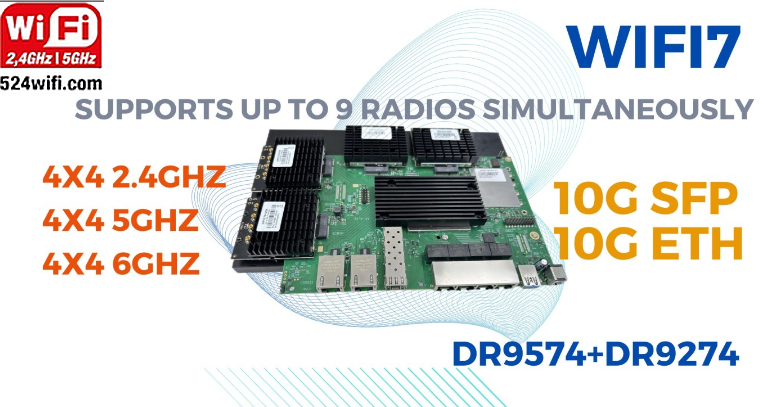
WiFi7 IOT Solution IPQ9574 with QCN9274 Supports Up to 9 Radios Simultaneously What does it brings?

What does it brings?

Imagine a scenario where an industrial-grade WiFi access point (AP) equipped with the capability to operate nine physical radios simultaneously is deployed across logistics, warehousing, ports, industries, and smart cities. Here’s what could happen:

1. Logistics Centers: In logistics centers, these APs could enable real-time tracking and management of goods. Each physical radio could connect to different sensors and devices, monitoring the location, temperature, humidity, and other information of goods. This data could be transmitted to a central control center over the network, enabling precise monitoring and management of logistics operations.

2. Warehousing Facilities: In warehousing facilities, these APs could optimize inventory management and goods allocation. Each physical radio could connect to different shelves or storage areas, synchronizing inventory information in real-time with warehouse management systems, improving inventory turnover rates, and operational efficiency.

3. Ports and Logistics Parks: In ports and logistics parks, these APs could facilitate real-time monitoring and dispatching of ships, containers, and transportation vehicles. Each physical radio could connect to different devices such as security cameras, sensors, and onboard equipment, transmitting data to a monitoring center over the network, ensuring the safe transport and efficient handling of goods.

4. Industrial Production: In industrial production, these APs could optimize the operation of production lines and equipment monitoring. Each physical radio could connect to different production equipment and sensors, transmitting equipment status and production data in real-time to production management systems, enabling automation and intelligence in the production process.

5. Smart Cities: In smart cities, these APs could enable intelligent management of city infrastructure and public services. Each physical radio could connect to different city facilities and sensors, monitoring information such as traffic flow, environmental pollution, energy consumption, and transmitting data to city operation centers over the network, enabling efficient utilization of city resources and sustainable development of the environment.

In summary, deploying an industrial-grade WiFi access point with nine physical radios across logistics, warehousing, ports, industries, and smart cities could lead to more efficient operations, smarter manufacturing, and intelligent city management.

In industrial Application

Configuring all nine radios as access points (APs) can bring several benefits:

1. Increased Device Connectivity: Industrial environments often require connectivity for numerous devices such as machinery, sensors, monitoring equipment, and mobile terminals. By utilizing nine APs, the network can accommodate a larger number of devices simultaneously, facilitating seamless communication and data exchange across various equipment and systems.

2. Enhanced Coverage and Reliability: Industrial facilities often have complex layouts and challenging environments, such as large warehouses, manufacturing floors, or outdoor areas. With multiple APs strategically deployed, the network coverage is extended, ensuring that devices throughout the facility can maintain a reliable connection with minimal dead zones or signal interference.

3. Load Balancing and Traffic Management: Distributing client connections across multiple APs allows for efficient load balancing and traffic management. This helps prevent network congestion and ensures that critical applications or devices receive sufficient bandwidth and priority access to resources, optimizing overall network performance.

4. Redundancy and Fault Tolerance: In industrial applications where uninterrupted operation is crucial, having redundant APs can provide fault tolerance and resilience against network failures. If one AP experiences issues or downtime, nearby devices can seamlessly connect to alternate APs, minimizing disruptions to critical operations.

5. Support for Mobile and IoT Devices: Many industrial processes rely on mobile terminals or IoT devices for data collection, monitoring, and control. With nine APs, the network can accommodate the growing number of wireless devices used in industrial automation, asset tracking, inventory management, and predictive maintenance applications.

Overall, configuring nine radios as APs in industrial environments enhances connectivity, coverage, reliability, and scalability, supporting the demanding requirements of modern industrial operations.

A Quick Overview for 524WiFi Dream WiFi7 modules

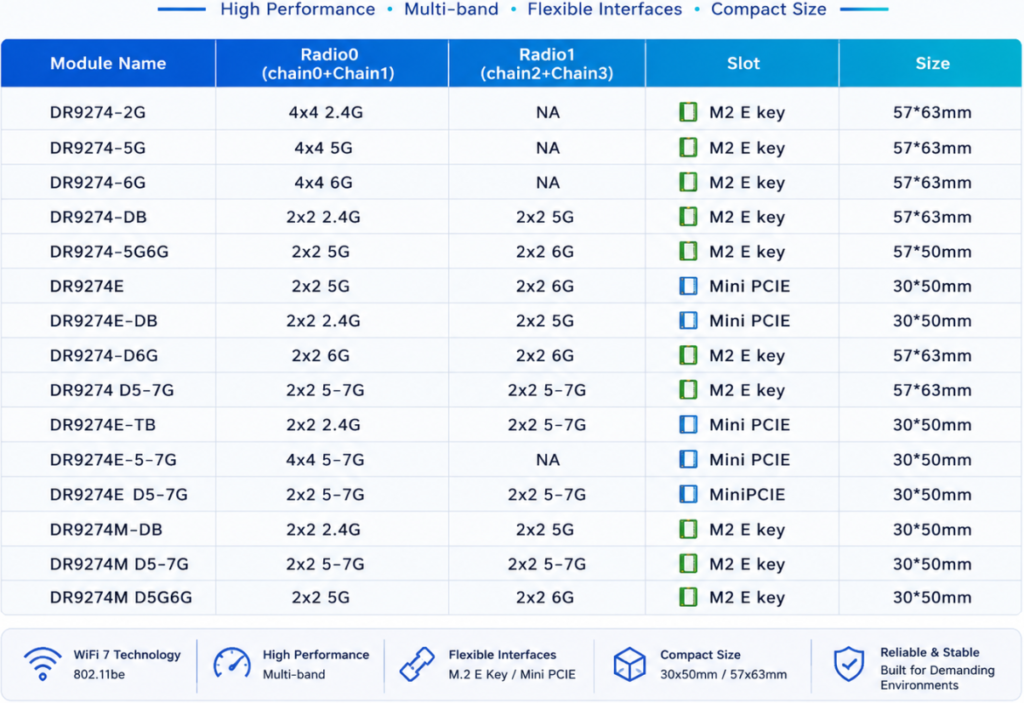
1. DR9274-QCN9274|QCN6274 WiFi7 Single Band 5G

2. DR9274-QCN9274|QCN6274 WiFi7 Single Band 6G

3. DR9274-QCN9274|QCN6274 WiFi7 Dual Band Dual Concurrent-2.4G&5G

4. DR9274-QCN9274|QCN6274 WiFi7 Dual Band Dual Concurrent-5G&6G