
Posted on

The Wi-Fi 7 Revolution: Beyond Speed to Industrial Reliability and MLO

In the world of Industrial IoT, legacy wireless standards are more than just slow—they are bottlenecks. In high-density environments, waiting for a single free channel is a luxury enterprises can no longer afford. This is why Wi-Fi 7 MLO (Multi-Link Operation) is the true game-changer.

At 524WiFi, we view Wi-Fi 7 not just as a speed upgrade, but as an infrastructure overhaul. Imagine a congested highway: MLO doesn’t just increase the speed limit; it adds multiple lanes across 5GHz and 6GHz bands simultaneously, ensuring data flows without interruption.

We recognize that many of our clients are at a crossroads: you need Wi-Fi 7 performance but are locked into existing Mini PCIe architectures.

To bridge this gap, 524WiFi has introduced the AW7990-NPD, the world’s first Wi-Fi 7 BE3600 Mini PCIe module. Powered by the MediaTek MT7990 chipset, this module is specifically engineered to bring enterprise-grade connectivity to industrial robotics, edge computing, and security gateways—without requiring a total system overhaul.

Technical Core & Strategic Advantages :

  • Sub-1GHz Efficiency : Operating in the Sub-1GHz spectrum to ensure superior wall penetration and minimized interference.
  • 1KM+ Transmission : Achieves long-range connectivity exceeding 1 kilometer, ideal for remote sensor monitoring and agricultural IoT.
  • Plug-and-Play Integration : A versatile USB interface that simplifies the addition of Wi-Fi HaLow capabilities to existing gateways, PCs, or embedded controllers.
  • IEEE 802.11ah Standard : Optimized for high-density IoT networks, supporting thousands of nodes with significantly lower power consumption than traditional Wi-Fi.

Why the AW7990-NPD is a Strategic Asset:

  • Extreme Throughput : Leveraging BE3600 dual-band concurrency and 4096-QAM for unprecedented data density.
  • Deterministic Latency : MLO technology ensures a stable, “wire-like” connection even in the most crowded RF environments.
  • Industrial Heritage : A standard Mini PCIe form factor designed for the rigors of high-performance  industrial applications.

We know the industry’s open secret: great hardware is often crippled by poor drivers. At AsiaRF, we don’t just build modules; we build development platforms.

Our MediaTek-powered Wi-Fi 7 solutions are highly optimized for Linux and OpenWrt. We provide the robust software foundation your custom Enterprise APs demand, so your engineering team can stop debugging drivers and start building legendary systems.

Our growth is fueled by a single principle: Stability is everything. We are committed to being the reliable partner you need for the next generation of industrial deployment.

🔗 Explore 𝗼𝘂𝗿 𝗪𝗶-𝗙𝗶 𝟳 𝗰𝗼𝗹𝗹𝗲𝗰𝘁𝗶𝗼𝗻

Posted on

524WiFi 𝑨𝑾7990-𝑵𝑷𝑫: MediTatek Filogic 6 MT7990 𝑾𝒊-𝑭𝒊 7 𝑴𝒊𝒏𝒊 𝑷𝑪𝑰𝒆 𝑴𝒐𝒅𝒖𝒍𝒆


Infrastructure Preservation: Upgrade to 802.11be Without a PCB Redesign

In industrial computing, the lifecycle of your platform is critical. While the industry pivots to Wi-Fi 7, transitioning often necessitates a full-scale hardware overhaul—until the introduction of the 524WiFi AW7990-NPD Mediatek based module.

Technical Core & Strategic Advantages :

  • MediaTek Filogic 600 (MT7990) : Delivers BE3600 dual-band concurrent (DBDC) operation.
  • 4096-QAM Modulation : Achieves a 20% increase in peak data rates compared to Wi-Fi 6.
  • Multi-Link Operation (MLO) : Ensures deterministic latency and link reliability in congested environments.
  • Drop-In Upgrade : Bypasses R&D costs and time-to-market delays by utilizing the standard Mini PCIe form factor.

Optimized for Mission-Critical Verticals :

  • Industrial Robotics : High-bandwidth telemetry for AMRs/AGVs.
  • Edge AI Nodes : Rapid data synchronization for Smart Factory 4.0.
  • Security Gateways : High-throughput processing without thermal throttling.

AW7990-NPD: High-Performance Wi-Fi 7 BE3600 AP Module with MediaTek MT7990AN

AW7990-NPD is an Wi-Fi 7 AP module BE3600 by MediaTek MT7990AN chipset supports Wi-Fi 7 technology and feature IEEE802.11 a/ b/ g/ n/ ac/ ax/ be compliant, 2.4GHz 2×2, 5GHz
3×3 2ss BE3600 Wi-Fi subsystem. The MT7990AN offers feature-rich wireless connectivity at high standards and delivers reliable, cost-effective throughput from an extended distance.

The optimized Wi-Fi baseband algorithms provide superb performance. The intelligent MAC design deploys a highly efficient offload engine and hardware data processing accelerators,
which fully offload Wi-Fi task of the host processor. The MT7976CN is designed to support standard-based features in the areas of security, quality of service, and international regulations, giving end users the greatest performance at any time and in any circumstances.

Pre-certified with CE / FCC / IC, this solution helps accelerate product deployment while lowering certification cost and complexity.

Features

WLAN

  • Wi-Fi compliant
  • IEEE 802.11a, b, g, n, ac, ax, be compliant
  • 2.4GHz 20 and 40 MHz, 2×2
  • 5GHz: 20, 40, 80 and 160 MHz, 3×3 2ss
  • Dual-Band Dual Concurrent (DBDC) iFEM
  • Supports up to 4096-QAM
  • Data rate of up to 688Mbps for 40MHz channel in 2.4Ghz and 2882Mbps for 160MHz in 5GHz mode
  • Integrated power detector to support per packet Tx power control
  • Multi-user multiple input multiple output (MU-MIMO) for Tx and Rx
  • Multi-user Orthogonal Frequency-Division Multiple Access (MU-OFDMA) for Tx and Rx
  • Support STBC, LDPC, Tx beamformer and Rx beamformee
  • Support greenfield mode, mixed mode, and legacy mode

Platform

  • 32bit RISC-V MCU for Wi-Fi protocol and Wi-Fi offload
  • Embedded SRAM and ROM
  • PCIe3.0 interface

Security

  • WFA, WPA, WPA2, WPA3 personal, WPS 2.0

QoS

  • WFA WMM and WMM-PS

Standard

ChipsetMT7990AN with MT7976CN
Memory8M byte
Host InterfaceMini PCIe
Operating VoltageDC 3.3V ± 5%
Power Consumption11.5W
Wireless2.4GHz 2T2R 802.11b/g/n/ac/ax/be5GHz 3T3R 2ss 802.11a/n/ac/ax/be
Frequency Range2.4GHz: 2.412~2.472GHz5GHz: 5.15~5825GHz
Channel Spectrum WidthsSupports 20/40MHz at 2.4GHzSupports 20/40/80/160MHz at 5GHz
AntennaExternal Antenna connector (IPEX) x3
Operating SystemLinux
Environmental TemperatureOperating:-10°C to 70°C, Storage:-20°C to 90°C
Environmental HumidityOperating: 10% to 90%, Storage: Max. 90%
Dimensions (mm)30(W)*51(L)*5.1(H)mm
WeightTBD
CertificationTBD

Package with Heatsink 30x40x25mm Aluminum material

Power consumption maximum is 9W, average is 4 – 8W.
Main board Power Supply design please provide 3.3V 3A, minimum 3.3V 2.5A.

Additional information

Weight0.0255 kg
Dimensions9.5 × 6.5 × 1.5 cm
Posted on

How to Use 524WiFi MEDIATEK Wi-Fi 5, 6, 6E, and Wi-Fi 7 Modules

A practical integration guide with a full 524WiFi MEDIATEK chipset based module overview.

524WiFi provides a complete portfolio of industrial-grade Wi-Fi modules covering Wi-Fi 5 (802.11ac), Wi-Fi 6 (802.11ax), Wi-Fi 6E (ax + 6 GHz), and Wi-Fi 7 (802.11be). These modules are widely used in routers, gateways, industrial IoT, smart cities, robotics, and embedded Linux systems.

This guide explains how to select, install, configure, and deploy AsiaRF Wi-Fi modules, followed by a full comparison table of current Wi-Fi 5/6/6E/7 models.

1. Choosing the Right MEDIATEK Wi-Fi Module

When selecting a module, consider:

  • Wi-Fi generation
    • Wi-Fi 5 → cost-effective, mature ecosystem
    • Wi-Fi 6 → higher efficiency, OFDMA, MU-MIMO
    • Wi-Fi 6E → access to clean 6 GHz spectrum
    • Wi-Fi 7 → ultra-low latency, multi-link operation (MLO)
  • Form factor
    • Mini-PCIe (industrial & networking equipment)
    • M.2 Key-A / Key-E (embedded systems & SBCs)
  • MIMO & throughput
    • 2×2 for compact/low-power designs
    • 4×4 for gateways, APs, and routers
2. Hardware Installation

Physical installation

  1. Insert the module into the Mini-PCIe or M.2 slot
  2. Secure with a screw
  3. Connect antennas using U.FL / MHF4 connectors
  4. Ensure antenna count matches RF chains (2×2 or 4×4)

Power & thermal

  • High-performance Wi-Fi 6/7 modules require:
    • Stable 3.3 V supply
    • Adequate ground plane
    • Optional heatsink or airflow for sustained throughput
3. Driver & OS Support

Linux / OpenWrt

524WiFi MT Mediatek Wi-Fi 6 / 6E / 7 modules are primarily based on MediaTek chipsets and are supported by:

Typical steps:

opkg update

opkg install kmod-mt76 hostapd iw

AP / STA configuration

  • Use hostapd for AP mode
  • Use wpa_supplicant for client mode
  • Configure regulatory domain:

iw reg set US # example

4. Antenna & RF Best Practices
  • Place antennas away from metal enclosures
  • Maintain proper antenna spacing for MIMO
  • Use low-loss coax for external antennas
  • Verify antenna tuning for 2.4 GHz / 5 GHz / 6 GHz
5. Regulatory & 6 GHz Considerations

For Wi-Fi 6E and Wi-Fi 7:

  • 6 GHz availability depends on country regulations
  • Ensure:
    • Correct country code
    • Proper EIRP limits
    • DFS compliance (5 GHz)
6. Validation & Testing

Recommended tests:

  • Throughput: iperf3
  • Stability: 24–72 hr stress test
  • Multi-client load test
  • Thermal monitoring under peak load
7. Full 524WiFI MEDIATEK Wi-Fi Module Table (Wi-Fi 5 → Wi-Fi 7)
ModelWi-Fi StandardBandsForm FactorMIMOChipset FamilyTypical Use Case
AW7615-NP1Wi-Fi 5 (802.11ac)2.4 / 5 GHzMini-PCIe4×4MediaTek MT7615Legacy routers, cost-optimized gateways
AW7915-NP1Wi-Fi 62.4 / 5 GHzMini-PCIe4×4MediaTek MT7915Industrial APs, enterprise gateways
AW7915-NPDWi-Fi 62.4 / 5 GHzMini-PCIe2×2MediaTek MT7915Embedded Linux platforms
AW7915-AE1Wi-Fi 62.4 / 5 GHzM.2 Key-A4×4MediaTek MT7915SBCs, edge computing
AW7915-AEDWi-Fi 62.4 / 5 GHzM.2 Key-E2×2MediaTek MT7915Compact embedded designs
AW7916-NPDWi-Fi 6E2.4 / 5 / 6 GHzMini-PCIe2×3MediaTek MT79166 GHz industrial gateways
✅ AW7916-AEDWi-Fi 6E2.4 / 5 / 6 GHzM.2 Key-E2×3MediaTek MT7916Compact Wi-Fi 6E embedded systems
AW7990-NPDWi-Fi 7 (BE)2.4 / 5 / 6 GHzMini-PCIe3×3MediaTek MT7990Wi-Fi 7 gateways & APs
✅ AW7990-AEDWi-Fi 7 (BE)2.4 / 5 / 6 GHzM.2 Key-E3×3MediaTek MT7990Next-gen embedded Wi-Fi 7 devices
✅ AW7991-AE2Wi-Fi 7 (BE)2.4 / 5 / 6 GHzM.2 Key-A/E3×3MediaTek MT7991High-efficiency Wi-Fi 7 platforms
8. Typical Application Scenarios
  • Industrial IoT gateways
  • Smart city infrastructure
  • AIoT edge devices
  • Enterprise & carrier-grade routers
  • Wi-Fi 7 next-generation APs
  • OpenWrt-based networking products
Conclusion

MEDIATEK Wi-Fi modules provide a clear upgrade path from Wi-Fi 5 to Wi-Fi 7, with consistent Linux/OpenWrt support, industrial-ready form factors, and scalable RF performance. By choosing the right module, following best practices for installation, and leveraging open-source drivers, system integrators can rapidly deploy reliable wireless solutions across diverse markets.

Posted on

Why OpenWrt + WiFi 6 = Future-Proof Networking? Unlock Next-Gen Networking with 524WiFi’ OpenWrt-Supported WiFi 6 Solutions

The demand for high-performance, customizable wireless solutions is surging across industries – from enterprise networks to industrial IoT and smart city deployments. At Wallys Communications, we bridge cutting-edge hardware with open-source flexibility through our OpenWrt-compatible WiFi 6 modules, engineered for reliability and scalability.

Why OpenWrt + WiFi 6 = Future-Proof Networking

OpenWrt Advantages: Full network stack control, lightweight operation (ideal for embedded systems), and 3,000+ software packages

WiFi 6 Benefits:

▶ 4× device capacity vs. WiFi 5

▶ 75% lower latency

▶ 1.8Gbps aggregate throughput (DR7915)

▶ BSS Coloring for dense deployments

Mediatek DR7915 MT7915

Featured Solutions: Enterprise-Grade WiFi 6 Modules

1. DR7915 Mini PCIe Module

✅ Chipset: MediaTek MT7915 + MT7975 (2×2 dual-band)

✅ Performance:

2.4GHz: 23dBm max power, 574Mbps

5GHz: 20dBm max power, 1201Mbps

-40°C to 70°C operating range

✅ Key Features:

DFS radar detection

MU-MIMO & OFDMA

LDPC/STBC encoding

Full OpenWrt 21.02+ support

2. DR4019 – The Robust Foundation for DR7915 WiFi 6 Solutions

DR4019 – The Robust Foundation for DR7915 WiFi 6 Solutions

Why Engineers Choose 524WiFi and Wallys?

🔧 Open-Source First:

Full driver source code access

Community-supported builds

🛠️ Design-to-Deployment Support:

RF layout optimization guidance

Thermal management consulting

FCC/CE pre-certification testing

🌐 Proven in Production:

Batch-to-batch consistency

Implementation Scenarios

• Industrial IoT gateways (5G + WiFi 6 edge computing)

• High-density office APs (200+ concurrent users)

• Outdoor mesh networks (-40°C hardened)

Posted on

Mediatek MT7915 : A Comprehensive Review of Its Features and Benefits

In the rapidly evolving world of wireless networking, the MT7915 stands out as a powerful and versatile solution for modern connectivity needs. Designed to deliver high performance, reliability, and flexibility, this WiFi 6 chip is ideal for a wide range of applications, from industrial IoT to enterprise networking. In this article, we’ll take a deep dive into the features and benefits of the MT7915, and explore why it’s a top choice for next-gen wireless solutions.

Key Features of the MT7915

1. WiFi 6 Technology

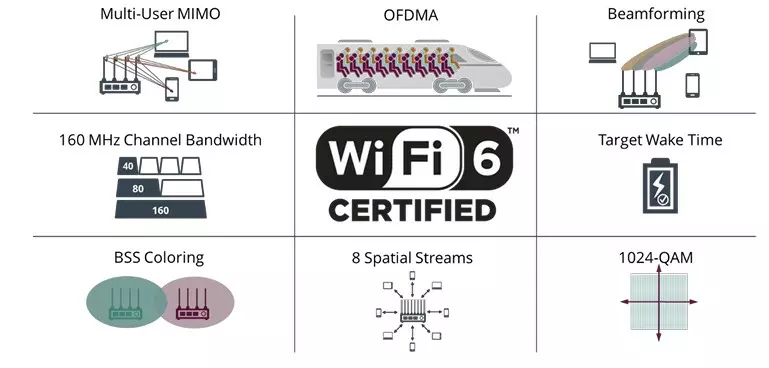
The MT7915 supports 802.11ax (WiFi 6), the latest wireless standard that offers significant improvements over previous generations. With features like OFDMA (Orthogonal Frequency Division Multiple Access) and MU-MIMO (Multi-User Multiple Input Multiple Output), it enables faster speeds, lower latency, and better performance in high-density environments.

2. Dual-Band Support

The MT7915 operates on both 2.4GHz and 5GHz bands, providing flexibility for various networking scenarios. Whether you need broader coverage or higher throughput, this chip delivers optimal performance.

3. High Throughput

With support for 2T2R (2 Transmit, 2 Receive) streams, the MT7915 offers impressive data rates, making it suitable for bandwidth-intensive applications like video streaming, online gaming, and industrial automation.

4. OpenWRT Compatibility

The MT7915 is compatible with OpenWRT, a popular open-source operating system for routers and networking devices. This allows for greater customization and flexibility, enabling developers to tailor the solution to their specific needs.

5. Mini PCIe and M.2 keay A+E or B+M Form Factor

The MT7915 comes in a Mini PCIe or m.2 module, making it easy to integrate into a wide range of devices, from routers and access points to industrial equipment and IoT devices.

6. Industrial-Grade Reliability

Designed for harsh environments, the MT7915 operates reliably in extreme temperatures and conditions, making it ideal for industrial applications.

Benefits of the MT7915

1. Enhanced Performance

The MT7915 delivers faster speeds and lower latency compared to previous-generation WiFi chips, ensuring a seamless user experience even in high-density environments.

2. Cost-Effective Solution

With its high performance and flexibility, the MT7915 offers excellent value for money, making it a cost-effective choice for businesses and developers.

3. Future-Proof Technology

By supporting WiFi 6, the MT7915 ensures that your network is ready for the future, with the ability to handle increasing data demands and new applications.

4. Easy Integration

The Mini PCIe form factor and OpenWRT compatibility make the MT7915 easy to integrate into existing systems, reducing development time and costs.

5. Versatility

From smart homes and offices to industrial IoT and smart cities, the MT7915 is suitable for a wide range of applications, providing reliable connectivity wherever it’s needed.

Applications of the MT7915

1. Industrial IoT

The MT7915’s industrial-grade reliability and high throughput make it ideal for industrial IoT applications, such as factory automation, remote monitoring, and smart logistics.

2. Enterprise Networking

With its support for WiFi 6 and high-density environments, the MT7915 is perfect for enterprise networks, providing fast and reliable connectivity for offices, campuses, and data centers.

3. Smart Homes

The MT7915’s dual-band support and high performance make it a great choice for smart home devices, ensuring seamless connectivity for streaming, gaming, and smart appliances.

4. Public WiFi

The MT7915’s ability to handle high-density environments makes it suitable for public WiFi hotspots, such as airports, malls, and stadiums.

Why Choose Mediatek MT7915 Solution?

At 524WiFi, we offer various MT7915 and MT7916 WiFi 6 / 6E module based on the Mediatek chip, designed to meet the needs of modern wireless networks. Our solution includes:

  • High-quality hardware: Built for durability and performance.
  • OpenWRT support: Enabling customization and flexibility.
  • Expert support: Our team is available to assist with integration and optimization.

To learn more about our MT7915-based solution, please read more : https://524wifi.net/?s=7915

Conclusion

The MT7915 is a powerful and versatile WiFi 6 chip that offers high performance, reliability, and flexibility for a wide range of applications. Whether you’re building an industrial IoT system, an enterprise network, or a smart home solution, the MT7915 is a future-proof choice that delivers exceptional value.

Posted on

Mediatek Unveils the New Wi-Fi 7 Platform AP7988-002, Delivering High-Performance Wireless Solutions for the AI Era

As AI development and the IoT market continue to mature, Wi-Fi has become one of the most universal and indispensable transmission methods in everyday life. However, with the growing demand for data traffic, existing networking technologies are facing challenges. To address these needs, 524WiFi proudly introduces its latest generation Wi-Fi 7 router development board, the AP7988-002. Designed to provide exceptional performance and seamless connectivity in the wireless communications field, the AP7988-002 is powered by the four-core ARM Cortex-A73 MediaTek MT7988A processor, making it the ideal choice for AI-driven communication and high-bandwidth applications.

In terms of wireless performance, the AP7988-002 is equipped with the MediaTek MT7996 Wi-Fi chipset, supporting Wi-Fi 7 technology and offering ultra-high-speed connectivity of up to 19,000 Mbps. This ensures ultra-low latency and outstanding data transmission capabilities, providing the perfect solution for next-generation network applications. To further enhance wireless signal coverage, the AP7988-002 features a high-power amplifier front-end module, significantly boosting signal strength and transmission range. This makes it especially suitable for large-scale infrastructure and environments requiring stable connections, positioning it as an essential networking device for both enterprise and residential applications.

The AP7988-002 is built around versatility, combining Tri-Band Triple Concurrent (TBTC) technology with 10G PHY high-speed wired connectivity. This allows it to handle substantial data transmissions simultaneously, ensuring optimal performance in multi-device connected environments and providing a stable network foundation for high-bandwidth applications.

Additionally, the product comes with an integrated M.2 B Key slot, supporting 4G/5G WWAN modules to offer flexible mobile network connectivity options. The M.2 M Key slot enables storage expansion, making it especially suitable for data-intensive applications such as large-scale data processing needed by small to medium-sized businesses. An integrated GPS module further enhances the device’s positioning capabilities, broadening its adaptability in modern network environments.

The launch of the AP7988-002 solidifies Mediatek’s leadership in wireless connectivity solutions, demonstrating the company’s commitment to technological innovation and laying a solid foundation for IoT applications. 524WiFi continues to drive advancements in wireless technology, striving to improve the performance and ease of use of IoT technologies, expanding the ways people live and work.

This product’s release marks a new milestone for Mediatek in the wireless technology field. With its exceptional performance and flexible application options, it brings an unprecedented network experience to both industries and individual users. For more information, please visit the 524WiFi official website for the latest updates and technical support.

Posted on

Unlocking the Future of Connectivity with Mediatek Wi-Fi 6, 6E, and 7 Modules

In today’s fast-paced digital landscape, the demand for robust and efficient wireless connectivity has never been greater. Mediatek’s cutting-edge Wi-Fi 6, Wi-Fi 6E, and Wi-Fi 7 modules are designed to meet these demands, providing seamless integration with various AI Linux PCs, including popular distributions like Debian, Ubuntu, Fedora, and more. These modules are set to revolutionize how users experience connectivity across multiple platforms.

Key Features of 524WiFi MIDIATEK’s Wi-Fi Modules

Wi-Fi 6 (802.11ax): This standard introduces significant improvements in speed, capacity, and efficiency. With features like Orthogonal Frequency Division Multiple Access (OFDMA) and Multi-User Multiple Input Multiple Output (MU-MIMO), Wi-Fi 6 can handle multiple devices simultaneously without compromising performance. This is particularly beneficial in environments with high device density, such as offices or public spaces.

Wi-Fi 6E: Expanding on the capabilities of Wi-Fi 6, Wi-Fi 6E operates in the newly available 6 GHz band. This additional spectrum allows for more channels, reducing congestion and enabling higher data rates for bandwidth-intensive applications like streaming and gaming. The increased capacity ensures that users can enjoy uninterrupted connectivity even in crowded environments.

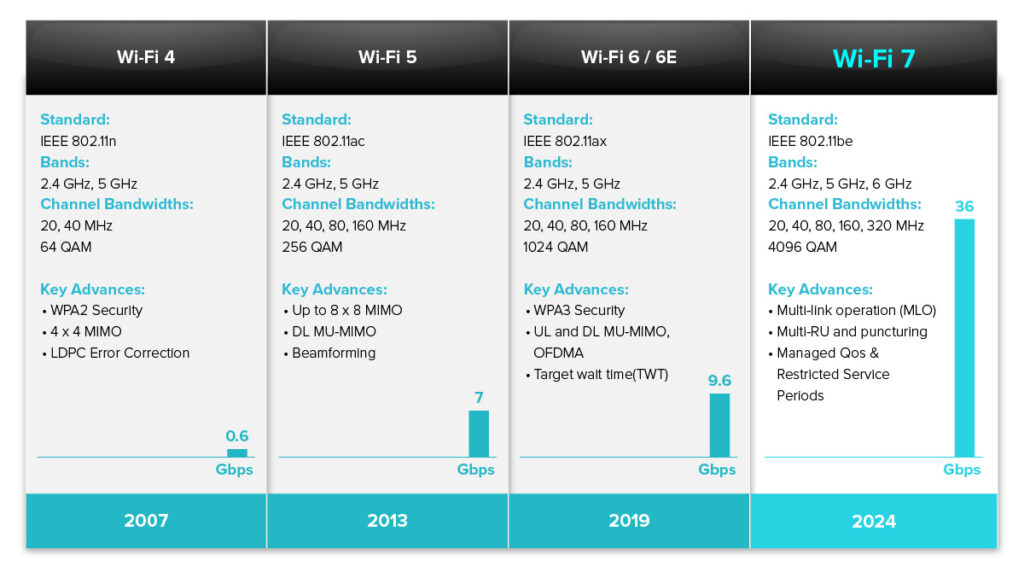
Wi-Fi 7 (802.11be): As the latest advancement in wireless technology, Wi-Fi 7 promises even faster speeds and lower latency through features like 320 MHz channels and enhanced MU-MIMO capabilities. This will be a game-changer for applications requiring real-time data transmission, such as augmented reality (AR) and virtual reality (VR).

Compliance and Certifications

524WiFi’s commitment to quality and safety is underscored by its extensive certifications. Most of their modules have passed rigorous testing and obtained certifications from recognized international bodies, including:

  • FCC (Federal Communications Commission): Ensuring compliance with U.S. regulations for electronic devices.
  • CE (Conformité Européenne): Certifying that products meet European health, safety, and environmental protection standards.
  • IC (Industry Canada): Meeting Canadian regulatory requirements for communication devices.
  • RCM (Regulatory Compliance Mark): Compliance with Australian electrical safety standards.
  • NCC (National Communications Commission): Adhering to Taiwanese communication regulations.

These certifications emphasize the performance and reliability of 524WiFi’s products while demonstrating their dedication to creating a seamlessly connected IoT landscape.

Compatibility with Linux Distributions

Mediatek’s Wi-Fi modules are designed with compatibility in mind, ensuring that they work seamlessly across various Linux distributions:

  • Debian/Ubuntu: Users can easily install drivers through package managers or compile from source if necessary.
  • Fedora/CentOS: The modules support the latest kernels available in these distributions, providing out-of-the-box functionality for most users.
  • Arch Linux/OpenSUSE/Manjaro: These distributions often have up-to-date kernel support, allowing users to take advantage of the latest features offered by Mediatek’s modules.
  • Red Hat Enterprise Linux/Oracle/Linux Mint/Gentoo/Slackware: These distributions may require additional configuration but are fully capable of supporting Mediatek’s Wi-Fi technology with the right drivers.

Enhanced Performance for AI Applications

The integration of Mediatek’s Wi-Fi modules into AI-driven Linux PCs enhances performance significantly. The high throughput and low latency provided by these technologies enable faster data processing and improved communication between devices. This is crucial for applications such as machine learning models that require large datasets to be transmitted quickly and efficiently.Moreover, the power efficiency of Wi-Fi 6 and beyond means that devices can maintain longer operational times without frequent recharging or energy consumption concerns. This is particularly important for IoT devices that rely on continuous connectivity.

Conclusion

Mediatek’s Wi-Fi 6, 6E, and 7 modules represent a significant leap forward in wireless technology. Their compatibility with a wide range of Linux distributions makes them an ideal choice for users looking to enhance their AI Linux PC experience. With faster speeds, increased capacity, improved efficiency, and compliance with international standards, these modules are poised to transform how we connect in an increasingly digital world. Embrace the future of connectivity with 524WiFi’s innovative solutions today!

Posted on

The New Era of Wi-Fi 7: Elevating the Network to the Next Level – MediaTek MT7996

In the ever-evolving landscape of wireless communication, 524WiFi has once again asserted its commitment to innovation by diving headfirst into the realm of Wi-Fi 7 technology. As the demand for faster and more reliable connectivity continues to surge, 524WiFi’s strategic move positions the company at the forefront of the next generation of wireless networking.

524WiFi’s Wi-Fi 7 technology, utilizing MediaTek MT7996, leverages MediaTek’s distinctive 4T5R technology platform with advanced receiver diversity techniques and MRC (Multiple Receive Chains). This boosts throughput in the 6GHz frequency for indoor use, delivering wider coverage, top-notch performance, and a stable, efficient 6GHz mesh backhaul. As a manufacturer committed to maximizing MediaTek’s capabilities, AsiaRF strives to collaboratively craft an enhanced connectivity experience for Wi-Fi 7.

What is Wi-Fi 7

WiFi 7, based on the new IEEE 802.11be standard, operates in three frequency bands: 2.4 GHz, 5 GHz, and 6 GHz. With a maximum bandwidth of 320 MHz in the 6 GHz band, it significantly boosts data transfer rates, addressing the need for faster and more efficient wireless communication in modern networks.

Advantages of Wi-Fi 7 Technology

  • Ultra-High Speed:

Wi-Fi 7 operates on the 6GHz spectrum, enabling the use of channels as wide as 320Hz, further enhancing transmission speeds and achieving a threefold increase compared to the previous generation.

  • Low Latency:

Wi-Fi 7 technology reduces latency, offering more real-time connectivity suitable for applications with stringent low-latency requirements, such as video conferencing.

  • Multi-Link Operation (MLO):

Using Multiple Link Operation (MLO), Wi-Fi 7 enables devices to transmit and receive data across different frequency bands and channels simultaneously, enhancing throughput and reducing latency.

  • Reliable Connectivity:

The use of advanced modulation techniques and signal processing in Wi-Fi 7 enhances the reliability of wireless connections, reducing the likelihood of signal interference and disruptions in enterprise environments.

In summary, Wi-Fi 7, as the next-generation wireless technology, with its enhanced speed and performance, is set to redefine our online experience. 524WiFi is at the forefront of innovation, gearing up to launch high-performance Wi-Fi 7 products, including system platforms and modules. These products will elevate our connectivity experience to higher levels. Anticipate the exciting advancements that Wi-Fi 7 and 524WiFi´s upcoming products promise to bring, leading us into a new era of seamless and superior wireless connectivity.

Posted on

Unlock the Future of Connectivity: Explore Dual-Band Dual-Concurrent DBDC Cards for Industrial Applications

DBDC Cards: A Solution for High-Density, High-Interference, and High-Bandwidth Network Environments

In today’s network landscape, the rapid increase in connected devices has introduced unprecedented challenges for stable and high-speed connectivity. In environments with high device density, strong signal interference, and high bandwidth requirements, traditional single-band networks often fall short of meeting users’ demands. Enter the Dual-Band Dual-Concurrent (DBDC) card, a breakthrough solution that redefines network performance. This article delves into the advantages of DBDC cards in tackling these network challenges, along with some recommended DBDC products from 524WiFi.

Key Advantages of DBDC Cards

1. Dual-Band Concurrency to Distribute Network Load

DBDC cards’ primary feature is their ability to operate simultaneously on both 2.4GHz and 5GHz bands. This dual-band functionality effectively expands total bandwidth, allowing devices to spread across two frequency bands, reducing congestion on a single channel. In high-density environments, DBDC cards enable devices to efficiently locate open channels, significantly decreasing signal interference and delays.

2. Interference Reduction for Stable Connections

In interference-heavy environments, such as public venues or industrial zones, DBDC cards’ dual-band capability is essential. The 5GHz band, which is typically less congested, is allocated for high-bandwidth, high-stability tasks, while the 2.4GHz band is reserved for low-bandwidth, non-time-sensitive tasks. This smart frequency allocation minimizes interference, ensuring stable connections for critical devices.

3. High Throughput for Future Bandwidth Needs

With increased demands for bandwidth due to high-resolution video, VR/AR applications, and cloud computing, DBDC cards provide substantial throughput improvements. Dual-band usage enables faster data transfers, reducing latency and supporting high-bandwidth applications, making DBDC cards ideal for bandwidth-heavy environments.

4. Enhanced Network Reliability

DBDC cards offer a dual-frequency safety net for devices, maintaining connection stability even if one band experiences interference or connection issues. This built-in redundancy is crucial for industries that rely on uninterrupted data transmission, providing higher levels of reliability across connected devices.

DBDC Card Applications Across Industries

1. Enterprise Environments

In office settings, DBDC cards improve network efficiency by managing multiple users and devices on separate bands. Enterprises that depend on video conferencing, data sharing, and collaborative work benefit from DBDC cards’ stability, optimizing productivity through smoother network performance.

2. Industrial IoT (IIoT)

DBDC cards are ideal for Industrial IoT applications, where a network of sensors, monitoring systems, and data collectors are continuously connected. Their high stability and resistance to interference enable DBDC cards to support IIoT environments with real-time data transmission, enhancing industrial device performance.

3. Public Venues and Smart Cities

In high-density public areas like airports and sports arenas or within smart city networks, countless IoT devices are connected simultaneously. DBDC cards’ dual-band functionality effectively reduces channel congestion and enhances connectivity between devices. In addition, DBDC-enabled devices in public networks can substantially improve user experience with smoother connections.

Recommended DBDC Products from 524WiFi

524WiFi offers a range of high-performance DBDC modules. Here are a few standout DBDC card options:

MediaTek MT 7915 / 7916

  • Overview: Powered by MediaTek’s MT7915 or 7916 chip, this WiFi 6 / 6E DBDC card supports 2T2R and is compatible with OpenWRT.
  • Highlights: Supports 802.11AX standard and features a MiniPCIe interface, making it suitable for enterprise and industrial IoT applications.
  • Product link : https://524wifi.net/?s=mediatek

DR 9274

  • Overview: The latest WiFi 7 dual-band module powered by Qualcomm’s QCN9274 and QCN6274 chips, designed for future high-bandwidth demands.
  • Highlights: Features an M.2 interface and supports 2×2 dual-band concurrent operation, perfect for high-bandwidth, high-resilience applications.
  • Product Link

Conclusion

DBDC cards offer an innovative approach to networking in high-density, high-interference, and high-bandwidth environments. By leveraging dual-band concurrent operation, DBDC cards effectively address pain points like channel congestion, signal interference, and bandwidth bottlenecks, improving network reliability and stability. 524WiFi’ DBDC products, with their robust performance and reliable design, are paving the way for enterprises and industrial users to meet the future of networking with confidence.

Posted on

Best Selling MEDIATEK Wi-Fi 6 6E Module

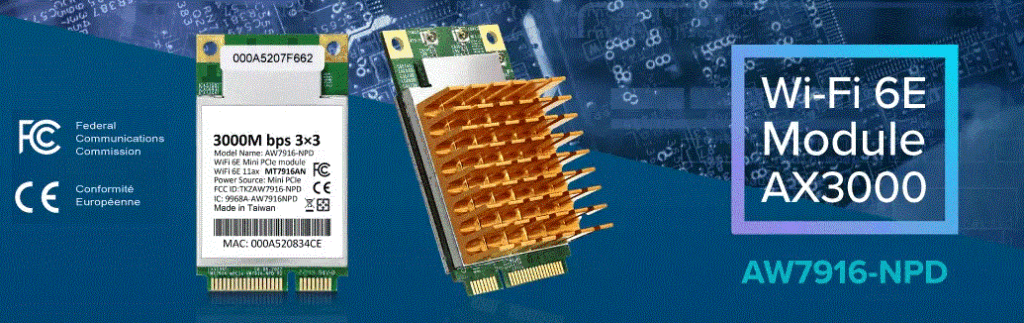
The Wi-Fi 6E Module AW7916-NPD is a highly advanced Mini PCIe module with Wi-Fi 6E 3000 capabilities. It features G-band 2T2R + A-band 3T3R 2ss dual-band concurrent technology, providing a transmission efficiency of 3000 Mbps. With support for Wi-Fi 6E, even in densely crowded environments, the Wi-Fi 6E Module AW7916-NPD delivers efficient network performance while accommodating a greater number of Wi-Fi users. Its wider spectrum and increased capacity ensure smooth operations, reducing latency and interruptions.

Features:

  • BUS Interface: Mini PCIe / M.2 AE Key
  • IEEE 802.11 a/b/g/n/ac/ax compliant
  • High-Performance Dual-Band Connectivity: G-band 2T2R + A-band 3T3R 2ss,  Dual-band concurrent with PHY rate up to 3000Mbps 
  • Flexible Bandwidth Support: Support 20/40MHz bandwidth in G-band, and 20/40/80/160MHz bandwidth in A-band
  • Robust Security Features: Security support for WFA WPA/WPA2/WPA3 personal, WPS2.0
  • Support MU-OFDMA TX/RX
  • Support MU-MIMO TX/RX
  • Compatibility with Diverse Modes: Support greenfield, mixed mode, legacy modes
  • Based on Mediatek MT7916AN.

The expanded spectrum delivers astonishing performance.

The Wi-Fi 6E Module AW7916-NPD provides a more powerful experience for high-bandwidth applications. By utilizing up to 14 additional 80MHz channels or 7 extra ultra-wide 160MHz channels in the 6GHz frequency band, it supports smooth and high-definition video calls and can handle large-scale data transmission.

Wi-Fi 6E moudle AW7916-NPD Mesh+Security

A mesh system can provide offices and enterprises with a more reliable network connection, covering a wide area, and allowing numerous devices to connect to the network, offering better performance in densely populated device areas. Even as users move to different areas, their devices can smoothly switch to the strongest Wi-Fi access point without the need for manual reconnection or experiencing disconnection.

The Wi-Fi 6E Module AW7916-NPD adopts the latest WPA3 security protocol, safeguarding users from unauthorized access and data breaches, addressing security threats in modern wireless networks.

Accurate and fast remote operation

Compared to the past, Wi-Fi 6E enables remote operations with higher precision. This advancement is expected to drive the progress of remote medical services and open up possibilities for practical applications of remote surgeries in the medical field. With Wi-Fi 6E, healthcare professionals can perform surgeries with greater precision and less invasiveness, marking a significant breakthrough in the field of medical services. Additionally, in manufacturing and logistics, technologies such as robotic arms and drones can execute tasks more swiftly and accurately, reducing the likelihood of errors. This technology also fosters progress in smart and automated systems, bringing forth more innovations and efficiency for businesses.

At the end of 2022, the University of Michigan in the United States underwent a revolutionary change by deploying over 16,000 Wi-Fi access points across 225 buildings and outdoor areas on campus. This remarkable achievement allowed the university to support up to 70,000 device connections simultaneously. Through this extensive Wi-Fi infrastructure, the University of Michigan can meet the growing data demands, enhance teaching and campus management efficiency, and foster the application and development of smart devices on campus. This will have a positive impact on various aspects of academic research, student learning, and campus life.

Wi-Fi 6E is a significant trend in the current wireless network market. With continuous technological advancements and increasing data demands, Wi-Fi 6E has become the representation of the next-generation wireless network technology and is gaining widespread attention and adoption in the market.

Comparison Chart

 MM610X-001AW7916-AEDAW7916-NPDAW7915-NP1AW7915-NPDAW7915-AE1AW7915-AEDAW7915-BMD
Wi-Fi
Generation
Wi-Fi HaLowWi-Fi 6EWi-Fi 6EWi-Fi 6Wi-Fi 6Wi-Fi 6Wi-Fi 6Wi-Fi 6
Communication
Protocol
11ah11ax11ax11ax11ax11ax11ax11ax
Number of
Connectors
1T1RG-band 2T2R
A-band 2T3R
G-band 2T2R
A-band 3T3R
4T4R2T2R4T4R2T2R2T2R
BUS
Interface
SDIO/SPIM.2 AE KeyMini PCIeMini PCIeMini PCIeM.2 AE KeyM.2 AE KeyM.2 BM Key
Baseband
IC
MM6108 RF SOCMT7916ANMT7916ANMT7915ANMT7915DANMT7915ANMT7915DANMT7915DAN
Transfer
Rate
20 Mbps3000 Mbps3000 Mbps2400 Mbps1800 Mbps2400 Mbps1800 Mbps1800 Mbps
Frequency
Bands
850-950MHzDual Bands
2.4 GHz & 5/6GHz
Dual Bands
2.4 GHz & 5/6GHz
Dual Bands
Selectable
2.4GHz or 5GHz
DBDC
2.4GHz & 5GHz
Dual Bands
Selectable
2.4GHz or 5GHz
DBDC
2.4GHz & 5GHz
DBDC
2.4GHz & 5GHz
Size of
SIM Card
17 X 22 mm30 X 52 mm30 X 51 mm30 X 51 mm30 X 51 mm30 X 52 mm30 X 52 mm30 X 52 mm
CertificatiingFCC ID:
TKZXXXXXX-XXX
IC:
996XX-XXXXXXXXX
NCC, RCM: Approved
CE
TELEC:
217-XXXXXX
Coming soonFCC ID:
TKZXXXXXX-XXX
IC:
996XX-XXXXXXXXX
CE:
Certification Approved
FCC ID: TKZXXXXXX-XXX
IC:
996XX-XXXXXXXXX
CE: Certification Approved
FCC ID:
TKZXXXXXX-XXX
IC:
996XX-XXXXXXXXX
NCC ID : CCAXXXXXXXXXXX
CE: Certification Approved
Coming soonComing soonComing soon