Posted on

QCN9074, QCN9274, IPQ9574, and QCN9024: Robust WiFi Modules for Modern Robotic Applications

How 524WiFi’ WiFi 6/7 Modules Adapt to Different Robotic Applications

Robots are transforming industries, from manufacturing and logistics to agriculture. However, each type of robot—industrial, warehouse, and agricultural—operates in unique environments with distinct wireless connectivity requirements. Reliable, high-speed communication is critical for real-time control, data transmission, and seamless automation. 524WiFi’ WiFi 6/7 modules, such as the DR9074 and DR9574, are designed to meet these varying demands, ensuring optimal performance in different robotic applications.

Industrial Robots: Low Latency and High Reliability

Industrial robots work in highly automated factories, assembling products with precision. These environments require ultra-low latency and high-reliability wireless connections to support real-time data exchange between robots and control systems. 524WiFi’ WiFi 6/7 modules offer:

  • Multi-Link Operation (MLO): Reducing latency by transmitting data over multiple channels simultaneously.
  • MU-MIMO and OFDMA: Enhancing efficiency in high-density environments with multiple robots operating simultaneously.
  • Advanced Security Features: Protecting sensitive manufacturing data from cyber threats.

Warehouse Robots: Seamless Roaming and Scalability

Autonomous Mobile Robots (AMRs) and Automated Guided Vehicles (AGVs) in warehouses require stable connections as they move between access points. The DR9074 and DR9574 ensure:

  • Fast Roaming Support: Minimizing disruptions when transitioning between WiFi coverage zones.
  • High Throughput & Low Power Consumption: Maintaining efficiency for long operational hours.
  • Interference Mitigation: Ensuring smooth operation in environments with multiple wireless networks.

Agricultural Robots: Long-Range Connectivity and Rugged Performance

Drones and autonomous farming machines operate in vast, open fields with limited infrastructure. Wireless modules for these applications must provide long-range coverage and withstand harsh outdoor conditions. 524WiFi’ solutions offer:

  • Extended Coverage with Beamforming: Enhancing signal strength over long distances.
  • Rugged Design for Extreme Conditions: Operating reliably in dust, humidity, and temperature variations.
  • Low-Latency Video Streaming: Enabling real-time monitoring of crops and livestock.

Conclusion

From precise industrial automation to large-scale warehouse logistics and autonomous farming, different robotic applications demand tailored wireless solutions. 524′ WiFi 6/7 modules, including the DR9074 and DR9574, provide the speed, stability, and security needed to meet these challenges. As robotics continue to evolve, robust wireless connectivity will be key to unlocking their full potential.

Want to optimize your robotic applications with cutting-edge WiFi technology? Contact us today to learn more about our solutions!

524 DREAM WiFi7 Modules
524 DREAM WiFi6 Modules
Posted on

QCN9074 and Smart Cities: Enabling the Future of Connectivity

As urban areas continue to expand, the concept of Smart Cities is gaining importance. These cities leverage advanced technologies to improve infrastructure, enhance public services, and create more sustainable environments. At the heart of this transformation is connectivity, and the QCN9074 is playing a pivotal role in enabling the future of Smart Cities.

The Role of Connectivity in Smart Cities

Connectivity is the backbone of Smart Cities, facilitating real-time data exchange between devices, infrastructure, and services. It enables various applications such as intelligent transportation systems, energy-efficient buildings, smart healthcare, and enhanced public safety. High-performance wireless solutions are essential to support these applications, ensuring seamless communication and data processing.

Introducing QCN9074

The QCN9074 is a high-performance Wi-Fi 6E (802.11ax) chipset designed to meet the demanding needs of modern wireless networks. With its advanced features, the QCN9074 is poised to revolutionize connectivity in Smart Cities.

  1. Extended Frequency Range: The QCN9074 supports the 6 GHz band in addition to the traditional 2.4 GHz and 5 GHz bands. This increased spectrum availability reduces congestion and enhances network performance, enabling robust and reliable connections in densely populated urban environments.
  2. High Data Throughput: With support for MU-MIMO technology and high data rates, the QCN9074 can handle multiple simultaneous connections efficiently. This capability is crucial for Smart Cities, where numerous sensors and devices are constantly communicating.
  3. Improved Efficiency and Low Latency: The QCN9074’s OFDMA technology improves network efficiency by allowing multiple devices to share channels simultaneously. This reduces latency and ensures smooth data transmission, essential for real-time applications like autonomous vehicles and smart traffic management.
  4. Enhanced Security: The QCN9074 includes advanced security features to protect sensitive data and maintain privacy. This is vital for Smart Cities, where the security of data is paramount.

Enabling Smart City Applications

The QCN9074’s advanced capabilities empower a wide range of Smart City applications:

  • Smart Transportation: Real-time traffic monitoring and management systems rely on the QCN9074 for efficient data exchange, reducing congestion and improving public transportation services.
  • Energy Management: Smart grids and energy-efficient buildings use QCN9074-enabled networks to monitor and control energy usage, promoting sustainability and reducing costs.
  • Public Safety: Surveillance systems and emergency response services benefit from the QCN9074’s high-speed connectivity, enabling rapid data transmission and improving situational awareness.
  • Healthcare Services: Telemedicine and remote patient monitoring require reliable connectivity, which the QCN9074 provides, enhancing healthcare delivery in urban areas.

Product Introduction: 524WiFi 6 DR9074

524WiFi 6 DR9074 is a tri-band Wi-Fi 6E network card based on the Qualcomm QCN9074, supporting the 2.4G, 5G, and 6GHz bands with a 4T4R M.2 E Key interface, compliant with the 802.11ax standard. This product is designed for high-performance and reliability in wireless network applications, making it particularly suitable for various scenarios in Smart Cities.

For more information on how the DR9074 can be integrated into your Smart City projects, please visit our product page: DR9074 Product Details. We are committed to providing innovative solutions to help you achieve your connectivity goals.

Posted on

QCN 9074 QCN 9024 Tri-Band Capability Meets Versatile Development: ROCK 5B + 524 WiFi 6 DR9074-Triband !

Harnessing the Power of 524WiFi 6 DR9074-TRIBAND with x86 Platforms: Practical Case Studies

In the fast-evolving world of wireless networking, Wi-Fi 6E is transforming connectivity with its higher speeds, lower latency, and increased device capacity. At 524WiFi and Wallys, we are dedicated to providing high-performance, easily integrable industrial wireless hardware to empower developers, businesses, and innovators. This article explores how the 524WiFi 6 DR9074-TRIBAND Wi-Fi card paired with x86 platforms can deliver exceptional value and elevate your project outcomes.


Why Choose DR9074-TRIBAND with x86 Platforms?

Selecting the right hardware often involves addressing key challenges:

  1. Does it meet current and future performance needs?
  2. Is it compatible with existing systems?
  3. Can it provide long-term reliability?

The 524WiFi 6 DR9074-TRIBAND card, powered by the Qualcomm QCN9074 chipset, supports Wi-Fi 6E across three frequency bands (2.4 GHz, 5 GHz, and 6 GHz). Combined with the computational power of x86 platforms, this pairing offers robust solutions for:

  • High-performance wireless access points (APs)
  • Extensive wireless mesh networks
  • Wireless protocol development and testing platforms
  • IoT gateways and data center connectivity

By integrating DR9074 and x86 platforms, we aim to help you build reliable, flexible, and scalable wireless networks for a wide range of applications.


Case Studies: How We Enable Success

Case 1: Deploying High-Performance Wireless Networks for SMEs

Challenge A small to medium-sized enterprise (SME) sought to enhance its internal network with low latency, high stability, and support for multiple concurrent connections.

524WiFi Solution

  • Provided the DR9074-TRIBAND card, seamlessly integrated with the client’s x86 motherboard via PCIe.
  • Enabled tri-band Wi-Fi using Ubuntu and the Ath11k driver.
  • Configured Hostapd to deploy an efficient wireless access point.

Results

  • Expanded Wi-Fi coverage to 150 meters and improved throughput by over 50%.
  • Maintained stable performance even under high concurrency, ensuring uninterrupted business operations.

“524WiFi hardware’s performance and ease of use allowed us to upgrade our network effortlessly, saving both time and budget.” — Client Feedback


Case 2: Building a Wireless Mesh Network for a Smart Campus

Challenge A smart campus required seamless wireless coverage across multiple buildings and open spaces with excellent roaming performance.

Wallys Solution

  • Configured multiple x86 devices, each equipped with a DR9074-TRIBAND card, to create mesh network nodes.
  • Utilized OpenWrt to establish the 6 GHz band as the backhaul, reducing interference.
  • Leveraged MU-MIMO and OFDMA to enhance connection density.

Results

  • Achieved full campus coverage with reduced latency using 6 GHz backhaul links.
  • Enabled seamless roaming for users, improving the overall smart campus experience.
For support drivers, please contact: 524wifi team

Case 3: Providing a Cost-Effective Wireless Testing Platform

Challenge A wireless technology research company needed a platform to test Wi-Fi 6E performance and optimize its products.

Wallys Solution

  • Paired x86 servers with DR9074-TRIBAND cards for a versatile testing framework.
  • Integrated tools like iperf3 and Wireshark to analyze bandwidth, latency, and protocols.
  • Simulated complex network environments under high load across multiple bands.

Results

  • Improved testing efficiency by 40% and reduced overall costs.
  • Enabled faster product launches with enhanced market readiness.

Our Commitment: Empowering Your Vision

At 524WiFi, we believe that the true value of technology lies in enabling others. Whether you’re an entrepreneur, developer, or researcher, our products and services are designed to help you:

  • Reduce Deployment Costs: Flexible hardware and software integration for faster implementation.
  • Accelerate Project Timelines: Comprehensive technical documentation and support to minimize trial and error.
  • Achieve Long-Term Goals: Hardware solutions that not only meet today’s needs but also prepare you for tomorrow’s challenges.

📩 For inquiries or hardware procurement, please contact us at [email protected] Let’s build the future of wireless networking together!

How to load driver for DR9074-Triband Tutorial:

Posted on

Which is better for industrial WiFi: IPQ6010 with QCN9074 or IPQ5332 with QCN9274?

Industrial-Grade WiFi Solutions: IPQ6010 with QCN9074 vs IPQ5332 with QCN9274

In industrial-grade applications, reliable and high-performance wireless solutions are critical. Here we compare two advanced options tailored for such demanding environments: the IPQ6010 with QCN9074 and the IPQ5332 with QCN9274. These solutions are designed to meet the rigorous standards of industrial settings, providing robust connectivity and performance.

IPQ6010 with QCN9074

The IPQ6010 chipset paired with the QCN9074 is a powerful WiFi 6E solution suitable for industrial applications. It supports enhanced network capacity and efficiency, making it ideal for environments that demand high performance and reliability.

Key Features:

  • Chipset: Qualcomm IPQ6010
  • Wireless Standard: WiFi 6E (802.11ax)
  • Wireless Configuration: 4×4 MIMO
  • Bands Supported: 2.4GHz, 5GHz, 6GHz
  • Ethernet Ports:Multiple 1Gbps and 2.5Gbps portsSFP interfaces for fiber connections
  • OFDMA Support: Yes
  • MU-MIMO Support: Yes
  • Power Options: Flexible POE support, DC power
  • Memory & Storage: Up to 512MB DDR, various Flash options

Advantages for Industrial Applications:

  • Robust Performance: Enhanced wireless performance with support for the 6GHz band.
  • Versatile Connectivity: Multiple Ethernet ports and SFP interfaces for diverse networking needs.
  • Backward Compatibility: Supports legacy WiFi standards for seamless integration.
  • Enhanced Efficiency: OFDMA and MU-MIMO support ensure efficient network traffic management.

IPQ5332 with QCN9274

The IPQ5332 chipset paired with the QCN9274 is a next-generation WiFi 7 solution designed for industrial-grade applications that require ultra-high-speed network connections with low latency. This setup is future-proof, ensuring top-notch performance for years to come.

Key Features:

  • Chipset: Qualcomm IPQ5332
  • Wireless Standard: WiFi 7 (802.11be)
  • Wireless Configuration:2×2 2.4GHz MIMO4x4 5GHz MIMO4x4 6GHz MIMO
  • Bands Supported: 2.4GHz, 5GHz, 6GHz
  • Ethernet Ports:Multiple 2.5Gbps ports10Gbps SFP interfaces for high-speed fiber connections
  • OFDMA Support: Yes
  • MU-MIMO Support: Yes
  • Power Options: DC Jack, POE support
  • Memory & Storage: 1GB DDR4, 512MB NAND Flash, 8MB NOR Flash

Advantages for Industrial Applications:

  • Future-Proof Technology: Cutting-edge WiFi 7 performance with high bandwidth and low latency.
  • High Capacity: Advanced MIMO configurations for efficient handling of multiple simultaneous connections.
  • Ultra-High-Speed Connectivity: Supports up to 10Gbps Ethernet and SFP interfaces for fiber optic connections.
  • Scalable and Reliable: Designed to meet the rigorous demands of industrial environments with scalable network options.

Comparative Table

Recommendation for Industrial-Grade Applications

For WiFi 6E Triband Solution: The IPQ6010 with QCN9074 is highly recommended. It provides robust performance and supports the new 6GHz band, making it ideal for industrial applications requiring enhanced capacity and efficiency.

For WiFi 7 Triband Solution: The IPQ5332 with QCN9274 is the best choice. It offers cutting-edge performance with high bandwidth and low latency, ensuring it meets the demands of high-performance industrial applications and is future-proof for upcoming wireless technology needs.

Posted on

6GHz Band: A New Era of WiFi

In the ever-evolving realm of wireless technology, the introduction of the 6 GHz band marks a significant milestone, promising a new era of enhanced connectivity and unlocking the potential for transformative advancements in various applications. This newly available frequency range, spanning between 5.925 GHz and 7.125 GHz, offers a plethora of benefits that far exceed those of its predecessors, the 2.4 GHz and 5 GHz bands. The addition of 6GHz into WiFi is poised to revolutionise wireless connectivity.

A Bandwidth Bonanza for Unfettered Data Flow

In today’s digital age, where data-intensive applications and high-resolution content reign supreme, the demand for bandwidth has skyrocketed. The 2.4 GHz and 5 GHz bands, the traditional workhorses of wireless connectivity, have struggled to keep pace with this ever-increasing demand, leading to frustrating congestion and sluggish performance.

At the heart of the 6 GHz band’s allure lies its expansive bandwidth, more than doubling the capacity of the 5 GHz band. This substantial increase in spectrum translates into significantly faster data speeds, enabling users to enjoy seamless video streaming in stunning 4K and 8K resolutions without encountering buffering or lag. Large file transfers can be completed in a fraction of the time, enabling efficient collaboration and data sharing. And immersive virtual reality experiences can be enjoyed without the hindrance of latency or choppy graphics.

Latency Triumphs over Distance: Real-time Applications Thrive

In the realm of real-time applications, where immediacy is paramount, latency, the time it takes for data to travel between devices, emerges as a critical factor. For applications like video conferencing, online gaming, and remote device control, even the slightest latency can lead to noticeable delays, glitches, and an overall diminished experience.

The 6 GHz band, the latest addition to the wireless spectrum, holds the key to conquering latency, offering a significant reduction in lag compared to its predecessors, the 2.4 GHz and 5 GHz bands. This latency reduction stems from several factors:

  • Wider Channels: The 6 GHz band supports wider data channels, allowing for more data to be transmitted in a single go, reducing the number of round trips required for data transfer.
  • Less Congestion: The 6 GHz band is less crowded than the 2.4 GHz and 5 GHz bands, minimising interference and ensuring that data packets reach their destination with minimal delays.
  • Enhanced Technology: The 6 GHz band utilises advanced technologies like Target Wake Time (TWT), which allows devices to negotiate sleep intervals, further reducing network overhead and improving latency.

The impact of reduced latency extends beyond consumer applications and into real-world scenarios that demand instantaneous responsiveness:

  • Autonomous Vehicles: The 6 GHz band is crucial for the development of autonomous vehicles, enabling real-time communication between the vehicle’s sensors, processors, and external infrastructure, ensuring safe and efficient operation.
  • Industrial Automation: In industrial settings, the 6 GHz band facilitates precise control of machinery and robotics, enabling seamless coordination and improved production efficiency.
  • Medical Robotics: Surgical robots, controlled remotely by surgeons, benefit significantly from reduced latency, ensuring accurate and life-saving procedures.

Embracing the Challenges: Navigating the Road Ahead

While the 6 GHz band presents a wealth of opportunities, it is not without its challenges. Device compatibility remains a hurdle, as not all devices currently support this new frequency range. Additionally, the 6 GHz band’s shorter range compared to its predecessors may require strategic router placement to ensure optimal coverage. Finally, regulatory approvals vary across countries, necessitating a cautious approach to deployment.

Despite these challenges, the 6 GHz band represents a significant leap forward in wireless technology, offering a combination of speed, reliability, security, and capacity that was previously unattainable. As device compatibility expands and regulatory approvals are granted, the 6 GHz band is poised to become the backbone of future wireless networks, shaping the way we work, play, and connect.

At Compex, we strive to provide the latest technology to our customers. Compex offers 6GHz WiFi solution for both WiFi 6E and WiFi 7 offering:

  1. WLE3000H56: 4×4 wide band 5-7GHz WiFi 6E module. This is a good solution for customers who are aiming to offer their customers an option of either 5GHz or 6GHz backhaul.
  2. WLE3000H6 (Filter version): 4×4 single band 6GHz WiFi 6E module. This filter version ensures that interference issue will not occur, when WiFi 6E module coexists with another 5GHz module. This is a perfect solution for customers who are aiming for tri-band implementation.
  3. WLE7002E56: 2×2 dual band dual concurrent 5 + 6GHz WiFi 7 module. This is a cost effective solution for customers who need 5 + 6GHz in a single package. This is a good solution for low-cost tri-band WiFi 7 implementation.

All products mentioned above have samples readily available for your testing.

Posted on

WI-Fi 7 module news: Everything you need to know about Compex WLE7002E25D

The future of connectivity is here with Compex! Wi-Fi 7 is set to revolutionize wireless connectivity with its lightning-fast speeds and seamless connectivity. The launch of Compex WLE7002E25D Wi-Fi 7 Dual-Band Dual Concurrent Module delivers enhanced wireless performance and reliability — all at Wi-Fi 6 prices!

Here’s a closer look on what you need to know about this new Wi-Fi Modules:

1. Dual- Band Dual-Concurrent Wi-Fi 7 Module

The new Compex WLE7002E25D is a Dual-Band Concurrent 2.4+5GHz WiFi 7 (802.11be) module, powered by Qualcomm’s QCN6224, QCN6274 or QCN9274 ‘Waikiki’ series radio chipsets, offering 2X2 MU-MIMO.

2. Stardard miniPCIe form factor

The new WLE7002E25D comes in a standard miniPCIe form factor. This means it is readily compatible with existing systems, particularly those devices that use Wi-Fi 4 or Wi-Fi 5 standard miniPCIe modules. This simplifies integration, reduces development costs and accelerates time-to-market.

3. Multi-Link Operation (MLO)

The new WLE7002E25D supports up to 4096 QAMs and features OFDMA and MLO. The new MLO allows devices to connect to the same access point (AP) across multiple channels and different frequency bands simultaneously, increasing throughput, lowering latency and enhancing reliability.

4. Cost-efficient diplexer design

Combines the 2.4GHz and 5GHz signals into a single dual-band antenna, reducing the need for multiple antennas and enhancing the performance and reliability of wireless devices.

5. Open Source Ath12K support

Compatible with Qualcomm and third-party platforms such as Marvell, NXP and x86 platform.

6. Enhanced wireless performance and reliability at Wi-Fi 6 prices

Ideal for enterprise, industrial, cybersecurity, transportation and SMB applications, offering enhanced wireless performance and reliability at competitive prices.

Key Takeaways for the Future

The new WLE7002E25D is an investment in the future. With its cutting-edge technology, comprehensive features and diverse application potential, it is set to redefine the standards of wireless connectivity.

The module is now available for order on our eshop. 

Posted on

DR4x19 | IPQ4x19 – Based Industrial Board: Multifunctional with 2 MiniPCIe Support, OpenWRT LTE, WIFI 5G, MT7915, and QCN9074 Platform

Empowering Customization and Connectivity: The IPQ4019-Based Industrial Board

In the realm of industrial connectivity, adaptability reigns supreme. Introducing the IPQ4019-based industrial board, a versatile solution engineered to offer unparalleled customization and connectivity options. Let’s explore its key features:

Tailored Dual LTE Support

– This board supports customizable configurations for dual LTE support, allowing for routerboard/baseboard+SOM setups tailored to specific requirements. Whether it’s optimizing bandwidth or ensuring redundancy, users can fine-tune their connectivity solutions with ease.

Efficient Network Segmentation via VLANs

– Recognizing the importance of network segmentation, this board seamlessly integrates VLAN support. Users can create distinct virtual networks within a single physical infrastructure, enhancing security and efficiency.

Customized LUCI Interface

– Elevate brand identity and user experience with a customized LUCI interface featuring the customer’s logo. This personalized touch adds a professional flair while maintaining familiarity for end-users.

Extended Range Firmware Customization

– Break through geographical barriers with custom firmware designed for long-distance transmission, reaching up to 20km. Whether it’s remote installations or expansive deployments, rest assured that firmware updates will reach even the most remote endpoints.

Seamless Integration with Leading Controllers

– Integrate effortlessly into existing network architectures with support for Wallys AP Controller and TIP Cloud Controller. Benefit from centralized management, configuration, and monitoring capabilities, enhancing operational efficiency and scalability.

Conclusion: Unmatched Flexibility for Industrial Connectivity

In conclusion, the IPQ4019-based industrial board stands as a beacon of innovation and adaptability in industrial connectivity. With its support for customizable LTE configurations, VLANs, branded interfaces, long-distance firmware transmission, and integration with leading management controllers, this board offers unparalleled flexibility and connectivity options. Whether optimizing performance, enhancing security, or streamlining operations, this versatile solution is poised to revolutionize industrial connectivity challenges.

DR4019

Featuring with industrial-grade IPQ4019/IPQ4029 chipset

Integrated with 2x 2 5G high power Radio module and 2×2 2.4G high power Radio module

Support 4.940GHz to 5.825GHz Frequency Range

Support 2.400GHz to 2.482GHz

Support 2 x 5G MMCX Connectors and 2×2.4G MMCX

Support 5MHz/10MHz/20MHz/40MHz/80MHz Bandwidth

Support 11ABGN/AC

Support fixed data rate

RoHS compliance ensure a high level protection of human health and the environment from risks that can be posed by chemicals

Our Firmware supports all the modules of Quectel

Support Openwifi

Support QSDK

Support Openwrt

https://www.524wifi.com/index.php/catalogsearch/result/?q=4029

Openwrt Supported and 6E support

With QCN9074 QCN9024 DR9074-6E card

With MT7915 DR7915

Posted on

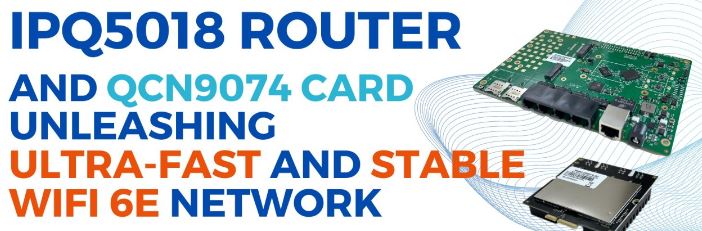
IPQ5018 Router and QCN9074 Card: Ultra-Fast and Stable WiFi 6E Network

Experience the Power of WiFi 6E with IPQ5018 Router and QCN9074 Card Duo

Get ready to experience unparalleled speed and stability with the IPQ5018 Router and QCN9074 Card duo. Designed for high-performance wireless networking, the IPQ5018 boasts integrated 802.11ax Wi-Fi/Bluetooth 5.1 subsystems, delivering cost-effective and efficient connectivity.

IPQ5018

The IPQ5018 is a highly integrated System-on-Chip (SoC) designed and manufactured for high-performance and efficient wireless network applications, including home routers, mesh nodes, and gateways. It features integrated 802.11ax Wi-Fi/Bluetooth 5.1 subsystems, providing high efficiency and cost-effectiveness.

Key Features:

– Wi-Fi subsystem supports IEEE802.11ax, incorporating a wireless radio operating in the 2.4 GHz band with 2 antennas (2×2/40).

– Network subsystem:

– Low-power PCIe interface with L1 sub-states.

– Two Ethernet ports:

– One integrated GbE PHY.

– One SerDes supporting 3.125/1.25 Gbps Ethernet ports for external 2.5/1 GbE PHY. This SerDes operates in SGMII+ or SGMII mode to connect to 2.5 GbE PHY or single-port GbE PHY.

In today’s fast-paced digital world, a reliable and lightning-fast internet connection is essential for seamless connectivity. With the advent of WiFi 6E technology, users can now enjoy unprecedented speed, stability, and coverage. The combination of the IPQ5018 Router and QCN9074 Card delivers an unparalleled WiFi 6E experience, setting new standards for home and business networks.

The IPQ5018 Router is a powerhouse in the world of networking, equipped with advanced features and cutting-edge technology to provide ultra-fast and stable connectivity. Its robust hardware ensures maximum performance, while its intelligent software optimizes network traffic for an uninterrupted online experience.

Paired with the QCN9074 Card, this duo takes WiFi 6E to new heights. The QCN9074 Card is designed to maximize the capabilities of WiFi 6E, offering higher speeds, lower latency, and increased capacity compared to previous generations. With its advanced beamforming and MU-MIMO technology, the QCN9074 Card ensures optimal signal strength and coverage throughout your home or office.

Together, the IPQ5018 Router and QCN9074 Card create a WiFi 6E network that is not only blazing fast but also incredibly stable. Whether you’re streaming 4K videos, gaming online, or video conferencing with colleagues, you can count on a seamless and lag-free experience.

But the benefits don’t stop there. The IPQ5018 Router and QCN9074 Card also prioritize security, with robust encryption protocols and built-in firewalls to protect your network from cyber threats. Additionally, advanced parental controls and network management tools allow you to customize and monitor your network with ease.

In conclusion, the IPQ5018 Router and QCN9074 Card combination is the ultimate solution for those seeking a high-performance WiFi 6E network. Experience the future of connectivity today with unparalleled speed, stability, and coverage.

Router board DRiver 5018

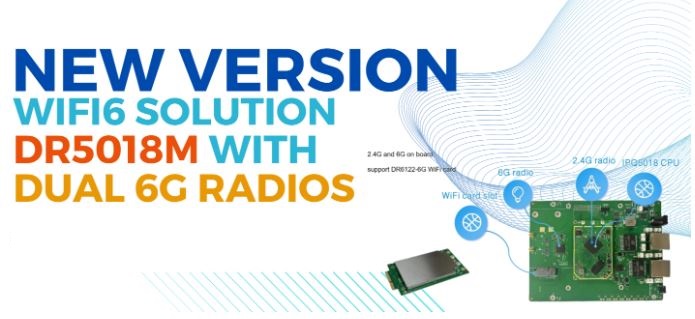
DR5018 based on IPQ5018 chipset is an enterprise wireless module integrated with BT5.1 Radio module and 2×2 2.4G high power Radio module designed specifically to provide users with mobile access to high-bandwidth video streaming, voice, and data transmission for office and challenging RF environment in factories, warehouses establishment.

CPU: Qualcomm-Atheros IPQ5018

CPU Frequency: Dual-core ARM 64-bit A53 @1.0 GHz processor

System Memory: 512MB DDR3L 16-bit interface with 32-bit memory bus design (Optional support for 1G)

Ethernet Port: 4 x 1Gbps Ethernet Ports or 1 x 1Gbps Ethernet Port & PoE

NGFF Slot: M.2 Card Slot for 5G (QUECTEL RM 500Q-GL); M.2 Card Slot for QCN9074 WIFI 6E Card

PoE: Support

DC Jack: 12V power supply

LED Header: LED for power, WiFi strength

Serial Port: Support

Wireless: On-board 2×2 2.4GHz MU-MIMO OFDMA 802.11b/802.11g/802.11n/802.11ax, max 23dBm per chain; 2x IPEX Connectors

Bluetooth: BT5.1 (optional)

Nor Flash: 8MB

Nand Flash: 128 MB

DDR: 512MB

Dimension: 170mm x 120mm x 15mm

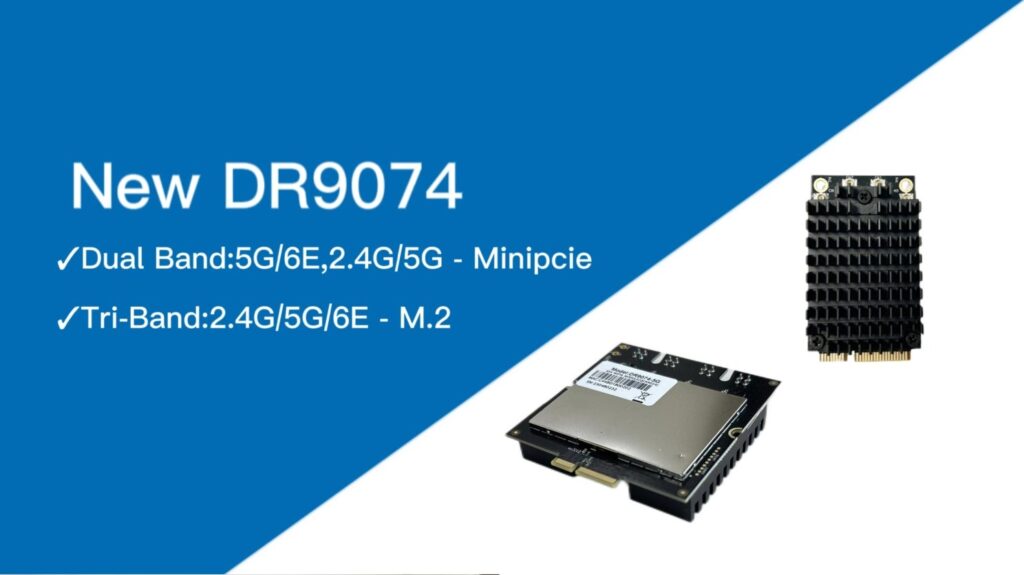
WiFi6 module DRiver 9074

Chipset: Qualcomm Atheros QCN9074

WLAN Host Interface: PCI Express 3.0 Interface

System Memory: 2Mbit serial I²C bus EEPROM

Standard Operating Voltage: 5V

Operating Systems: QSDK

Host Interface: M.2 E Key

Antenna Cable / Port: 4 x MMCX Connectors, 4T4R

Frequency Range: 5.925GHz-7.125GHz

Data Rates: 6GHz, max 23dBm per chain, up to 4804Mbps

Channel Spectrum Widths: Support 20/40/80/160MHz at 6GHz

Modulation Techniques: OFDMA: BPSK, QPSK, DBPSK, DQPSK, 16-QAM, 64-QAM, 256-QAM, 1024-QAM

Temperature Range: Operating: -20°C to 70°C, Storage: -40°C to 90°C

Humidity: Operating: 5% to 95% (non-condensing), Storage: Max. 90% (non-condensing)

Certification: TBD

Power Consumption: TBD

Reference Design: PN02.7

Dimensions (WxHxD): 57mm x 63mm x 6mm

Posted on

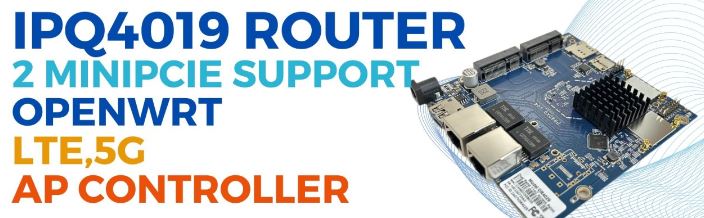
DRiver series 4019 IPQ4019 Based Industrial Board: Multifunctional with 2 MiniPCIe Support, OpenWRT LTE, 5G, MT7915, and QCN9074 Platform

Empowering Customization and Connectivity: The IPQ4019-Based Industrial Board

In the realm of industrial connectivity, adaptability reigns supreme. Introducing the IPQ4019-based industrial board, a versatile solution engineered to offer unparalleled customization and connectivity options. Let’s explore its key features:

Tailored Dual LTE Support

– This board supports customizable configurations for dual LTE support, allowing for routerboard/baseboard+SOM setups tailored to specific requirements. Whether it’s optimizing bandwidth or ensuring redundancy, users can fine-tune their connectivity solutions with ease.

Efficient Network Segmentation via VLANs

– Recognizing the importance of network segmentation, this board seamlessly integrates VLAN support. Users can create distinct virtual networks within a single physical infrastructure, enhancing security and efficiency.

Customized LUCI Interface

– Elevate brand identity and user experience with a customized LUCI interface featuring the customer’s logo. This personalized touch adds a professional flair while maintaining familiarity for end-users.

Extended Range Firmware Customization

– Break through geographical barriers with custom firmware designed for long-distance transmission, reaching up to 20km. Whether it’s remote installations or expansive deployments, rest assured that firmware updates will reach even the most remote endpoints.

Seamless Integration with Leading Controllers

– Integrate effortlessly into existing network architectures with support for Wallys AP Controller and TIP Cloud Controller. Benefit from centralized management, configuration, and monitoring capabilities, enhancing operational efficiency and scalability.

Conclusion: Unmatched Flexibility for Industrial Connectivity

In conclusion, the IPQ4019-based industrial board stands as a beacon of innovation and adaptability in industrial connectivity. With its support for customizable LTE configurations, VLANs, branded interfaces, long-distance firmware transmission, and integration with leading management controllers, this board offers unparalleled flexibility and connectivity options. Whether optimizing performance, enhancing security, or streamlining operations, this versatile solution is poised to revolutionize industrial connectivity challenges.

DR4019 / DR4029

Featuring with industrial-grade IPQ4019/IPQ4029 chipset

Integrated with 2x 2 5G high power Radio module and 2×2 2.4G high power Radio module

Support 4.940GHz to 5.825GHz Frequency Range

Support 2.400GHz to 2.482GHz

Support 2 x 5G MMCX Connectors and 2×2.4G MMCX

Support 5MHz/10MHz/20MHz/40MHz/80MHz Bandwidth

Support 11ABGN/AC

Support fixed data rate

RoHS compliance ensure a high level protection of human health and the environment from risks that can be posed by chemicals

Our Firmware supports all the modules of Quectel

Support Openwifi

Support QSDK

Support Openwrt

Openwrt and 6E support

With QCN9074 QCN9024 DR9074-6E card

With MT7915 DR7915

Openwrt and 5Ghz support

With QCA9880/QCA9882 DR900VX DR600VX DR882

Posted on

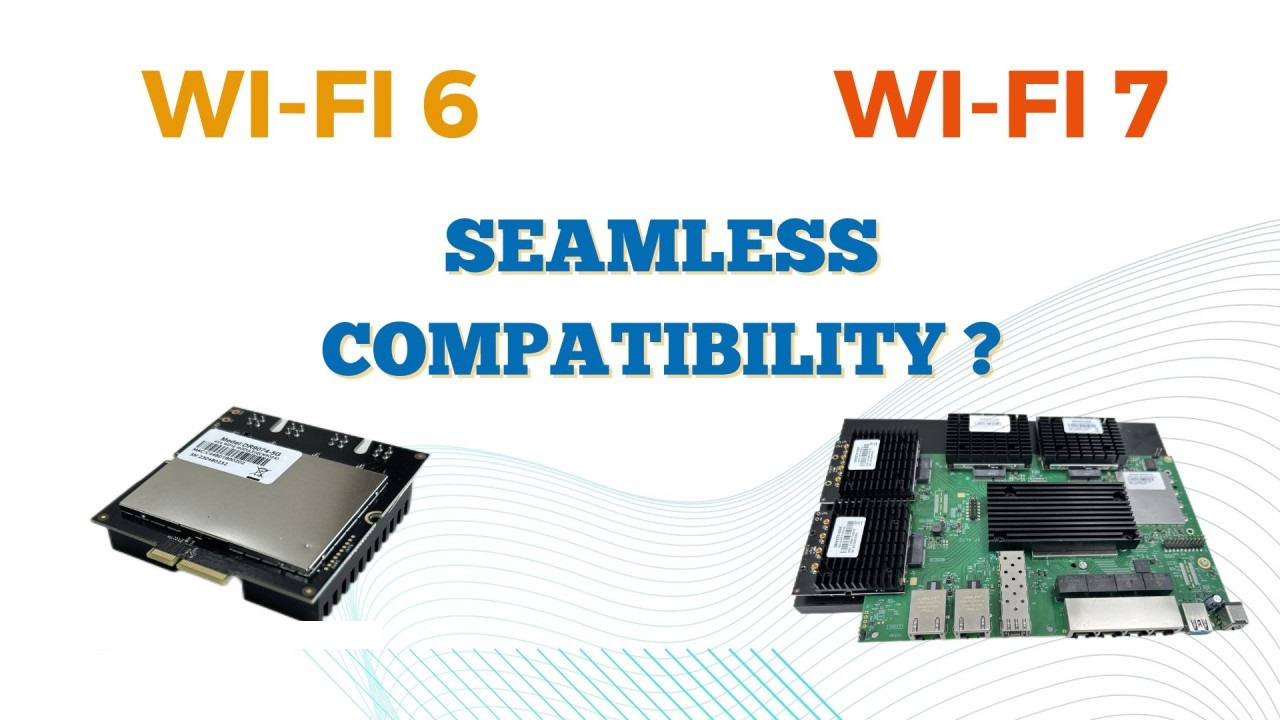
Wi-Fi 7 IPQ9574 QCN9074 Does the WiFi 7 IPQ 9574 Platform Support WiFi6 QCN 9074 Card?

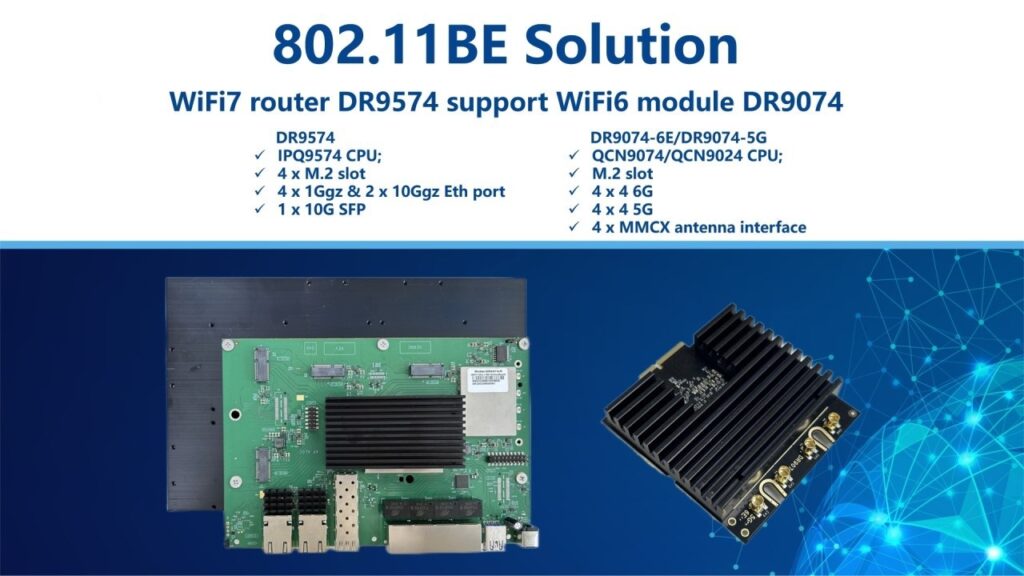
In the realm of wireless networking, compatibility is key to ensuring smooth transitions and optimal performance. With the emergence of the WiFi7 platform DR9574 featuring the powerful IPQ9574 chipset alongside the versatile QCN9074, many wonder: does this cutting-edge platform support backward compatibility with WiFi6 cards like the DR9074? Let’s delve into this compatibility aspect.

Exploring Compatibility with WiFi6 Card DR9074

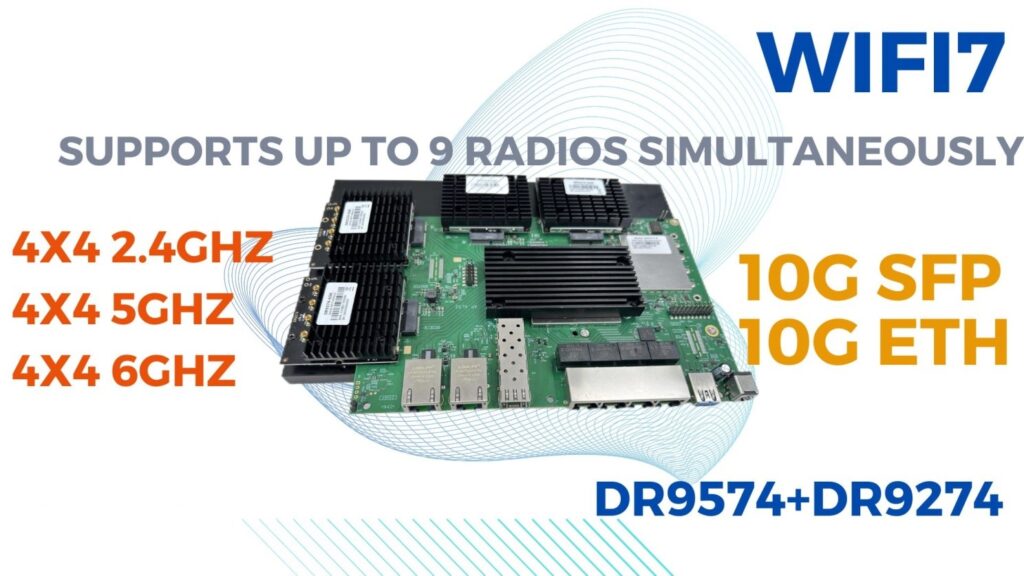
The DR9574 WiFi7 platform by Wallys, powered by the robust IPQ9574 chipset and complemented by the QCN9074, represents a pinnacle of wireless technology innovation. But what about its compatibility with WiFi6 cards such as the DR9074?

524WiFi engineering prowess ensures that the DR9574 WiFi7 platform seamlessly integrates with WiFi6 cards like the DR9074. Through meticulous optimization and firmware enhancements, Wallys’ software team has facilitated backward compatibility, allowing customers to leverage existing WiFi6 infrastructure alongside the latest WiFi7 advancements.

By supporting backward compatibility with WiFi6 cards like the DR9074, the DR9574 WiFi7 platform empowers customers with unparalleled versatility and flexibility in their network deployments. Whether upgrading to WiFi7 or expanding existing WiFi6 networks, customers can seamlessly integrate both technologies to meet their evolving connectivity needs.

With the DR9574 WiFi7 platform’s backward compatibility with WiFi6 cards like the DR9074, Wallys enables customers to unlock new capabilities and possibilities in their wireless networks. Whether it’s enhancing throughput, extending coverage, or improving network efficiency, the seamless integration of WiFi6 and WiFi7 technologies opens doors to new opportunities for innovation and growth.

How to configure the DR9074(QCN9074) card on DR9574(IPQ9574) platform?

Kindly note DR9074 only used on pcie3 slot

If you want use DR9074-5G, you can under uboot:

setenv machid 8050001

setenv bootargs ‘console=ttyMSM0,115200n8 ubi.mtd=rootfs root=mtd:ubi_rootfs rootfstype=squashfs rootwait cnss2.bdf_pci3=0xa0’

saveenv

than reset, you can use DR9074-5G;

if you want use DR9074-6G, should change 0xa0 to 0xa2.

In the ever-evolving landscape of wireless networking, seamless compatibility between different generations of technology is essential. With the DR9574 WiFi7 platform’s backward compatibility with WiFi6 cards like the DR9074, Wallys reaffirms its commitment to providing customers with cutting-edge solutions that seamlessly integrate with existing infrastructure while embracing the advancements of tomorrow.

524WiFi is dedicated to continuous innovation, constantly pushing the boundaries of WiFi technology. In addition to its hardware products, Wallys also offers a range of ODM/OEM services, including:

Customization: Wallys can customize its WiFi 5/6/7 products and embedded boards to meet the specific needs of its customers.

Engineering support

Testing and certification