
Posted on

A Smarter Drone Still Needs a Stronger Wireless Link

The future of drones is no longer only about flying.

Modern drones are becoming intelligent platforms equipped with:

  • AI vision systems
  • Autonomous navigation
  • Real-time data processing
  • Advanced sensors
  • Edge AI computing capabilities

But behind every smart drone, there is one critical infrastructure that is often overlooked:

Reliable wireless connectivity.

Because even the most advanced AI system becomes limited when the connection is unstable.


AI Makes Drones Smarter. Connectivity Makes Them Useful.

A drone performing industrial inspection, mapping, agriculture monitoring, or security missions needs to continuously exchange large amounts of data.

It needs to:

  • Stream high-resolution video in real time
  • Transfer sensor and vision data
  • Maintain low-latency control communication
  • Stay connected during high-speed movement

The wireless link is no longer just a communication channel.

It becomes the nervous system of an autonomous flying machine.


Why Drone Applications Need More Than Traditional Wireless Connectivity

Many UAV applications operate in challenging environments:

  • Long-range communication
  • High-speed mobility
  • Complex RF environments
  • Multiple drones working simultaneously
  • High-bandwidth AI data transmission

For these scenarios, peak speed alone is not enough.

A professional drone platform requires:

  • Stable connectivity
  • Low-latency response
  • Strong interference resistance
  • Reliable performance during long operation cycles

WiFi 6 and WiFi 7: Building the Wireless Foundation for Next-Generation UAVs

As drones become more intelligent, wireless technology must evolve to support higher demands.

Advanced WiFi platforms enable:

High-bandwidth AI applications

Real-time video streaming, multi-camera systems, and edge AI processing require fast and reliable data transmission.

Low-latency autonomous control

Faster response helps support autonomous navigation and mission-critical operations.

Multi-device communication

Future drone fleets and collaborative robotic systems will require efficient wireless networking.


524WiFi Industrial WiFi Modules for Intelligent Drone Platforms

For drone developers, selecting a wireless module is not only about maximum throughput.

Important considerations include:

  • Industrial-grade chipset platform
  • Driver and software support
  • Thermal stability
  • Flexible integration options
  • Long-term supply availability

Based on Qualcomm wireless platforms, Wallys provides WiFi solutions designed for industrial and AI-driven applications.


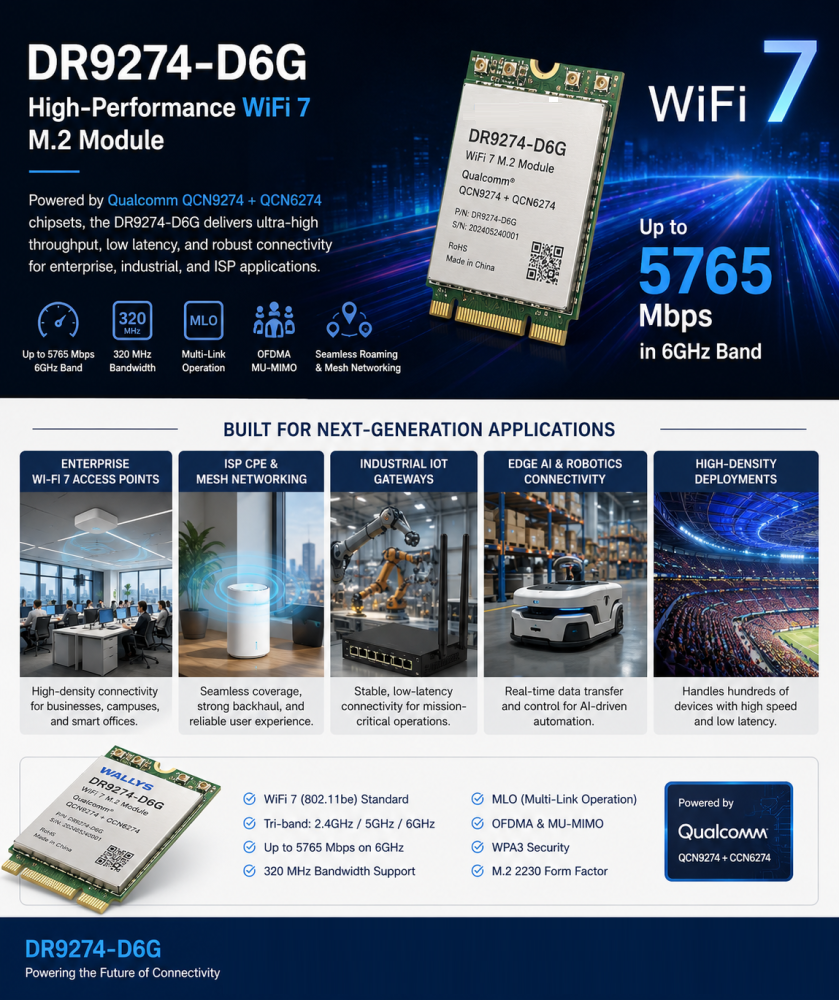
DR9274E WiFi 7 Module: Enabling Next-Generation Autonomous Drones

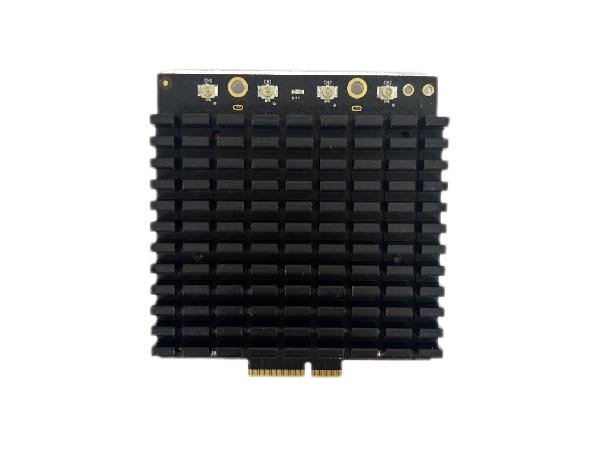
Powered by Qualcomm QCN9274 and QCN6274 platforms, the DR9274E WiFi 7 module is designed for applications requiring higher bandwidth, advanced connectivity, and future-ready wireless performance.

Potential applications include:

  • AI vision drones
  • Autonomous aerial robots
  • Industrial inspection UAVs
  • High-resolution video transmission systems

With WiFi 7 capabilities, it provides a powerful wireless foundation for intelligent devices requiring faster data exchange and more reliable connections.

DR9074 WiFi 6E Module: Reliable Connectivity for Industrial UAV Applications

Based on Qualcomm QCN9024, the DR9074 supports Tri-Band WiFi 6E operation across 2.4GHz, 5GHz, and 6GHz.

It is designed for applications requiring:

  • Stable wireless links
  • High-performance data transmission
  • Flexible frequency selection
  • Industrial deployment reliability

Suitable for:

  • Inspection drones
  • Mapping systems
  • Smart agriculture UAVs
  • Edge AI devices
Article content

Connecting the Future of Autonomous Flight

The future of drones will not only depend on better AI algorithms.

It will depend on the complete technology ecosystem:

AI provides intelligence. Sensors provide perception. Wireless connectivity enables action.

A smarter drone still needs a stronger wireless link.

At 524WiFi and Wallys, we are committed to providing Qualcomm-based WiFi 6 and WiFi 7 platforms for the next generation of drones, robotics, and edge AI applications.

The future of autonomous flight will not only be smarter.

It will be better connected.
Posted on

524 WiFi 7 modules from Wallys Now Fully Supports ath12k | Faster Performance & Open-Source Flexibility

524 WiFi 7 cards Now Fully Supports ath12k — Performance Unlocked, Connectivity Redefined

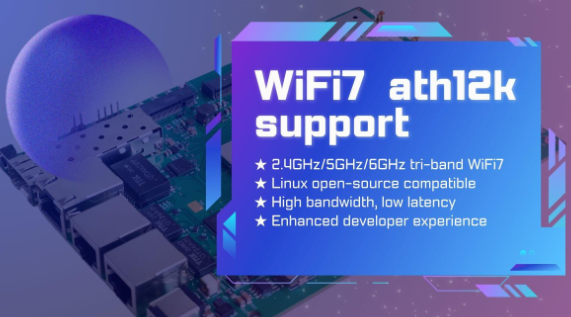
The evolution of WiFi 7 continues to accelerate, and open-source innovation is playing a key role in enabling faster development and deployment. We are excited to announce that our entire WiFi 7 product line now offers full compatibility with the ath12k driver — Qualcomm’s next-generation open-source wireless driver for Linux.

From high-performance router boards to enterprise-grade network cards, Wallys WiFi 7 platforms based on IPQ95xx, QCN92xx, and QCN62xx are now ready to take advantage of the powerful features and enhanced stability provided by ath12k.


Why ath12k Matters for WiFi 7 Development

As the successor to ath11k, the ath12k driver introduces major improvements tailored for WiFi 7’s advanced feature set. Developers, integrators, and enterprises gain stronger kernel support, increased flexibility, and a smoother path to building next-generation wireless systems.

Key Benefits of ath12k

  • Tri-band WiFi 7 support (2.4GHz / 5GHz / 6GHz) Supports core WiFi 7 technologies such as 4K-QAM, MLO, and Multi-Link Aggregation, unlocking higher throughput and reliability.
  • Deep compatibility with the Linux open-source ecosystem Ideal for companies building custom firmware or integrating WiFi 7 into specialized platforms.
  • Significant performance upgrades Improved speed, lower latency, and greater stability — perfect for enterprise networking, industrial IoT, MDUs, and outdoor deployments.
  • Developer-friendly architecture Open, flexible, and optimized for ODM/OEM workflows, reducing development time and increasing customization freedom.

WallysTech Products Now Supporting ath12k

With ath12k integration now complete across our WiFi 7 lineup, developers gain reliable and scalable platforms for their next wireless innovation.

1. DR9574 Series (IPQ9574)

A high-performance tri-band WiFi 7 router/AP mainboard designed for:

  • Enterprise WiFi networks
  • Industrial wireless systems
  • High-density environments
  • Multi-port, high-throughput applications

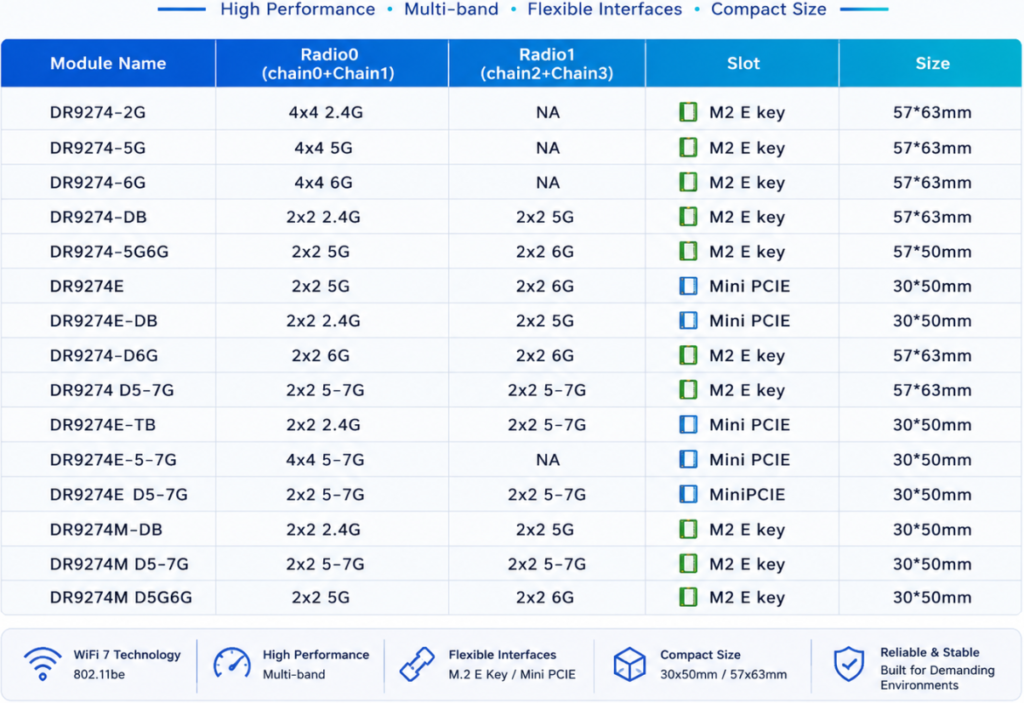
2. DR9274 & DR6274 WiFi 7 NICs (QCN9274 / QCN6274)

PCIe-based WiFi 7 network cards suitable for:

  • Custom Access Points
  • CPE devices
  • Industrial and outdoor wireless equipment
  • OEM/ODM hardware upgrades

3. Additional WiFi 7 SoC Mainboards

More WiFi 7 models are currently under development and will be added to the ath12k-enabled family soon, expanding options for integrators and solution providers.


Accelerating Real-World WiFi 7 Deployment

At 524WiFi and WallysTech, our mission is to deliver open, flexible, and production-ready wireless platforms to help customers shorten evaluation cycles and bring WiFi 7 products to market faster.

With full ath12k support, our WiFi 7 solutions now provide:

  • Greater openness for developers
  • Better compatibility with custom Linux systems
  • Improved performance for demanding use cases
  • A smoother upgrade path for companies transitioning to WiFi 7

Whether you’re building enterprise APs, industrial routers, outdoor IoT gateways, or custom wireless equipment, ours WiFi 7 platforms offer the performance and openness needed for next-generation deployments.

Article content

The integration of ath12k marks a major milestone for the WiFi 7 ecosystem. 524WiFi is proud to be among the first hardware solution providers to fully adopt the new driver across a broad product portfolio.

As WiFi 7 continues to redefine wireless performance, 524WiFi and WallysTech will keep delivering powerful, customizable, and future-ready solutions to help partners innovate with confidence.

Posted on

Introducing the DR5018S – Built for Industrial Grade Wireless – Qualcomm IPQ5018

🚀 Introducing the DR5018S – Built for Industrial-Grade Wireless

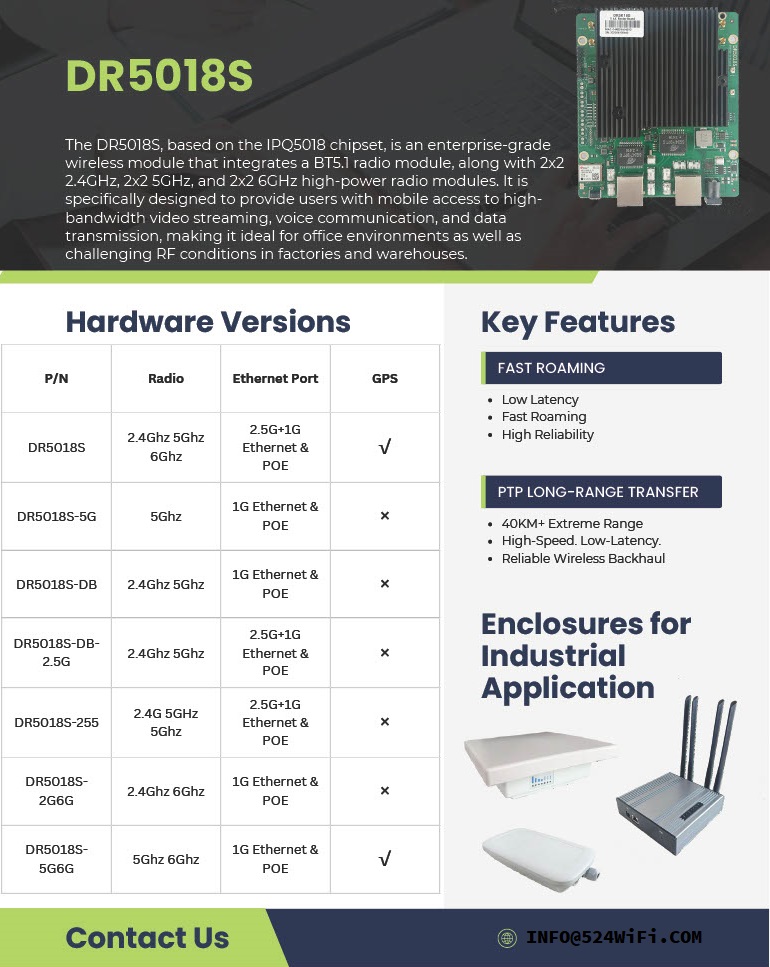
From smart ports to logistics hubs to long-range PTP connections, the DR5018S is engineered to deliver:
✅ Fast Roaming
✅ 40km+ PTP Long-Range Transmission
✅ Flexible Enclosures for Any Industrial Application

Whether it’s powering connectivity in smart cities, transportation, or critical infrastructure, the DR5018S ensures powerful performance with reliability you can trust.

https://www.524wifi.com/index.php/catalogsearch/result/?q=5018s

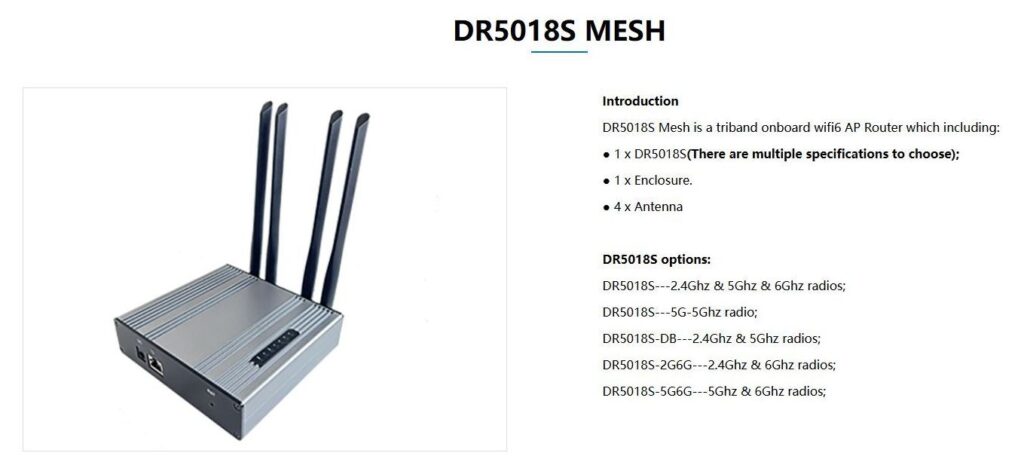
xperience next-level WiFi 6 tri-band performance with the DR5018S Mesh – designed for industrial, enterprise, and large-scale applications. Seamless connectivity, EasyMesh support, and robust hardware all in one compact solution.
💡 Learn more and explore full specifications on our website:

https://524wifi.net/?s=dr5018s

: Introducing the DR5018S – Built for Industrial Grade Wireless – Qualcomm IPQ5018

🚀 When 5G NR Meets Mesh: Filling the Coverage Gaps

5G NR provides standardized, high-performance connectivity — but there are still scenarios where base station deployment is difficult or impractical:

Drone swarms requiring real-time coordination in remote airspace
Robots in underground mines where signals can’t penetrate
Military field operations demanding resilient, ad-hoc communication
In such environments, Mesh networks step in as a complementary layer, ensuring local connectivity even when 5G NR coverage is limited.

👉 Question for the community: Do you see Mesh as a temporary patch until 5G expands everywhere, or as a long-term complement to 3GPP 5G NR in mission-critical deployments?

Posted on

Chipset Comparison: IPQ5322 vs IPQ5424-What’s the Difference and Which One Fits Your Project?

DR5332S vs DR5424: What’s the Difference and Which One Fits Your Project?

As Wi-Fi 7 enters the spotlight of next-gen wireless connectivity, developers and OEMs are seeking powerful, cost-effective router boards to power AIoT, edge computing, mesh networking, and enterprise-grade gateways. At Wallys, we provide two flagship tri-band Wi-Fi 7 router boards: the DR5332S and the DR5424. While they share a common mission — delivering ultra-reliable, high-throughput connectivity — they are built on different SoC platforms and tailored for slightly different project needs.

Let’s break down the differences and help you decide which one is the right fit for your application.

1. Chipset Comparison: IPQ5322 vs IPQ5424

CPU Architecture: A53 vs A55

  • The IPQ5424 uses a Cortex-A55 @1.8GHz, which is newer, more efficient, and more powerful than the Cortex-A53 @1.5GHz in IPQ5332.
  • A55 supports out-of-order execution, making it significantly better for multitasking and edge workloads.

IPQ5424 offers superior computing performance, making it ideal for intensive processing and multitasking at the edge.

AI Acceleration

  • IPQ5424 benefits from its more capable CPU architecture and overall system bandwidth for smoother AI task handling.
Article content

If you’re considering router boards such as Wallys DR5332S (IPQ5332) or DR5424 (IPQ5424):

  • 🧩 DR5332S + IPQ5332: Great for budget-sensitive, compact, quick-to-market solutions
  • 🚀 DR5424 + IPQ5424: Built for edge intelligence, multi-client environments, and future-proof mesh deployments

🔍 DR5424 offers higher performance and better power efficiency at the same time the costs will be higher than DR5322S.

Article content

2. Wireless Capabilities (Tri-Band Wi-Fi 7)

Both boards support tri-band (2.4GHz + 5GHz + 6GHz) Wi-Fi 7, including:

  • Multi-Link Operation (MLO) for increased stability
  • 320MHz bandwidth support on 6GHz band
  • 4096-QAM for enhanced throughput
  • Onboard radio modules for space-saving and simplified integration

However, DR5424 has more headroom for advanced use cases involving concurrent client management, AI inference at the edge, or industrial-grade networking.

3. Use Case Suitability

💡 Recommendation:

  • Choose DR5332S if your project prioritizes cost, compactness, and moderate throughput.
  • Choose DR5424 if you need higher computing power, better future-proofing, and support for intensive applications like edge inference, video analytics, or high-density mesh.

4. Hardware Interface & Customization

Both boards offer:

  • 2.5G Ethernet
  • Multiple UART, I2C, SPI
  • M.2 / USB3.0 / GPIO
  • Support for OpenWRT SDK
  • Optional expansion for LTE/5G/Storage modules

Customization and ODM services are available for both platforms.

5. Pricing & Availability

Both models are available for sampling, with volume support for OEM/ODM integration. DR5332S is generally more affordable and available sooner for entry-level or mid-range products, while DR5424 is geared for premium products with long-term lifecycle planning.

📬 For pricing, datasheets, or demo kits, contact us at: 📧 info@524wifi dot net or com

🧠 Final Thoughts

Whether you’re building a smart city gateway, an industrial mesh router, or a next-gen enterprise AP, 524WiFi and Wallys’ Wi-Fi 7 router boards offer flexible, powerful foundations.

  • DR5332S → Cost-effective, compact, fast-to-market
  • DR5424 → High-performance, future-ready, edge-AI capable

Need help choosing or customizing for your unique application? 

Posted on

IPQ5018 | 524WiFi and Wallys DR5018S VLAN Configuration Guide

1. Introduction

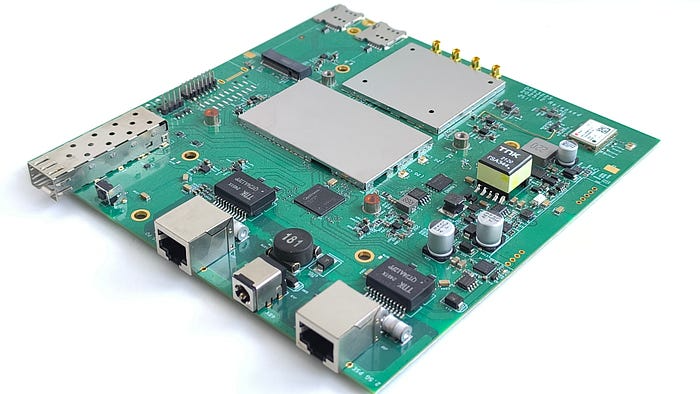
The 524WiFi and Wallys DR5018S router board, based on the Qualcomm IPQ5018 chipset, is widely used in industrial wireless applications. VLAN functionality allows network segmentation, optimized traffic management, and enhanced security. This guide provides a step-by-step tutorial to configure Access VLAN and Trunk VLAN on the DR5018S.

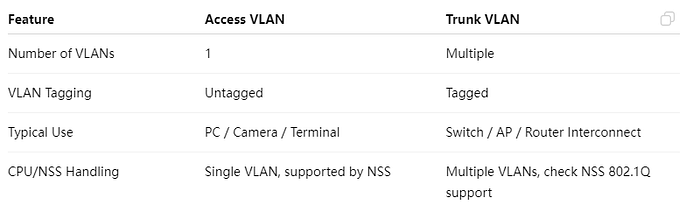
2. Understanding VLAN, Access, and Trunk

Article content

Access VS Trunk

3. Prerequisites

  • Wallys DR5018S router, firmware: wallys firmware
  • Admin access via Web GUI or SSH
  • VLAN ID plan and IP addressing plan
  • Optional: VLAN-aware NIC or Vlan Switch for testing

4. VLAN Configuration on DR5018S

Steps:

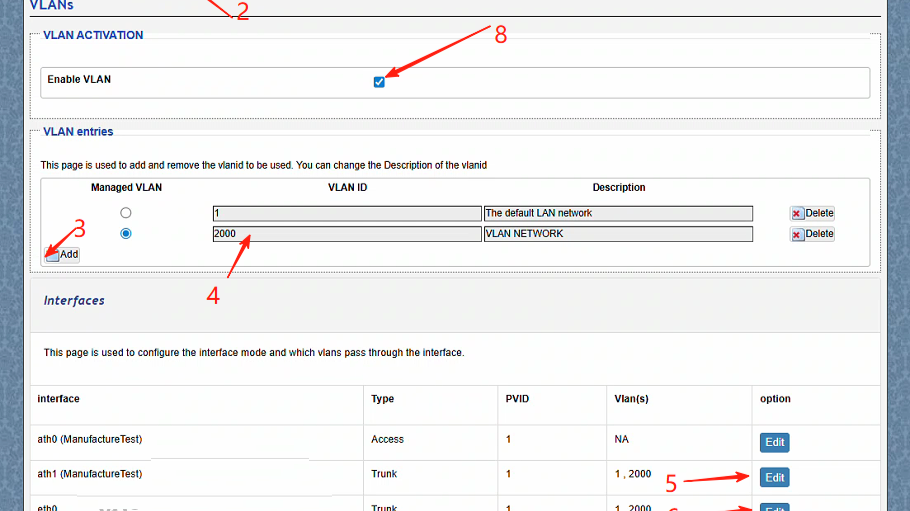
  1. Log in to the Web GUI.
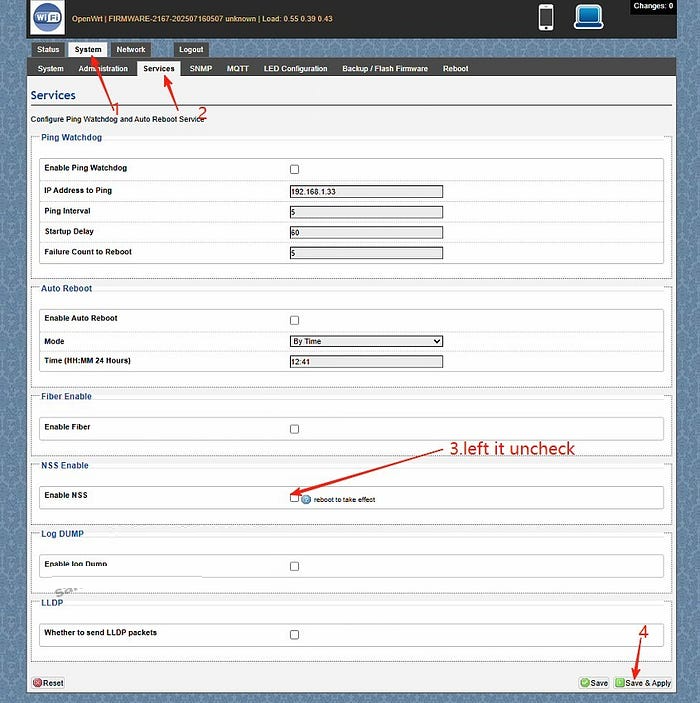
  2. Go to System → Services. Left the Enable NSS uncheck and click “save and apply”
  3. Go to Network → Vlans.Create a VLAN (e.g., VLAN 2000).
  4. Edit the ath1(the working radio) and eth0(the ethernet port connected) port mode to Trunk.
  5. ath1 setting:Select type Trunk,Assign the PVID as 1,select Vlans 2000,save changes
  6. ath1 setting:Select type Trunk,Assign the PVID as 1,select Vlans 2000,save changes.
  7. Assign an IP address to the VLAN interface (static or DHCP).
  8. Save and apply the configuration.
  9. Test connectivity: connect a PC to the port, get an IP, and ping the radio.

5. Troubleshooting

  • Cannot access the device → check VLAN ID, PVID, and tagging.
  • Trunk traffic lost → verify VLAN configuration on the remote end.
  • PC cannot ping → ensure the IP address is in the VLAN subnet.
  • Check NSS hardware acceleration

With this guide, you can easily configure Access VLAN and Trunk VLAN on the DR5018S router board. VLANs help isolate traffic, improve security, and optimize performance in industrial wireless networks.

For more technical support and inquiry for industrial wireless products, contact 524WiFi at info@524wifi dot com or net!

Posted on

DR5322S + QCN9274: Next-Gen WiFi 7 for Industrial Networks

WiFi 7 is here — and 524WiFi is ready.

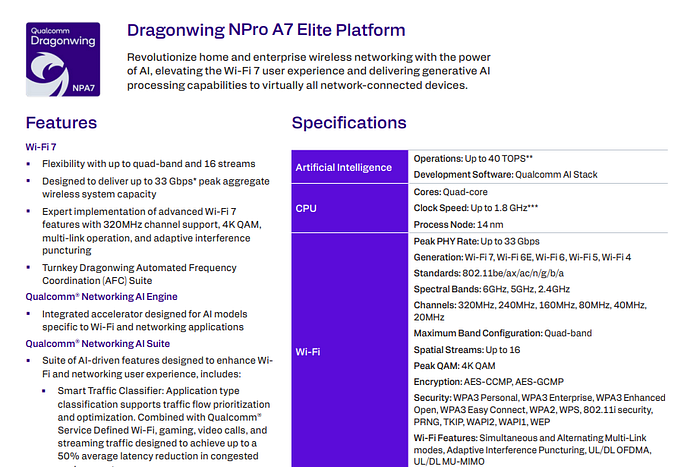
Our latest solution, the DR5332 and DR5322s router boards, combine the power of Qualcomm IPQ 5332 / IPQ5322 and the high-speed QCN9274 wireless module to deliver multi-gigabit connectivity, ultra-low latency, and industrial-grade reliability.

🧠 Key Platform Specs — DR5322

  • ✅ Based on Qualcomm IPQ5322 SoC
  • ✅ Dual 2.5G Ethernet ports + 10G SFP
  • ✅ Supports Tri-band: 2.4G / 5G / 6G (via QCN9274/QCN6274)
  • ✅ PCIe 3.0 slot for flexible radio support
  • ✅ DDR4 1GB, eMMC 8GB onboard
  • ✅ Fully OpenWrt/QSDK customizable

📶 Why QCN9274?

  • ✅ 4×4 MIMO
  • ✅ 320 MHz channel width
  • ✅ Multi-Link Operation (MLO) ready
  • ✅ Supports WiFi 7 (802.11be) features

Paired with DR5322s, this combo brings elite wireless performance to OEM/ODM platforms in:

  • Industrial APs
  • Outdoor wireless CPEs
  • Edge mesh gateways

🔧 Future-Proof Your Wireless Projects

This isn’t just a board. It’s a WiFi 7 infrastructure base built for the next 5–10 years. And yes — QCN6274, QCN9024, and even QCN9074 (WiFi 6) are all supported too, for backward compatibility.

📩 Want to test a DR5322s sample or request a spec sheet? Contact us!

Posted on

524WiFi is driving the future of high-power 6GHz Wi-Fi 7 solutions—with full support for OpenWRT and OpenWiFi collaborative development!

As a global leader in wireless innovation, 524WiFi and WallysTech are advancing the next generation of connectivity with a tri-band platform built on the Qualcomm IPQ9574 + QCN9274/QCN6274 architecture—engineered for ultra-reliable, high-power 6GHz transmission.

🧠 We’re not just innovating in hardware—we’re also deeply engaged in the OpenWRT and OpenWiFi communities, empowering rapid development and seamless integration for our global partners.

🔧 Key Product Highlights:
✅ Tri-band concurrent operation (2.4GHz / 5GHz / 6GHz)
✅ High-power 6GHz RF design for long-range outdoor performance
✅ Fully compatible with OpenWRT and OpenWiFi software stacks
✅ Ideal for mesh backhaul, smart campuses, and industrial IoT deployments

🤝 We invite global partners—developers, system integrators, OEM/ODM teams—to collaborate with us in building the future of Wi-Fi 7.

📩 For product briefs, test boards, or partnership opportunities, reach out to us!

Posted on

IPQ5018 IPQ5010 Wallys DR5018S WiFi 6 Router Board Now Supports Tcpdump — Network Diagnostics Just Got Easier

In the world of embedded networking, visibility is everything. Whether you’re an engineer troubleshooting a client deployment or a developer fine-tuning a custom OpenWrt-based application, packet-level insights can save hours — if not days — of guesswork.

We’re excited to announce that tcpdump is now fully supported on our DR5018S router board, bringing enterprise-grade packet analysis directly to your industrial WiFi 6 hardware.

🧰 Why Tcpdump Matters

Tcpdump is a powerful, command-line packet analyzer tool that allows users to:

  • Monitor live traffic on specific interfaces
  • Capture and filter packets based on IP, port, protocol, and more
  • Export logs for deeper analysis or compliance purposes
  • Debug intermittent network issues with precision

Now with tcpdump on DR5018S, you don’t need a separate laptop or tap device — your router board becomes the diagnostic tool.

Article content

📡 About DR5018S

The DR5018S is based on the Qualcomm IPQ5018 SoC, designed for advanced industrial WiFi 6 applications. It supports:

  • 2.4G/5G concurrent dual-band
  • M.2 slot for LTE/5G modem expansion
  • Optional PoE support
  • Flexible OpenWrt/QSDK firmware environment

By adding tcpdump support, we’re giving system integrators, OEMs, and network developers more control and clarity at the edge.

📝 Documentation & Access

An updated user manual with tcpdump usage examples, interface configurations, and filtering tips will be released shortly. In the meantime, you can check out the DR5018S hardware details here:

https://www.524wifi.com/index.php/catalogsearch/result/?q=5018

Posted on

Beyond IPQ5010: How IPQ5018 DR5018S Solves High-Density Networking Pain Points

Introduction

In high-density networking environments such as stadiums, shopping malls, and enterprise campuses, the demand for robust and efficient wireless solutions is greater than ever. While the IPQ5010 chipset offers a solid foundation for WiFi 6 applications, our DR5018 – IPQ5018 provides an enhanced solution designed to tackle key pain points in these challenging scenarios. This article explores how the IPQ5018 outperforms its predecessor and why it is the optimal choice for high-density networking.

The Limitations of IPQ5010 in High-Density Environments

The IPQ5010 chipset, part of Qualcomm’s WiFi 6 portfolio, delivers substantial improvements over previous generations but has limitations when handling large numbers of concurrent connections. Key constraints include:

  • Lower processing power – Struggles with managing large-scale connections efficiently.
  • Limited memory – Reduced ability to handle simultaneous data streams.
  • Reduced MIMO capabilities – Less effective in environments with multiple devices competing for bandwidth.
  • Basic security features – May not meet the increasing security demands of modern enterprises.

How 524WiFi and Wallys IPQ5018 Overcome These Challenges

Wallys has integrated the IPQ5018 chipset into its latest networking solutions, addressing the limitations of the IPQ5010 and enhancing performance in several key areas:

1. Improved Processing Power and Efficiency

The IPQ5018 features a more powerful quad-core ARM Cortex-A53 processor compared to the IPQ5010’s dual-core setup. This results in:

  • Faster data processing speeds.
  • Reduced latency in high-demand environments.
  • Enhanced ability to manage concurrent client connections.

2. Higher Memory and Storage Capabilities

With support for 1GB DDR memory, the IPQ5018 provides greater capacity for buffering and handling multiple high-bandwidth applications simultaneously. This is crucial for high-density venues where seamless performance is required.

3. Advanced MIMO and OFDMA Support

Our IPQ5018 boards support 2×2 MU-MIMO and OFDMA (Orthogonal Frequency-Division Multiple Access) technology, allowing:

  • More efficient data transmission to multiple users.
  • Reduced interference and congestion in dense environments.
  • Higher overall network throughput and stability.

4. Enhanced Security Features

Security is a growing concern for enterprises, and Wallys IPQ5018 includes:

  • WPA3 encryption support for stronger network security.
  • Advanced firewall and packet filtering features for enterprise-grade protection.
  • Secure boot and firmware validation, ensuring system integrity against cyber threats.

5. Power Efficiency and Thermal Management

Wallys has optimized the IPQ5018 platform for low power consumption, making it an ideal choice for applications requiring 24/7 operation. Its improved thermal management reduces overheating risks, ensuring stable performance in high-traffic areas.

Applications of IPQ5018 in High-Density Networking

With its superior capabilities, the IPQ5018 chipset is an excellent choice for:

  • Smart cities & public WiFi deployments – Handles thousands of simultaneous connections with ease.
  • Corporate and industrial networks – Offers secure and high-speed connectivity for enterprise applications.
  • Hospitality & retail – Supports seamless guest WiFi experiences in hotels, malls, and airports.
  • Educational institutions – Ensures smooth online learning with high-capacity support.

Conclusion

524WiFi and Wallys’ IPQ5018 is a game-changer for high-density networking, delivering better processing power, enhanced MIMO support, stronger security, and improved efficiency over the IPQ5010. Whether for large-scale enterprise deployments or public WiFi solutions, this chipset is designed to meet the growing demands of modern connectivity.

Posted on

IPQ5010 vs. IPQ5018: Why Wallys’ IPQ5018 Redefines Enterprise Wi-Fi 6 Performance

IPQ5010 vs. IPQ5018: A Comprehensive Comparison and Why IPQ5018 is the Future of Networking Solutions

In the rapidly evolving world of networking technology, choosing the right platform for your wireless solutions is crucial. Two prominent players in this space are the IPQ5010 and IPQ5018 chipsets. While the IPQ5010 has proven its worth in various applications, the IPQ5018, particularly Wallys’ DR5018S solution, offers a host of advanced features and performance enhancements that make it the superior choice for modern networking needs. This article delves into the key differences between the two platforms and highlights why the IPQ5018 is the future of networking solutions.

IPQ5010: A Solid Foundation

The IPQ5010 has been widely adopted in the networking industry due to its reliable performance and versatility. It supports dual-band Wi-Fi 6 (802.11ax) and is suitable for a range of applications, including home routers, enterprise access points, and IoT devices. Its key features include:

Efficient Performance: Handles moderate traffic loads with ease.

Cost-Effective: A budget-friendly option for basic networking needs.

Wide Compatibility: Works well with various networking protocols and devices.

However, as networking demands grow, the limitations of the IPQ5010 become apparent. It struggles to handle high-density environments, lacks advanced roaming capabilities, and offers limited support for mesh networking—areas where the IPQ5018 excels.

IPQ5018: The Next-Generation Solution

The IPQ5018 builds on the strengths of the IPQ5010 while addressing its shortcomings. Wallys’ DR5018S solution, powered by the IPQ5018, is a game-changer in the networking industry. Here’s why:

1. Enhanced Performance

Higher Throughput: The IPQ5018 delivers superior performance, making it ideal for high-density environments such as stadiums, airports, and large enterprises.

Improved Stability: A more robust platform ensures consistent performance even under heavy traffic loads.

2. Advanced Roaming and Mesh Networking

Fast Roaming: Wallys’ self-developed fast roaming technology ensures seamless switching between access points, reducing latency and improving user experience.

Mesh Networking: The IPQ5018 is optimized for mesh networks, making it perfect for large-scale deployments that require seamless coverage.

3. GPS Integration

DR5018S with GPS Module: The inclusion of a GPS module in Wallys’ DR5018S solution enables precise location tracking, making it ideal for applications such as fleet management, asset tracking, and location-based services.

4. Cost-Effective and Scalable

Competitive Pricing: Despite its advanced features, the IPQ5018 offers a cost-effective solution, making it accessible for businesses of all sizes.

Bulk Management: Wallys’ self-developed AP Controller supports bulk firmware upgrades and management, simplifying large-scale deployments and reducing operational overhead.

5. Future-Proof Technology

Support for Emerging Standards: The IPQ5018 is designed to support future networking standards, ensuring your investment remains relevant for years to come.

Flexibility: Its modular design allows for easy customization to meet specific application requirements.

Real-World Applications

Enterprise Networks: The IPQ5018’s superior performance and fast roaming capabilities make it ideal for large office spaces and campuses.

Smart Cities: Its support for mesh networking and GPS integration enables seamless connectivity across urban areas.

IoT Deployments: The IPQ5018’s stability and scalability make it a perfect fit for IoT applications requiring reliable and consistent connectivity.

Why Choose 524WiFi’ IPQ5018 Solution?

524WiFi and Wallys have leveraged the IPQ5018’s capabilities to create a solution that stands out in the market. Here’s what sets our Dream router board DR5018S apart:

Self-Developed Fast Roaming(value added service): Ensures uninterrupted connectivity, even in high-mobility scenarios.

Seamless Mesh Networking(value added service): Simplifies the deployment of large-scale networks.

GPS Module: Adds a layer of functionality for location-based applications.

AP Controller Support: Streamlines bulk management and firmware upgrades, reducing operational complexity.

Cost-Effective: Offers advanced features at a competitive price point.

Conclusion

While the IPQ5010 has served as a reliable workhorse in the networking industry, the IPQ5018, particularly 524wifi + Wallys’ DR5018S solution, represents the next generation of networking technology. With its enhanced performance, advanced roaming capabilities, GPS integration, and cost-effective pricing, the IPQ5018 is the ideal choice for businesses looking to future-proof their networks.

For those seeking a more robust, scalable, and feature-rich solution, our IPQ5018-based DR5018S is the clear winner. Its unique advantages make it the perfect platform for enterprise networks, smart cities, and IoT deployments. Upgrade to the IPQ5018 today and experience the future of networking.

Contact us today to learn more about the DR5018S solution and how it can transform your network!