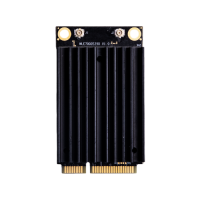
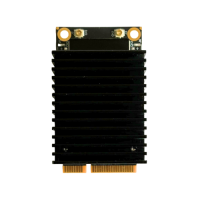
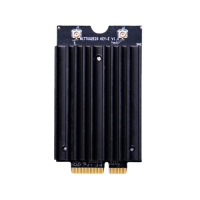
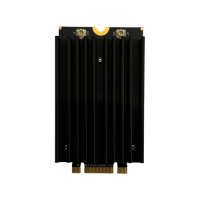
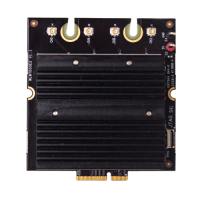
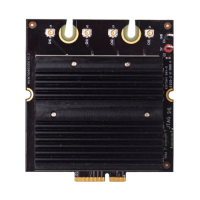
Wi-Fi 7 is here, ushering in a new era of wireless connectivity that promises to transform the way we experience the internet. At Compex, we are excited to introduce the new M.2 variants to our popular dual-band Wi-Fi 7 module lineup. Meet the new WLTB7002E25 with a M.2 B+M Key and the WLTE7002E25 with a M.2 E Key — both designed to complement our existing WLE7002E25, which features the popular standard miniPCIe form factor. Together, these Wi-Fi 7 modules offer a comprehensive solutions with enhanced performance, flexibility and compatibility — all at competitive Wi-Fi 6 prices!
Powered by Qualcomm’s QCN6224, QCN6274 and QCN9274 Waikiki series radio chipsets, the WLE/WLTE/WLTB7002E25 are dual-band concurrent 2.4+5GHz Wi-Fi 7 (802.11be) modules, offering wider signal coverage by transmitting both bands concurrently, reducing latency with Multi-Link Operation (MLO) support, featuring OFDMA and 4096 QAMs. Delivering up to 20dBm per chain, these 2×2 MU-MIMO models are ideal for enterprise, industrial, cybersecurity, transportation and SMB applications.
What are the features of the Compex Wi-Fi 7 Modules WLE/WLTE/WLTB7002E25?
Dual-Band Dual-Concurrent Operation: Support both 2.4GHz and 5GHz bands simultaneously.
Variants for Easy Adoption: WLE7002E25 features a MiniPCIe interface with PCIe 3.0, while the WLTE7002E25 and WLTB7002E25 both have M.2 connectors, supporting E Key and B+M Key respectively.
MLO: All Compex Wi-Fi 7 modules support Multi-Link Operation, a key performance advantage of Wi-Fi 7, which increases throughput, lowers latency and enhances reliability.
Open Source Ath12k Support: Compatible with Qualcomm and third-party platforms such as Marvell, NXP and x86 platform.
Exploring the Differences Between Wi-Fi 7, LoRa, and NB-IoT in IoT Applications
As the Internet of Things (IoT) continues to expand, more specialized networking solutions have emerged to meet various connectivity requirements. Among them, Wi-Fi 7, LoRa, and NB-IoT are prominent technologies with unique attributes. While each technology offers specific benefits, understanding their differences helps businesses and developers choose the best fit for their IoT applications. This article examines how Wi-Fi 7 compares to LoRa and NB-IoT, focusing on coverage, data speed, power consumption, and typical applications.
1. Overview of Wi-Fi 7, LoRa, and NB-IoT
Wi-Fi 7 is the latest iteration of the Wi-Fi standard, offering ultra-high-speed connectivity with significant improvements in latency, capacity, and efficiency over its predecessors. It is optimized for data-intensive, low-latency applications and operates primarily within high-frequency bands.
LoRa (Long Range) is a low-power, long-range wireless protocol designed for battery-operated devices over large areas. It is part of the LoRaWAN standard and operates in unlicensed sub-GHz frequency bands, making it ideal for low data-rate applications in rural or urban areas.
NB-IoT (Narrowband IoT) is a cellular IoT standard under LTE networks, focused on low-power, wide-area network (LPWAN) technology. It provides excellent penetration and coverage, especially in hard-to-reach indoor areas, with a focus on efficient energy use and long-term battery life.
2. Frequency Bands and Coverage
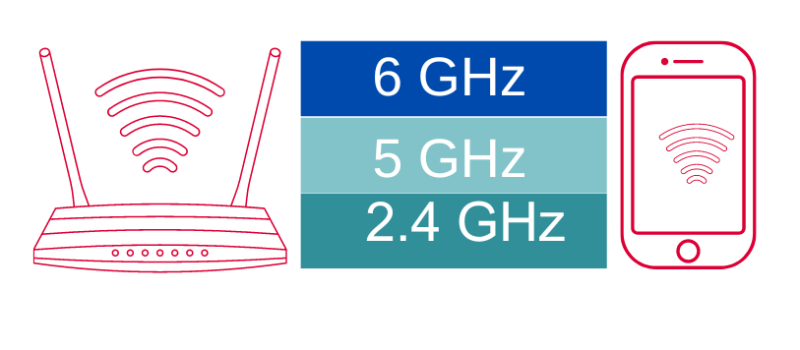
Wi-Fi 7 operates in the 2.4GHz, 5GHz, and 6GHz bands, giving it significant bandwidth and high data speeds but limiting its range compared to LPWAN technologies. It is best suited for areas with a high density of devices, such as homes, offices, and industrial sites with robust infrastructure.
LoRa uses sub-GHz bands (typically 915 MHz in the Americas, 868 MHz in Europe) to achieve longer-range coverage, with signal reach often extending up to 15 km in rural settings. Its lower frequency allows it to penetrate buildings and other obstacles effectively, ideal for both urban and rural IoT deployments.
NB-IoT operates in licensed LTE bands, giving it excellent coverage and allowing it to reach deep indoors and across extensive areas. As a cellular technology, NB-IoT can leverage existing cellular infrastructure, providing broader coverage even in remote locations.
3. Data Speed and Latency
Wi-Fi 7 is built for ultra-fast data speeds, theoretically up to 46 Gbps with 320MHz channels, enabling low-latency, high-bandwidth applications like real-time video streaming, AR/VR, and smart home automation. It is optimized for situations where large volumes of data need rapid processing.
LoRa supports lower data rates, generally between 0.3 to 50 kbps. This slower speed makes it unsuitable for high-data applications but perfect for applications that transmit small amounts of data sporadically, like temperature or air quality sensors.
NB-IoT offers moderate data speeds of up to 250 kbps, which, while significantly lower than Wi-Fi 7, is still sufficient for many IoT applications such as smart metering and environmental monitoring. NB-IoT has moderate latency, generally between 1.5 to 10 seconds, which suits non-real-time applications.
4. Power Consumption
Wi-Fi 7 requires more power than LoRa or NB-IoT, making it best suited for applications with continuous power sources, such as AC-powered devices or rechargeable systems. Its high data throughput demands substantial power, and thus it is less ideal for battery-powered IoT devices.
LoRa is highly efficient in terms of power consumption, designed to support low-power, battery-operated devices with lifespans of up to 10 years. Its low transmission rate and periodic data transmission keep energy use minimal, making it a popular choice for remote or hard-to-reach sensors.
NB-IoT also focuses on low power consumption, using a simplified communication protocol that allows devices to stay in sleep mode for extended periods. Devices using NB-IoT can often operate for several years on a single battery, making it well-suited for battery-powered applications like water meters and smart agriculture.
5. Security and Reliability
Wi-Fi 7 builds on Wi-Fi 6’s robust security protocols, including WPA3 and enhanced encryption standards, which make it highly secure for data-sensitive applications in private networks. However, since Wi-Fi 7 operates on unlicensed bands, it may face interference from other devices.
LoRa security is managed by the LoRaWAN protocol, which includes AES-128 encryption. While secure, it may not match Wi-Fi 7’s advanced security measures, making it less suited for highly sensitive data. However, LoRa’s long-range capability ensures robust reliability across vast areas.
NB-IoT leverages cellular security protocols, offering robust encryption and secure authentication. Operating over licensed LTE bands, it is highly reliable and less susceptible to interference, making it ideal for mission-critical IoT applications.
6. Key Applications for Each Technology
Wi-Fi 7: Given its high speed and low latency, Wi-Fi 7 is ideal for smart homes, industrial automation, AR/VR applications, HD streaming, and environments with dense device populations that require substantial bandwidth and quick response times.
LoRa: Due to its range and power efficiency, LoRa is well-suited for applications like smart agriculture, environmental monitoring, and asset tracking. It is ideal for areas with dispersed sensors, requiring minimal data but reliable connectivity over long distances.
NB-IoT: NB-IoT’s strength lies in smart metering, smart cities, health monitoring, and applications requiring consistent coverage in challenging areas, such as underground or indoor locations. Its low-power nature and reliable cellular infrastructure make it highly versatile for various IoT needs.
7. Summary: Choosing the Right Technology
Summary: Choosing the Right Technology
Conclusion
Wi-Fi 7, LoRa, and NB-IoT each excel in different areas of IoT connectivity. Wi-Fi 7 provides high data rates and low latency for bandwidth-intensive, real-time applications but requires consistent power sources. LoRa offers extensive range and low power usage for rural or low-data applications, while NB-IoT provides reliable cellular connectivity with excellent indoor penetration and low power demands. Selecting the right technology depends on your specific requirements in terms of range, power, data speed, and environmental conditions.
524WiFi DR9274 Wi-Fi 7 Network Card
The 524WiFi 7 DR9274 network card, built on Qualcomm’s QCN9274 chip, is designed for high-performance Wi-Fi 7 applications. Featuring a 320MHz ultra-wide channel and 4×4 MIMO configuration on the 6GHz band, this card offers top-tier performance for applications requiring low latency and high data throughput, including industrial automation, smart home environments, and mesh networking setups. With its M.2 interface and compact form factor, it’s easy to integrate into various devices, providing robust and reliable network connectivity.
How Does 320MHz Bandwidth in the 6GHz Band Improve Data Transfer Speeds Compared to Previous WiFi Generations?
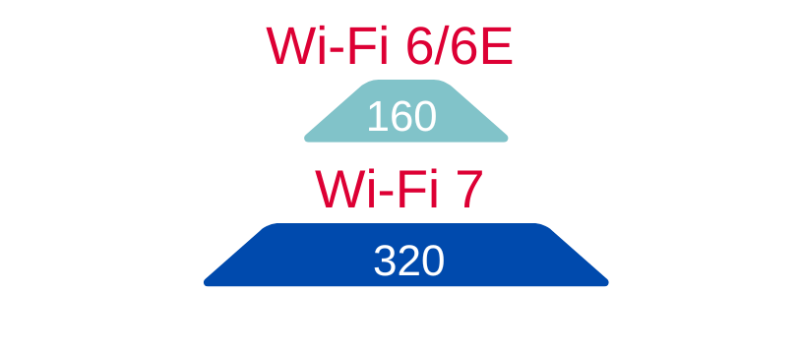
The world of wireless technology is rapidly evolving, and with the introduction of WiFi 7, we are entering a new era of high-speed, low-latency wireless connectivity. One of the standout features of WiFi 7, also known as 802.11be, is its support for a 320MHz channel width in the 6GHz band, doubling the 160MHz width available in WiFi 6E. This significant increase in bandwidth directly translates into faster data transfer rates and improved network performance. In this article, we will explore how this enhanced bandwidth in the 6GHz band boosts speeds and why WallysTech’s DR9274-6G module, equipped with Qualcomm’s latest QCN9274 and QCN6274 chips, is perfectly suited to take advantage of this technology.
Technical Features of the DR9274-6G
The DR9274-6G is a high-performance wireless network card designed for modern high-bandwidth, low-latency applications. It is fully compatible with the latest WiFi 7 (802.11be) standard, which offers substantial improvements over previous WiFi generations, particularly when it comes to speed and reliability.
1. WiFi 7 Standard Support
WiFi 7 offers several key advancements over its predecessor, WiFi 6E:
Higher Bandwidth Support: The channel width in WiFi 7 is increased to 320MHz, doubling the capacity from WiFi 6E’s 160MHz. This expanded bandwidth enables faster data transfer rates by allowing more data to be transmitted at once.
Multi-Link Operation (MLO): WiFi 7 introduces MLO technology, which aggregates multiple frequency bands into a single connection. This improves both bandwidth and connection reliability.
Enhanced 4K QAM: WiFi 7 supports 4096-QAM (Quadrature Amplitude Modulation), significantly increasing the efficiency of data transmission compared to the 1024-QAM used in WiFi 6E. This leads to better data throughput, especially in high-demand environments.
2. Cutting-Edge Chipset
The DR9274-6G uses Qualcomm’s QCN9274 and QCN6274 chips, which offer several advanced features:
4×4 MU-MIMO: This technology improves the module’s ability to handle multiple devices simultaneously, providing stable connections even in high-density environments.
Efficient Signal Processing: These chips feature advanced signal processing capabilities, reducing latency and ensuring stable connections in challenging conditions.
Power Efficiency: The DR9274-6G is designed for low power consumption, making it ideal for long-term deployments in industrial, IoT, and smart city applications.
3. Modular Design and Interfaces
The DR9274-6G is designed with flexibility in mind. It features an M.2 connector and supports PCI Express 3.0, making it easy to integrate into a wide range of devices. It also offers a choice of UFL or MMCX antenna interfaces, providing options for customization based on the application.
DR9274-6E 4X4 QCN9074 QCN9024 WIFI7
Application Scenarios
The DR9274-6G is well-suited for various use cases across different sectors. Its high bandwidth and low latency make it ideal for demanding applications:
Home and Business Networks: In homes, this network card offers ultra-fast wireless connections, supporting bandwidth-heavy activities like 4K/8K video streaming and online gaming. In business environments, it ensures stable and fast connections for numerous devices, making it ideal for high-density deployments such as conference rooms or large offices.
Industrial Internet of Things (IIoT): Industrial applications demand reliable, low-latency connectivity, and the DR9274-6G delivers just that, making it perfect for complex networking needs in IIoT environments.
Smart Cities and Public Spaces: Public WiFi hotspots and smart city deployments require support for many concurrent devices. The DR9274-6G, with its multi-band support and MU-MIMO technology, ensures stable connections even in high-traffic areas like public transportation hubs and city centers.
DR9274-6G
Advantages of WiFi 7
The leap from WiFi 6E to WiFi 7 brings numerous benefits to both individual users and large-scale network deployments:
Greater Channel Bandwidth (320 MHz): With double the bandwidth of WiFi 6E, WiFi 7 enables significantly faster data transfer rates, improving overall network performance.
Multi-Link Operation (MLO): This feature allows WiFi 7 devices to use multiple frequency bands for data transmission, which enhances both speed and connection stability.
Enhanced QAM (4096-QAM): The higher modulation density in WiFi 7 means better data efficiency, leading to faster, more reliable wireless communication.
Why 524WiFi’s DR9274-6G?
DR9274-6G wireless network card is at the forefront of WiFi 7 technology. Based on Qualcomm’s powerful QCN9274 and QCN6274 chips, this module fully supports the latest WiFi 7 standard, offering significant advantages in terms of bandwidth, latency, and device connectivity. Whether deployed in homes, businesses, industrial environments, or public spaces, the DR9274-6G ensures robust and stable network performance.
As WiFi 7 continues to gain traction and become the new standard in wireless communication, the DR9274-6G is poised to play a pivotal role in high-performance network deployments.
Your Go-To Guide for Loading Firmware and Configuring MLO on IPQ9574 !
Hey there! Are you feeling a bit lost when it comes to loading firmware and configuring MLO on the IPQ9574? Fret not! Here at 524WiFi, we’ve crafted a super easy and detailed tutorial just for you. Let’s jump right into it!
Why This Guide?
Whether you’re a seasoned pro or a complete newbie, setting up advanced hardware can be daunting. That’s why we’re here to break it down into simple, manageable steps. By the end of this guide, you’ll be a pro at loading firmware and configuring your device like a champ!
What You’ll Get
Clear Hardware Setup: We’ll kick things off by connecting the hardware. Don’t worry; we’ll guide you through the process of connecting your UART cable without any hassle.
Seamless Firmware Loading: Next, we’ll tackle loading the firmware. We’ll ensure you have everything in the right place and give you step-by-step instructions to make it a breeze.
Effortless AP Configuration: Finally, we’ll walk you through configuring the Access Point. This step is crucial for ensuring your device runs at its best.
Stick Around for More!
But wait, there’s more! If you stick around until the end of the video, you’ll get an exclusive sneak peek at our upcoming DR9574kit throughput test. Trust us, you won’t want to miss it!
Ready to Dive In?
So, what are you waiting for? Click the link below to watch our tutorial and empower yourself with the skills to conquer firmware loading and MLO configuration!
📺 Watch here:
P.S.: The MLO for DR5332/DR5322 is currently in active preparation. We appreciate your patience as our R&D team works diligently on this. Stay tuned for the latest updates coming your way soon—just you wait!
524WiFi Wi-Fi 7 Router Powered by Qualcomm IPQ9574 and QCN9274: Enhanced Network Experience with MLO Technology
MLO (Multi-Link Operation) is a key technology in Wi-Fi 7 that allows data to be transmitted across multiple wireless links simultaneously, significantly improving network performance, stability, and efficiency. Specifically, MLO enables devices to transmit and receive data on multiple frequency bands (2.4GHz, 5GHz, and 6GHz) at the same time, rather than being limited to a single band.
Key Roles of MLO in Wi-Fi 7:
Increased Throughput: MLO allows devices to utilize multiple links for data transmission, greatly boosting bandwidth and data transfer speeds, especially for high-bandwidth applications like 4K/8K streaming, cloud gaming, and VR/AR.
Reduced Latency: Parallel transmission across multiple links accelerates data transfer, lowering latency, which is crucial for real-time applications like online gaming and video conferencing.
Enhanced Reliability: MLO can automatically switch to other links if one experiences interference or congestion, ensuring connection stability, especially in crowded environments or when devices are far from the router.
More Efficient Spectrum Usage: MLO dynamically distributes traffic across different links, improving spectrum resource utilization and reducing wireless congestion.
Why Many Applications Need MLO:
High Bandwidth Demands: As 4K/8K video and immersive media become more prevalent, applications increasingly require higher bandwidth. MLO’s multi-link capability meets these demands.
Low Latency Requirements: Applications like cloud gaming and video conferencing require very low latency. MLO can significantly reduce latency through parallel transmission.
Reliability: Smart home and industrial automation applications need stable connections. MLO’s multi-link mechanism ensures stability even if one link fails.
About IPQ9574 and QCN9274:
Qualcomm IPQ9574: This powerful SoC (System on Chip) is designed for high-performance networking applications, providing robust processing power and advanced features to support next-gen Wi-Fi 7 capabilities. Its architecture is optimized for handling multiple data streams, ensuring seamless connectivity and improved network efficiency.
Qualcomm QCN9274: Qualcomm Wi-Fi 7 ‘Waikiki’ series radio solution.
In summary, MLO is a core technology in Wi-Fi 7 that enhances network experience by providing higher throughput, lower latency, and greater reliability, making it essential for modern high-performance applications.
524WiFi Solution:
524WiFI and Wallystech’s Wi-Fi 7 router DR9574 supports MLO functionality with the DR9274 Wi-Fi 7 card, fulfilling diverse Wi-Fi project needs:
DR9574 supports 3 DR9274 single cards: 2.4G, 5G, and 6G can operate simultaneously.
In point-to-point WiFi long-distance transmission, selecting the right hardware platform is crucial. To achieve stable signal transmission, it’s important to focus on key factors such as processor performance, transmission standards, RF (radio frequency) performance, and heat dissipation design. Wallys offers a range of industrial wireless routers that meet these needs, particularly excelling in scenarios requiring stable transmission over distances of up to 23 kilometers.
1. Processor Performance
Choosing routers with high-performance CPUs is essential. 524WiFi’ industrial routers are equipped with powerful multi-core processors capable of handling high data traffic, ensuring a smooth network experience even with multiple device connections. This level of performance guarantees reliability in data-intensive applications, such as video monitoring and real-time data transmission.
WIFI6 VS WIFI7
2. Transmission Standards
To achieve higher efficiency and lower latency, it’s vital to select devices that support the latest WiFi standards. Wallys 524WiFi routers support WiFi 6 and WiFi 6E, with preparations for WiFi 7. This means users can enjoy faster connection speeds and greater network capacity, making them suitable for high-density user environments.
3. RF (Radio Frequency) Performance
Good RF performance is another key factor for stable transmission. 524WiFi’ industrial wireless routers employ advanced RF designs that optimize signal transmission and reception, significantly enhancing signal stability and interference resistance. This is especially important in complex environments such as factories or warehouses, ensuring stable signal transmission even over distances of up to 23 kilometers.
4. Heat Dissipation Design
Overheating can severely impact device performance, so a good heat dissipation design is crucial. Wallys 524WiFi routers utilize efficient heat management solutions to maintain stable performance during long-term operation. This design allows devices to operate efficiently under high load conditions, ensuring continuous network connectivity.
524WIFI 7 Heat Dissipation Design
5. Quality Control
524WiFi’ commitment to quality is reflected in its manufacturing process. All devices undergo 100% calibration before shipment, ensuring that signal quality and performance meet high standards. This rigorous quality control measure gives users peace of mind, ensuring that devices can operate reliably in various environments.
Recommended Models
DR5018S: Based on the Qualcomm IPQ5018 CPU, supports WiFi 6, suitable for high-density connection environments, offering robust data processing capabilities.
DR5018S router board
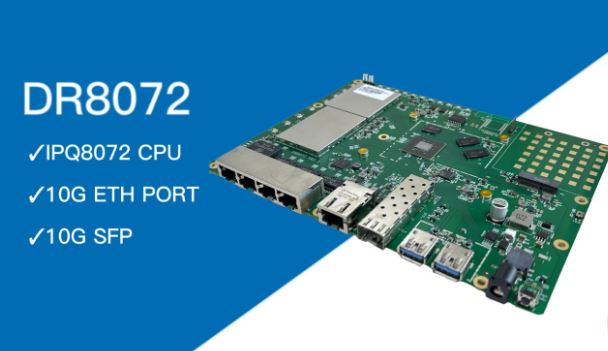
DR8072: Features the Qualcomm IPQ8072 CPU, supports WiFi 6E, with excellent RF performance and heat dissipation design, ideal for industrial applications.
DR8072
Wallys DR6018: Based on the Qualcomm IPQ6010 CPU, suitable for environments that require stable transmission and efficient processing.
Wallys DR6018
DR5332: A forward-looking design supporting WiFi 7, based on the Qualcomm IPQ5332 CPU, offering multiple connectivity options to meet future needs.
IPQ6010 VS IPQ5332
DR9574: Equipped with the Qualcomm IPQ9574 CPU, providing exceptional performance and efficient signal transmission, suitable for large-scale applications.
Wallys DR9574
Conclusion
Choosing the right industrial wireless router is essential for ensuring stable wireless transmission. 524WiFi’ products excel in processor performance, transmission standards, RF performance, and heat dissipation design, making them ideal for achieving efficient point-to-point WiFi connections while maintaining stability over distances of up to 23 kilometers. By selecting the appropriate model based on specific application scenarios and requirements, you can maximize network stability and efficiency, ensuring reliable wireless communication.
Wi-Fi 7, also known as IEEE 802.11be, is the next-generation Wi-Fi standard that supports 2.4GHz, 5GHz, and 6GHz all three frequency bands. This advanced technology introduces innovative features that provide wider signal coverage, reduced latency and seamless connectivity. Wi-Fi 7 is set to revolutionize the way we connect, redefining the standards of wireless communication and rewriting your connectivity experiences. For Linux users, recommended is Linux krenel 6.5 and in kernel ath12k driver.
Unlock the Full Possibilities of Wi-Fi 7
320MHz Bandwidths
Wi-Fi 7 introduces 320MHz channel bandwidths, significantly expanding data transmission capacity. This allows for higher data rates and improved performance, ideal for bandwidth-intensive applications like streaming, gaming, and large file transfers.
4096 QAM
WiFi 7 uses 4K QAM to enhance data capacity, enabling higher speeds and efficiency. This improves performance for 4K streaming, online gaming, and large file downloads, delivering superior connectivity for modern applications.
Multi-Link Operation
Wi-Fi 7 debuts Multi-Link Operation (MLO), enabling devices to connect to the same access point across multiple channels and frequency bands simultaneously. MLO increases throughput, reduces latency, and enhances reliability.
Compex Wi-Fi 7 Solutions
The new Compex’s Wi-Fi 7 Dual-Band Dual-Concurrent Modules are designed to take your connectivity to the next level with seamless adoption, power efficiency and enhanced wireless performance. Ideal for enterprise, industrial, cybersecurity, transportation, and SMB applications or appliances, our Wi-Fi 7 Dual-Band Dual-Concurrent Modules set a new standard in performance and reliability.
Compex Wi-Fi 7 Solutions Product Matrix
WLE7000 Standard MiniPCIe Series
WLE7002E25
2×2 2.4+5GHz DBDC WiFi 7 with 2.4/5GHz Diplexer MiniPCIe Interface with PCIe 3.0
WLE7002E56
2×2 5+6GHz DBDC WiFi 7 with 5/6GHz Diplexer MiniPCIe Interface with PCIe 3.0
WLT7000 M.2 Series
WLTE7002E25
2×2 2.4+5GHz DBDC WiFi 7 with 2.4/5GHz Diplexer M.2 E Key Interface with PCIe 3.0
WLTB7002E25
2×2 2.4+5GHz DBDC WiFi 7 with 2.4/5GHz Diplexer M.2 B+M Key Interface with PCIe 3.0
WLW7000 High-Power M.2 Series
WLW7002E25
2×2 2.4+5GHz DBDC WiFi 7 M.2 E Key Interface with PCIe 3.0
WLW7002E56
2×2 5+6GHz DBDC WiFi 7 M.2 E Key Interface with PCIe 3.0
WLW7000E2
4×4 2.4GHz WiFi 7 M.2 E Key Interface with PCIe 3.0
If you’ve ever been in a packed venue or a bustling office, you know how crucial it is to have a reliable WiFi connection. With more devices than ever connecting to the network, WiFi is under pressure. That’s where WiFi 6 and WiFi 7 come into play, offering some impressive upgrades for high-density environments. Here’s the lowdown:
🔹 WiFi 6 (802.11ax): OFDMA: This tech slices up the channel into smaller chunks so multiple devices can communicate simultaneously. It means less congestion and faster speeds! MU-MIMO: This lets multiple devices send and receive data at the same time, cutting down on wait times and improving performance. TWT: Target Wake Time schedules when devices wake up, reducing network congestion and saving battery life.
🔹 WiFi 7 (802.11be): Faster Speeds: With wider channels and more spatial streams, WiFi 7 delivers even higher speeds and better performance. Enhanced OFDMA: It’s like WiFi 6’s OFDMA but turbocharged, optimizing how resources are used. Better MU-MIMO: Handles even more users at once, making it ideal for ultra-crowded environments. Lower Latency: Improvements here mean less lag, which is great for real-time applications like AR/VR. Whether you’re thinking of upgrading or just curious about the latest in wireless tech, both WiFi 6 and WiFi 7 are worth your attention. WiFi 7 is set to lead the way with its higher speeds and lower latency, but WiFi 6 is still a fantastic option for current needs.
💡 Got questions about WiFi solutions or need advice? Feel free to reach out!
WiFi7 in Smart City Infrastructure: Performance and Reliability Evaluation
The advent of WiFi7 marks a significant leap in wireless technology, promising substantial improvements in speed, capacity, and latency. As smart cities continue to evolve, the integration of WiFi7 into their infrastructure can revolutionize various aspects of urban living, from transportation and public safety to energy management and healthcare. This article evaluates the performance and reliability of WiFi7 in the context of smart city infrastructure.
Enhanced Performance
One of the most notable advancements of WiFi7 is its increased data transfer rates. WiFi7 can achieve speeds up to 30 Gbps, which is three times faster than its predecessor, WiFi6. This enhanced performance is crucial for smart cities, where a vast array of devices and systems require robust and swift connectivity. For example, real-time traffic management systems can benefit from faster data processing, enabling more efficient control of traffic lights and reducing congestion.
Moreover, WiFi7’s improved capacity can support a higher density of connected devices. In a smart city, thousands of sensors, cameras, and other IoT devices are constantly transmitting data. WiFi7’s ability to handle these connections simultaneously without compromising performance is a game-changer. This ensures that critical systems, such as emergency services and public transportation, remain operational and responsive even during peak times.
Increased Reliability
Reliability is a cornerstone of any smart city infrastructure. WiFi7 addresses this with several key features. First, its use of the 6 GHz band reduces congestion on the 2.4 GHz and 5 GHz bands, leading to more stable connections. This is particularly important in urban environments, where interference from numerous wireless networks can disrupt communication.
WiFi7 also incorporates Multi-Link Operation (MLO), which allows devices to connect to multiple frequency bands simultaneously. This redundancy enhances connection stability and ensures continuous data flow, even if one band experiences interference or becomes unavailable. For smart city applications like autonomous vehicles and remote healthcare, such reliability is essential for safety and effectiveness.
Lower Latency
Low latency is critical for applications requiring real-time data transmission and response. WiFi7 achieves latency reductions through its advanced modulation and coding schemes, making it ideal for use cases like augmented reality (AR), virtual reality (VR), and real-time video surveillance. In smart cities, this means quicker response times for emergency services, more accurate environmental monitoring, and improved user experiences for residents and visitors.
Energy Efficiency
WiFi7 also brings improvements in energy efficiency, which is a key consideration for sustainable smart city initiatives. Its Target Wake Time (TWT) feature allows devices to schedule when they wake up to send or receive data, reducing unnecessary power consumption. This is particularly beneficial for battery-powered IoT devices deployed throughout a city, such as environmental sensors and smart meters, extending their operational life and reducing maintenance costs.
Future-Proofing Smart Cities
As cities continue to adopt more advanced technologies, the demand for robust and scalable wireless infrastructure will only grow. WiFi7’s enhanced performance, reliability, and efficiency make it an ideal foundation for future-proofing smart city initiatives. Its ability to support emerging applications, such as smart grids, autonomous transportation, and advanced public safety systems, ensures that cities can continue to innovate and improve the quality of life for their residents.
Conclusion
The integration of WiFi7 into smart city infrastructure represents a significant advancement in urban technology. Its superior performance, increased reliability, lower latency, and energy efficiency address the critical needs of smart cities, enabling them to operate more effectively and sustainably. As WiFi7 becomes more widely adopted, it will undoubtedly play a pivotal role in shaping the future of smart urban environments.
For more information on integrating WiFi7 into your smart city infrastructure, consider 524WiFi’ advanced routerboard solutions:
DR9574: This routerboard features the Qualcomm IPQ9574 chipset, designed to support WiFi7 with 4×4 2.4 GHz and 4x M.2 slots. It also includes QCN6274 and QCN9274 modules, providing robust wireless connectivity options. Additionally, it offers versatile Ethernet connectivity with 2x 10G and 4x 1G ports, making it ideal for high-performance applications. Learn more about DR9574.
DR5332: This routerboard is powered by the Qualcomm IPQ5332 chipset and is designed to meet the demands of WiFi7 technology. It features a 10G SFP+ port for high-speed data transfer and 1GB DDR4 16-bit memory, ensuring smooth and efficient operation. Its robust design makes it suitable for various industrial applications requiring reliable and fast wireless connectivity. Learn more about DR5332.
In today’s hyper-connected world, the expectation of uninterrupted wireless connectivity has become a given, whether we’re in an office, a factory, or a moving vehicle. Behind the scenes, one key technology enables this seamless experience: wireless roaming. This article explores the core principles of roaming, its significance in industrial applications, and how companies like Wallys are optimizing this technology for critical environments.
What is Wireless Roaming?
Wireless roaming refers to the process by which a device maintains its network connection while moving between different wireless access points (APs) within the same network. As a device moves out of the range of one AP, it must connect to another AP without dropping the connection or disrupting the user experience. This handover needs to be smooth and fast, especially in environments where continuous connectivity is crucial.
For example, think about walking through an office building while on a video call. As you move from one area to another, your device will transition between different APs. If roaming is well-implemented, you won’t even notice this transition; your call will continue uninterrupted.
The Technical Standards Behind Roaming
Roaming is made possible through a combination of advanced wireless standards that help devices decide when and how to switch between APs. The most critical of these standards include:
802.11k: This standard allows devices to make informed decisions about which AP to connect to next. It does this by gathering information about the surrounding network, such as the signal strength of neighboring APs. By having this data in advance, the device can more quickly and intelligently choose the best AP when it’s time to switch.
802.11r: Also known as Fast BSS Transition, this standard is crucial for minimizing the delay during AP handovers. In typical scenarios, when a device switches APs, it has to go through a re-authentication process, which can cause a noticeable delay. 802.11r speeds up this process by allowing the device to pre-authenticate with the next AP while still connected to the current one, enabling a faster and more seamless transition.
802.11v: This standard provides network management features that optimize roaming performance. For instance, it allows the network to “advise” devices on which APs they should connect to based on current network conditions, such as load balancing or signal strength. This proactive management can lead to more efficient roaming and better overall network performance.
Challenges in Wireless Roaming
Despite these advanced standards, implementing effective roaming can be challenging, particularly in complex environments. Some of the key challenges include:
Handoff Delays: Even with fast protocols like 802.11r, there’s always a risk of delays during the handoff process. This can be particularly problematic in environments where even a brief interruption is unacceptable, such as in automated industrial systems or real-time communication platforms.
Signal Interference and Coverage Gaps: In large or densely populated areas, signal interference from other devices or physical obstructions can disrupt the roaming process. Similarly, coverage gaps between APs can cause a device to lose connection before it finds the next AP, leading to dropped connections.
Security Considerations: Each time a device switches APs, it typically has to re-authenticate, which can create a window of vulnerability. Ensuring that this process is both fast and secure is a major concern in environments where data security is critical.
Roaming in Industrial Applications
The importance of effective roaming becomes even more apparent in industrial and enterprise environments, where seamless connectivity is often mission-critical. In these settings, devices might be continuously on the move—whether they are automated guided vehicles (AGVs) in a warehouse, mobile devices used by workers on a factory floor, or surveillance cameras in a smart city.
For example:
In Smart Cities: Public transportation systems often rely on roaming to maintain live video feeds from buses or trains as they move through the city. Here, uninterrupted connectivity ensures real-time monitoring and security.
In Warehouses: AGVs that move goods around large storage areas must remain connected to the central control system at all times. Any interruption in connectivity could halt operations or cause errors in the logistics process.
In Manufacturing: Factory automation systems depend on reliable wireless communication to coordinate complex processes. Roaming ensures that these systems can operate smoothly even as components or devices move throughout the facility.
524WiFi and Wallys’ Solutions for Optimized Roaming
524WiFi and Wallys have developed a range of wireless solutions specifically designed to address the challenges of roaming in industrial environments. By integrating high-performance hardware with advanced firmware, 524WiFI ensures that devices can roam seamlessly between APs with minimal delay and maximum reliability.
High-Performance Hardware: 524WiFI’ wireless modules are built with robust components that enhance signal strength and reduce the likelihood of interference. This hardware foundation is critical for ensuring strong, stable connections that can support fast and efficient roaming.
Optimized Firmware: Wallys’ custom firmware is tailored to optimize roaming performance. This includes intelligent algorithms that manage AP selection and transition processes, ensuring that devices always connect to the best available AP with minimal disruption.
Ease of Integration: 524WiFi’ solutions are designed to be easily integrated into existing networks, making it simple for enterprises to upgrade their systems with advanced roaming capabilities. Whether you’re deploying a new network or enhancing an existing one, we provide the tools and support needed for a smooth implementation.
The Future of Roaming – Wi-Fi 6E and Wi-Fi 7
As wireless technology continues to evolve, the future of roaming looks promising. With the advent of Wi-Fi 6E and Wi-Fi 7, we can expect even faster and more reliable roaming capabilities, especially in high-density environments. Additionally, the integration of AI and machine learning into network management could enable even smarter and more predictive roaming, further enhancing the user experience.
Moreover, the convergence of Wi-Fi and 5G networks is likely to play a significant role in the future of roaming, particularly in industrial applications. The ability to seamlessly switch between different types of networks, such as Wi-Fi and cellular, will open up new possibilities for continuous connectivity in the most demanding environments.
Conclusion
Wireless roaming is a critical component of modern networking, enabling seamless connectivity in a wide range of environments. As the demand for uninterrupted wireless communication continues to grow, especially in industrial and enterprise settings, the importance of optimized roaming technology cannot be overstated. Companies like 524WiFi and Wallys are at the forefront of this field, developing solutions that ensure reliable, fast, and secure roaming for today’s most demanding applications.
If you’re interested in learning more about how 524WiFi can enhance your network’s roaming capabilities, feel free to reach out to our team. We’re here to help you achieve the seamless connectivity your operations depend on.