Posted on

What Makes QCN9074 Stand Out in the WiFi 6E Landscape?

In the ever-evolving world of wireless technology, WiFi 6E has emerged as a game-changer, offering unprecedented speed and connectivity. Among the numerous chipsets available, the QCN9074 stands out with its unique features and capabilities. Let’s explore what makes the QCN9074 a leader in the WiFi 6E landscape.

Introduction to WiFi 6E

WiFi 6E extends the capabilities of WiFi 6 (802.11ax) by operating in the 6 GHz band, in addition to the existing 2.4 GHz and 5 GHz bands. This expansion provides more channels, reduces congestion, and supports higher data rates, making it ideal for environments with multiple connected devices.

The QCN9074 Advantage

The QCN9074 chipset, developed by Qualcomm, is designed to maximize the benefits of WiFi 6E. Here’s why it stands out:

1. Extended Frequency Range

The QCN9074 leverages the newly available 6 GHz spectrum, providing additional bandwidth that translates to increased data throughput and reduced latency. This makes it perfect for high-density environments like smart homes and offices, where multiple devices demand stable and fast connections.

2. High Data Throughput and MU-MIMO Support

With support for Multi-User, Multiple-Input, Multiple-Output (MU-MIMO) technology, the QCN9074 can handle multiple simultaneous connections efficiently. This ensures that all connected devices, from smartphones to IoT gadgets, receive optimal performance without compromising speed.

3. OFDMA for Enhanced Efficiency

Orthogonal Frequency Division Multiple Access (OFDMA) is a standout feature of the QCN9074, allowing multiple devices to share channels simultaneously. This not only improves network efficiency but also reduces latency, which is crucial for applications that require real-time data transmission, such as online gaming and video conferencing.

4. Robust Security Features

In today’s digital age, security is paramount. The QCN9074 integrates advanced security protocols to protect sensitive data and maintain privacy. This ensures that users can enjoy a secure browsing experience, free from potential threats and vulnerabilities.

5. Support for Advanced Applications

The QCN9074’s capabilities make it ideal for supporting advanced applications such as virtual reality (VR), augmented reality (AR), and ultra-high-definition streaming. Its high data throughput and low latency ensure seamless experiences, even with bandwidth-intensive applications.

Conclusion: The Future of Connectivity with QCN9074

As the demand for faster and more reliable wireless connectivity continues to grow, the QCN9074 is well-positioned to lead the charge in the WiFi 6E landscape. Its advanced features, combined with Qualcomm’s expertise in wireless technology, make it a top choice for anyone looking to future-proof their network.

For more information on how the QCN9074 can enhance your connectivity solutions, or to explore our product offerings, please contact us

Posted on

Real-Time Streaming Made Easy with QCN9074 WiFi 6E Module

Real-Time Streaming Made Easy with QCN9074 WiFi 6E Module

In today’s fast-paced digital world, real-time streaming has become an essential part of our daily lives. Whether it’s for live sports, online gaming, video conferencing, or entertainment, the demand for seamless and high-quality streaming is ever-growing. The QCN9074 WiFi 6E module is here to revolutionize this experience, offering unparalleled connectivity and performance.

The Importance of Real-Time Streaming

Real-time streaming requires consistent and high-speed internet connectivity to deliver content without interruptions or delays. As more devices connect to the internet, traditional WiFi networks often struggle to provide the necessary bandwidth and stability, leading to buffering and reduced quality.

Enter WiFi 6E and the QCN9074 Module

The introduction of WiFi 6E marks a significant advancement in wireless technology, providing access to the 6 GHz band. This additional spectrum offers more channels and less interference, which is crucial for environments with many connected devices. The QCN9074 WiFi 6E module, developed by Qualcomm, is designed to take full advantage of these benefits.

Key Features of the QCN9074 WiFi 6E Module

Extended Bandwidth and Reduced Congestion

The QCN9074 module operates across the 2.4 GHz, 5 GHz, and 6 GHz bands, providing more channels and reducing network congestion. This ensures smooth and uninterrupted streaming, even in high-density environments like apartments or office buildings.

High Data Throughput

With support for MU-MIMO technology, the QCN9074 can handle multiple data streams simultaneously. This high throughput capability is essential for streaming high-definition content without delays or quality loss.

OFDMA for Improved Efficiency

Orthogonal Frequency Division Multiple Access (OFDMA) allows the QCN9074 module to efficiently allocate bandwidth, serving multiple devices simultaneously. This reduces latency, providing a seamless experience for real-time applications like gaming and live video streaming.

Enhanced Security

The QCN9074 includes advanced security features to protect your data during streaming sessions. This ensures your content remains private and secure from potential cyber threats.

DR9074 Triband

Product Highlight: 524WiFi 6E DR9074

The DR9074 by WallysTech is a tri-band WiFi 6E network card based on the Qualcomm QCN9074 chipset. Supporting 2.4 GHz, 5 GHz, and 6 GHz bands and equipped with a 4T4R M.2 E Key interface, it adheres to the 802.11ax standards. This product is designed for high performance and reliability in wireless network applications, making it particularly suitable for various real-time streaming scenarios.

  • Outstanding Signal Coverage: The DR9074 is engineered to provide robust signal coverage over a wide area, ensuring smooth real-time streaming in any environment.
  • Optimized Performance: With full support for WiFi 6E, the DR9074 can maintain excellent performance even in congested networks, offering users an unparalleled streaming experience.

Conclusion

The QCN9074 WiFi 6E module and its derivative product, the DR9074, stand out as leaders in the realm of wireless connectivity, making real-time streaming easy and efficient. By leveraging the extended spectrum and advanced features of WiFi 6E, they provide a superior streaming experience that meets the demands of today’s digital landscape.

Posted on

QCN 9074 QCN 9024 Tri-Band Capability Meets Versatile Development: ROCK 5B + 524 WiFi 6 DR9074-Triband !

Harnessing the Power of 524WiFi 6 DR9074-TRIBAND with x86 Platforms: Practical Case Studies

In the fast-evolving world of wireless networking, Wi-Fi 6E is transforming connectivity with its higher speeds, lower latency, and increased device capacity. At 524WiFi and Wallys, we are dedicated to providing high-performance, easily integrable industrial wireless hardware to empower developers, businesses, and innovators. This article explores how the 524WiFi 6 DR9074-TRIBAND Wi-Fi card paired with x86 platforms can deliver exceptional value and elevate your project outcomes.


Why Choose DR9074-TRIBAND with x86 Platforms?

Selecting the right hardware often involves addressing key challenges:

  1. Does it meet current and future performance needs?
  2. Is it compatible with existing systems?
  3. Can it provide long-term reliability?

The 524WiFi 6 DR9074-TRIBAND card, powered by the Qualcomm QCN9074 chipset, supports Wi-Fi 6E across three frequency bands (2.4 GHz, 5 GHz, and 6 GHz). Combined with the computational power of x86 platforms, this pairing offers robust solutions for:

  • High-performance wireless access points (APs)
  • Extensive wireless mesh networks
  • Wireless protocol development and testing platforms
  • IoT gateways and data center connectivity

By integrating DR9074 and x86 platforms, we aim to help you build reliable, flexible, and scalable wireless networks for a wide range of applications.


Case Studies: How We Enable Success

Case 1: Deploying High-Performance Wireless Networks for SMEs

Challenge A small to medium-sized enterprise (SME) sought to enhance its internal network with low latency, high stability, and support for multiple concurrent connections.

524WiFi Solution

  • Provided the DR9074-TRIBAND card, seamlessly integrated with the client’s x86 motherboard via PCIe.
  • Enabled tri-band Wi-Fi using Ubuntu and the Ath11k driver.
  • Configured Hostapd to deploy an efficient wireless access point.

Results

  • Expanded Wi-Fi coverage to 150 meters and improved throughput by over 50%.
  • Maintained stable performance even under high concurrency, ensuring uninterrupted business operations.

“524WiFi hardware’s performance and ease of use allowed us to upgrade our network effortlessly, saving both time and budget.” — Client Feedback


Case 2: Building a Wireless Mesh Network for a Smart Campus

Challenge A smart campus required seamless wireless coverage across multiple buildings and open spaces with excellent roaming performance.

Wallys Solution

  • Configured multiple x86 devices, each equipped with a DR9074-TRIBAND card, to create mesh network nodes.
  • Utilized OpenWrt to establish the 6 GHz band as the backhaul, reducing interference.
  • Leveraged MU-MIMO and OFDMA to enhance connection density.

Results

  • Achieved full campus coverage with reduced latency using 6 GHz backhaul links.
  • Enabled seamless roaming for users, improving the overall smart campus experience.
For support drivers, please contact: 524wifi team

Case 3: Providing a Cost-Effective Wireless Testing Platform

Challenge A wireless technology research company needed a platform to test Wi-Fi 6E performance and optimize its products.

Wallys Solution

  • Paired x86 servers with DR9074-TRIBAND cards for a versatile testing framework.
  • Integrated tools like iperf3 and Wireshark to analyze bandwidth, latency, and protocols.
  • Simulated complex network environments under high load across multiple bands.

Results

  • Improved testing efficiency by 40% and reduced overall costs.
  • Enabled faster product launches with enhanced market readiness.

Our Commitment: Empowering Your Vision

At 524WiFi, we believe that the true value of technology lies in enabling others. Whether you’re an entrepreneur, developer, or researcher, our products and services are designed to help you:

  • Reduce Deployment Costs: Flexible hardware and software integration for faster implementation.
  • Accelerate Project Timelines: Comprehensive technical documentation and support to minimize trial and error.
  • Achieve Long-Term Goals: Hardware solutions that not only meet today’s needs but also prepare you for tomorrow’s challenges.

📩 For inquiries or hardware procurement, please contact us at [email protected] Let’s build the future of wireless networking together!

How to load driver for DR9074-Triband Tutorial:

Posted on

How to Upgrade the Wallys DR4019 Router Board to OpenWrt 23.05 – A Step-by-Step Guide

How to Upgrade the Wallys DR4019 Router Board to OpenWrt 23.05 – A Step-by-Step Guide for Industrial Networks

In the world of industrial WiFi, staying ahead of the curve is key to ensuring your network operates at peak efficiency. That’s why we’re excited to share a new tutorial on upgrading the Wallys DR4019 router board to the latest OpenWrt 23.05 firmware.

Here’s what you’ll learn in the video:

  1. Hardware Setup: The first step is ensuring you have all the required components for the upgrade, including your Wallys DR4019 router board, Ethernet cable, and UART cable. We’ll walk you through the setup to get everything ready for the firmware flash.
  2. Loading the Firmware: Once you’re set up, we guide you through the process of loading the latest OpenWrt 23.05 firmware via TFTP. This simple process ensures your router is ready to take advantage of the latest features.
  3. Verifying the Upgrade: After rebooting, we show you how to check that the firmware has been successfully installed. You’ll learn how to access the updated OpenWrt interface and ensure everything is running smoothly.

Stay Ahead of the Game

This tutorial simplifies the upgrade process for you, helping you stay ahead with the latest technology. If you’re looking for customized industrial WiFi solutions or have any hardware inquiries, feel free to reach out to us at [email protected].

Don’t Miss Out on Our Next Tutorial!

In our upcoming video, we’ll dive deeper into the DR4019’s Mesh capabilities and test its performance across multiple devices. Be sure to follow us for more insights and updates!

Watch the video now to upgrade your DR4019 router board and unlock the full potential of your industrial wireless network!

Posted on

IPQ6000 vs IPQ4019: A Comprehensive Comparison

IPQ6000 vs IPQ4019: A Comprehensive Comparison

When it comes to selecting the right SoC (System on Chip) for wireless networking, Qualcomm’s IPQ6000 and IPQ4019 are two of the most popular choices. Both chips cater to a wide range of applications, but understanding their differences and strengths is essential to making an informed decision. In this article, we’ll explore their key features and dive into why the IPQ4019, and specifically Wallystech’s DR4019, stands out as a reliable and efficient solution for industrial and commercial wireless applications.

Performance and Processing Power

IPQ6000: The IPQ6000 is a newer SoC designed for mid-tier networking applications. It offers quad-core ARM Cortex-A53 processors running at up to 1.2 GHz. While it provides sufficient power for home and small enterprise use, its capabilities can be overkill for applications that prioritize cost-efficiency and stability over raw power.

IPQ4019: On the other hand, the IPQ4019 features quad-core ARM Cortex-A7 processors clocked at up to 717 MHz. While slightly less powerful than the IPQ6000, its processing power is optimized for efficiency, making it a preferred choice for cost-sensitive industrial applications that require stable and long-term operation without unnecessary overhead.

Wi-Fi Capabilities

IPQ6000: The IPQ6000 supports Wi-Fi 6 (802.11ax), offering higher throughput and better performance in high-density environments. However, it is primarily suited for scenarios where Wi-Fi 6’s capabilities are essential, such as advanced enterprise networks or consumer-grade devices.

IPQ4019: The IPQ4019 supports Wi-Fi 5 (802.11ac) with dual-band capabilities (2.4GHz and 5GHz) and MU-MIMO technology. While it doesn’t offer Wi-Fi 6, it provides robust and reliable performance for most industrial and commercial wireless applications. The simplicity of Wi-Fi 5 makes it easier to deploy and maintain, especially in environments where ultra-high-speed connectivity isn’t critical.

Power Consumption

Power efficiency is a critical factor in industrial and embedded applications. The IPQ4019’s Cortex-A7 cores consume significantly less power compared to the Cortex-A53 cores in the IPQ6000. This makes the IPQ4019 an excellent choice for devices that need to operate continuously in challenging environments with limited power resources.

Cost-Effectiveness

The IPQ4019 outshines the IPQ6000 in terms of cost-efficiency. Its balance of performance and affordability makes it a go-to solution for projects that demand reliability without inflating costs. For industrial-grade applications, the IPQ4019’s price-to-performance ratio is hard to beat.

Why Choose DR4019 ?

Wallystech’s DR4019 router board harnesses the full potential of the IPQ4019 chipset. Here are some key advantages:

  1. Industrial-Grade Design: The DR4019 is designed for demanding industrial environments, ensuring long-term reliability and stability.
  2. Dual-Band Capability: It supports simultaneous 2.4GHz and 5GHz bands, enabling versatile wireless applications.
  3. Customizable Hardware and Software: Wallystech offers unparalleled customization options, including tailored firmware, drivers, and interfaces.
  4. Support for MU-MIMO: Enhanced connectivity for multiple users, making it ideal for high-demand applications.
  5. Wide Application Range: From smart cities to secure networks, the DR4019 is versatile enough to meet the needs of various industrial use cases.

The choice between IPQ6000 and IPQ4019 ultimately depends on your specific application. For cost-effective, reliable, and industrial-grade performance, the IPQ4019 and Wallystech’s DR4019 offer a winning combination.

Posted on

Industrial Applications of Phased Array Antennas with Wi-Fi 6 and mmWave

524WiFi mmWave Wireless Transmission System-Rotating Receiver Test

Ver thought about keeping a stable wireless connection while on the move ?

In today’s hyper-connected world, industrial environments are rapidly adopting advanced wireless technologies to meet the demands of automation, IoT, and real-time data processing. Among these innovations, the integration of phased array antennas, Wi-Fi 6, and mmWave stands out as a transformative solution for high-speed, reliable, and scalable connectivity.

Phased Array Antennas

Why Phased Array Antennas Matter

Phased array antennas, known for their ability to steer beams electronically, are revolutionizing wireless communication. Unlike traditional antennas, they can dynamically adjust their directionality without moving physically. This capability enables:

  • Precise Signal Targeting: Ideal for environments where devices are in motion or scattered across large areas.
  • Enhanced Interference Mitigation: Crucial for industrial zones with high electromagnetic noise.
  • Scalability: Suitable for networks requiring numerous simultaneous connections.

Wi-Fi 6 in Industrial Settings

Wi-Fi 6 introduces technologies like OFDMA, MU-MIMO, and BSS Coloring, making it a game-changer for industrial wireless applications:

  • Higher Network Efficiency: Supports dense environments with numerous connected devices.
  • Low Latency: Enables real-time communication critical for robotics and automation.
  • Energy Efficiency: Prolongs battery life for IoT devices in industrial setups.

The Role of mmWave in Industry

Millimeter-wave (mmWave) frequencies unlock ultra-high-speed data rates and massive bandwidth. In industrial applications, mmWave excels in:

  • Large-Scale Video Monitoring: Supporting real-time 4K/8K video feeds in security systems.
  • High-Speed Data Transfers: Ensuring seamless communication between edge devices and central systems.
  • Fixed Wireless Access: Providing a reliable alternative to wired connections in remote or rugged environments.

Synergizing Phased Array Antennas, Wi-Fi 6, and mmWave

Combining these three technologies amplifies their individual strengths, creating a robust solution for challenging industrial use cases:

  • Dynamic Environments: Phased array antennas maintain stable mmWave connections, even in motion-heavy setups like automated guided vehicles (AGVs).
  • Massive IoT: Wi-Fi 6 handles the connection density, while mmWave ensures high-speed data flow.
  • Scalability and Flexibility: The trio supports evolving industrial needs, from manufacturing floors to remote operations.

Real-World Applications

  1. Smart Factories: Phased array antennas guide autonomous robots with precision, while Wi-Fi 6 ensures seamless communication between IoT devices and control systems.
  2. Warehouse Automation: mmWave enables rapid data transmission for real-time inventory tracking, supported by the stability of phased array antennas.
  3. Smart Ports and Logistics: The combination of these technologies enhances operational efficiency in managing fleets and monitoring cargo.

524WiFi and Wallys’ New Wireless Transmission System

To meet the growing demand for cutting-edge industrial connectivity, 524WiFi and Wallys are set to launch a new millimeter-wave wireless transmission system. This system is powered by a Qualcomm Wi-Fi 6 chipset and features an embedded phased array antenna, offering unmatched stability, speed, and reliability for industrial applications.

Designed for dynamic and challenging environments, it’s a perfect fit for industries requiring real-time, high-speed, and scalable wireless solutions.

You can see the video from the test : https://www.linkedin.com/feed/update/urn:li:activity:7264555749320601602

Dynamic Wireless Connectivity Redefined! 🚀
We’ve just tested our millimeter-wave wireless transmission system in a rotating receiver setup, achieving speeds up to 1Gbps with remarkable stability. Perfect for mobile applications and transportation. Stay tuned for outdoor tests!

#Wireless Innovation #Millimeter Wave #5G

Posted on

Unlock the Future of Connectivity: Explore Dual-Band Dual-Concurrent DBDC Cards for Industrial Applications

DBDC Cards: A Solution for High-Density, High-Interference, and High-Bandwidth Network Environments

In today’s network landscape, the rapid increase in connected devices has introduced unprecedented challenges for stable and high-speed connectivity. In environments with high device density, strong signal interference, and high bandwidth requirements, traditional single-band networks often fall short of meeting users’ demands. Enter the Dual-Band Dual-Concurrent (DBDC) card, a breakthrough solution that redefines network performance. This article delves into the advantages of DBDC cards in tackling these network challenges, along with some recommended DBDC products from 524WiFi.

Key Advantages of DBDC Cards

1. Dual-Band Concurrency to Distribute Network Load

DBDC cards’ primary feature is their ability to operate simultaneously on both 2.4GHz and 5GHz bands. This dual-band functionality effectively expands total bandwidth, allowing devices to spread across two frequency bands, reducing congestion on a single channel. In high-density environments, DBDC cards enable devices to efficiently locate open channels, significantly decreasing signal interference and delays.

2. Interference Reduction for Stable Connections

In interference-heavy environments, such as public venues or industrial zones, DBDC cards’ dual-band capability is essential. The 5GHz band, which is typically less congested, is allocated for high-bandwidth, high-stability tasks, while the 2.4GHz band is reserved for low-bandwidth, non-time-sensitive tasks. This smart frequency allocation minimizes interference, ensuring stable connections for critical devices.

3. High Throughput for Future Bandwidth Needs

With increased demands for bandwidth due to high-resolution video, VR/AR applications, and cloud computing, DBDC cards provide substantial throughput improvements. Dual-band usage enables faster data transfers, reducing latency and supporting high-bandwidth applications, making DBDC cards ideal for bandwidth-heavy environments.

4. Enhanced Network Reliability

DBDC cards offer a dual-frequency safety net for devices, maintaining connection stability even if one band experiences interference or connection issues. This built-in redundancy is crucial for industries that rely on uninterrupted data transmission, providing higher levels of reliability across connected devices.

DBDC Card Applications Across Industries

1. Enterprise Environments

In office settings, DBDC cards improve network efficiency by managing multiple users and devices on separate bands. Enterprises that depend on video conferencing, data sharing, and collaborative work benefit from DBDC cards’ stability, optimizing productivity through smoother network performance.

2. Industrial IoT (IIoT)

DBDC cards are ideal for Industrial IoT applications, where a network of sensors, monitoring systems, and data collectors are continuously connected. Their high stability and resistance to interference enable DBDC cards to support IIoT environments with real-time data transmission, enhancing industrial device performance.

3. Public Venues and Smart Cities

In high-density public areas like airports and sports arenas or within smart city networks, countless IoT devices are connected simultaneously. DBDC cards’ dual-band functionality effectively reduces channel congestion and enhances connectivity between devices. In addition, DBDC-enabled devices in public networks can substantially improve user experience with smoother connections.

Recommended DBDC Products from 524WiFi

524WiFi offers a range of high-performance DBDC modules. Here are a few standout DBDC card options:

MediaTek MT 7915 / 7916

  • Overview: Powered by MediaTek’s MT7915 or 7916 chip, this WiFi 6 / 6E DBDC card supports 2T2R and is compatible with OpenWRT.
  • Highlights: Supports 802.11AX standard and features a MiniPCIe interface, making it suitable for enterprise and industrial IoT applications.
  • Product link : https://524wifi.net/?s=mediatek

DR 9274

  • Overview: The latest WiFi 7 dual-band module powered by Qualcomm’s QCN9274 and QCN6274 chips, designed for future high-bandwidth demands.
  • Highlights: Features an M.2 interface and supports 2×2 dual-band concurrent operation, perfect for high-bandwidth, high-resilience applications.
  • Product Link

Conclusion

DBDC cards offer an innovative approach to networking in high-density, high-interference, and high-bandwidth environments. By leveraging dual-band concurrent operation, DBDC cards effectively address pain points like channel congestion, signal interference, and bandwidth bottlenecks, improving network reliability and stability. 524WiFi’ DBDC products, with their robust performance and reliable design, are paving the way for enterprises and industrial users to meet the future of networking with confidence.

Posted on

Need 3 WiFi 6 Radios? Meet the Game-Changing 3 in 1 Solution! QCN9024 WIFI6

In the ever-evolving world of industrial WiFi solutions, efficiency and versatility are paramount. If you’re finding yourself tangled in a mess of multiple WiFi cards just to get the coverage you need—one for 2.4GHz, another for 5GHz, and yet another for 6GHz—you’re not alone. With a variety of card types flooding the market, it’s easy to get lost in the specs, modes, and compatibility issues. But what if there was a way to consolidate all of this into one sleek, high-performance solution? That’s where the 3-in-1 WiFi 6 card comes into play.

The Game-Changer: 3-in-1 WiFi 6 Card with Qualcomm QCN9024 Chip

Imagine this: One WiFi card that supports tri-band connectivity—2.4GHz, 5GHz, and 6GHz—along with 4×4 high-performance streams. Gone are the days of juggling multiple cards or worrying about compatibility with your motherboard. This powerful card features Qualcomm’s industrial-grade QCN9024 chip, which makes it a perfect fit for any industrial or high-demand network setup.

What makes this card truly exceptional is its ability to switch between STA (Station) mode and AP (Access Point) mode seamlessly, allowing for ultimate flexibility in your wireless setup. Need to operate in STA mode today? No problem! Need to flip to AP mode tomorrow? It’s just as simple.

Benefits You Can’t Miss:

  • Tri-Band Support: Choose between 2.4GHz, 5GHz, and 6GHz for maximum flexibility.
  • 4×4 Streams: Each radio supports high-performance streams for faster, more reliable connections.
  • STA and AP Modes: Switch between modes to meet your specific needs, whether you’re connecting to a network or setting up one.
  • Linux Compatibility: This WiFi 6 card is compatible with Ubuntu, making it ideal for Linux enthusiasts and industrial users alike.

But don’t just take our word for it—see it in action!

Check Out These YouTube Videos:

DR9074-Triband Quick Review

If you’re curious about the performance of the DR9074-triband, check out this quick review video:

How to Load Driver for DR9074-Triband on Linux 5.17.0 Ubuntu—Step by Step Want to get this WiFi card working on your Ubuntu system? This step-by-step tutorial walks you through the driver installation process:

Don’t Miss Out!

The 3-in-1 WiFi 6 card is the ultimate solution to all your connectivity needs—whether for industrial applications or high-performance home networks. If you want to know more, or if you’re ready to make an inquiry, contact us at: [email protected].

Power up your network and revolutionize the way you connect with the 3-in-1 WiFi 6 card. The future of industrial WiFi is here—are you ready to take the leap?

Posted on

Stable Wireless PTP Long Range Transmission Hardware: 524 WiFi Industrial Wireless Routerboards

IPQ5018, IPQ6018, IPQ8072, IPQ9574, IPQ5332 Routerboards

Choosing Stable Wireless Transmission Hardware: Recommended 524 WiFi Industrial Wireless Routers

In point-to-point WiFi long-distance transmission, selecting the right hardware platform is crucial. To achieve stable signal transmission, it’s important to focus on key factors such as processor performance, transmission standards, RF (radio frequency) performance, and heat dissipation design. Wallys offers a range of industrial wireless routers that meet these needs, particularly excelling in scenarios requiring stable transmission over distances of up to 23 kilometers.

1. Processor Performance

Choosing routers with high-performance CPUs is essential. 524WiFi’ industrial routers are equipped with powerful multi-core processors capable of handling high data traffic, ensuring a smooth network experience even with multiple device connections. This level of performance guarantees reliability in data-intensive applications, such as video monitoring and real-time data transmission.

WIFI6 VS WIFI7
WIFI6 VS WIFI7

2. Transmission Standards

To achieve higher efficiency and lower latency, it’s vital to select devices that support the latest WiFi standards. Wallys 524WiFi routers support WiFi 6 and WiFi 6E, with preparations for WiFi 7. This means users can enjoy faster connection speeds and greater network capacity, making them suitable for high-density user environments.

3. RF (Radio Frequency) Performance

Good RF performance is another key factor for stable transmission. 524WiFi’ industrial wireless routers employ advanced RF designs that optimize signal transmission and reception, significantly enhancing signal stability and interference resistance. This is especially important in complex environments such as factories or warehouses, ensuring stable signal transmission even over distances of up to 23 kilometers.

4. Heat Dissipation Design

Overheating can severely impact device performance, so a good heat dissipation design is crucial. Wallys 524WiFi routers utilize efficient heat management solutions to maintain stable performance during long-term operation. This design allows devices to operate efficiently under high load conditions, ensuring continuous network connectivity.

Wallys WIFI7 Heat Dissipation Design
524WIFI 7 Heat Dissipation Design

5. Quality Control

524WiFi’ commitment to quality is reflected in its manufacturing process. All devices undergo 100% calibration before shipment, ensuring that signal quality and performance meet high standards. This rigorous quality control measure gives users peace of mind, ensuring that devices can operate reliably in various environments.

Recommended Models

  • DR5018S: Based on the Qualcomm IPQ5018 CPU, supports WiFi 6, suitable for high-density connection environments, offering robust data processing capabilities.
DR5018S router board
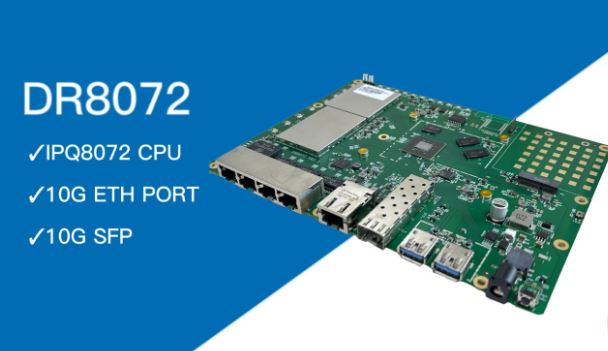
  • DR8072: Features the Qualcomm IPQ8072 CPU, supports WiFi 6E, with excellent RF performance and heat dissipation design, ideal for industrial applications.
DR8072
  • Wallys DR6018: Based on the Qualcomm IPQ6010 CPU, suitable for environments that require stable transmission and efficient processing.
Wallys DR6018
  • DR5332: A forward-looking design supporting WiFi 7, based on the Qualcomm IPQ5332 CPU, offering multiple connectivity options to meet future needs.
IPQ6010 VS IPQ5332
IPQ6010 VS IPQ5332
  • DR9574: Equipped with the Qualcomm IPQ9574 CPU, providing exceptional performance and efficient signal transmission, suitable for large-scale applications.
Wallys DR9574

Conclusion

Choosing the right industrial wireless router is essential for ensuring stable wireless transmission. 524WiFi’ products excel in processor performance, transmission standards, RF performance, and heat dissipation design, making them ideal for achieving efficient point-to-point WiFi connections while maintaining stability over distances of up to 23 kilometers. By selecting the appropriate model based on specific application scenarios and requirements, you can maximize network stability and efficiency, ensuring reliable wireless communication.

Posted on

Multi-Band Support and Wi-Fi 6: Exploring the Technical Advantages of the DR5018S with IPQ5018

Multi-Band Support and Wi-Fi 6: Exploring the Technical Advantages of the DR5018S with IPQ5018

In the realm of wireless communication, Wi-Fi 6 represents a significant leap forward, delivering enhanced speed, capacity, and efficiency. For industrial applications that demand robust and reliable wireless solutions, the DR5018S module, featuring the powerful IPQ5018 chipset, stands out as an exemplary choice. This article explores the technical advantages of the DR5018S and how the IPQ5018 chipset enhances its capabilities, particularly in multi-band support and Wi-Fi 6 technology.

1. Three-Band Support: Extensive Coverage, Flexible Deployment

The DR5018S offers comprehensive coverage with its support for 2.4 GHz, 5 GHz, and 6 GHz frequency bands. This multi-band capability ensures optimal performance across a variety of environments, from expansive outdoor areas to densely populated industrial sites.

Advantages:

  • 2.4 GHz Band: Provides broad signal coverage and is effective for long-distance transmission and penetration through obstacles.
  • 5 GHz Band: Delivers higher data transfer speeds, making it suitable for applications requiring substantial bandwidth, such as HD video streaming and high-speed data transfers.
  • 6 GHz Band: Introduces additional bandwidth, reducing interference and congestion. This band is particularly valuable for future high-density, high-throughput applications.
Wi-Fi generations (Source: Wikipedia)

2. IPQ5018 Chipset: Powering Superior Performance

At the heart of the DR5018S is the IPQ5018 chipset, which brings exceptional performance and efficiency to the module. The IPQ5018 is designed to handle demanding networking tasks with ease, providing a solid foundation for advanced wireless capabilities.

Key Features of IPQ5018:

  • High Processing Power: The IPQ5018 chipset features a robust processor that supports high-speed data processing and efficient network management, making it ideal for high-performance applications.
  • Enhanced Efficiency: Optimized for low power consumption while maintaining high performance, the IPQ5018 ensures extended operational longevity and reduced energy costs.
  • Advanced Features: Supports a range of advanced networking features, including enhanced security protocols and efficient bandwidth management, ensuring reliable and secure connections.
Wallys DR5018S:WIFI6 TRIBAND ROUTERBOARD CPU IPQ5018

3. Wi-Fi 6E

Wi-Fi 6E extends the capabilities of Wi-Fi 6 by incorporating the 6 GHz band. This extension is crucial for maintaining performance in increasingly crowded wireless environments.

Advantages:

  • Expanded Spectrum: The 6 GHz band provides additional non-overlapping channels, significantly reducing interference and network congestion.
  • Increased Speed: Supports higher bandwidth, facilitating rapid data exchange and improved performance for demanding applications.
  • Reduced Latency: Wi-Fi 6E minimizes latency, which is essential for applications requiring real-time data transmission and low lag.

4. DR5018S in Industrial Applications

The DR5018S, equipped with the IPQ5018 chipset, excels in various industrial applications, from smart cities to advanced manufacturing and security monitoring.

Application Examples:

  • Smart Cities: The DR5018S supports a large number of sensors and IoT devices, enabling real-time data collection and processing that enhances urban infrastructure and management.
SMART CITY
SMART CITY
  • Intelligent Manufacturing: In manufacturing settings, the module’s multi-band support improves device communication and automation efficiency, driving productivity and operational success.
Intelligent Manufacturing
  • Security Monitoring: For security applications, the DR5018S’s 6 GHz band provides clear and smooth video streaming with minimal latency, enhancing the effectiveness of surveillance systems.
Security Monitoring
Security Monitoring

5. Conclusion: DR5018S with IPQ5018 – A Powerful Networking Solution

As the demand for advanced wireless solutions grows, 524WiFi and Wallys’ DR5018S, driven by the IPQ5018 chipset, offers a powerful and versatile solution for industrial wireless networks. With its multi-band support and Wi-Fi 6E technology, the DR5018S is well-suited for a range of demanding applications, delivering exceptional performance and reliability.

DR5018S(IPQ5018)

For more details on the DR5018S and the IPQ5018 chipset, or to discuss how these technologies can meet your specific needs, please contact our sales team. We are here to provide tailored solutions for your networking requirements.

DR5018S:https://524wifi.net/?s=5018