
Key takeaways
- Wi-Fi 7 emphasizes link capacity through wide channels, 4K-QAM and Multi-Link Operation.
- Wi-Fi 8 targets continuity across access points through SMD and coordinated network operation.
- The right generation depends on whether the application prioritizes fixed high throughput or mobile reliability.
Wi-Fi 8 vs Wi-Fi 7: What Really Changes?
Every generation of Wi-Fi promises “faster, more reliable, more efficient.” Most of the time, that just means bigger numbers on a spec sheet. Wi-Fi 8 (IEEE 802.11bn) is different — it’s the first generation explicitly designed around reliability and continuity, not just peak throughput. For anyone building multi-AP environments — warehouses full of AMRs, ports, factory floors — that shift matters more than another jump in Mbps.
What Is Wi-Fi 8, and Why Does It Exist?
Wi-Fi 7 (802.11be) was a throughput and latency story: Multi-Link Operation (MLO), 320MHz channels, 4K-QAM. Wi-Fi 8 keeps that PHY-layer foundation but adds something industrial users have been asking for since the first multi-AP AMR deployment: continuity across the coordinated network as a device moves across access points.
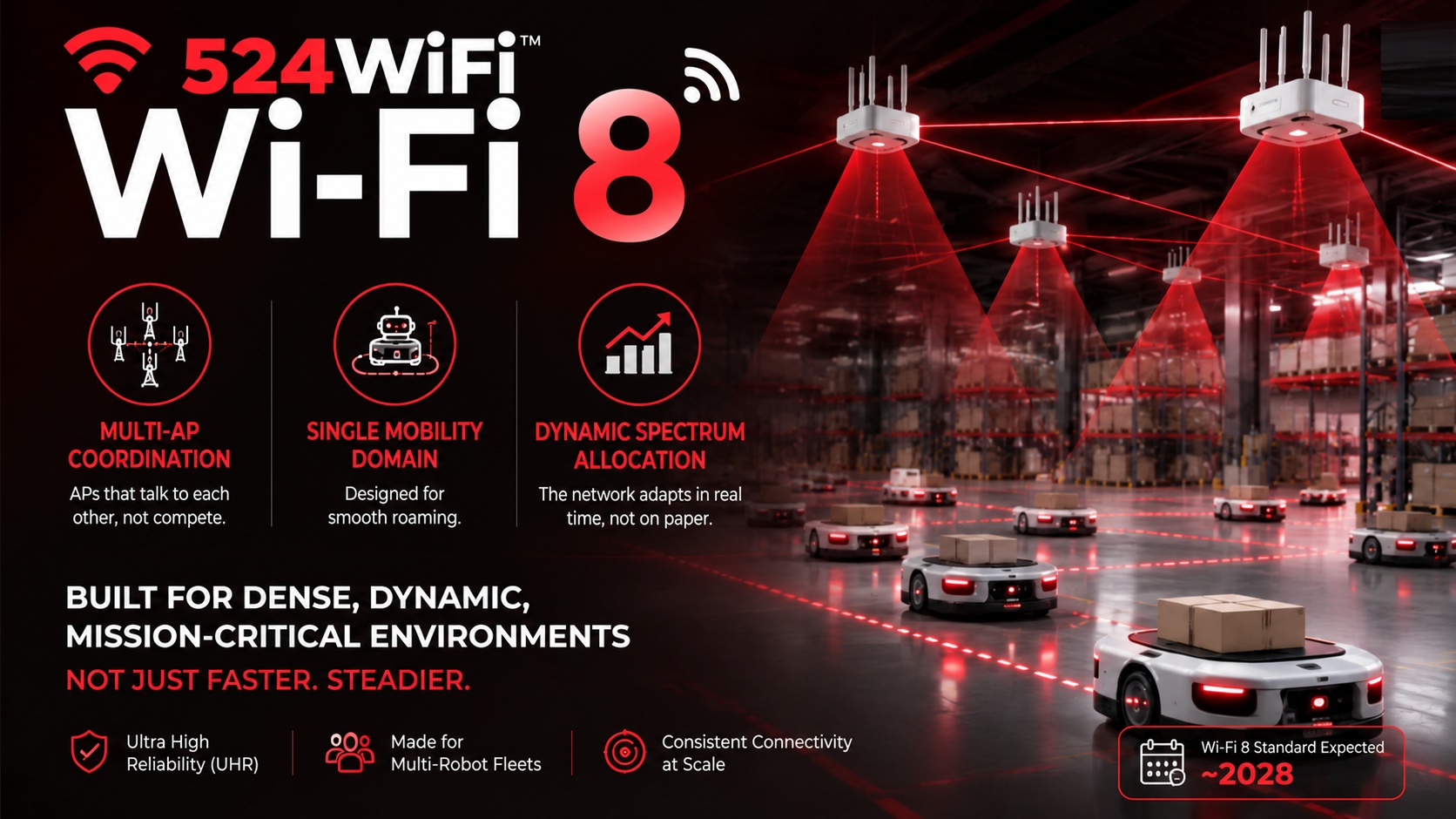
The headline feature is Single Mobility Domain (SMD) — a framework where multiple APs behave as one logical network from the client’s point of view. Instead of a robot or handheld scanner disassociating from AP-A and re-authenticating with AP-B, SMD is designed to make that transition invisible: no re-auth handshake, no dropped session, no packet-loss spike at the handoff point.
Wi-Fi 8 also formalizes Multi-AP Coordination (MAC) for interference management and pushes further on deterministic latency for time-sensitive traffic — both aimed less at “how fast” and more at “how consistent.”
How This Changes the Multi-Robot Network Problem
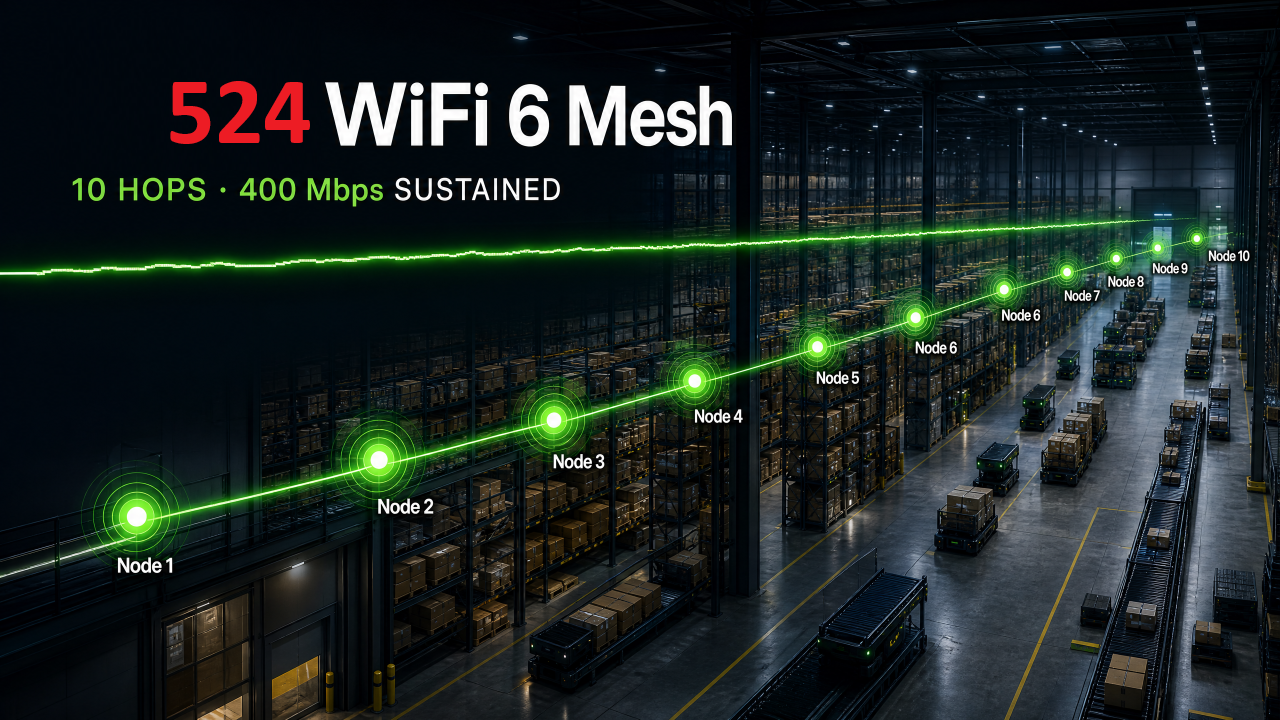
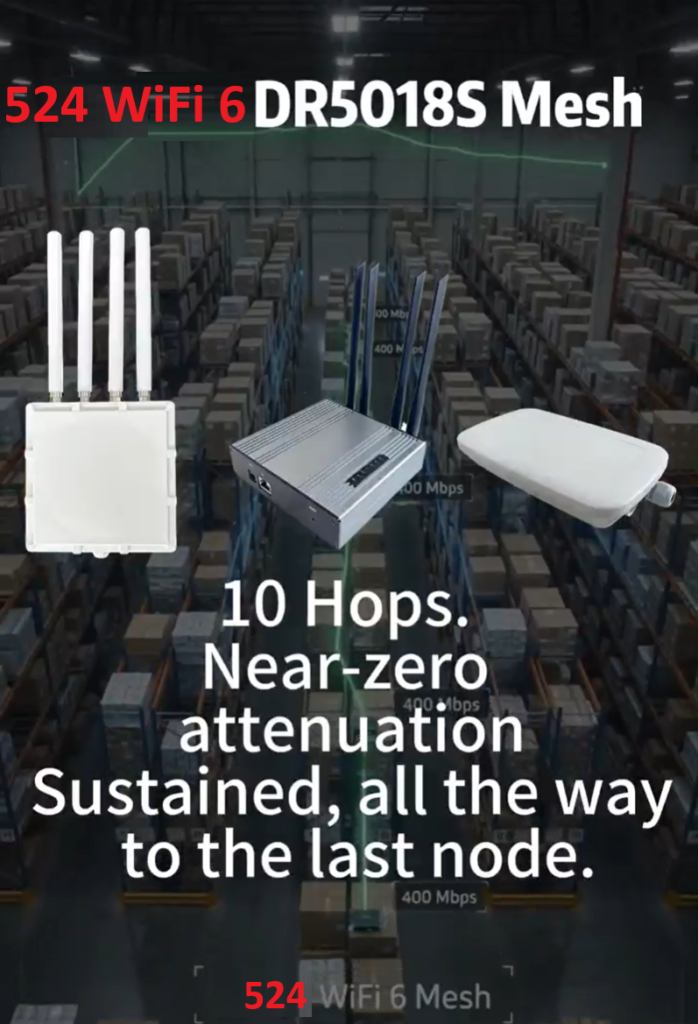
A manufacturer-reported 10-hop Wi-Fi 6 mesh test showed near-zero attenuation and a sustained 400Mbps — solid mesh performance. But mesh and multi-AP roaming are two different problems. Throughput across hops doesn’t tell you what happens in the 50–150ms window when a device actually switches APs — and in a warehouse with dozens of AMRs on the same floor, that handoff window is where control-link glitches and localization errors happen.
Wi-Fi 7’s MLO already reduces link disruption by keeping multiple radio links active in parallel. Wi-Fi 8’s SMD goes a layer further: it targets the roaming event itself, not just the link redundancy around it. For fleets doing continuous SLAM and real-time motion control, that’s the difference between “fast Wi-Fi” and “Wi-Fi designed for continuous mobility.”
Wi-Fi 8 vs Wi-Fi 7: The Practical Contrast
- Wi-Fi 7 = maximize throughput and reduce latency on a single link (320MHz channels, 4K-QAM, MLO across bands)
- Wi-Fi 8 = maximize continuity across a network of APs (SMD, multi-AP coordination, deterministic handoff)
They’re not competing generations so much as sequential layers: Wi-Fi 7 solved “how much data, how fast,” Wi-Fi 8 is solving “what happens when the client keeps moving.” For fixed-location industrial gear, Wi-Fi 7 already covers most needs. For anything mobile — AMRs, AGVs, tracked assets, handheld scanners — Wi-Fi 8’s roaming model is the more relevant upgrade.
Where This Applies
- Warehouse AMR/AGV fleets: multi-AP floors where dozens of robots roam continuously between zones
- Port and yard operations: long, multi-AP corridors where vehicles and cranes move across cell boundaries constantly
- Mining and tunnel environments: point-to-point roaming where any re-auth gap means a control-link blackout, not just a slow download
- Mobile industrial vision: multi-camera inspection carts that can’t tolerate a frame drop mid-handoff
Where We’re Positioned
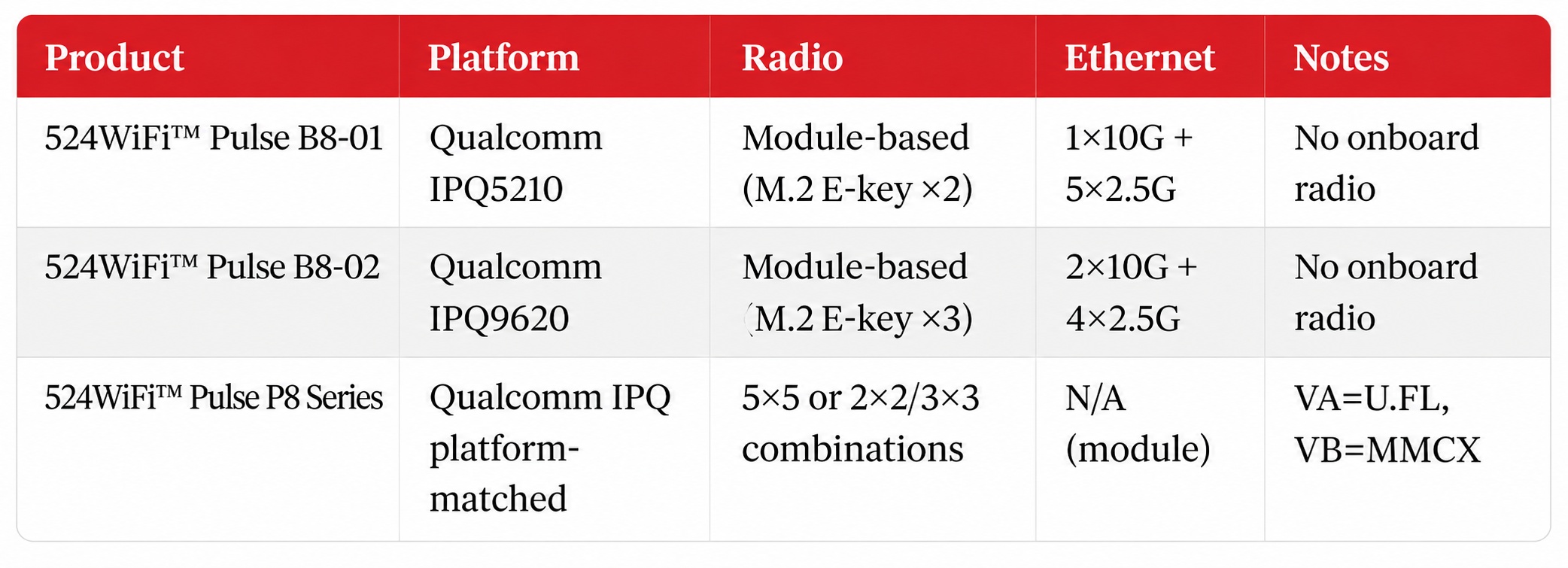
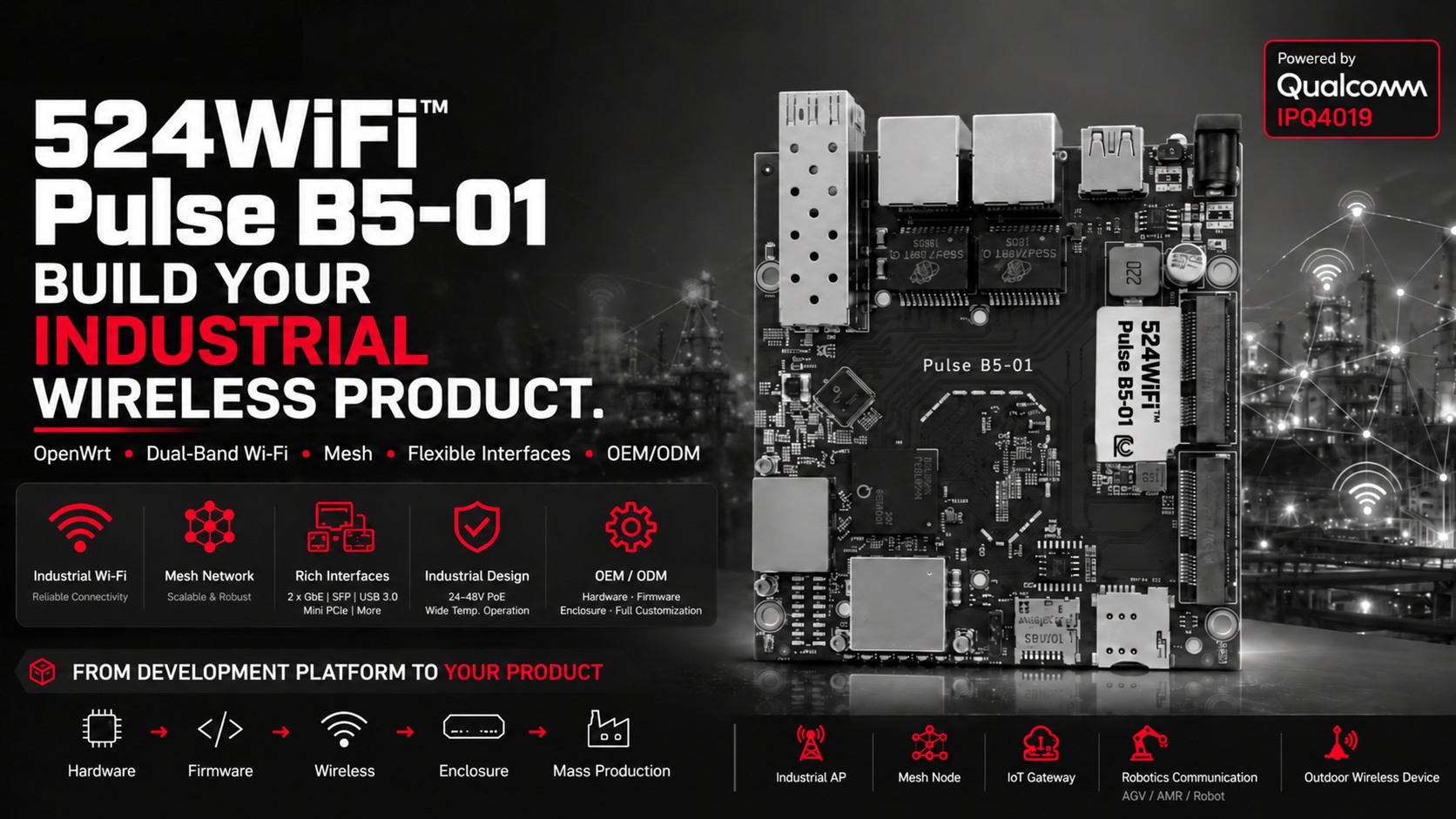
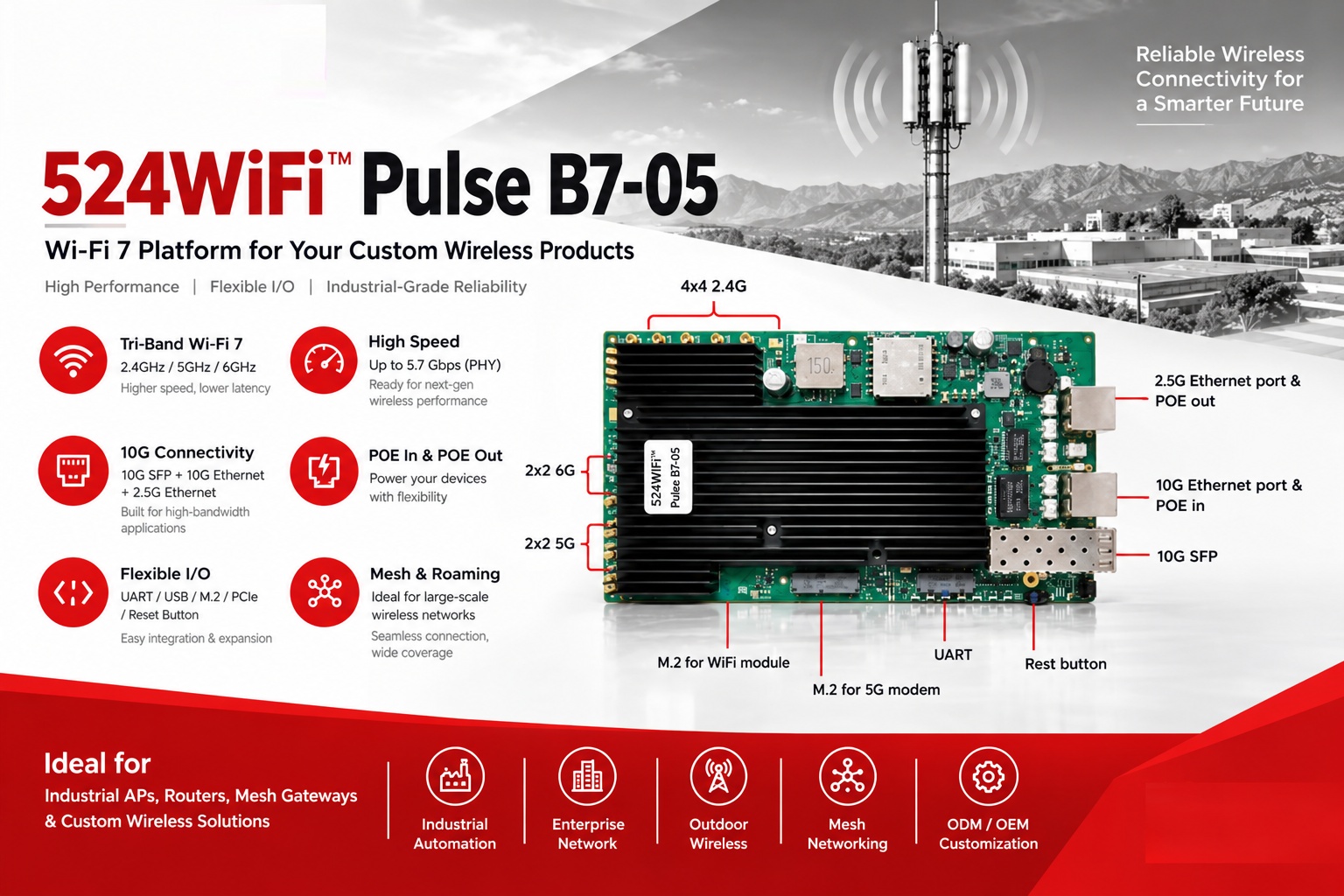
524WiFi™ are preparing our Wi-Fi 8 routerboard line now, building on the same IPQ/QCN industrial platform architecture behind our current Wi-Fi 7 boards (524WiFi™ Pulse B9574-4M2 Pro Plus, 524WiFi™ Pulse B5424-4×4 Pro Plus) and Wi-Fi 6 roaming series (524WiFi™ Pulse R6 roaming series). If you’re evaluating multi-AP roaming for a robotics, port, or industrial mobility deployment — or want to talk through where Wi-Fi 7 is still the right call versus waiting on Wi-Fi 8 — reach out [email protected].