Posted on — Leave a comment

Qualcomm Wi-Fi 8 Chipset: What Hardware Developers Should Know

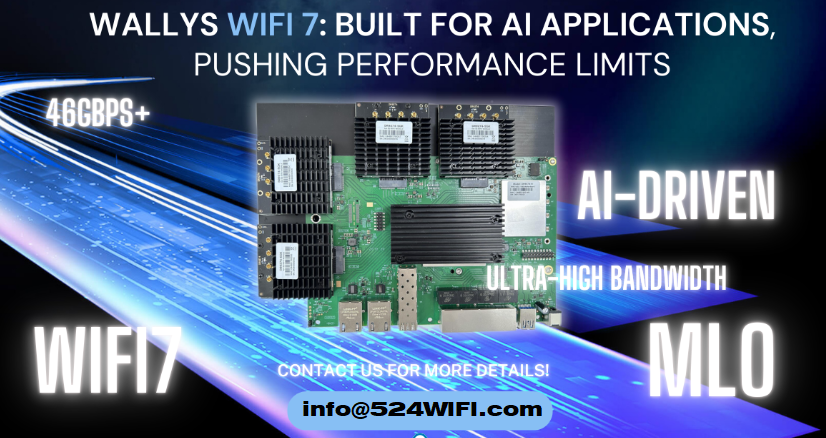
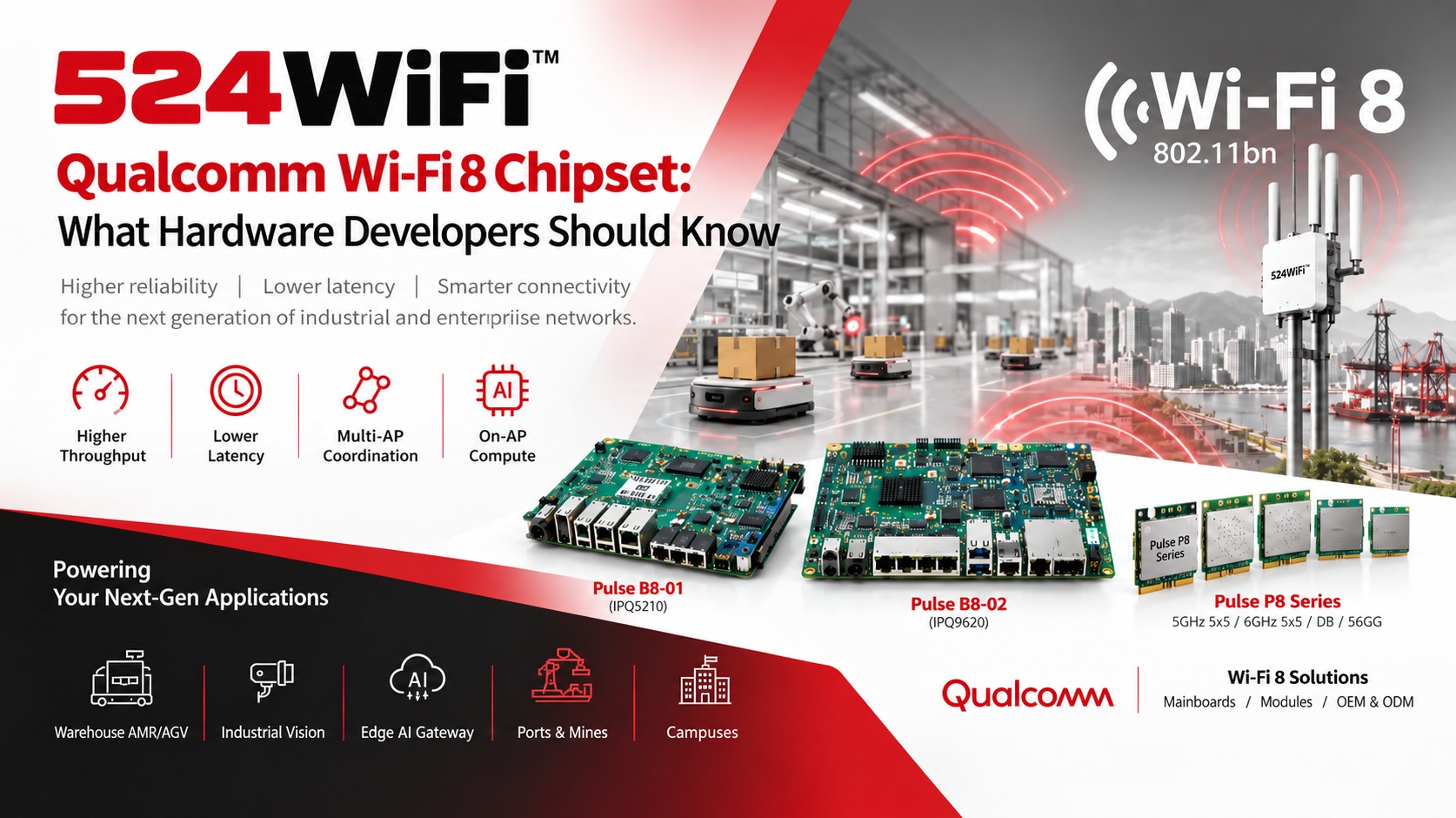
524WiFi™ Pulse B8 mainboards and Pulse P8 radio modules on Qualcomm Wi-Fi 8 technology

Wi-Fi 8 (IEEE 802.11bn) has moved from a standards discussion into silicon you can design around. Qualcomm’s MWC 2026 launch gave hardware teams a concrete platform to plan against. Here is what matters for developers building routers, industrial APs, gateways and robot connectivity.

What Is Qualcomm’s Wi-Fi 8 Platform, and Why Does It Matter?

Qualcomm launched a Wi-Fi 8 portfolio with a mobile chip (FastConnect 8800) and new Dragonwing networking platforms aimed at broadband gateways, enterprise access points and fixed wireless equipment. The infrastructure flagship is the Dragonwing NPro A8 Elite, part of the IPQ96 family. rcrwireless

The headline specs from Qualcomm’s materials:

  • A 5×5 Wi-Fi 8 radio system, with up to 40% more throughput at typical distances, 2.5x lower latency at peak usage, and up to 30% lower daily energy use than the previous generation techpowerup
  • A penta-core CPU up to 2.0 GHz, a Hexagon NPU, and a peak PHY rate of up to 33 Gbps qualcomm
  • Capacity for up to 1,500 clients in infrastructure gear dev

The design goal is reliability, not just peak speed. Wi-Fi 8 is meant to be about reliability rather than raw speed. For hardware developers, latency consistency, roaming behavior and performance under load matter more than the 33 Gbps figure, which is a peak PHY rate, not a throughput you will measure in the field. wifinowglobal

How Does Wi-Fi 8 Change Hardware Design?

1. Compute moves onto the access point. The NPro A8 Elite integrates an NPU and a packet processing engine. Your AP can run containerized services and network-optimization models locally instead of relying on a controller or the cloud.

2. Uplinks become the bottleneck. With PHY rates in the tens of Gbps, a 1G port will not do. Plan for 2.5G and 10G copper or SFP, and check your PoE budget. Qualcomm’s own IPQ96 documentation lists 2.5GbE and 25GbE-class interfaces, so board-level power, thermal and switch design need a fresh look.

3. 6 GHz becomes core, not optional. Wide channels and multi-radio designs put your antenna layout, RF shielding and connector choices (U.FL vs. MMCX) under more pressure than on Wi-Fi 6.

4. Roaming changes. Wi-Fi 8’s multi-AP coordination features, including the Single Mobility Domain (SMD) concept for seamless roaming without repeated re-authentication, target moving clients such as AMRs. Client-side support will be the limiting factor early on, so validate with real client devices.

Wi-Fi 8 vs. Wi-Fi 7: What Is Actually Different?

524WiFi™ Wi-Fi 8 and Wi-Fi 7 architecture comparison

Should you skip Wi-Fi 7? No. Wi-Fi 7 platforms such as IPQ9574 and IPQ5424 are shipping and stable, with mature software. Wi-Fi 8 makes sense when your product roadmap spans 2027 and beyond, or when roaming and latency in dense multi-robot environments are your main pain points.

Which Applications Benefit Most?

  • Warehouse AMR/AGV fleets: consistent latency and better roaming matter more than raw Gbps.
  • Industrial vision: multi-camera streams need stable uplinks and predictable performance under load.
  • Edge AI gateways: on-AP compute can pre-process data before it reaches an edge server.
  • Ports, mines and campuses: dense clients, mobile endpoints and harsh RF environments.

Where 524WiFi™ Fits: Wi-Fi 8 Hardware in Development

We are preparing Wi-Fi 8 routerboards and modules built on Qualcomm silicon. The modular platform roadmap combines dedicated mainboards and radio modules. The planned lineup:

Mainboards (no onboard radio, radios added via M.2 E-key):

  • Pulse B8-01 (IPQ5210): DDR4, NOR + NAND, 2× M.2 E-key, 1× 10G copper, 5× 2.5G, 12V
  • Pulse B8-02 (IPQ9620): DDR4, NOR + NAND, 3× M.2 E-key, 2× 10G copper, 4× 2.5G, 12V

Pulse P8 Series Wi-Fi 8 modules:

  • 5 GHz 5×5
  • 6 GHz 5×5
  • DB: 2×2 2.4 GHz + 3×3 5 GHz
  • 5G6G: 3×3 5 GHz + 2×2 6 GHz (VB only)

Connector options: VA = U.FL, VB = MMCX.

The mainboard-plus-module approach lets OEMs choose their radio configuration and enclosure, indoor or outdoor, without a full board respin. The same system planning can pair Qualcomm-based connectivity with Tomo AI Core NVIDIA for Jetson-based edge compute.

Quick Checklist for Hardware Teams

  1. Define whether you need peak throughput or reliability and roaming. The answer decides Wi-Fi 7 vs. Wi-Fi 8.
  2. Budget for 2.5G/10G uplinks, PoE and thermal headroom.
  3. Confirm client-device support before promising end-to-end Wi-Fi 8 gains.
  4. Get regulatory and certification timelines early, as Wi-Fi 8 products are new to test labs.
  5. Choose a modular architecture so you can upgrade radios without redesigning the mainboard.

Planning a Wi-Fi 8 or Wi-Fi 7 product? Talk to our engineering team about mainboards, modules and custom designs : info at 524wifi.net or .com

Platform references: DR5210_VA, DR9650_VA and DR9575.

Posted on

A Smarter Drone Still Needs a Stronger Wireless Link

The future of drones is no longer only about flying.

Modern drones are becoming intelligent platforms equipped with:

  • AI vision systems
  • Autonomous navigation
  • Real-time data processing
  • Advanced sensors
  • Edge AI computing capabilities

But behind every smart drone, there is one critical infrastructure that is often overlooked:

Reliable wireless connectivity.

Because even the most advanced AI system becomes limited when the connection is unstable.


AI Makes Drones Smarter. Connectivity Makes Them Useful.

A drone performing industrial inspection, mapping, agriculture monitoring, or security missions needs to continuously exchange large amounts of data.

It needs to:

  • Stream high-resolution video in real time
  • Transfer sensor and vision data
  • Maintain low-latency control communication
  • Stay connected during high-speed movement

The wireless link is no longer just a communication channel.

It becomes the nervous system of an autonomous flying machine.


Why Drone Applications Need More Than Traditional Wireless Connectivity

Many UAV applications operate in challenging environments:

  • Long-range communication
  • High-speed mobility
  • Complex RF environments
  • Multiple drones working simultaneously
  • High-bandwidth AI data transmission

For these scenarios, peak speed alone is not enough.

A professional drone platform requires:

  • Stable connectivity
  • Low-latency response
  • Strong interference resistance
  • Reliable performance during long operation cycles

WiFi 6 and WiFi 7: Building the Wireless Foundation for Next-Generation UAVs

As drones become more intelligent, wireless technology must evolve to support higher demands.

Advanced WiFi platforms enable:

High-bandwidth AI applications

Real-time video streaming, multi-camera systems, and edge AI processing require fast and reliable data transmission.

Low-latency autonomous control

Faster response helps support autonomous navigation and mission-critical operations.

Multi-device communication

Future drone fleets and collaborative robotic systems will require efficient wireless networking.


524WiFi Industrial WiFi Modules for Intelligent Drone Platforms

For drone developers, selecting a wireless module is not only about maximum throughput.

Important considerations include:

  • Industrial-grade chipset platform
  • Driver and software support
  • Thermal stability
  • Flexible integration options
  • Long-term supply availability

Based on Qualcomm wireless platforms, Wallys provides WiFi solutions designed for industrial and AI-driven applications.


DR9274E WiFi 7 Module: Enabling Next-Generation Autonomous Drones

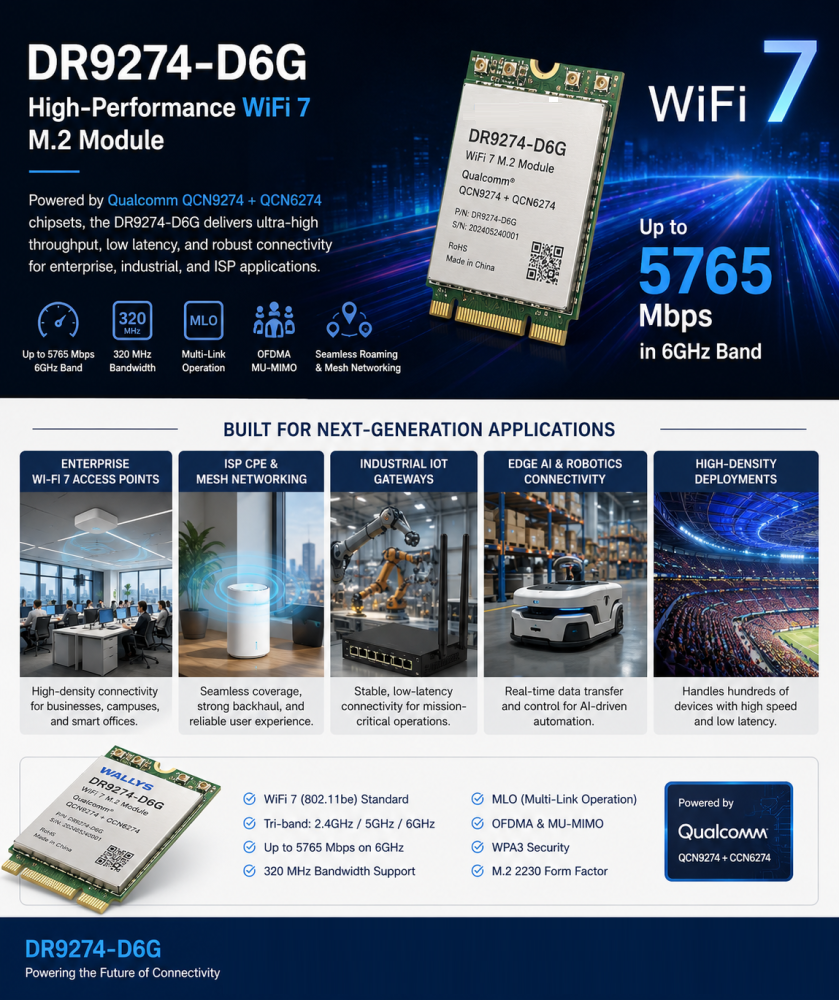
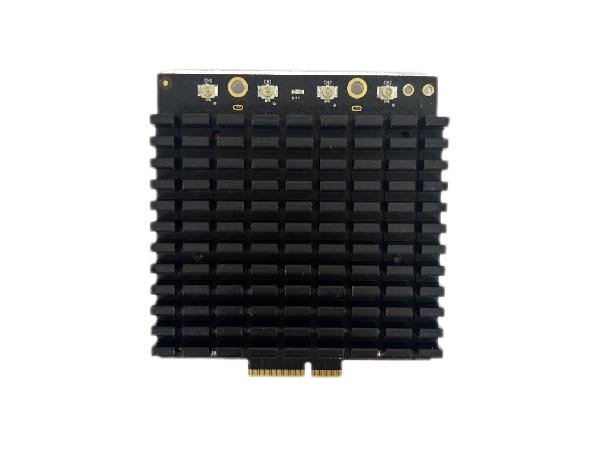
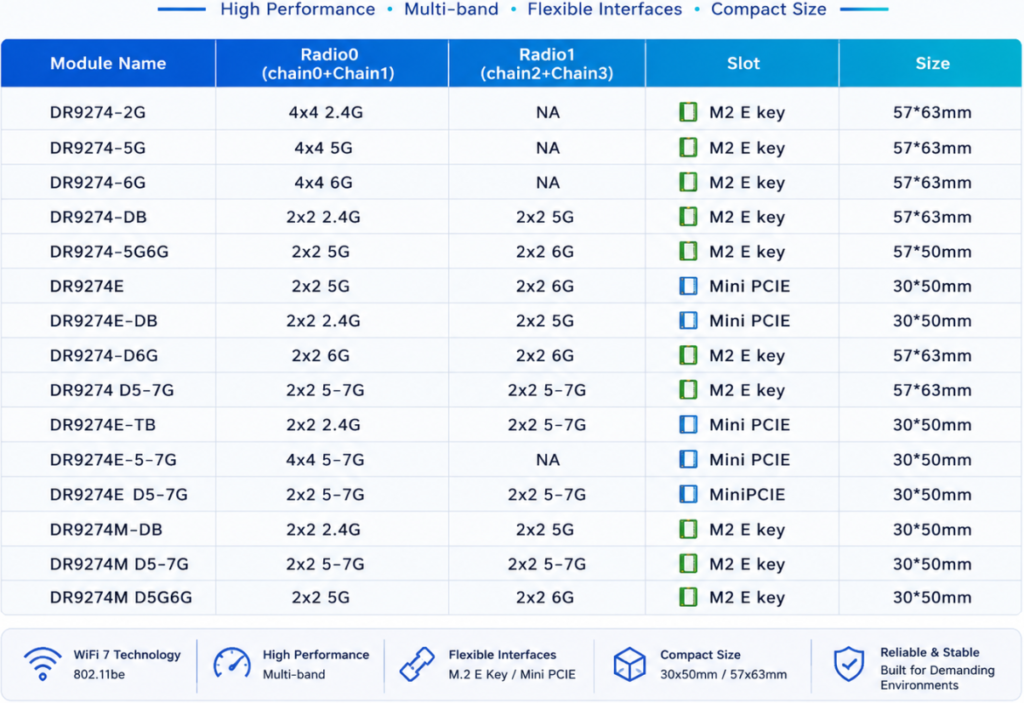
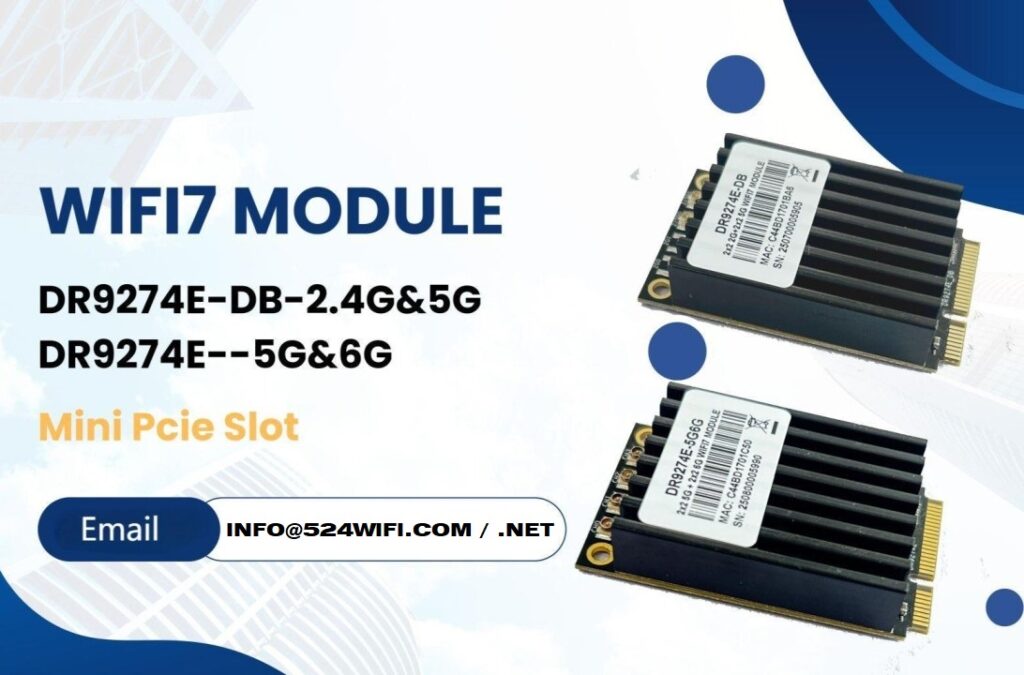
Powered by Qualcomm QCN9274 and QCN6274 platforms, the DR9274E WiFi 7 module is designed for applications requiring higher bandwidth, advanced connectivity, and future-ready wireless performance.

Potential applications include:

  • AI vision drones
  • Autonomous aerial robots
  • Industrial inspection UAVs
  • High-resolution video transmission systems

With WiFi 7 capabilities, it provides a powerful wireless foundation for intelligent devices requiring faster data exchange and more reliable connections.


DR9074 WiFi 6E Module: Reliable Connectivity for Industrial UAV Applications

Based on Qualcomm QCN9024, the DR9074 supports Tri-Band WiFi 6E operation across 2.4GHz, 5GHz, and 6GHz.

It is designed for applications requiring:

  • Stable wireless links
  • High-performance data transmission
  • Flexible frequency selection
  • Industrial deployment reliability

Suitable for:

  • Inspection drones
  • Mapping systems
  • Smart agriculture UAVs
  • Edge AI devices
Article content

Connecting the Future of Autonomous Flight

The future of drones will not only depend on better AI algorithms.

It will depend on the complete technology ecosystem:

AI provides intelligence. Sensors provide perception. Wireless connectivity enables action.

A smarter drone still needs a stronger wireless link.

At 524WiFi and Wallys, we are committed to providing Qualcomm-based WiFi 6 and WiFi 7 platforms for the next generation of drones, robotics, and edge AI applications.

The future of autonomous flight will not only be smarter.

It will be better connected.

Posted on

Do you need original QCA Linux DBDC driver for Sparklan WNFQ or WPEQ 268AXI WiFi6 module? Or is better to use open source Ath11k driver ?

Let us share our experience with Qualcomm Atheros WCN6856 based Wi-Fi 6 Triband modules from Sparklan. These WiFi6 modules are very popular. Many professional customers are requesting testing samples and want to use them for their projects.

Open Source Linux ath11k driver is available, works but has limitations.

If the customer needs DBS, they will need to apply the ath11k patch. However, after applying the patch, DFS will not be available, and many functions will not work with ath11k. In many cases, we have already suggested using the official QCA driver. Unfortunately original QCA driver is for older Linux kernel only – WNFQ-269AX(BT) Qualcomm official driver supports Linux Kernel version 5.4 & 5.10 & 5.15.

“For DFS and support for more client connections (+60) , they will need to use the official QCA driver.”

Sparklan can provide the original driver but every customer has to sign the NDA . If you are interested in , then please contact us and provide your project description and company details. We will send the NDA for you.

Here is the latest driver for 268AXI module :

Change WPEQ-268AXI.tar.xz Firmware BDF

SOP 

#rm -r /lib/firmware/ath11k/WCN6855

#cp WPEQ-268AXI.tar.xz /lib/firmware/ath11k

#cd /lib/firmware/ath11k

#tar xvf WPEQ-268AXI.tar.xz

Please follow the steps higher to replace the firmware BDF.

Here is an older success story from our customer, maybe thsi can help to many other to develop relaibel working x86 Linux based device with WCN6856 based Wi-Fi 6 Triband modules :

I think we will have to stick with the open source ath11k driver for now since we already are committed to 6.1.x.

I have since migrated this project to Debian 12, also on 6.1.x. I can confirm the exact kernel version. However I was able to install ath11k on Debian 12 core (no X since this will run headless) along with the open source firmware and I do have hostapd working now. I am yet to activate dnsmasq, a bridge that includes the lan interface, etc. So far it seems that what I am stuck on is 2.4GHz + 5GHz DBDC. I’ve experimented with hostapd.conf quite a bit and I cannot seem to figure out how to do this. Typically with DBDC I have seen two wifi interfaces enumerate in linux. I only see one (named wlp1s0) in my case. Performing sudo iw list does show all of the correct frequencies in the supported list (including 6GHz which is not necessary for my application).

Strangely, after a reboot, the only way that I can correctly set the regulatory region (sudo iw reg set US in my case here) is after I perform a manual sudo iwlist scan. This could be an issue because I will want the appliance to reboot with hostapd activated automatically (presumably by systemd?)

I would be happy to share my hostapd.conf and anything else from my configurations to get this working. I feel that I am quite close to success and with just a few more configuration file adjustments plus the correct systemd service definition this project will be complete.

The hostapd.conf and dnsmasq.conf are attached. These are working well except:

No SDBC. I don’t seem to see in a scan anything except the 5GHz radio.

Trying after boot:

armbian@nanopi-r5c:/$ sudo hostapd /etc/hostapd.conf
wlp1s0: interface state UNINITIALIZED->COUNTRY_UPDATE
Frequency 5180 (primary) not allowed for AP mode, flags: 0x100853 NO-IR
Primary frequency not allowed
wlp1s0: IEEE 802.11 Configured channel (36) or frequency (5180) (secondary_channel=1) not found from the channel list of the current mode (2) IEEE 802.11a
wlp1s0: IEEE 802.11 Hardware does not support configured channel
Could not select hw_mode and channel. (-3)
wlp1s0: interface state COUNTRY_UPDATE->DISABLED
wlp1s0: AP-DISABLED 
wlp1s0: interface state DISABLED->DISABLED
wlp1s0: AP-DISABLED 
wlp1s0: CTRL-EVENT-TERMINATING 
hostapd_free_hapd_data: Interface wlp1s0 wasn’t started
nl80211: deinit ifname=wlp1s0 disabled_11b_rates=0

Produces hostapd failure every time. However if I instead first:

armbian@nanopi-r5c:/$ sudo ip link set wlp1s0 up
armbian@nanopi-r5c:/$ sudo iwlist scan
armbian@nanopi-r5c:/$ sudo iw reg set US
armbian@nanopi-r5c:/$ sudo hostapd /etc/hostapd.conf
wlp1s0: interface state UNINITIALIZED->COUNTRY_UPDATE
wlp1s0: interface state COUNTRY_UPDATE->HT_SCAN
wlp1s0: interface state HT_SCAN->ENABLED
wlp1s0: AP-ENABLED


Doing these steps produces a perfectly running ap bridged with one of the two ethernet NICs and with a working DHCP server. It seems stuck in 5GHz and at lower speed classes. But otherwise it’s working. These extra steps are quite tricky to run without a bunch of shell scripts called by systemd which is not as reliable as I would prefer.

sudo iw reg set US

Does nothing unless I first: sudo iwlist scan

NetworkManager (NM) is disabled and I am using systemd-networkd. This is a headless micro-server and NM just got in the way of everything.

I feel like I am very close to having this working perfectly!

More system information follows. Thanks.

armbian@nanopi-r5c:/$ uname -a
Linux nanopi-r5c 6.6.31-current-rockchip64 #1 SMP PREEMPT Fri May 17 10:02:40 UTC 2024 aarch64 GNU/Linux

armbian@nanopi-r5c:/$ inxi -b
System:
  Host: nanopi-r5c Kernel: 6.6.31-current-rockchip64 arch: aarch64 bits: 64 Console: pty pts/0
    Distro: Armbian GNU/Linux 12 (bookworm)
Machine:
  Type: ARM System: FriendlyElec NanoPi R5C details: N/A serial: 43d60e96d20b8351
CPU:
  Info: quad core Model N/A [MCP] speed (MHz): avg: 1800 min/max: 408/1992
Graphics:
  Device-1: display-subsystem driver: rockchip_drm v: N/A
  Device-2: rk3568-mali driver: panfrost v: kernel
  Device-3: rk3568-dw-hdmi driver: dwhdmi_rockchip v: N/A
  Display: server: No display server data found. Headless machine? tty: 167×44
    resolution: 3840×2160
  API: N/A Message: No display API data available in console. Headless machine?
Network:
  Device-1: Qualcomm QCNFA765 Wireless Network Adapter driver: ath11k_pci
  Device-2: Realtek RTL8125 2.5GbE driver: r8169
  Device-3: Realtek RTL8125 2.5GbE driver: r8169
Drives:
  Local Storage: total: 58.63 GiB used: 7.9 GiB (13.5%)
Info:
  Processes: 206 Uptime: 14m Memory: 3.65 GiB used: 416 MiB (11.1%) Init: systemd
  target: graphical (5) Shell: Bash inxi: 3.3.26

Here is the solution for this customer.

1. Kernel config —> enable “CONFIG_ATH_REG_DYNAMIC_USER_REG_HINTS”

2. iw reg get —> phy#0 (self-managed) country ?

3. iw reg set US

4. iw list —> Check 5G Frequencies “NO-IR” disappears

However, I must remind you again that they will need to apply the ath11k patch for DBS.

Result – Super helpful and I can report I have success, I have an AP, I have rather good performance for a software AP, and I’m going to send this to testing.

In case anyone else was wondering: on current Debian the wifi needed a new file /usr/lib/firmware/ath11k/WCN6855/hw2.0/board-2.bin which was extracted from either Debian unstable or https://git.kernel .org/pub/scm/linux/kernel/git/firmware/linux-firmware.git/

Posted on

QCN6224 Wi-Fi 7 2×2 Module Overview for Cost-Optimized APs

Introduction

As Wi-Fi 7 (IEEE 802.11be) transitions from cutting-edge innovation to mainstream deployment, device manufacturers increasingly look for wireless solutions that balance performance, cost, and energy efficiency. The QCN6224 Wi-Fi 7 2×2 module delivers exactly that balance. It brings next-generation connectivity into cost-optimized access points (APs), routers, CPEs, and industrial gateways, without significantly increasing system complexity or bill-of-materials (BOM) costs.


What Is the QCN6224 Wi-Fi 7 Module?

The QCN6224 is a 2×2 MU-MIMO Wi-Fi 7 module designed for embedded networking equipment. Supporting dual-band or tri-band operation depending on design, the module introduces major Wi-Fi 7 enhancements such as higher throughput, improved spectral efficiency, and greater link reliability — all within a compact and power-efficient form factor. Compared with many high-end Wi-Fi 7 chipsets, the QCN6224 focuses on value-driven performance, making it ideal for mainstream devices rather than premium flagship systems.


Key Wi-Fi 7 Features of QCN6224

✔ 320 MHz Channel Support

The QCN6224 supports ultra-wide 320 MHz channels, enabling dramatically higher peak data rates. This capability reduces latency and improves user experience in applications such as HD and 4K video streaming, VR/AR, cloud gaming, and high-density enterprise networks.

✔ Multi-Link Operation (MLO)

MLO allows Wi-Fi devices to transmit data across multiple frequency bands at the same time. This improves reliability by minimizing interruption risks and delivers smoother, faster data transfers — especially valuable in congested wireless environments.

✔ 4K-QAM Modulation

With 4K-QAM support, the QCN6224 significantly increases spectral efficiency, packing more data into every transmission. This is ideal for environments with many users, such as offices, campuses, hotels, and public Wi-Fi deployments.

✔ 2×2 MU-MIMO Architecture

The 2×2 design provides the optimal balance between speed, power consumption, and hardware cost. It enables fast performance without requiring the more complex RF layouts or higher component costs seen in larger 4×4 or 8×8 systems.


Why the QCN6224 Is Ideal for Cost-Optimized APs

Manufacturers of cost-optimized access points face several key design requirements. They need low BOM cost, compact hardware, and efficient power consumption — without sacrificing network performance. The QCN6224 meets all these criteria.

Because it uses a 2×2 architecture, the module footprint is smaller and integration is simpler. At the same time, Wi-Fi 7-level features such as MLO and 4K-QAM ensure clear performance gains over Wi-Fi 6. Its low-power operation makes it especially suitable for PoE-powered APs and always-on devices. In addition, the QCN6224 is compatible with popular networking software ecosystems such as OpenWrt and QSDK (depending on vendor implementation), helping device makers bring products to market more quickly.


Typical Application Scenarios

The QCN6224 Wi-Fi 7 2×2 module is well-suited for:

  • Enterprise and SMB access points
  • Mid-range Wi-Fi 7 routers
  • ONT / FTTH gateway devices
  • Industrial networking equipment
  • Smart building and IoT controllers
  • Wireless video transmission systems

Its compact size and stable performance make it highly attractive for embedded and industrial environments where reliability and cost efficiency are critical.


QCN6224 vs. Higher-End Wi-Fi 7 Solutions

Compared with 4×4 and 8×8 Wi-Fi 7 chipsets, the QCN6224 focuses on value rather than maximum throughput. High-end chipsets deliver higher data rates but also require more complex RF layouts, significantly higher power consumption, and greater BOM costs — making them ideal for premium enterprise or carrier-class APs.

By contrast, the QCN6224 is optimized for mainstream Wi-Fi 7 devices. It delivers strong performance upgrades over Wi-Fi 6 while keeping both power and hardware costs at practical levels. This makes it an excellent choice for large-scale deployments, SMB networking, consumer broadband devices, and mid-range enterprise APs where cost-performance balance is essential.

In short, if your design goal is reliability, efficiency, and affordability, rather than extreme bandwidth, the QCN6224 stands out as a perfect match.


Benefits for OEMs and Device Manufacturers

Selecting QCN6224 brings multiple advantages:

  • Reduced BOM cost compared with larger Wi-Fi 7 solutions
  • Faster product development cycles
  • Lower thermal and power-supply requirements
  • Compatibility with established software stacks
  • Strong Wi-Fi 7 marketing value for product positioning

Manufacturers can upgrade Wi-Fi 6 designs to Wi-Fi 7 with minimal redesign effort — accelerating time-to-market.


Conclusion

The QCN6224 Wi-Fi 7 2×2 module is a powerful, efficient, and cost-optimized solution for next-generation wireless devices. Featuring MLO, 320 MHz channel support, 4K-QAM, and 2×2 MU-MIMO, it enables manufacturers to deliver Wi-Fi 7-class performance at highly competitive price points.

If your goal is to build compact, power-efficient, and scalable access points or gateways, the QCN6224 offers the ideal balance between technology advancement and commercial practicality.

Posted on

DR9574S: Building WiFi 7 Industrial APs with Qualcomm IPQ9574

The next generation of industrial wireless networks is not only about faster WiFi speeds.

For industrial applications, wireless infrastructure needs to deliver:

  • High-capacity connectivity
  • Reliable performance under heavy traffic
  • Low-latency communication
  • Multi-device scalability
  • Long-term platform stability

This is where WiFi 7 is becoming a key technology for the future of industrial networking.

However, transforming WiFi 7 technology into a reliable industrial product requires more than just a powerful chipset.

It requires a complete hardware platform, optimized RF design, thermal management, and industrial deployment experience.

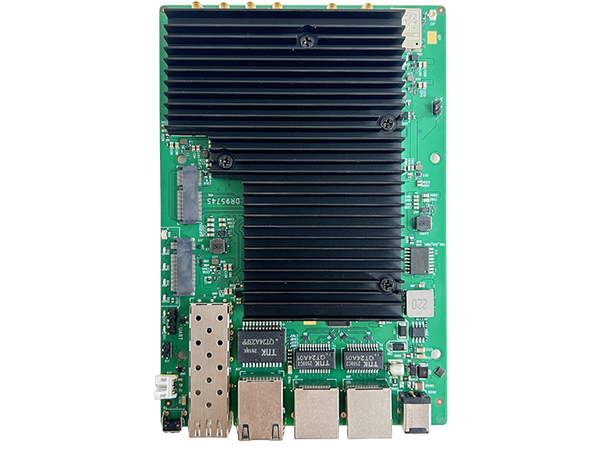
Introducing DR9574S — A WiFi 7 Industrial AP Platform Powered by Qualcomm IPQ9574

DR9574S is built around the Qualcomm IPQ9574 networking platform, designed for high-performance enterprise and industrial wireless applications.

With advanced WiFi 7 capabilities, DR9574S provides a strong foundation for customers developing:

  • Industrial access points
  • Enterprise WiFi systems
  • Smart factory networks
  • AI edge connectivity solutions
  • Outdoor wireless infrastructure
  • Customized OEM/ODM wireless products
Article content

WiFi7 DR9574S

Why WiFi 7 Matters for Industrial Networks

Traditional WiFi upgrades mainly focus on higher throughput.

WiFi 7 introduces several technologies that improve not only speed, but also network efficiency and reliability.

1. Multi-Link Operation (MLO)

MLO allows devices to use multiple wireless links simultaneously.

Benefits include:

  • Higher throughput
  • Better connection stability
  • Improved latency performance
  • More reliable wireless communication

For industrial environments with robots, cameras, sensors, and mobile devices, maintaining stable connectivity is often more important than peak speed.

2. 320MHz Channel Support

WiFi 7 doubles channel bandwidth compared with previous generations.

This enables:

  • Higher wireless capacity
  • Better support for high-bandwidth applications
  • More efficient network utilization

Applications such as industrial vision inspection, AI cameras, and real-time data transmission can benefit from this increased capacity.

3. 4096-QAM

Higher-order modulation improves data efficiency, allowing more data transmission within the same spectrum conditions.

This helps maximize wireless performance in modern high-density networks.


Built for Industrial Product Development

DR9574S is designed for companies that need a reliable WiFi 7 hardware foundation without starting from zero.

Wallys provides:

Hardware Platform

  • Qualcomm IPQ9574 platform
  • WiFi 7 architecture
  • High-performance CPU processing
  • Enterprise-level wireless capability
  • Flexible hardware customization

Development Support

Our engineering team supports:

  • Hardware customization
  • Antenna optimization
  • Thermal design
  • Firmware integration
  • OEM/ODM/JDM projects

Helping customers accelerate their product development cycle.


WiFi 7 + Industrial AI: The Next Connectivity Era

As AI moves from the cloud to the edge, wireless networks are becoming a critical infrastructure component.

Future applications such as:

  • Autonomous mobile robots (AMR)
  • Industrial automation
  • AI vision systems
  • Smart factories
  • Drones
  • Edge computing devices

will require wireless networks that are faster, more stable, and more intelligent.

WiFi 7 is not just an upgrade in speed.

It is becoming the foundation for next-generation industrial connectivity.


Build Your Next WiFi 7 Product with 524WiFi

Whether you are developing an industrial AP, enterprise wireless solution, or customized networking product, DR9574S provides a powerful Qualcomm-based platform to accelerate your innovation.

Contact 524WiFi to explore your next WiFi 7 project!

Posted on

IPQ9570 Wi-Fi 7 Chip Overview: High-End Enterprise Router Platform

As Wi-Fi 7 (IEEE 802.11be) enters commercial deployment, enterprises and industrial users are demanding higher throughput, lower latency, stronger reliability, and scalable networking platforms. The Qualcomm IPQ9570 is designed precisely for these needs, positioning itself as a high-end Wi-Fi 7 router SoC for enterprise, industrial, and mission-critical networking applications.

This article provides a comprehensive overview of the IPQ9570 Wi-Fi 7 chipset, its key features, advantages, and typical application scenarios.

What Is IPQ9570?

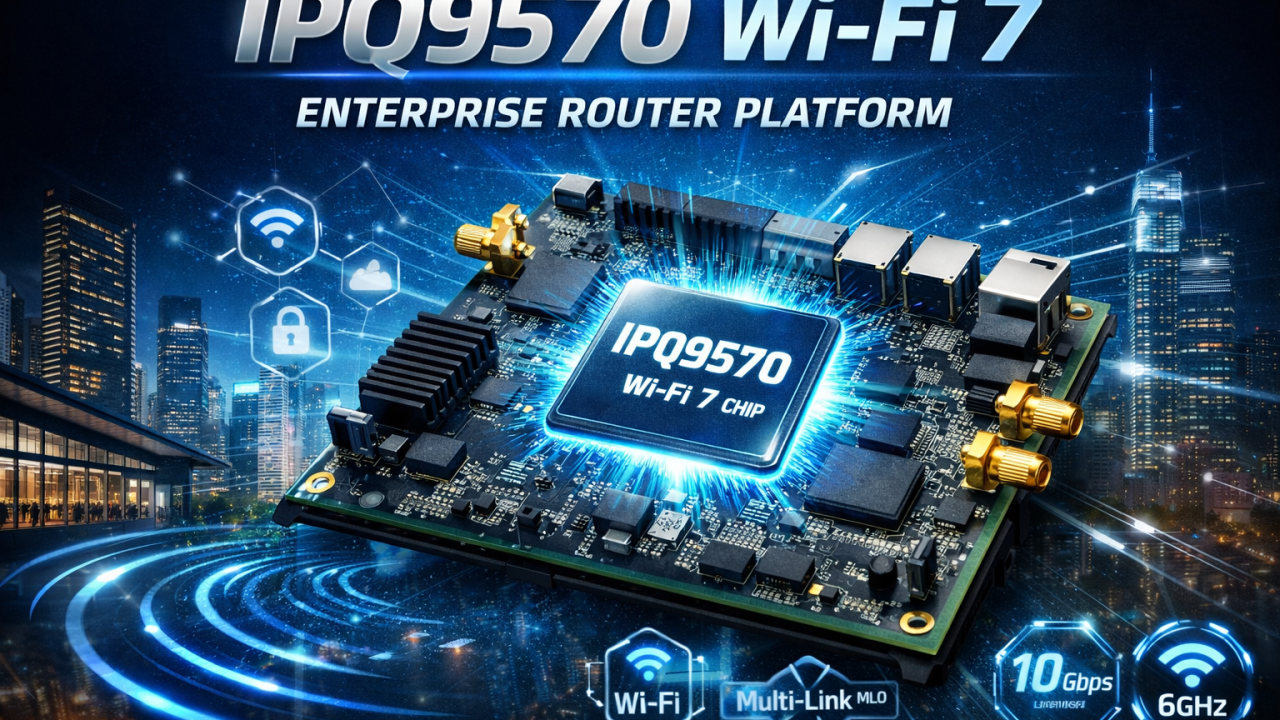
The IPQ9570 is a flagship networking processor from Qualcomm’s Wi-Fi 7 router platform lineup. It targets enterprise-grade access points, high-performance gateways, and industrial routers, delivering advanced compute power, next-generation wireless capabilities, and rich wired connectivity.

Built for multi-gigabit networking, IPQ9570 is ideal for deployments where performance, stability, and long-term scalability are critical.

Key Features of IPQ9570 Wi-Fi 7 Platform

1. Wi-Fi 7 (802.11be) Support

IPQ9570 fully supports Wi-Fi 7, bringing major enhancements over Wi-Fi 6/6E:

  • 320 MHz channel bandwidth
  • Multi-Link Operation (MLO)
  • 4096-QAM
  • Significantly improved throughput and spectrum efficiency

These features enable ultra-fast wireless performance while maintaining stable connections in dense environments.

2. Multi-Link Operation (MLO)

One of the most important Wi-Fi 7 innovations, MLO, allows devices to transmit and receive data across multiple bands (2.4 GHz / 5 GHz / 6 GHz) simultaneously.

Benefits include:

  • Lower latency
  • Seamless roaming
  • Higher reliability
  • Reduced packet loss in mission-critical applications

This makes IPQ9570 particularly suitable for enterprise roaming, industrial mobility, and real-time communication systems.

3. High-Performance Quad-Core CPU

IPQ9570 integrates a high-performance quad-core processor, delivering strong computing capability for:

  • Advanced routing
  • Firewall and security services
  • VPN acceleration
  • Edge computing and traffic management

This ensures stable operation even under heavy traffic loads and complex network conditions.

4. Multi-Gigabit Ethernet Connectivity

To eliminate wired bottlenecks, IPQ9570 supports:

  • 2.5G / 5G / 10G Ethernet interfaces
  • High-speed LAN and WAN configurations

This enables full utilization of Wi-Fi 7 wireless speeds and supports modern enterprise network architectures.

5. Enterprise-Grade Security and Reliability

IPQ9570 is designed with enterprise and industrial reliability in mind, offering:

  • Hardware-accelerated security
  • Secure boot and encryption
  • Long-term platform support

It is well suited for 24/7 operation in demanding environments.

Typical Applications of IPQ9570

Thanks to its high-end positioning, IPQ9570 is widely applicable in:

  • Enterprise Wi-Fi 7 Access Points
  • High-performance Wi-Fi 7 Routers & Gateways
  • Industrial Wireless Routers
  • Smart Factories & Industrial Automation
  • Smart Ports, Airports, and Transportation Systems
  • Mesh & Seamless Roaming Networks
  • Edge Computing Gateways

IPQ9570 vs Previous-Generation Platforms

Compared with Wi-Fi 6/6E platforms, IPQ9570 offers:

  • Up to 2×–3× higher wireless throughput
  • Lower latency for real-time applications
  • Better performance in high-density environments
  • Improved future-proofing for next-generation devices

For enterprises planning long-term network upgrades, IPQ9570 provides a solid foundation.

Why Choose IPQ9570 for Wi-Fi 7 Projects?

Choosing IPQ9570 means investing in:

  • Future-ready Wi-Fi 7 performance
  • Enterprise-grade stability
  • Scalable hardware and software architecture
  • Support for advanced features like MLO and multi-gig Ethernet

It is an ideal solution for customers who require high reliability, customization flexibility, and long product lifecycle support.

Conclusion

The Qualcomm IPQ9570 stands out as a high-end Wi-Fi 7 router platform designed for enterprise and industrial applications. With support for Wi-Fi 7, MLO, multi-gigabit Ethernet, and strong processing power, IPQ9570 enables next-generation wireless networks that are faster, more reliable, and ready for the future.

For companies planning to deploy Wi-Fi 7 enterprise routers, industrial APs, or custom wireless solutions, IPQ9570 is a powerful and forward-looking choice.

524WiFi and Wallys IPQ9570 Router Board & ODM Services

We provide IPQ9570-based Wi-Fi 7 router boards and customized ODM solutions for enterprise and industrial applications.

With in-house R&D, manufacturing, and software customization capabilities, Wallys helps customers accelerate Wi-Fi 7 product development, from concept to mass production. Our IPQ9570 router board solutions support:

  • Wi-Fi 7 (802.11be) architecture with MLO support
  • Multi-gigabit Ethernet (2.5G / 5G / 10G) designs
  • Industrial-grade hardware options
  • Customized RF, antenna, and enclosure design
  • OpenWrt / Linux-based firmware customization
  • OEM / ODM / JDM project support

Whether you are building enterprise Wi-Fi 7 routers, industrial gateways, mesh & roaming systems, or customized wireless platforms, 524WiFi delivers flexible, reliable, and scalable solutions tailored to your project requirements.

Posted on

The Quiet Revolution: How 5G RedCap is Unlocking a New Wave of Connected Devices

For years, the promise of 5G has been a tale of two extremes. On one end, high-speed smartphones and fixed wireless access demanding gigabit speeds. On the other, massive IoT sensors requiring years of battery life but minimal data. In the vast, fertile middle ground, a crucial category of devices has been left waiting for a cost-effective, power-efficient, yet capable wireless solution.

That wait is over. The arrival of 5G Reduced Capability (RedCap) is not just an incremental update; it’s the key that unlocks the full, diverse potential of the 5G ecosystem.

Bridging the 5G Divide: What is RedCap?

Think of the 5G spectrum as a highway system. You have the Formula 1 lanes for eMBB (enhanced Mobile Broadband) and the specialized, low-power bike paths for mMTC (massive Machine-Type Communications). RedCap effectively creates a new, smart “commuter lane”—perfectly balanced for devices that need more than a trickle of data but don’t require the expense and power drain of a full 5G modem.

Formally defined in the 3GPP Release 17 standard, 5G RedCap (also known as NR-Light) is a optimized version of 5G. It’s designed specifically for devices that fall between the high-performance and low-power extremes. By strategically reducing complexity, antenna count, and supported features, RedCap achieves a critical goal: it brings the inherent benefits of 5G—security, low latency, and mobility—to a much wider array of applications at a fraction of the cost and power consumption.

Source: https://www.ericsson.com/en/blog/2021/2/reduced-cap-nr

The Engineering Trade-Off: How RedCap “Slims Down”

RedCap isn’t a watered-down version of 5G; it’s a purpose-built one. It achieves its efficiency through several intelligent design choices:

  • Reduced Bandwidth: While high-end 5G can use up to 100 MHz in sub-7 GHz spectra, RedCap operates on a leaner 20 MHz. For most industrial sensors, health monitors, and wearables, this is more than sufficient and drastically cuts complexity.
  • Fewer Antennas: A flagship smartphone might have 4 receive antennas (4Rx). RedCap devices can operate with just 1 or 2 (1Rx or 2Rx). This simplification is a major driver behind reducing device size, cost, and power needs.
  • Half-Duplex FDD: This allows the device to either transmit or receive at a time, but not both simultaneously. By eliminating the need for a duplexer (a component that prevents interference), RedCap devices become significantly cheaper and more power-efficient. For many applications that send bursts of data, this slight trade-off is unnoticeable.
  • Lower Order Modulation: RedCap primarily uses 64 QAM instead of the 256 QAM found in high-end 5G. This is a more than capable modulation scheme that reduces power demands on the device’s power amplifier.

The Real-World Impact: RedCap’s Killer Applications

The theoretical benefits are clear, but where will we actually see RedCap make a difference? The answer is in three key verticals that have been hamstrung by the limitations of existing technologies.

  1. Industrial IoT 2.0: The factory floor is a perfect environment for RedCap. Think of wireless video surveillance cameras for safety and quality control, condition monitoring sensors on high-value machinery, and programmable logic controllers (PLCs). These devices need more bandwidth than a simple LPWAN sensor but can’t justify the cost of a full 5G module. RedCap fits perfectly, offering the reliable, low-latency connection needed for modern automation.
  2. The Next Generation of Wearables: While smartwatches today use a mix of 4G and proprietary technologies, RedCap paves the way for a new class of advanced wearables. Imagine high-performance augmented reality (AR) glasses for enterprise or rich video-streaming capabilities in a fitness band. RedCap provides the data throughput for these experiences while ensuring the device doesn’t overheat and has a usable battery life.
  3. A New Era for Video Surveillance: City-wide and industrial security systems require high-quality, real-time video streaming. RedCap modems are powerful enough to handle 1080p or even 4K video, and their native support for network slicing means a city can guarantee a secure, uninterrupted video feed for public safety, separate from consumer traffic on the same network.

The Road Ahead: Integration and Coexistence

The rollout of RedCap is a masterclass in seamless network integration. A key feature is its “fallback” capability. RedCap devices can connect to both modern 5G Standalone (SA) networks and older 4G LTE networks, ensuring broad coverage from day one. For network operators, enabling RedCap is often a simple software upgrade to existing 5G SA cellsites, making deployment swift and cost-effective.

Looking forward, RedCap doesn’t replace existing technologies like LTE-M or NB-IoT; it complements them. It fills a crucial performance and cost gap, creating a more complete and versatile connectivity portfolio. As we move toward 3GPP Releases 18 and beyond, we can expect further enhancements in power saving and integration, solidifying RedCap’s role as the backbone for the mid-tier IoT revolution.

In summary, 5G RedCap is the missing piece in the connectivity puzzle. By making a few smart engineering trade-offs, it brings the robust power of 5G to the devices that will define the next decade of innovation—from smarter factories to advanced wearables. The 5G revolution is no longer just about speed; it’s about intelligent, scalable, and efficient connectivity for everything. And with RedCap, that future is finally within reach.

Posted on

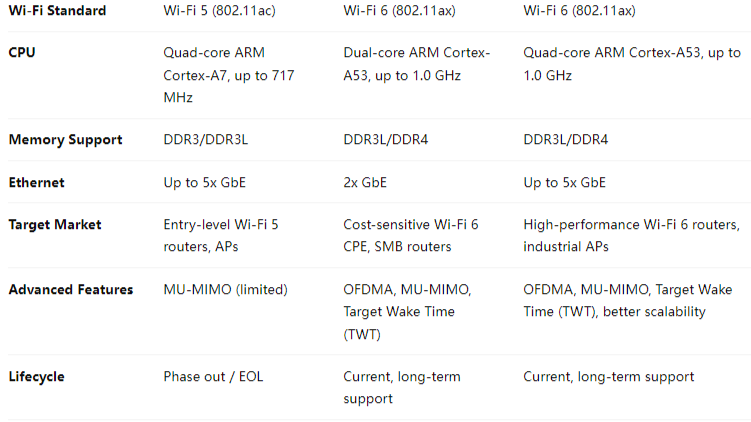
IPQ4019 IPQ4029 Phase Out Alert: Secure Your Upgrade Path with IPQ5018 IPQ5010

Introduction

The Qualcomm IPQ4019 and IPQ4029 chipsets have long been popular choices for cost-effective Wi-Fi 5 router boards and networking solutions. However, as Wi-Fi technology advances and demand for higher throughput, better efficiency, and longer product lifecycles grows, these chipsets are now entering the phase out stage.

For product developers and OEMs/ODMs who have built solutions around IPQ4019/IPQ4029, this shift raises a key question: What’s next?

The answer lies in Qualcomm’s next-generation IPQ5018 and IPQ5010 chipsets — designed to deliver superior Wi-Fi 6 performance while offering a cost-effective and future-proof path for industrial and enterprise networking solutions.


Why IPQ4019 / IPQ4029 Are Phasing Out

  • Wi-Fi 5 Limitations: With Wi-Fi 6 becoming the industry standard, Wi-Fi 5 chipsets like IPQ4019/4029 struggle to meet the growing requirements of high-density and high-throughput networks.
  • Lifecycle End
  • Market Demand: Clients now expect advanced features such as OFDMA, MU-MIMO, and improved energy efficiency — capabilities not fully supported by IPQ40xx chipsets.

Why Transition to IPQ5018 / IPQ5010?

1. Wi-Fi 6 Performance

  • Support for OFDMA and MU-MIMO, ensuring stable performance in dense environments.
  • Higher throughput and lower latency compared to IPQ4019/IPQ4029.

2. Cost-Effective Upgrade Path

  • IPQ5010 is ideal for entry-level Wi-Fi 6 solutions, providing a balance of performance and affordability.
  • IPQ5018 offers more robust capabilities for industrial and enterprise-grade products.

3. Extended Lifecycle

  • Qualcomm’s roadmap ensures that IPQ50xx series chipsets will receive long-term support, securing your product investments.

4. Industrial-Grade Applications

  • Rugged and reliable for deployments in smart cities, industrial Wi-Fi, surveillance, and long-distance outdoor networking.
  • Future-ready platform to support customized software development including OpenWrt and QSDK.

Our Solutions Based on IPQ5018/IPQ5010

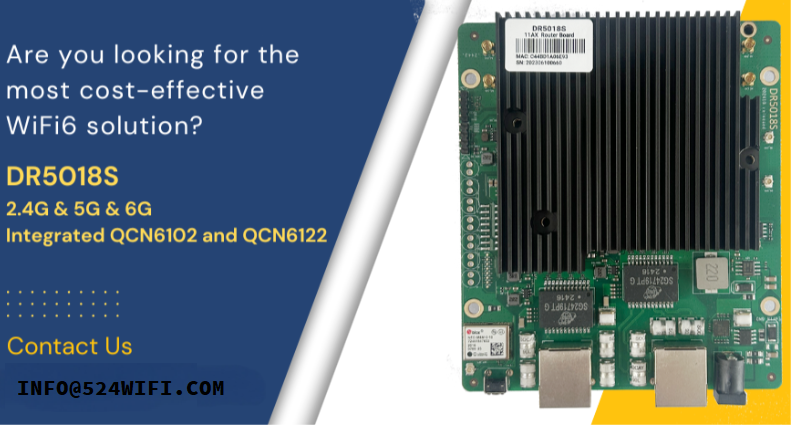
At 524WIFI and Wallys Communications (Suzhou) Co., Ltd., we have developed a range of router boards and wireless solutions built on the IPQ50xx series. Our latest product, the DR5018S, leverages the IPQ5018 chipset to deliver:

  • High-performance Wi-Fi 6 connectivity
  • Multiple Gigabit Ethernet ports
  • Support for industrial applications
  • Flexible OEM/ODM/JDM customization options

With strong hardware and software expertise, we ensures a smooth migration from IPQ40xx-based platforms to IPQ50xx solutions.


Conclusion

The phase-out of Qualcomm’s IPQ4019/IPQ4029 chipsets signals the end of an era — but also the beginning of a new one. By adopting the IPQ5018 and IPQ5010, businesses can secure a future-proof, cost-effective, and high-performance upgrade path that aligns with the growing demand for Wi-Fi 6 technology.

For more details on our IPQ5018/IPQ5010 solutions, or to discuss OEM/ODM opportunities, please visit www.524wifi.com / .net or contact us at info@524wifi dot com or net

Quick Review / More Info:

Both DR4019 and DR5018S support:

  • Wallys AP Controller
  • Hardware SOM version
  • VLAN functionality

The latest DR5018S VLAN configuration guide is first published here: Blog Article

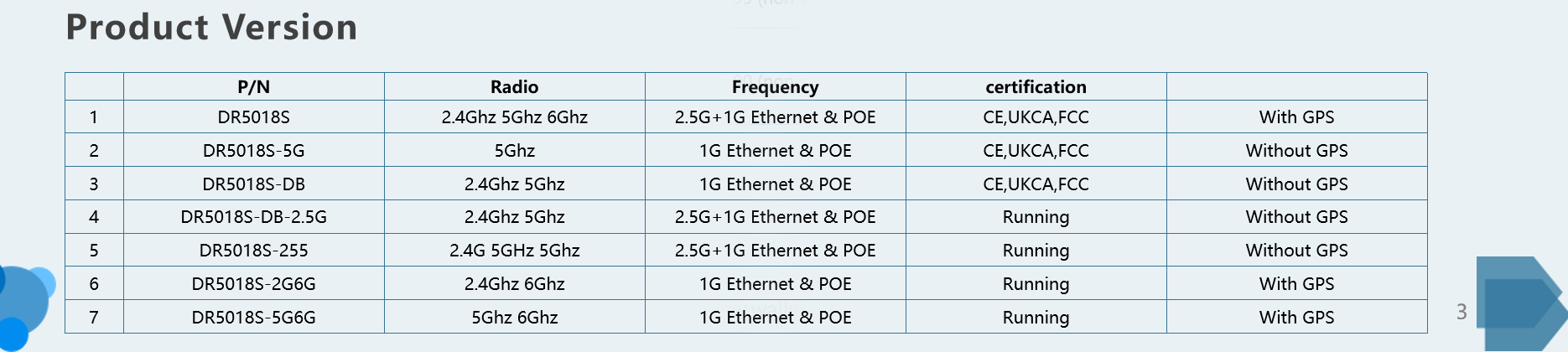
All available DR5018S Versions

Additional DR5018S features:

  • Mesh networking & seamless roaming
  • Long-range PTP over 30 km
  • GPS support
  • Tri-band option
  • FCC, CE, and UKCA certified
  • Proven performance: DR5018S-AP achieved a 14 km 5 GHz link test in Dongbei at 50 m height, with one-way throughput reaching 475 Mbps!
Posted on

IPQ8072 vs IPQ9574: Why Upgrade to Wi-Fi 7 for Your Next Wireless Project

The Qualcomm IPQ8072 has long been a reliable choice for Wi-Fi 6 networking hardware. Many enterprise routers, carrier CPEs, and industrial access points are still powered by IPQ8072 due to its strong balance of cost and performance. However, with the rapid evolution of Wi-Fi 7 (802.11be), the Qualcomm IPQ9574 offers significant technical advantages that make it the logical upgrade path for next-generation solutions.

In this article, we compare IPQ8072 vs IPQ9574, highlighting the major differences and why developers should consider migrating to Wi-Fi 7 hardware.


Overview of IPQ8072 (Wi-Fi 6 SoC)

The Qualcomm IPQ8072 is part of the IPQ807x family, designed for Wi-Fi 6. It features:

  • Quad-core ARM Cortex-A53 processor
  • 8×8 MU-MIMO capability
  • Up to 160 MHz channel bandwidth
  • 1024-QAM modulation
  • Robust support for enterprise and carrier-grade networking

While still capable, the IPQ8072 has reached maturity, and limitations in throughput and latency become noticeable in demanding applications.


Overview of IPQ9574 (Wi-Fi 7 SoC)

The Qualcomm IPQ9574 represents the new generation of Wi-Fi 7 platforms, optimized for ultra-high throughput and low latency. Key features include:

  • Enhanced multi-core CPU architecture for higher processing power
  • 320 MHz channel bandwidth (double that of IPQ8072)
  • 4096-QAM modulation for higher spectral efficiency
  • Support for Multi-Link Operation (MLO)
  • Designed for advanced enterprise, industrial, and carrier networks

This makes IPQ9574 ideal for data-heavy applications such as 8K video streaming, AR/VR, industrial IoT, and low-latency control systems.


IPQ8072 vs IPQ9574 Technical Comparison

The Qualcomm IPQ8072 is a Wi-Fi 6 (802.11ax) SoC built with a quad-core Cortex-A53 processor. It supports channel bandwidths of up to 160 MHz and uses 1024-QAM modulation, making it a strong choice for enterprise routers, carrier CPE, and industrial APs.

Article content
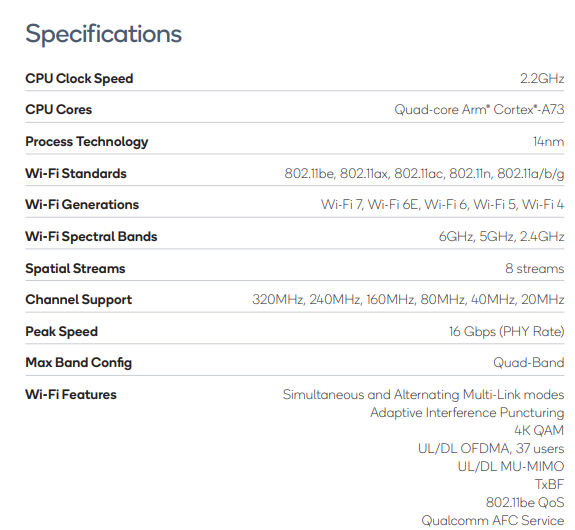
Data from Wallys DR8072 Webpage

By contrast, the Qualcomm IPQ9574 belongs to the Wi-Fi 7 (802.11be) generation. It features a more advanced multi-core CPU architecture, supports 320 MHz channel bandwidth (double that of IPQ8072), and enables 4096-QAM modulation for higher spectral efficiency. Unlike IPQ8072, it also supports Multi-Link Operation (MLO), a Wi-Fi 7 feature that allows simultaneous use of multiple frequency bands to reduce latency and improve stability. These enhancements make IPQ9574 ideal for next-generation enterprise networks, industrial IoT deployments, low-latency applications, and high-density environments.

Article content
Data from Qualcomm IPQ9574 Datasheet

Why Upgrade from IPQ8072 to IPQ9574?

  1. Performance Leap – Wi-Fi 7 doubles available channel bandwidth and introduces 4096-QAM for significantly higher throughput.
  2. Ultra-Low Latency – MLO ensures faster and more reliable connectivity, critical for real-time applications.
  3. Future-Proofing – As Wi-Fi 6 hardware reaches end of lifecycle, Wi-Fi 7 ensures long-term product competitiveness.
  4. Scalability – IPQ9574’s stronger CPU supports more devices, traffic, and complex networking tasks.

524WiFi and Wallys’ IPQ9574 Router Board Solution

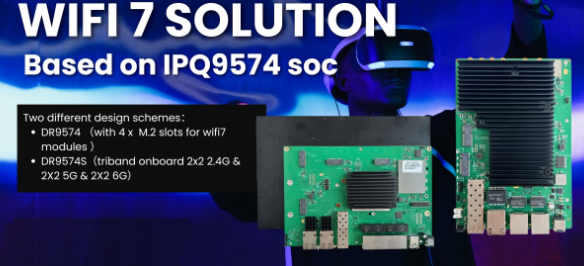
At 524WiFi, we provide hardware solutions based on Qualcomm IPQ9574, including the DR9574 Router Board, designed for Wi-Fi 7 networks. With strong processing power, advanced wireless features, and industrial-grade reliability, it is the perfect upgrade path for developers currently using IPQ8072-based designs.

Frequently Asked Questions (FAQ)

1. Is IPQ8072 still good in 2025?

Yes. The Qualcomm IPQ8072 is still a stable and cost-effective Wi-Fi 6 chipset, suitable for enterprise routers and industrial APs. However, for new projects that require higher throughput, lower latency, and longer product lifecycle, Wi-Fi 7 chipsets such as IPQ9574 are strongly recommended.

Article content
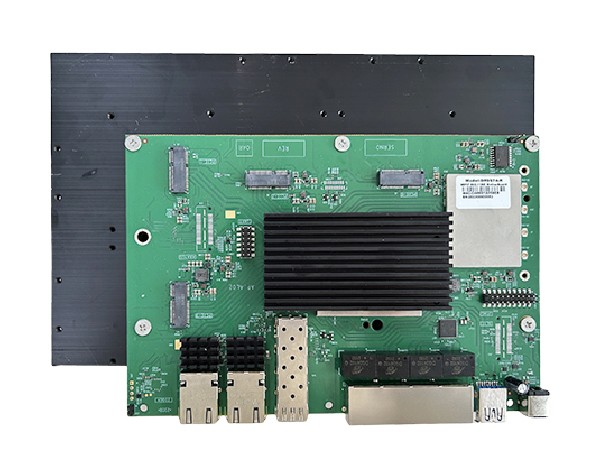
DR9574 board

2. What is the difference between IPQ8072 and IPQ9574?

The IPQ8072 is a Wi-Fi 6 (802.11ax) SoC, supporting up to 160 MHz bandwidth and 1024-QAM. The IPQ9574 is a Wi-Fi 7 (802.11be) SoC with 320 MHz bandwidth, 4096-QAM, and Multi-Link Operation (MLO), enabling much higher throughput and lower latency.

3. Why upgrade from Wi-Fi 6 to Wi-Fi 7?

Upgrading to Wi-Fi 7 provides faster data rates, reduced latency, and better efficiency in high-density environments. For applications such as AR/VR, 8K streaming, and industrial automation, Wi-Fi 7 ensures future-proof performance and competitiveness.

4. Does 524WiFi provide IPQ9574-based solutions?

Yes. 524WiFi and Wallys Communications offer router boards and network modules based on Qualcomm IPQ9574, including the DR9574 Router Board. These solutions are designed for enterprise, carrier, and industrial use cases that demand next-generation Wi-Fi 7 performance.

Posted on

Wi-Fi 7 for AIoT: How IPQ9574 and QCN9274 Enable Real-Time Edge AI

When we talk about Wi-Fi 7 (802.11be), most discussions focus on its impressive speed upgrades — and rightly so. But beneath the surface, Wi-Fi 7 is quietly becoming a critical enabler for Artificial Intelligence (AI) and AIoT (Artificial Intelligence of Things). It’s not just about faster wireless — it’s about making intelligent devices truly efficient, real-time, and scalable.

🚀 What Makes Wi-Fi 7 Different?

Wi-Fi 7 introduces groundbreaking features like:

  • Multi-Link Operation (MLO) — enabling devices to connect across multiple bands simultaneously, improving reliability and reducing latency.
  • Higher throughput — supporting up to 46 Gbps, ideal for high-data AI workloads.
  • Lower latency — essential for real-time AI inference.
  • Improved concurrency — allowing more smart devices to communicate simultaneously without congestion.

These capabilities make Wi-Fi 7 a natural fit for the AI revolution — both in the cloud and at the edge.


🧠 AI + Wi-Fi 7: A Perfect Match

1. Faster Real-Time Inference at the Edge

Edge AI devices like smart cameras, traffic sensors, or inspection drones require:

  • Constant data streams
  • Real-time decision-making
  • High connection reliability

Wi-Fi 7 ensures ultra-low latency and high bandwidth — perfect for AI models processing data in real time, directly on edge devices.

📍 Example: In smart manufacturing, a defect detection system running AI vision models can send high-resolution images instantly over Wi-Fi 7 for sub-second inference.


2. Scalable AIoT Networks

AIoT means connecting and managing hundreds or thousands of smart devices, often with edge AI capabilities.

Wi-Fi 7 supports:

  • Massive device concurrency
  • Dynamic bandwidth allocation
  • Superior QoS (Quality of Service)

This allows factories, campuses, or smart buildings to scale up their AIoT systems without overloading the network.

📍 Example: A smart office can deploy hundreds of AI-enabled occupancy sensors and environmental monitors — all reporting in real time — without lag.


3. Wireless Edge AI Gateways

Many AIoT systems use a local AI gateway that:

  • Aggregates data from various sensors
  • Runs local AI models
  • Connects wirelessly to the cloud or central system

Wi-Fi 7’s multi-band capabilities ensure that these gateways maintain stable, high-speed connections — even in noisy RF environments.

📍 Example: In a hospital, an AI-powered patient monitoring system can use a Wi-Fi 7-enabled gateway to transmit continuous multi-sensor data with minimal delay or risk of interruption.


🌐 AI-Powered Devices Need a Smarter Network — That’s Wi-Fi 7

As AI models become more complex and real-time applications more common, the network needs to evolve as well. Wi-Fi 7 is not just keeping up — it’s paving the way forward.

Whether it’s in:

  • Retail analytics
  • Autonomous vehicles
  • Healthcare monitoring
  • Smart agriculture
  • or Industrial robotics…

AI + Wi-Fi 7 is the new power couple for connected intelligence.


🔧 524WiFi and Wallys Wi-Fi 7 Hardware: Designed for AI and AIoT Deployments

At 524WiFi and Wallys, we offer industrial-grade Wi-Fi 7 solutions based on Qualcomm platforms such as IPQ9574 and QCN9274. Our high-performance router boards and wireless modules are ideal for:

  • AI-enabled edge computing devices
  • Custom AIoT gateways
  • High-bandwidth data streaming systems

🔹 DR9574 Router Board – (CPU:Qualcomm IPQ9574) Perfect for AI gateways with multiple high-speed interfaces

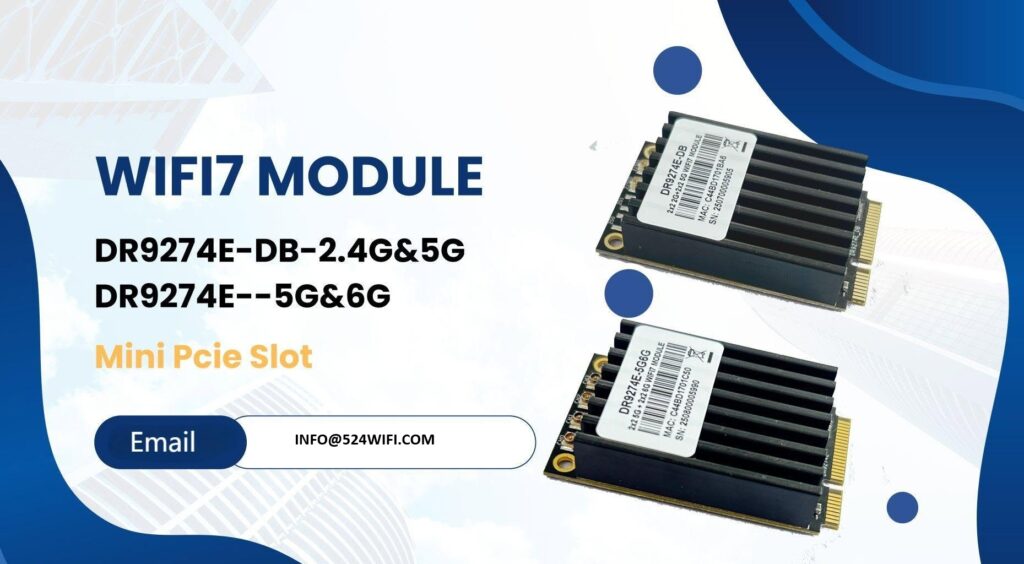
🔹 DR9274 Mini PCIe Module – (CPU:Qualcomm QCN9274/QCN6274) Compact and powerful Wi-Fi 7 module for embedded AI system

🔹 Custom ODM/OEM support – Tailor-made solutions for your AI product roadmap

👉 Contact our team at info@524wifi dor net or com to discuss your AI project and how Wi-Fi 7 can help you scale it smarter and faster.