Posted on

QCN9274 and Mesh Networks: A Game-Changer for Seamless Connectivity

How QCN9274 Supports Efficient Operation of Mesh Network Systems

With the increasing number of IoT devices and the growing demand for seamless connectivity, mesh network systems have become the preferred choice for modern homes, enterprises, and industrial networks. Qualcomm’s QCN9274 chip stands out with its high performance, low latency, and robust connectivity capabilities, providing essential support for the efficient operation of mesh networks. This article explores how QCN9274 enhances mesh networks through its key features and benefits.

1. Basics of Mesh Network Systems

Mesh networks use multiple routing nodes that connect with each other, expanding network coverage across larger areas. These nodes communicate, forming a self-healing, adaptive network that remains stable even if some nodes fail or encounter interference. This characteristic is essential in large-scale network deployments, such as smart homes, industrial parks, and office buildings.

2. Key Features of QCN9274 in Mesh Networks

The QCN9274, Qualcomm’s Wi-Fi 7 chip, has powerful network processing capabilities and advanced wireless features. Below are the core technologies and advantages QCN9274 brings to mesh network systems for efficient operation:

1. Multi-Link Operation (MLO) for Reliable Connectivity

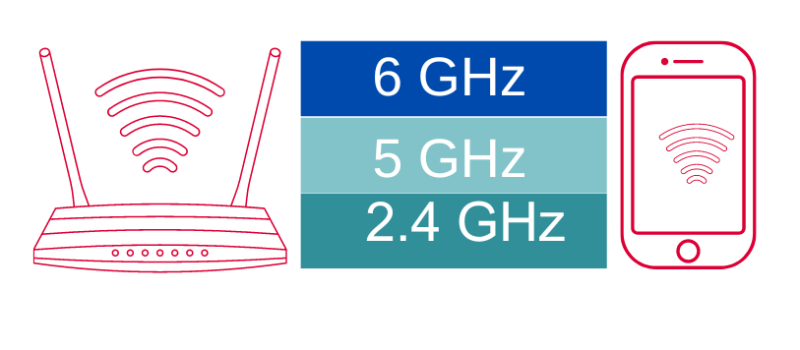
QCN9274 supports Multi-Link Operation (MLO) technology in Wi-Fi 7, allowing mesh nodes to communicate over multiple bands, such as 6GHz, 5GHz, and 2.4GHz, simultaneously. MLO enables the network to switch dynamically to clearer frequencies when interference or congestion occurs, maintaining efficient data transmission and stable connections. This dynamic multi-link switching capability reduces latency and interruptions in the mesh network, enhancing overall efficiency.

2. Wider Channels and Advanced Modulation

The QCN9274 chip supports ultra-wide 320MHz channels and 4K QAM modulation, delivering multiple times the bandwidth and data rate compared to Wi-Fi 6 or Wi-Fi 5 standards. For mesh networks, this means multiple nodes can simultaneously transmit large volumes of data without compromising network quality or user experience. The wider channels and advanced modulation make the QCN9274 ideal for bandwidth-intensive applications such as video streaming, real-time gaming, and industrial automation.

3. MU-MIMO and OFDMA for Efficient Multi-User Connections

QCN9274 supports enhanced Multi-User Multiple-Input Multiple-Output (MU-MIMO) and Orthogonal Frequency Division Multiple Access (OFDMA) technologies, allowing mesh networks to handle multiple user devices more efficiently. MU-MIMO enables simultaneous service to multiple endpoints, while OFDMA can divide channel resources into sub-channels for flexible resource allocation. Together, these technologies enable high-quality connections for multiple devices within the mesh network, ideal for high-density device environments.

4. Low Latency and Adaptive Path Selection

Low latency is crucial for mesh networks to ensure rapid data transfer between nodes. QCN9274 features low-latency communication protocols and a powerful network processor for fast data exchange between nodes. Additionally, it has adaptive path selection, allowing real-time routing to the optimal communication path, avoiding congested areas and interference to improve data stability and speed.

5. Efficient Power Management for Long-Term Stability

Low power consumption is essential in large-scale mesh network deployments. QCN9274 integrates smart power management, maintaining high performance while minimizing power usage, allowing nodes to operate reliably for extended periods. This feature is especially valuable in industrial IoT, outdoor, and remotely managed mesh networks where devices need long-lasting and reliable functionality without frequent maintenance.

3. Real-World Applications of QCN9274 in Mesh Networks

Thanks to these technical advantages, QCN9274 excels in mesh network deployments in the following scenarios:

1. Smart Home Networks

In smart home environments with a wide range of Wi-Fi devices, such as smart speakers, cameras, and appliances, QCN9274’s MLO technology and MU-MIMO provide reliable connectivity for every room and area. Low latency and wide channel support also make streaming and video calls smoother, enhancing the user experience.

2. Enterprise and Office Networks

In enterprises, the stability and scalability of mesh networks are crucial, especially in open office spaces and meeting rooms with multiple users. QCN9274’s OFDMA and MU-MIMO capabilities ensure that multiple employees and devices connect seamlessly to the network, even during peak usage, maintaining efficient network performance for video conferencing, file sharing, and cloud storage applications.

3. Industrial IoT and Remote Monitoring

In industrial settings, mesh networks often need to cover large areas and support a high number of low-power, long-connected devices. QCN9274’s low power design and adaptive path selection allow industrial IoT devices to run reliably over long periods. MLO’s multi-link functionality ensures stable connections even in remote monitoring and data collection scenarios, where part of the mesh may encounter interference.

4. 524WiFi DR9274 Wi-Fi 7 Network Card

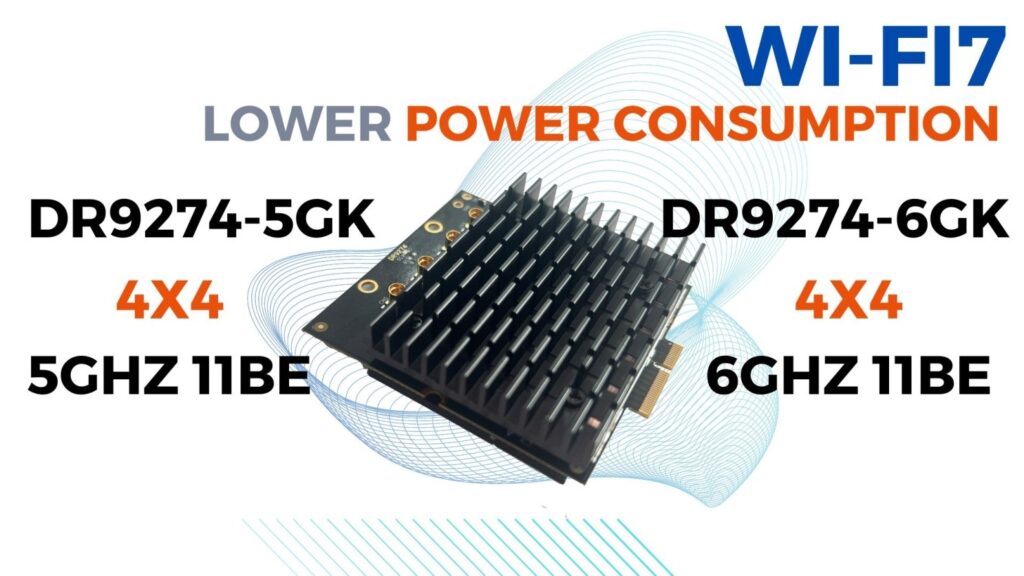
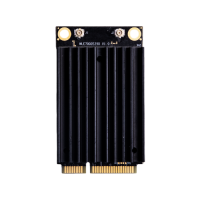
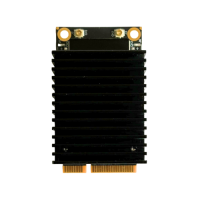
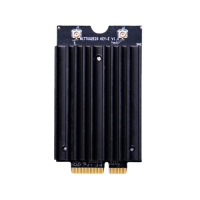
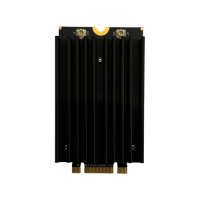
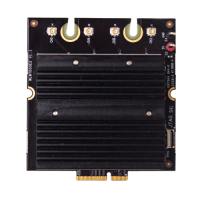
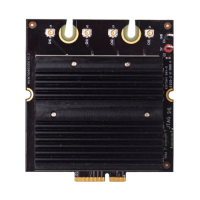
The 524WiFi and Wallys DR9274 network card, based on Qualcomm’s QCN9274 chip, is specifically designed for high-performance mesh networks. Supporting Wi-Fi 7 standards, it features a 320MHz ultra-wide channel and 4×4 MIMO configuration focused on the 6GHz single band. With its M.2 slot and compact design, it’s easily integrated into various devices, delivering exceptional network performance for smart homes, enterprise offices, and industrial IoT.

5. Conclusion

Qualcomm’s QCN9274 chip, with its support for Multi-Link Operation, wide channel capabilities, MU-MIMO, OFDMA, and low latency, provides strong support for efficient mesh network systems. These technologies ensure that mesh networks maintain stable performance and rapid response times even in complex network environments and with high device connection demands.

By incorporating the QCN9274, enterprises and users can experience a more stable, faster, and reliable mesh network, meeting current network needs and laying the groundwork for future expansion.

Posted on

Need 3 WiFi 6 Radios? Meet the Game-Changing 3 in 1 Solution! QCN9024 WIFI6

In the ever-evolving world of industrial WiFi solutions, efficiency and versatility are paramount. If you’re finding yourself tangled in a mess of multiple WiFi cards just to get the coverage you need—one for 2.4GHz, another for 5GHz, and yet another for 6GHz—you’re not alone. With a variety of card types flooding the market, it’s easy to get lost in the specs, modes, and compatibility issues. But what if there was a way to consolidate all of this into one sleek, high-performance solution? That’s where the 3-in-1 WiFi 6 card comes into play.

The Game-Changer: 3-in-1 WiFi 6 Card with Qualcomm QCN9024 Chip

Imagine this: One WiFi card that supports tri-band connectivity—2.4GHz, 5GHz, and 6GHz—along with 4×4 high-performance streams. Gone are the days of juggling multiple cards or worrying about compatibility with your motherboard. This powerful card features Qualcomm’s industrial-grade QCN9024 chip, which makes it a perfect fit for any industrial or high-demand network setup.

What makes this card truly exceptional is its ability to switch between STA (Station) mode and AP (Access Point) mode seamlessly, allowing for ultimate flexibility in your wireless setup. Need to operate in STA mode today? No problem! Need to flip to AP mode tomorrow? It’s just as simple.

Benefits You Can’t Miss:

  • Tri-Band Support: Choose between 2.4GHz, 5GHz, and 6GHz for maximum flexibility.
  • 4×4 Streams: Each radio supports high-performance streams for faster, more reliable connections.
  • STA and AP Modes: Switch between modes to meet your specific needs, whether you’re connecting to a network or setting up one.
  • Linux Compatibility: This WiFi 6 card is compatible with Ubuntu, making it ideal for Linux enthusiasts and industrial users alike.

But don’t just take our word for it—see it in action!

Check Out These YouTube Videos:

DR9074-Triband Quick Review

If you’re curious about the performance of the DR9074-triband, check out this quick review video:

How to Load Driver for DR9074-Triband on Linux 5.17.0 Ubuntu—Step by Step Want to get this WiFi card working on your Ubuntu system? This step-by-step tutorial walks you through the driver installation process:

Don’t Miss Out!

The 3-in-1 WiFi 6 card is the ultimate solution to all your connectivity needs—whether for industrial applications or high-performance home networks. If you want to know more, or if you’re ready to make an inquiry, contact us at: [email protected].

Power up your network and revolutionize the way you connect with the 3-in-1 WiFi 6 card. The future of industrial WiFi is here—are you ready to take the leap?

Posted on

QCN9274 vs QCN6274 -How Does 320MHz Bandwidth in the 6GHz Band Improve Data Transfer Speeds Compared to Previous WiFi Generations?

How Does 320MHz Bandwidth in the 6GHz Band Improve Data Transfer Speeds Compared to Previous WiFi Generations?

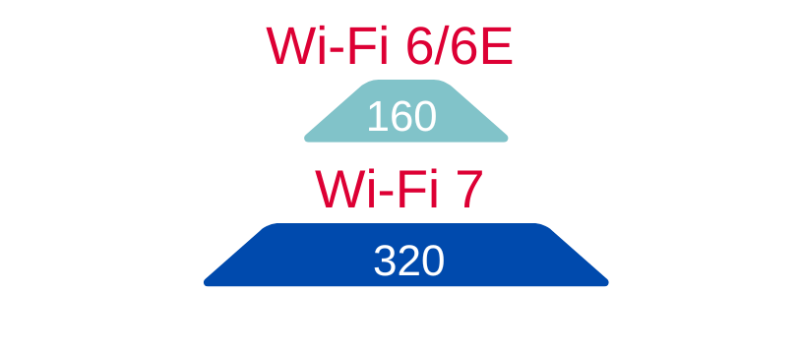
The world of wireless technology is rapidly evolving, and with the introduction of WiFi 7, we are entering a new era of high-speed, low-latency wireless connectivity. One of the standout features of WiFi 7, also known as 802.11be, is its support for a 320MHz channel width in the 6GHz band, doubling the 160MHz width available in WiFi 6E. This significant increase in bandwidth directly translates into faster data transfer rates and improved network performance. In this article, we will explore how this enhanced bandwidth in the 6GHz band boosts speeds and why WallysTech’s DR9274-6G module, equipped with Qualcomm’s latest QCN9274 and QCN6274 chips, is perfectly suited to take advantage of this technology.

Technical Features of the DR9274-6G

The DR9274-6G is a high-performance wireless network card designed for modern high-bandwidth, low-latency applications. It is fully compatible with the latest WiFi 7 (802.11be) standard, which offers substantial improvements over previous WiFi generations, particularly when it comes to speed and reliability.

1. WiFi 7 Standard Support

WiFi 7 offers several key advancements over its predecessor, WiFi 6E:

  • Higher Bandwidth Support: The channel width in WiFi 7 is increased to 320MHz, doubling the capacity from WiFi 6E’s 160MHz. This expanded bandwidth enables faster data transfer rates by allowing more data to be transmitted at once.
  • Multi-Link Operation (MLO): WiFi 7 introduces MLO technology, which aggregates multiple frequency bands into a single connection. This improves both bandwidth and connection reliability.
  • Enhanced 4K QAM: WiFi 7 supports 4096-QAM (Quadrature Amplitude Modulation), significantly increasing the efficiency of data transmission compared to the 1024-QAM used in WiFi 6E. This leads to better data throughput, especially in high-demand environments.

2. Cutting-Edge Chipset

The DR9274-6G uses Qualcomm’s QCN9274 and QCN6274 chips, which offer several advanced features:

  • 4×4 MU-MIMO: This technology improves the module’s ability to handle multiple devices simultaneously, providing stable connections even in high-density environments.
  • Efficient Signal Processing: These chips feature advanced signal processing capabilities, reducing latency and ensuring stable connections in challenging conditions.
  • Power Efficiency: The DR9274-6G is designed for low power consumption, making it ideal for long-term deployments in industrial, IoT, and smart city applications.

3. Modular Design and Interfaces

The DR9274-6G is designed with flexibility in mind. It features an M.2 connector and supports PCI Express 3.0, making it easy to integrate into a wide range of devices. It also offers a choice of UFL or MMCX antenna interfaces, providing options for customization based on the application.

DR9274-6E 4X4 QCN9074 QCN9024 WIFI7

Application Scenarios

The DR9274-6G is well-suited for various use cases across different sectors. Its high bandwidth and low latency make it ideal for demanding applications:

  • Home and Business Networks: In homes, this network card offers ultra-fast wireless connections, supporting bandwidth-heavy activities like 4K/8K video streaming and online gaming. In business environments, it ensures stable and fast connections for numerous devices, making it ideal for high-density deployments such as conference rooms or large offices.
  • Industrial Internet of Things (IIoT): Industrial applications demand reliable, low-latency connectivity, and the DR9274-6G delivers just that, making it perfect for complex networking needs in IIoT environments.
  • Smart Cities and Public Spaces: Public WiFi hotspots and smart city deployments require support for many concurrent devices. The DR9274-6G, with its multi-band support and MU-MIMO technology, ensures stable connections even in high-traffic areas like public transportation hubs and city centers.
DR9274-6G

Advantages of WiFi 7

The leap from WiFi 6E to WiFi 7 brings numerous benefits to both individual users and large-scale network deployments:

  • Greater Channel Bandwidth (320 MHz): With double the bandwidth of WiFi 6E, WiFi 7 enables significantly faster data transfer rates, improving overall network performance.
  • Multi-Link Operation (MLO): This feature allows WiFi 7 devices to use multiple frequency bands for data transmission, which enhances both speed and connection stability.
  • Enhanced QAM (4096-QAM): The higher modulation density in WiFi 7 means better data efficiency, leading to faster, more reliable wireless communication.

Why 524WiFi’s DR9274-6G?

DR9274-6G wireless network card is at the forefront of WiFi 7 technology. Based on Qualcomm’s powerful QCN9274 and QCN6274 chips, this module fully supports the latest WiFi 7 standard, offering significant advantages in terms of bandwidth, latency, and device connectivity. Whether deployed in homes, businesses, industrial environments, or public spaces, the DR9274-6G ensures robust and stable network performance.

As WiFi 7 continues to gain traction and become the new standard in wireless communication, the DR9274-6G is poised to play a pivotal role in high-performance network deployments.

Posted on

IPQ 9574: Does DR9574 Router Powered by Qualcomm IPQ9574 Support MLO?

524WiFi Wi-Fi 7 Router Powered by Qualcomm IPQ9574 and QCN9274: Enhanced Network Experience with MLO Technology

MLO (Multi-Link Operation) is a key technology in Wi-Fi 7 that allows data to be transmitted across multiple wireless links simultaneously, significantly improving network performance, stability, and efficiency. Specifically, MLO enables devices to transmit and receive data on multiple frequency bands (2.4GHz, 5GHz, and 6GHz) at the same time, rather than being limited to a single band.

Key Roles of MLO in Wi-Fi 7:

  • Increased Throughput: MLO allows devices to utilize multiple links for data transmission, greatly boosting bandwidth and data transfer speeds, especially for high-bandwidth applications like 4K/8K streaming, cloud gaming, and VR/AR.
  • Reduced Latency: Parallel transmission across multiple links accelerates data transfer, lowering latency, which is crucial for real-time applications like online gaming and video conferencing.
  • Enhanced Reliability: MLO can automatically switch to other links if one experiences interference or congestion, ensuring connection stability, especially in crowded environments or when devices are far from the router.
  • More Efficient Spectrum Usage: MLO dynamically distributes traffic across different links, improving spectrum resource utilization and reducing wireless congestion.

Why Many Applications Need MLO:

  • High Bandwidth Demands: As 4K/8K video and immersive media become more prevalent, applications increasingly require higher bandwidth. MLO’s multi-link capability meets these demands.
  • Low Latency Requirements: Applications like cloud gaming and video conferencing require very low latency. MLO can significantly reduce latency through parallel transmission.
  • Reliability: Smart home and industrial automation applications need stable connections. MLO’s multi-link mechanism ensures stability even if one link fails.

About IPQ9574 and QCN9274:

  • Qualcomm IPQ9574: This powerful SoC (System on Chip) is designed for high-performance networking applications, providing robust processing power and advanced features to support next-gen Wi-Fi 7 capabilities. Its architecture is optimized for handling multiple data streams, ensuring seamless connectivity and improved network efficiency.
  • Qualcomm QCN9274: Qualcomm Wi-Fi 7 ‘Waikiki’ series radio solution.

In summary, MLO is a core technology in Wi-Fi 7 that enhances network experience by providing higher throughput, lower latency, and greater reliability, making it essential for modern high-performance applications.

524WiFi Solution:

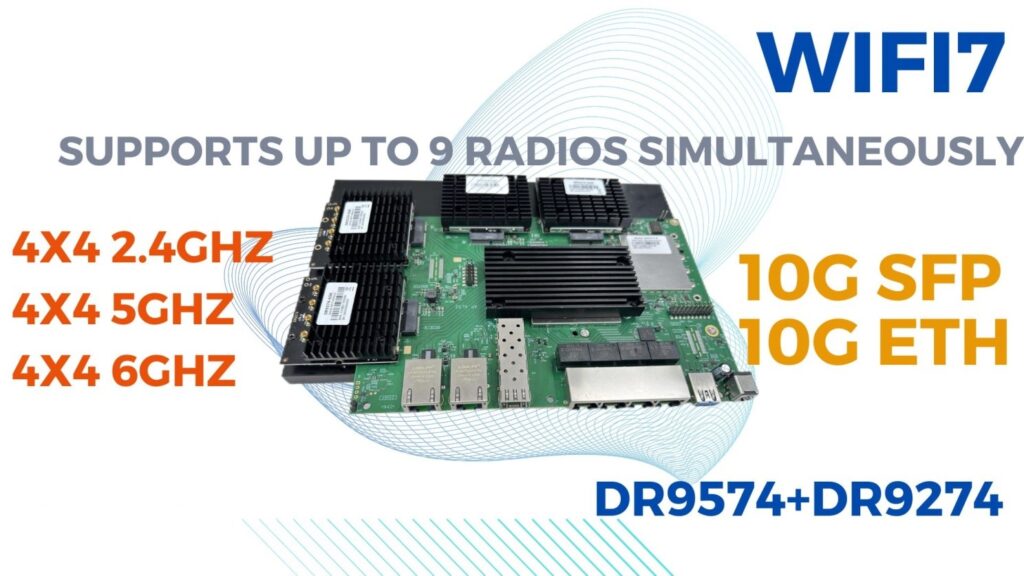
524WiFI and Wallystech’s Wi-Fi 7 router DR9574 supports MLO functionality with the DR9274 Wi-Fi 7 card, fulfilling diverse Wi-Fi project needs:

  • DR9574 supports 3 DR9274 single cards: 2.4G, 5G, and 6G can operate simultaneously.
  • DR9574 supports one DBDC card: DR9274-5G6G
Posted on

Wi-Fi 7 Unleashed: Explore Qualcomm’s 4×4 Tri-Band Powerhouse!

Exploring Wi-Fi 7 4×4 Qualcomm Triband Solutions

Wi-Fi 7, also known as 802.11be, marks a significant leap forward in wireless networking technology, offering enhanced performance, higher throughput, and lower latency compared to its predecessors. With features like 320 MHz channel bandwidth, 4K-QAM modulation, and Multi-Link Operation (MLO), it is poised to deliver speeds up to 46 Gbps, ideal for the ever-increasing demands of modern networks.

This article explores several Qualcomm-based Wi-Fi 7 4×4 triband solutions from 524WiFi and Wallys Communications, highlighting their key features and applications.

1. DR9574: Tri-Band Routerboard with Qualcomm IPQ9574

  • Overview: The DR9574 routerboard is equipped with the Qualcomm IPQ9574 chipset and features 4×4 MU-MIMO technology, offering robust performance across three bands (2.4 GHz, 5 GHz, and 6 GHz). It supports four M.2 slots, which provides significant flexibility for module integration and customization.
  • Specifications:
  • Chipset: Qualcomm IPQ9574 and QCN9274
  • Bands: Tri-band (2.4 GHz, 5 GHz, 6 GHz)
  • Ports: 2x 10G Ethernet and 4x 1G Ethernet ports
  • Applications: Suitable for high-performance networking applications such as routers, access points, and enterprise-level solutions, the DR9574 is designed for environments where both speed and reliability are critical.
  • Use Case: It is ideal for deployment in offices, large homes, or enterprise environments that demand simultaneous high-speed connections across multiple devices.

More about DR9574

IPQ9574 QCN9274

2. DR9274 Series: Single-Band Wi-Fi 7 M.2 Modules

  • Overview: The DR9274 series consists of three single-band Wi-Fi 7 cards—each catering to a different frequency band (2.4 GHz, 5 GHz, and 6 GHz). These M.2 modules provide high-speed 4×4 MU-MIMO functionality, enabling better coverage and increased data throughput in densely populated environments.
  • Key Models:
  • DR9274-2G: Focuses on the 2.4 GHz band, which is ideal for devices requiring long-range connectivity with moderate data requirements.
  • DR9274-5G: Optimized for the 5 GHz band, offering a balance between range and speed, perfect for most modern devices.
  • DR9274-6G: Leverages the 6 GHz band, providing ultra-fast connectivity with minimal interference, designed for future-proofing wireless networks.
  • Specifications:
  • Chipset: Qualcomm QCN9274 and QCN6274
  • Form Factor: M.2 slot, ensuring easy integration into a wide range of devices.
  • 4×4 MU-MIMO: Delivers enhanced performance for demanding applications, such as streaming, gaming, and large file transfers.
  • Use Case: The DR9274 series is ideal for laptops, embedded systems, and other devices requiring high-performance wireless modules in specialized applications.

More about DR9274-2G

More about DR9274-5G

More about DR9274-6G

3. DR5332: Qualcomm IPQ5332 Dual-Band Routerboard

  • Overview: The DR5332 is a dual-band routerboard that comes with a Qualcomm IPQ5332 chipset, offering support for 2.4 GHz and 5 GHz bands. It is designed for network solutions that require fast, stable, and efficient connections.
  • Specifications:
  • Chipset: Qualcomm IPQ5332
  • Ports: 10G SFP for high-speed fiber connections, making it ideal for data-heavy applications.
  • Memory: 1 GB DDR4, enhancing performance for processing-intensive tasks.
  • Use Case: This model is well-suited for small- to medium-sized business environments, especially where high data throughput and fiber connectivity are crucial.

More about DR5332

IPQ5332 4×4 Solution

Conclusion

The Qualcomm Wi-Fi 7 4×4 triband solutions provide a comprehensive range of products tailored to meet the needs of high-performance networking applications. From single-band M.2 modules to advanced routerboards supporting multiple frequencies, 524WiFi’ lineup offers flexibility and scalability for various industries and use cases.

Posted on

What industries are likely to benefit the most from WiFi 7 advancements?

WiFi 7 advancements are set to benefit several industries, particularly those that rely heavily on connectivity, data transfer, and real-time communication. Here are some of the key industries likely to gain the most:

1. Manufacturing

  • Smart Factories: Enhanced connectivity supports IoT devices, automation, and robotics, improving efficiency and productivity on the factory floor.
Smart Factories

2. Healthcare

  • Telemedicine and Remote Monitoring: High-speed, low-latency connections enable real-time patient monitoring and telehealth services, enhancing care delivery.
Healthcare

3. Transportation and Logistics

  • Fleet Management: IoT sensors and real-time tracking systems can operate more effectively, improving logistics, inventory management, and route optimization.
Transportation and Logistics

4. Retail

  • Smart Retail Solutions: WiFi 7 can support advanced point-of-sale systems, inventory tracking, and customer engagement technologies like AR applications.

5. Education

  • Online Learning and Collaboration: Schools and universities can leverage high-speed connectivity for blended learning, virtual classrooms, and enhanced collaboration tools.

6. Energy and Utilities

  • Smart Grids: Enhanced data transmission allows for better monitoring and management of energy consumption and distribution, facilitating the growth of renewable energy sources.

7. Construction

  • Site Connectivity: Real-time data sharing between devices and personnel can improve project management, safety monitoring, and equipment tracking.

8. Agriculture

  • Precision Farming: IoT devices can collect and transmit data on soil conditions, crop health, and weather, optimizing agricultural practices and yields.

9. Hospitality

  • Guest Experience: Hotels can provide seamless connectivity for guests and improve operational efficiency through integrated management systems.

Conclusion

WiFi 7’s capabilities are set to transform industries by enhancing connectivity, supporting advanced technologies, and improving efficiency. As businesses adopt these advancements, the impact on operations, customer experience, and overall productivity will be significant.

Wallys WiFi 7 Solutions

With over 16 years of expertise, Wallys is a leader in OEM/ODM services for WiFi products, including router boards, WiFi cards, antennas, and access points spanning WiFi 5, 6, and 7 standards. We excel in both software development and hardware customization, leveraging Qualcomm chipsets like IPQ9574 and IPQ6010 to deliver superior performance. Many of our products support open-source platforms such as OpenWrt and OpenWiFi, allowing for highly customizable solutions tailored to meet specific client needs.

At Wallys, we offer two robust WiFi 7 solutions designed to meet diverse needs:

1.DR9574 IPQ9574 Solution (Industrial Grade)

Features: Qualcomm IPQ9574 chipset, QCN9247 4×4 2.4GHz, 4x M.2 slots, QCN6274/QCN9274, 2x 10G Ethernet ports, 4x 1G Ethernet ports.

Performance: Achieves impressive throughput with a 6GHz indoor test reaching 9.9Gbps when tested with a 10G port PC.

More Info: DR9574 IPQ9574 Solution

2.DR5332 IPQ5332 Solution (Commercial Grade)

Features: Qualcomm IPQ5332 chipset, 10G SFP, 1GB DDR4 16-bit.

More Info: DR5332 IPQ5332 Solution

Posted on

Wi-Fi 7 The Next Generation of Connectivity from COMPEX wireless

Wi-Fi 7, also known as IEEE 802.11be, is the next-generation Wi-Fi standard that supports 2.4GHz, 5GHz, and 6GHz all three frequency bands. This advanced technology introduces innovative features that provide wider signal coverage, reduced latency and seamless connectivity. Wi-Fi 7 is set to revolutionize the way we connect, redefining the standards of wireless communication and rewriting your connectivity experiences. For Linux users, recommended is Linux krenel 6.5 and in kernel ath12k driver.

Unlock the Full Possibilities of Wi-Fi 7

320-bandwidth

320MHz Bandwidths

Wi-Fi 7 introduces 320MHz channel bandwidths, significantly expanding data transmission capacity. This allows for higher data rates and improved performance, ideal for bandwidth-intensive applications like streaming, gaming, and large file transfers.

4k-qam-3

4096 QAM

WiFi 7 uses 4K QAM to enhance data capacity, enabling higher speeds and efficiency. This improves performance for 4K streaming, online gaming, and large file downloads, delivering superior connectivity for modern applications.

mlo

Multi-Link Operation

Wi-Fi 7 debuts Multi-Link Operation (MLO), enabling devices to connect to the same access point across multiple channels and frequency bands simultaneously. MLO increases throughput, reduces latency, and enhances reliability.

Compex Wi-Fi 7 Solutions

The new Compex’s Wi-Fi 7 Dual-Band Dual-Concurrent Modules are designed to take your connectivity to the next level with seamless adoption, power efficiency and enhanced wireless performance. Ideal for enterprise, industrial, cybersecurity, transportation, and SMB applications or appliances, our Wi-Fi 7 Dual-Band Dual-Concurrent Modules set a new standard in performance and reliability.

Compex Wi-Fi 7 Solutions Product Matrix

WLE7000 Standard MiniPCIe Series

wle7002e25d

WLE7002E25

2×2 2.4+5GHz DBDC WiFi 7
with 2.4/5GHz Diplexer
MiniPCIe Interface with PCIe 3.0
wle7002e56_wifi-7

WLE7002E56

2×2 5+6GHz DBDC WiFi 7
with 5/6GHz Diplexer
MiniPCIe Interface with PCIe 3.0

WLT7000 M.2 Series

wlt7002e25d-e

WLTE7002E25

2×2 2.4+5GHz DBDC WiFi 7
with 2.4/5GHz Diplexer
M.2 E Key Interface with PCIe 3.0
wltb7002e25_wifi-7

WLTB7002E25

2×2 2.4+5GHz DBDC WiFi 7
with 2.4/5GHz Diplexer
M.2 B+M Key Interface with PCIe 3.0

WLW7000 High-Power M.2 Series

wlw7000e25

WLW7002E25

2×2 2.4+5GHz DBDC WiFi 7
M.2 E Key Interface with PCIe 3.0
wlw7000e25

WLW7002E56

2×2 5+6GHz DBDC WiFi 7
M.2 E Key Interface with PCIe 3.0
wlw7000e2e5e6

WLW7000E2

4×4 2.4GHz WiFi 7
M.2 E Key Interface with PCIe 3.0
wlw7000e2e5e6

WLW7000E5

4×4 5GHz WiFi 7
M.2 E Key Interface with PCIe 3.0
wlw7000e2e5e6

WLW7000E6

4×4 5GHz WiFi 7
M.2 E Key Interface with PCIe 3.0
Posted on

Multi-Band Support and Wi-Fi 6: Exploring the Technical Advantages of the DR5018S with IPQ5018

Multi-Band Support and Wi-Fi 6: Exploring the Technical Advantages of the DR5018S with IPQ5018

In the realm of wireless communication, Wi-Fi 6 represents a significant leap forward, delivering enhanced speed, capacity, and efficiency. For industrial applications that demand robust and reliable wireless solutions, the DR5018S module, featuring the powerful IPQ5018 chipset, stands out as an exemplary choice. This article explores the technical advantages of the DR5018S and how the IPQ5018 chipset enhances its capabilities, particularly in multi-band support and Wi-Fi 6 technology.

1. Three-Band Support: Extensive Coverage, Flexible Deployment

The DR5018S offers comprehensive coverage with its support for 2.4 GHz, 5 GHz, and 6 GHz frequency bands. This multi-band capability ensures optimal performance across a variety of environments, from expansive outdoor areas to densely populated industrial sites.

Advantages:

  • 2.4 GHz Band: Provides broad signal coverage and is effective for long-distance transmission and penetration through obstacles.
  • 5 GHz Band: Delivers higher data transfer speeds, making it suitable for applications requiring substantial bandwidth, such as HD video streaming and high-speed data transfers.
  • 6 GHz Band: Introduces additional bandwidth, reducing interference and congestion. This band is particularly valuable for future high-density, high-throughput applications.
Wi-Fi generations (Source: Wikipedia)

2. IPQ5018 Chipset: Powering Superior Performance

At the heart of the DR5018S is the IPQ5018 chipset, which brings exceptional performance and efficiency to the module. The IPQ5018 is designed to handle demanding networking tasks with ease, providing a solid foundation for advanced wireless capabilities.

Key Features of IPQ5018:

  • High Processing Power: The IPQ5018 chipset features a robust processor that supports high-speed data processing and efficient network management, making it ideal for high-performance applications.
  • Enhanced Efficiency: Optimized for low power consumption while maintaining high performance, the IPQ5018 ensures extended operational longevity and reduced energy costs.
  • Advanced Features: Supports a range of advanced networking features, including enhanced security protocols and efficient bandwidth management, ensuring reliable and secure connections.
Wallys DR5018S:WIFI6 TRIBAND ROUTERBOARD CPU IPQ5018

3. Wi-Fi 6E

Wi-Fi 6E extends the capabilities of Wi-Fi 6 by incorporating the 6 GHz band. This extension is crucial for maintaining performance in increasingly crowded wireless environments.

Advantages:

  • Expanded Spectrum: The 6 GHz band provides additional non-overlapping channels, significantly reducing interference and network congestion.
  • Increased Speed: Supports higher bandwidth, facilitating rapid data exchange and improved performance for demanding applications.
  • Reduced Latency: Wi-Fi 6E minimizes latency, which is essential for applications requiring real-time data transmission and low lag.

4. DR5018S in Industrial Applications

The DR5018S, equipped with the IPQ5018 chipset, excels in various industrial applications, from smart cities to advanced manufacturing and security monitoring.

Application Examples:

  • Smart Cities: The DR5018S supports a large number of sensors and IoT devices, enabling real-time data collection and processing that enhances urban infrastructure and management.
SMART CITY
SMART CITY
  • Intelligent Manufacturing: In manufacturing settings, the module’s multi-band support improves device communication and automation efficiency, driving productivity and operational success.
Intelligent Manufacturing
  • Security Monitoring: For security applications, the DR5018S’s 6 GHz band provides clear and smooth video streaming with minimal latency, enhancing the effectiveness of surveillance systems.
Security Monitoring
Security Monitoring

5. Conclusion: DR5018S with IPQ5018 – A Powerful Networking Solution

As the demand for advanced wireless solutions grows, 524WiFi and Wallys’ DR5018S, driven by the IPQ5018 chipset, offers a powerful and versatile solution for industrial wireless networks. With its multi-band support and Wi-Fi 6E technology, the DR5018S is well-suited for a range of demanding applications, delivering exceptional performance and reliability.

DR5018S(IPQ5018)

For more details on the DR5018S and the IPQ5018 chipset, or to discuss how these technologies can meet your specific needs, please contact our sales team. We are here to provide tailored solutions for your networking requirements.

DR5018S:https://524wifi.net/?s=5018

Posted on

How to Choose the Right WiFi 7 Solution: An In-Depth Look at IPQ5332, QCN9274, and QCN6274 Chips

How to Choose the Right WiFi 7 Solution: An In-Depth Look at IPQ5332, QCN9274, and QCN6274 Chips

As wireless technology continues to advance, WiFi 7 is becoming a key driver for industrial and commercial applications. The IPQ5332, QCN9274, and QCN6274 chips, newly released by Qualcomm, offer high performance and a wide range of applications. However, with these options, users may face challenges in selecting the most suitable solution for their specific needs. In this article, we will explore the features and application scenarios of these chips, helping you make an informed decision.

1. IPQ5332: The Top WiFi 7 SoC for High-Density Environments

The IPQ5332 is a high-performance WiFi 7 SoC designed by Qualcomm to support multi-band, high bandwidth, and low latency applications. This chip integrates multi-core CPUs, acceleration engines, and advanced network processing capabilities, making it ideal for handling complex network demands in high-density user scenarios.

  • Learn more about the DR5332(IPQ5332 SoC) here.

User Needs and Challenges

  • Needs: Users are looking for a SoC that can operate stably in high-density environments while supporting the latest WiFi 7 technology.
  • Challenges:How to ensure IPQ5332’s stability in high-interference environments?Are there ready-made development boards or modules available for rapid prototyping?How to achieve compatibility between the IPQ5332 and existing network devices?

Solutions

  • Performance Testing and Case Studies: We provide performance test data for the IPQ5332 in various environments, showcasing its superior performance in high-density and long-distance transmission scenarios.
  • Development Resources: Wallys offers development boards and modules based on the IPQ5332, complete with technical documentation and development support to help you quickly start your project.

2. QCN9274: The Ideal RF Solution for Multi-Band Wireless Communication

The QCN9274 is a multi-band RF chip that supports wideband, high-speed wireless communication, making it particularly suitable for demanding wireless transmission scenarios. Whether for industrial automation or large-scale enterprise wireless networks, the QCN9274 provides stable RF performance and low power consumption.

  • Learn more about the DR9274(QCN9274 RF chip) here.

User Needs and Challenges

  • Needs: Users are seeking an RF chip that can deliver optimal performance in multi-band, multi-user scenarios.
  • Challenges:How does the QCN9274 perform in complex environments?How to ensure seamless integration between the QCN9274 and the IPQ5332?Are there ready-made drivers or firmware available for custom development?

Solutions

  • Optimization Strategies: We demonstrate how the QCN9274 maintains stable connections in high-density, high-interference environments and provide the best combination solution with the IPQ5332.
  • Technical Support: We offer comprehensive driver and firmware support to ensure your development project runs smoothly.

3. QCN6274: The Low-Power Choice for IoT and Smart Home Applications

The QCN6274 is a low-power, high-performance RF chip designed specifically for IoT and smart home applications. This chip not only excels in transmission efficiency but also has extremely low power consumption, making it ideal for battery-powered devices.

User Needs and Challenges

  • Needs: Users need a low-power RF chip that can provide stable wireless connections in long-term operational environments.
  • Challenges:How effective is the QCN6274’s signal penetration?How to maintain signal stability while extending battery life?Does it support rapid integration into existing IoT solutions?

Solutions

  • Power Optimization: Through precise power management and optimization strategies, the QCN6274 can maintain stable wireless connections in long-running devices while extending battery life.
  • Integration Support: We provide detailed technical documentation and reference designs to help you quickly integrate the QCN6274 into your existing IoT and smart home devices.

4. How to Choose the Right WiFi 7 Chip Solution for You

The IPQ5332, QCN9274, and QCN6274 each have unique advantages, making them suitable for different application scenarios. Whether you are looking for a high-performance WiFi 7 SoC, a multi-band RF chip, or a low-power IoT solution, 524WiFi can provide you with the most appropriate hardware support and technical services.

Actionable Recommendations:

  • Learn More: Visit our product pages to learn more about the IPQ5332, and here for the QCN9274.
  • Contact Our Sales Team: If you have any technical questions or need a custom solution, feel free to reach out to our sales team at info at 524wifi.com and we will provide you with the best support.
  • By choosing the right chip, you can ensure that your project achieves optimal performance, stability, and power efficiency, helping you quickly reach your business goals.
QCN9274/QCN6274
Posted on

DR9074 Triband : QCN9074 WiFi 6E Network Card – 23dBm, 4949 Mbps, Industrial-Grade

As wireless technology continues to evolve, the demand for high-performance solutions that can keep pace with increasing connectivity needs has never been greater. At the forefront of this revolution is the Qualcomm QCN9074 chipset, a powerful and versatile component designed to meet the rigorous demands of modern wireless networks. Here’s why the QCN9074 is considered the future of high-performance wireless solutions.

1. Cutting-Edge Wi-Fi 6 Technology

The QCN9074 chipset is built to fully harness the capabilities of Wi-Fi 6 (802.11ax), the latest and most advanced Wi-Fi standard. Wi-Fi 6 brings a host of improvements over previous generations, including faster speeds, greater capacity, and enhanced efficiency. With the QCN9074, you can achieve data rates that are up to four times faster than Wi-Fi 5, making it ideal for bandwidth-intensive applications such as video streaming, online gaming, and virtual reality.

2. Superior Multi-User Performance

One of the standout features of the QCN9074 is its support for OFDMA (Orthogonal Frequency Division Multiple Access) and MU-MIMO (Multi-User, Multiple Input, Multiple Output). These technologies allow the QCN9074 to handle multiple devices simultaneously without a drop in performance. This is particularly beneficial in environments with high device density, such as smart homes, offices, and public spaces, where multiple users need to access the network at the same time.

3. Exceptional Signal Quality and Coverage

The QCN9074 chipset is engineered to deliver superior signal quality and coverage. It supports 4×4 MIMO, which enhances the signal strength and extends the coverage area. Whether you’re deploying a network in a large office, a multi-story building, or an outdoor environment, the QCN9074 ensures that every corner is covered, providing a reliable connection even in challenging conditions.

4. Energy Efficiency

In today’s world, energy efficiency is a critical consideration for any wireless solution. The QCN9074 is designed with power-saving features that reduce energy consumption without compromising performance. This makes it an excellent choice for IoT devices, smart home applications, and other scenarios where power efficiency is crucial.

5. Versatile Frequency Support

The QCN9074 supports a wide range of frequency bands, including 2.4 GHz, 5 GHz, and 6 GHz. This versatility allows it to operate in various environments, from congested urban areas to remote industrial sites. The ability to switch between different frequency bands also ensures that your network can adapt to changing conditions and maintain optimal performance at all times.

6. Robust Security Features

With increasing concerns about cybersecurity, the QCN9074 offers advanced security features to protect your wireless network. It supports the latest WPA3 security protocol, providing enhanced protection against unauthorized access and ensuring that your data remains secure. This is particularly important in enterprise and industrial environments where sensitive information is transmitted over the network.

QCN9074 6E CARD

DR9074-Triband Spes

Symbol: Parameter

Chipset: Qualcomm Atheros QCN9024

WLAN Host Interface: PCI Express 3.0 Interface

System Memory: 2Mbit serial I²C bus EEPROM

Standard Operating Voltage: 3.3V

Operating Systems: QSDK

Host Interface: M.2 E Key

Antenna Cable / Port: 4 x ufl Connectors, 4T4R

Frequency Range: 2.412GHz-2.472GHz & 5.18GHz-5.825GHz & 5.925GHz-7.125GHz

Data Rates: Maximum 23dBm per chain, up to 4804Mbps

Channel Spectrum Widths: Supports 20/40/80/160MHz

Modulation Techniques: OFDMA: BPSK, QPSK, DBPSK, DQPSK, 16-QAM, 64-QAM, 256-QAM, 1024-QAM

Temperature Range: Operating: -20°C to 70°C, Storage: -40°C to 90°C

Humidity: Operating: 5% to 95% (non-condensing), Storage: Max. 90% (non-condensing)

Certification: TBD

Reference Design: PN02

Power Consumption: TBD

Dimensions (WxHxD): 57mm x 63mm x 6mm

Conclusion

The Qualcomm QCN9074 chipset is more than just a component; it’s a gateway to the future of wireless technology. With its advanced features, superior performance, and versatility, the QCN9074 is poised to lead the next generation of high-performance wireless solutions. Whether you’re building a smart home, deploying an enterprise network, or designing an industrial application, the QCN9074 offers the reliability and performance you need to stay ahead in a rapidly evolving digital world.

As the demand for faster, more reliable, and more secure wireless networks continues to grow, the QCN9074 stands out as a future-proof solution that can meet the challenges of tomorrow’s connectivity needs today.

If you’re looking for a QCN9074-based module, consider the 524WiFi DR9074 network card. The DR9074 is a high-performance network card designed by 524WiFi and Wallys, offering multiple configurations to meet the diverse needs of industrial projects.