Posted on

Stop Using Unencrypted WiFi: Secure Your Network with WPA3

In today’s hyperconnected world, WiFi has become essential for work, entertainment, and daily communication. However, many networks are still operating on outdated or unencrypted protocols, leaving them highly vulnerable to cyber threats. If your network security is not up to date, it’s time to consider upgrading to WPA3, the latest and most secure WiFi encryption standard available.

The Risks of Unencrypted WiFi

Using unencrypted or weakly encrypted WiFi opens your network to a variety of threats, including:

  • Data Interception: Without proper encryption, hackers can easily capture sensitive information such as passwords, bank details, and private messages.
  • Man-in-the-Middle Attacks: In unprotected networks, attackers can insert themselves between your device and the network to spy on your activity or modify the information being exchanged.
  • Unauthorized Network Access: Attackers can infiltrate your network and exploit connected devices, leaving them vulnerable to malware or ransomware attacks.

WPA3 encryption prevents these attacks by securing the data transmitted over your network, ensuring that only authorized users have access.

What Makes WPA3 More Secure?

WPA3 (Wi-Fi Protected Access 3) represents the most advanced WiFi security protocol to date. It is designed to address the weaknesses of earlier standards like WPA2, providing more robust encryption and additional layers of protection.

Here’s why WPA3 is the best choice for securing your WiFi:

  1. Stronger Encryption: WPA3 uses 192-bit encryption for enterprise environments and 128-bit encryption for personal use, making it much harder for attackers to break into your network.
  2. Simultaneous Authentication of Equals (SAE): This replaces the pre-shared key (PSK) system used by WPA2, significantly enhancing protection against brute-force attacks.
  3. Forward Secrecy: Even if a hacker intercepts data in the future, they cannot decrypt previously captured traffic, thanks to forward secrecy.
  4. Improved Protection for IoT Devices: WPA3’s Easy Connect feature simplifies the process of securely adding IoT devices, which are often a weak link in network security.
  5. Enhanced Safeguards for Public Networks: WPA3 improves protection on open networks, such as those in public places, by encrypting individual connections, preventing eavesdropping and data theft.

Benefits of Upgrading to WPA3

Upgrading to WPA3 provides numerous benefits that protect your network and enhance your user experience:

  • Peace of Mind: With WPA3, you know that your network is protected by the latest encryption standards, keeping your data secure from unauthorized access.
  • Future-Proof Security: As cyber threats continue to evolve, WPA3 is designed to provide long-term protection, ensuring that your network stays secure even as new vulnerabilities emerge.
  • Better IoT Security: With the growing number of smart devices in homes and businesses, WPA3’s improved security features for IoT devices reduce the risk of these devices being exploited.
  • Easier Network Management: WPA3 allows for easier management of network devices while maintaining high security standards, making it ideal for both personal and enterprise use.

How to Upgrade to WPA3

To upgrade your network to WPA3, follow these steps:

  1. Check Your Router’s Compatibility: Ensure that your router supports WPA3. Many newer models include WPA3 support, but older routers may need a firmware update or replacement.
  2. Update Router Firmware: If your router supports WPA3, update its firmware to enable the latest security features.
  3. Configure WPA3 Settings: Access your router settings and enable WPA3 encryption. Most routers have this option under the wireless security or network settings tab.
  4. Device Compatibility: Ensure that your devices (laptops, smartphones, tablets) support WPA3. Many devices released after 2019 are WPA3-compatible.
  5. Mixed Mode for Legacy Devices: If you have older devices that don’t support WPA3, you can use WPA2/WPA3 mixed mode, which maintains backward compatibility while improving security for newer devices.

524WiFi WPA3-Enabled Routerboards

524WiFi and WallysTech offer a range of high-performance routerboards that support WPA3, making them ideal for industrial and extreme usage scenarios where network security is critical. 524WiFi specializes in industrial wireless communication products, ensuring that their hardware is optimized for even the most demanding environments. Here are a few of their top routerboards that support WPA3:

  • DR5018S (IPQ5018) This tri-band routerboard supports 2.4GHz, 5GHz, and 6GHz WiFi 6 bands with MU-MIMO and OFDMA, providing exceptional speed and security, including WPA3 encryption. Ideal for high-traffic networks.
  • DR8072 (IPQ8072) Powered by the Qualcomm IPQ8072A chipset, this board supports OpenWRT, WiFi 6, and WPA3 encryption. Its 10GE port and 10G SFP make it a great choice for data-heavy applications.
  • DR9574 (IPQ9574) A WiFi 7-ready routerboard, the DR9574 delivers top-of-the-line performance with WPA3 support and multiple high-speed Ethernet ports, making it a future-proof option for businesses.
  • DR5332 (IPQ5332) Featuring WiFi 7 and the IPQ5332 chipset, this routerboard offers 10G SFP connectivity, WPA3 encryption, and exceptional processing power for demanding industrial applications.
Posted on

Wi-Fi 7 The Next Generation of Connectivity from COMPEX wireless

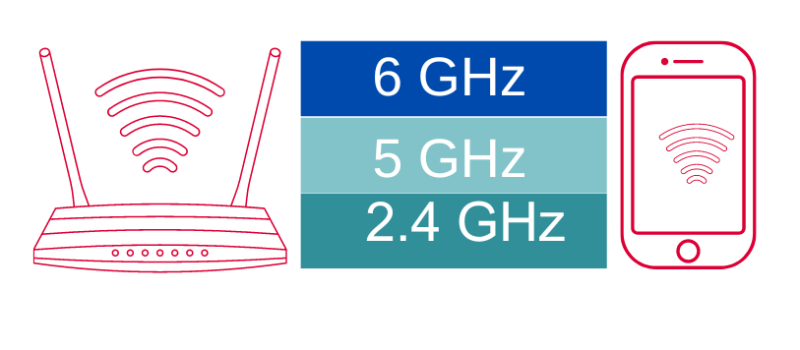
Wi-Fi 7, also known as IEEE 802.11be, is the next-generation Wi-Fi standard that supports 2.4GHz, 5GHz, and 6GHz all three frequency bands. This advanced technology introduces innovative features that provide wider signal coverage, reduced latency and seamless connectivity. Wi-Fi 7 is set to revolutionize the way we connect, redefining the standards of wireless communication and rewriting your connectivity experiences. For Linux users, recommended is Linux krenel 6.5 and in kernel ath12k driver.

Unlock the Full Possibilities of Wi-Fi 7

320-bandwidth

320MHz Bandwidths

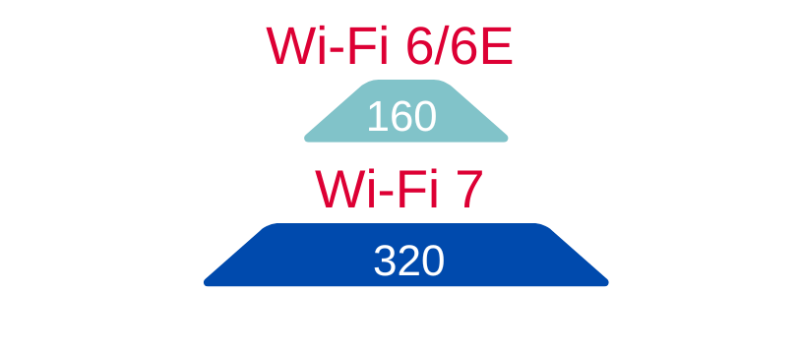
Wi-Fi 7 introduces 320MHz channel bandwidths, significantly expanding data transmission capacity. This allows for higher data rates and improved performance, ideal for bandwidth-intensive applications like streaming, gaming, and large file transfers.

4k-qam-3

4096 QAM

WiFi 7 uses 4K QAM to enhance data capacity, enabling higher speeds and efficiency. This improves performance for 4K streaming, online gaming, and large file downloads, delivering superior connectivity for modern applications.

mlo

Multi-Link Operation

Wi-Fi 7 debuts Multi-Link Operation (MLO), enabling devices to connect to the same access point across multiple channels and frequency bands simultaneously. MLO increases throughput, reduces latency, and enhances reliability.

Compex Wi-Fi 7 Solutions

The new Compex’s Wi-Fi 7 Dual-Band Dual-Concurrent Modules are designed to take your connectivity to the next level with seamless adoption, power efficiency and enhanced wireless performance. Ideal for enterprise, industrial, cybersecurity, transportation, and SMB applications or appliances, our Wi-Fi 7 Dual-Band Dual-Concurrent Modules set a new standard in performance and reliability.

Compex Wi-Fi 7 Solutions Product Matrix

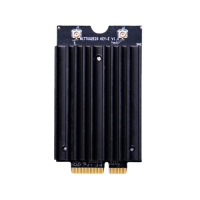
WLE7000 Standard MiniPCIe Series

wle7002e25d

WLE7002E25

2×2 2.4+5GHz DBDC WiFi 7
with 2.4/5GHz Diplexer
MiniPCIe Interface with PCIe 3.0
wle7002e56_wifi-7

WLE7002E56

2×2 5+6GHz DBDC WiFi 7
with 5/6GHz Diplexer
MiniPCIe Interface with PCIe 3.0

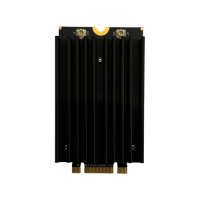
WLT7000 M.2 Series

wlt7002e25d-e

WLTE7002E25

2×2 2.4+5GHz DBDC WiFi 7
with 2.4/5GHz Diplexer
M.2 E Key Interface with PCIe 3.0
wltb7002e25_wifi-7

WLTB7002E25

2×2 2.4+5GHz DBDC WiFi 7
with 2.4/5GHz Diplexer
M.2 B+M Key Interface with PCIe 3.0

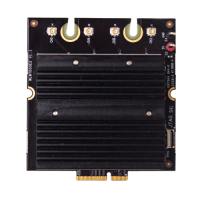
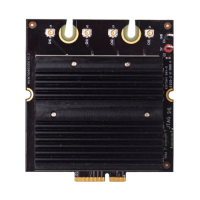
WLW7000 High-Power M.2 Series

wlw7000e25

WLW7002E25

2×2 2.4+5GHz DBDC WiFi 7
M.2 E Key Interface with PCIe 3.0
wlw7000e25

WLW7002E56

2×2 5+6GHz DBDC WiFi 7
M.2 E Key Interface with PCIe 3.0
wlw7000e2e5e6

WLW7000E2

4×4 2.4GHz WiFi 7
M.2 E Key Interface with PCIe 3.0
wlw7000e2e5e6

WLW7000E5

4×4 5GHz WiFi 7
M.2 E Key Interface with PCIe 3.0
wlw7000e2e5e6

WLW7000E6

4×4 5GHz WiFi 7
M.2 E Key Interface with PCIe 3.0
Posted on

Multi-Band Support and Wi-Fi 6: Exploring the Technical Advantages of the DR5018S with IPQ5018

Multi-Band Support and Wi-Fi 6: Exploring the Technical Advantages of the DR5018S with IPQ5018

In the realm of wireless communication, Wi-Fi 6 represents a significant leap forward, delivering enhanced speed, capacity, and efficiency. For industrial applications that demand robust and reliable wireless solutions, the DR5018S module, featuring the powerful IPQ5018 chipset, stands out as an exemplary choice. This article explores the technical advantages of the DR5018S and how the IPQ5018 chipset enhances its capabilities, particularly in multi-band support and Wi-Fi 6 technology.

1. Three-Band Support: Extensive Coverage, Flexible Deployment

The DR5018S offers comprehensive coverage with its support for 2.4 GHz, 5 GHz, and 6 GHz frequency bands. This multi-band capability ensures optimal performance across a variety of environments, from expansive outdoor areas to densely populated industrial sites.

Advantages:

  • 2.4 GHz Band: Provides broad signal coverage and is effective for long-distance transmission and penetration through obstacles.
  • 5 GHz Band: Delivers higher data transfer speeds, making it suitable for applications requiring substantial bandwidth, such as HD video streaming and high-speed data transfers.
  • 6 GHz Band: Introduces additional bandwidth, reducing interference and congestion. This band is particularly valuable for future high-density, high-throughput applications.
Wi-Fi generations (Source: Wikipedia)

2. IPQ5018 Chipset: Powering Superior Performance

At the heart of the DR5018S is the IPQ5018 chipset, which brings exceptional performance and efficiency to the module. The IPQ5018 is designed to handle demanding networking tasks with ease, providing a solid foundation for advanced wireless capabilities.

Key Features of IPQ5018:

  • High Processing Power: The IPQ5018 chipset features a robust processor that supports high-speed data processing and efficient network management, making it ideal for high-performance applications.
  • Enhanced Efficiency: Optimized for low power consumption while maintaining high performance, the IPQ5018 ensures extended operational longevity and reduced energy costs.
  • Advanced Features: Supports a range of advanced networking features, including enhanced security protocols and efficient bandwidth management, ensuring reliable and secure connections.
Wallys DR5018S:WIFI6 TRIBAND ROUTERBOARD CPU IPQ5018

3. Wi-Fi 6E

Wi-Fi 6E extends the capabilities of Wi-Fi 6 by incorporating the 6 GHz band. This extension is crucial for maintaining performance in increasingly crowded wireless environments.

Advantages:

  • Expanded Spectrum: The 6 GHz band provides additional non-overlapping channels, significantly reducing interference and network congestion.
  • Increased Speed: Supports higher bandwidth, facilitating rapid data exchange and improved performance for demanding applications.
  • Reduced Latency: Wi-Fi 6E minimizes latency, which is essential for applications requiring real-time data transmission and low lag.

4. DR5018S in Industrial Applications

The DR5018S, equipped with the IPQ5018 chipset, excels in various industrial applications, from smart cities to advanced manufacturing and security monitoring.

Application Examples:

  • Smart Cities: The DR5018S supports a large number of sensors and IoT devices, enabling real-time data collection and processing that enhances urban infrastructure and management.
SMART CITY
SMART CITY
  • Intelligent Manufacturing: In manufacturing settings, the module’s multi-band support improves device communication and automation efficiency, driving productivity and operational success.
Intelligent Manufacturing
  • Security Monitoring: For security applications, the DR5018S’s 6 GHz band provides clear and smooth video streaming with minimal latency, enhancing the effectiveness of surveillance systems.
Security Monitoring
Security Monitoring

5. Conclusion: DR5018S with IPQ5018 – A Powerful Networking Solution

As the demand for advanced wireless solutions grows, 524WiFi and Wallys’ DR5018S, driven by the IPQ5018 chipset, offers a powerful and versatile solution for industrial wireless networks. With its multi-band support and Wi-Fi 6E technology, the DR5018S is well-suited for a range of demanding applications, delivering exceptional performance and reliability.

DR5018S(IPQ5018)

For more details on the DR5018S and the IPQ5018 chipset, or to discuss how these technologies can meet your specific needs, please contact our sales team. We are here to provide tailored solutions for your networking requirements.

DR5018S:https://524wifi.net/?s=5018

Posted on

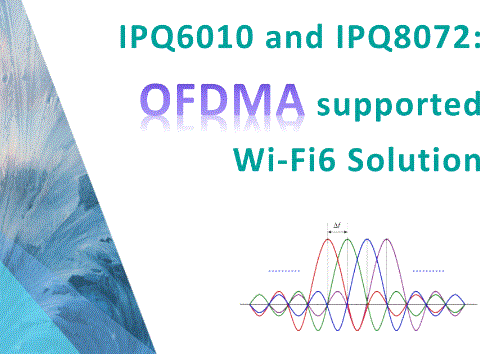
IPQ6010 and IPQ8072 OFDMA support in Wifi6 Solution

IPQ6010 and IPQ8072:OFDMA support in Wifi6 Solution

Introduction:

In the dynamic landscape of wireless communication, the techniques employed play a crucial role in optimizing data transmission and overcoming challenges. Two key technologies, FDMA (Frequency Division Multiple Access) and OFDMA (Orthogonal Frequency Division Multiple Access), are pivotal in this context. This blog aims to unravel the disparities between FDMA and OFDMA, shedding light on their applications and significance in mitigating multipath interference, particularly in the realm of Wi-Fi.

The Need for Multiple Carrier Technologies:

To comprehend the essence of OFDMA, it’s imperative to first delve into the concept of OFDM (Orthogonal Frequency Division Multiplexing). OFDM is a multicarrier modulation technique designed to combat multipath interference encountered in wireless communication. Multipath interference occurs when radio waves encounter obstacles, causing reflections and refractions. This phenomenon results in multiple versions of the same signal reaching the receiver, leading to what is known as multipath interference.

The Challenge of Inter-Symbol Interference:

Multipath interference directly contributes to intersymbol interference (ISI). In the realm of wireless communication, ISI poses a challenge where, for a given set of serial signals, the receiver encounters difficulty distinguishing between them. This challenge arises when the time delay between two identical signals is less than the signal’s transmission interval. The outcome is known as inter-symbol interference, making it arduous for the receiver to accurately decipher the intended signals.

OFDM as a Solution:

OFDM addresses this issue by transforming high-speed serial data into parallel low-speed data streams, thereby reducing inter-symbol interference. However, OFDM comes with its own set of drawbacks. In Wi-Fi 4/5, where communication is single-user-centric, each data transmission occupies all available subcarriers. This results in inefficiencies when small data packets, such as instant messages or web browsing, are transmitted, as the entire bandwidth is underutilized.

Introduction of OFDMA:

In response to this inefficiency, Wi-Fi 6 introduced OFDMA, borrowing a page from 5G’s playbook. OFDMA, despite its name’s resemblance to OFDM, is fundamentally a multiple access technique. Multiple access techniques distinguish different users, and common methods include FDMA, TDMA, and CDMA.

FDMA vs. OFDMA:

FDMA relies on allocating different frequency channels to different users. In the analogy of a gathering, it’s akin to separating rooms for distinct conversations. On the other hand, OFDMA divides the channel into Resource Units (RUs), each orthogonal to the others. In our gathering analogy, OFDMA creates individual compartments within a room, facilitating multiple conversations simultaneously.

Enhancing Efficiency with OFDMA:

OFDMA optimizes spectral efficiency by scheduling users in specific resource units instead of utilizing the entire channel for a single user, as seen in traditional OFDM. It introduces a more flexible approach, akin to efficiently utilizing a delivery vehicle by allocating designated compartments for different recipients.

Conclusion:

In summary, while OFDM successfully addresses multipath interference by transforming data streams, OFDMA takes a step further by introducing an innovative multiple access technique. By adopting OFDMA, Wi-Fi 6 has elevated efficiency in point-to-multipoint communication, ensuring that a single cycle completes communication with multiple users. This evolution underscores the dynamic nature of wireless communication technologies, continually adapting to enhance performance and meet the demands of evolving applications.

Here are some of Wallys’ 802.11ax products support OFDMA

DR6018:

Qualcomm-Atheros IPQ6010

Quad-core ARM 64bit A53 @1.8GHz Processor

1GB DDRL3L System Memory

32MB NOR Flash, 256MB NAND Flash

Supports Dynamic Frequency Selection (DFS)

2×2 On-board 2.4GHz radio, up to 573Mbps physical Data Rate

2×2 On-board 5GHz radio, up to 1201Mbps physical Data Rate

Support: QUECTEL RM500Q-GL

Support: QCN9074 WiFi 6E Card

Support Openwifi

Support QSDK

DR8072:

Qualcomm Atheros IPQ8072A AR Quad Core CPU

On-board 5GHz radio, up to 2475 Mbps physical data rate,On-board 2.4GHz radio, up to 1147Mbps physical data rate

8 MB NOR Flash, 256MB NAND Flash(NAND Flash can be up to 1GB as optional)

Support 11ax TX Beamforming,Support 11ac/ax MU-MIMO DL and UL,Support OFDMA DL and UL

Supports Dynamic Frequency Selection (DFS)

DDR 1GB DDR3L(Support DDR3L can be up to 2GB as optional)

M.2 connector can support QCN9074 production

DR9074-TRIBAND

Qualcomm Atheros QCN9024

Maxim 23 dBm per chain,up to 4949Mbps

Data Rateup to 4949Mbps

Support  Tri Band 2.4GHz&5GHz&6GHz 4×4 WiFi 6E (802.11ax)

4 spatial streams (4SS)

M.2 E Key Interface

PCI Express 3 .0 Interface

Posted on

OEM Customization Support

OpenWRT, OpenWiFi, LEDE and Linux supported HW for your heavy loaded WiFI applications and outdoor long range Wi-Fi links and Embeded projects.

Develop OpenWRT or OpenWIFi on reliable hardware from 524wifi! Wallys is a member of the OpenWIFI project. Please if you are a company, first create account and mail to us for business login with discount.

We develop OpenWRT – LEDE Github with our suppliers (manufacturers) to help our customers load OpenWRT onto our Embedded Boards and use our WiFi modules, providing opportunities to develop powerful features and customized versions of OpenWRT. 

524WiFi and Wallys also provide Software development support to customers utilizing their embedded boards and developing OpenWRT features. Wallys is a member of the OpenWIFI project.


Please read this full prodcut report as an example of customisation possibilities :  https://www.524wifi.com/index.php/dr4029board/


lede openwrt COMPEX and Wallys develop Patches and GitHubs to help our customers load OpenWRT and LEDE onto our Embedded Boards, providing opportunities to develop powerful features and customized versions of OpenWRT and LEDE. We provide OpenWRT patches up to latest Chaos Calmer. Wodaplug LTE routers use Golden Orb – Rooter firmeare for 4G / 5G applications.You can check https://github.com/Wallystech/openwrt  and https://github.com/compex-systems/Mediatek MT7915 and MT7916 github : https://github.com/openwrt/mt76/tree/master/mt7915MT7916 OpenWRT porting guide example – read hereWe recommend CANDELA TECH QCA Ath10k frimware and Linux driver to use with our WiFi QCA 9880 / 9882 modules > http://www.candelatech.com/ath10k.php

ATH11K driver delelopment for LINUX x86 and OpenWRT platforms : 

Informations regarding Linux and OpenWRT drivers – The ath11k code from github can’t support the dual / tri band card now, it needs modification. Wallystech and 524WiFi did some changes and applied in Linux kernel version 5.17.0 – if you use different kernel version, then 524WiFi will do some work for you. That is a Linux issue, there are some incompatible with different kernel versions. So the Customer need tell us the kernel version, then we release the ath11k and board-2.bin, bdf and amss.bin to customer – all is binary. Jason, chief of development, told us : “We will build it based on the Customer’s Linux version, The kernel should be 5.17 up. The Card can be AP or Client mode on x86. We do it better than Compex, 8devices and others, DR9074 Triband and Dualband cards are very good and its is powerfull opportunity for all customers developing WiFi6 devices. We have software engineers and we we have resources to support Customers tu use our WiFI6 modules, but we have add lock to amss, so the Customer can’t use our asmss on other vendor’s card“

If The Customer has big volume order, then we can open the ath11k code to the customer customer based on NDA, SLA.

NEW WIFI 6 TRIBAND AND DUAL BAND MODULES LIST. 

OEM from Wallys & 524WiFi Communications :

    Since its inception in 2010, Wallys has had a strong team, including dozens of research and development personnel, a complete set of assembly lines, they play an irreplaceable role.

    Under the premise of ensuring the product quality, we will deliver the goods at the fastest speed and maximize the product benefit.  Wallys is a member of the OpenWIFI project.

    We are trustworthy, trust us, choose us!

ODM

ODM

    Wallys provides all services from r&d, design to production and post-maintenance. There can be a buyout or an unbuyout mode.

    China has a complete wireless communication industry group, which enables ODM manufacturers to obtain the supply of low-cost components. Years of reform and opening-up have made China an ideal low-cost manufacturing base. Compared with the rapid development of the market, ODM services which focus more on design capability and production experience become more competitive.

OUR ADVANTAGES

OUR ADVANTAGES

Lower production costs

Strong design capability

Rich production experience

Higher productivity

Complete after-sales service

Wallys is a member of the OpenWIFI project.

SCHEMATIC DESIGN

SCHEMATIC DESIGN

    Wallys introduced senior talents and built a strong technical team integrating hardware and software design, providing firm support for the company’s ODM services. We undertake all the design of wireless communication because of enthusiasm and professional. Make any modifications based on our existing solutions to better meet customer needs. From idea to market, Wallys is a one-stop shop.

PROTOTYPE

    Wallys could help clients build Prototype. We have a professional technical team supporting.

    Helping you realize your idea is our aspiration. Everything on RF is our enthusiasm. Different chipsets, different materials, different features, different designs…we could realize all you want.

    Making your idea visible and alive is what we persuit.

Software & Hardware Design

SOFTWARE & HARDWARE DESIGN

    We have experienced R&D engineer team with a demonstrated history of working in the wireless industry. Skilled in RF and embedded communications  , network protocol, firmware ,openwrt ,linux system  development , analog and Digital Circuit Design, Network Processors, Power supplies ,PCB design and layout and etc.,

    Many years of expertise in software and hardware design allow us to deliver solutions based on your specification list for commercial and industrial applications. We are able to think ahead and deliver design that meet and exceed customer requirement.

 Wallys is a member of the OpenWIFI project. 

RF

RF

    In addition to the most commonly used 2.4G and 5G, Wallys can meet customers’ requirements for special spectrum. Our technicians are skilled in up-conversion and down-conversion technologies to meet your various RF requirements.

    The enthusiasm of technicians for RF and wifi drives Wallys to make continuous progress and innovation. We use advanced equipment to produce the most suitable products for the market and meet the needs of customers. We are reliable radio experts.

online baner