Posted on

IPQ8072 vs IPQ9574: Why Upgrade to Wi-Fi 7 for Your Next Wireless Project

The Qualcomm IPQ8072 has long been a reliable choice for Wi-Fi 6 networking hardware. Many enterprise routers, carrier CPEs, and industrial access points are still powered by IPQ8072 due to its strong balance of cost and performance. However, with the rapid evolution of Wi-Fi 7 (802.11be), the Qualcomm IPQ9574 offers significant technical advantages that make it the logical upgrade path for next-generation solutions.

In this article, we compare IPQ8072 vs IPQ9574, highlighting the major differences and why developers should consider migrating to Wi-Fi 7 hardware.


Overview of IPQ8072 (Wi-Fi 6 SoC)

The Qualcomm IPQ8072 is part of the IPQ807x family, designed for Wi-Fi 6. It features:

  • Quad-core ARM Cortex-A53 processor
  • 8×8 MU-MIMO capability
  • Up to 160 MHz channel bandwidth
  • 1024-QAM modulation
  • Robust support for enterprise and carrier-grade networking

While still capable, the IPQ8072 has reached maturity, and limitations in throughput and latency become noticeable in demanding applications.


Overview of IPQ9574 (Wi-Fi 7 SoC)

The Qualcomm IPQ9574 represents the new generation of Wi-Fi 7 platforms, optimized for ultra-high throughput and low latency. Key features include:

  • Enhanced multi-core CPU architecture for higher processing power
  • 320 MHz channel bandwidth (double that of IPQ8072)
  • 4096-QAM modulation for higher spectral efficiency
  • Support for Multi-Link Operation (MLO)
  • Designed for advanced enterprise, industrial, and carrier networks

This makes IPQ9574 ideal for data-heavy applications such as 8K video streaming, AR/VR, industrial IoT, and low-latency control systems.


IPQ8072 vs IPQ9574 Technical Comparison

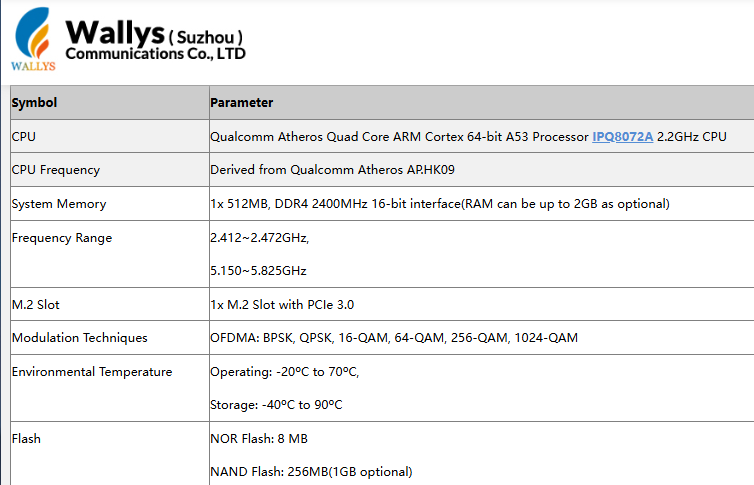
The Qualcomm IPQ8072 is a Wi-Fi 6 (802.11ax) SoC built with a quad-core Cortex-A53 processor. It supports channel bandwidths of up to 160 MHz and uses 1024-QAM modulation, making it a strong choice for enterprise routers, carrier CPE, and industrial APs.
Article content
Data from Wallys DR8072 Webpage

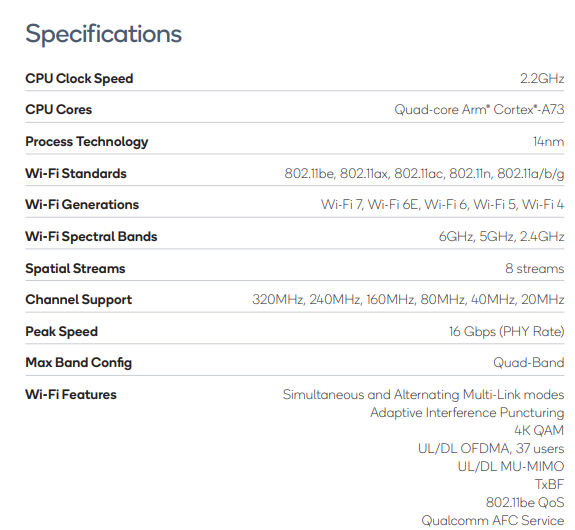
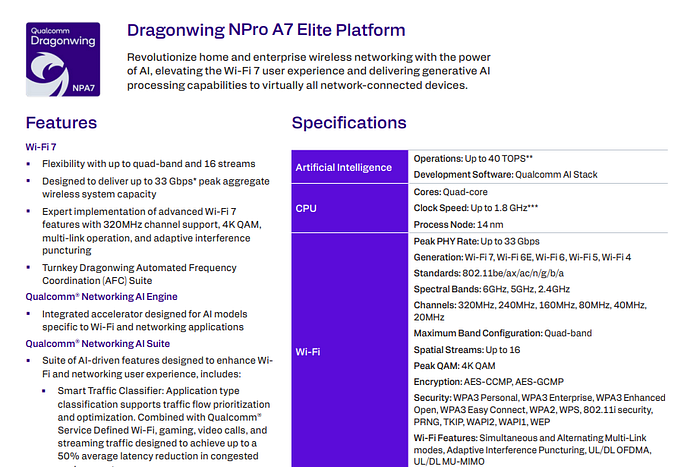
By contrast, the Qualcomm IPQ9574 belongs to the Wi-Fi 7 (802.11be) generation. It features a more advanced multi-core CPU architecture, supports 320 MHz channel bandwidth (double that of IPQ8072), and enables 4096-QAM modulation for higher spectral efficiency. Unlike IPQ8072, it also supports Multi-Link Operation (MLO), a Wi-Fi 7 feature that allows simultaneous use of multiple frequency bands to reduce latency and improve stability. These enhancements make IPQ9574 ideal for next-generation enterprise networks, industrial IoT deployments, low-latency applications, and high-density environments.
Article content
Data from Qualcomm IPQ9574 Datasheet

Why Upgrade from IPQ8072 to IPQ9574?

  1. Performance Leap – Wi-Fi 7 doubles available channel bandwidth and introduces 4096-QAM for significantly higher throughput.
  2. Ultra-Low Latency – MLO ensures faster and more reliable connectivity, critical for real-time applications.
  3. Future-Proofing – As Wi-Fi 6 hardware reaches end of lifecycle, Wi-Fi 7 ensures long-term product competitiveness.
  4. Scalability – IPQ9574’s stronger CPU supports more devices, traffic, and complex networking tasks.

524WiFi and Wallys’ IPQ9574 Router Board Solution

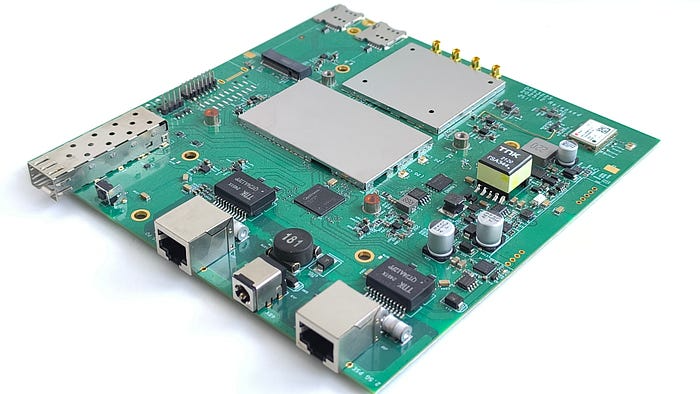
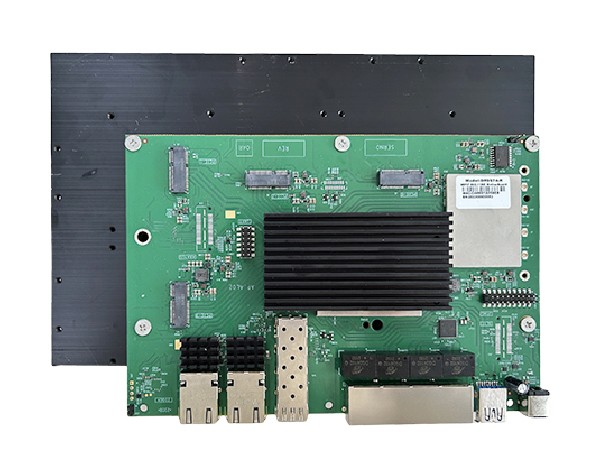
At 524WiFi, we provide hardware solutions based on Qualcomm IPQ9574, including the DR9574 Router Board, designed for Wi-Fi 7 networks. With strong processing power, advanced wireless features, and industrial-grade reliability, it is the perfect upgrade path for developers currently using IPQ8072-based designs.

Frequently Asked Questions (FAQ)

1. Is IPQ8072 still good in 2025?

Yes. The Qualcomm IPQ8072 is still a stable and cost-effective Wi-Fi 6 chipset, suitable for enterprise routers and industrial APs. However, for new projects that require higher throughput, lower latency, and longer product lifecycle, Wi-Fi 7 chipsets such as IPQ9574 are strongly recommended.
Article content
DR9574 board

2. What is the difference between IPQ8072 and IPQ9574?

The IPQ8072 is a Wi-Fi 6 (802.11ax) SoC, supporting up to 160 MHz bandwidth and 1024-QAM. The IPQ9574 is a Wi-Fi 7 (802.11be) SoC with 320 MHz bandwidth, 4096-QAM, and Multi-Link Operation (MLO), enabling much higher throughput and lower latency.

3. Why upgrade from Wi-Fi 6 to Wi-Fi 7?

Upgrading to Wi-Fi 7 provides faster data rates, reduced latency, and better efficiency in high-density environments. For applications such as AR/VR, 8K streaming, and industrial automation, Wi-Fi 7 ensures future-proof performance and competitiveness.

4. Does 524WiFi provide IPQ9574-based solutions?

Yes. 524WiFi and Wallys Communications offer router boards and network modules based on Qualcomm IPQ9574, including the DR9574 Router Board. These solutions are designed for enterprise, carrier, and industrial use cases that demand next-generation Wi-Fi 7 performance.

Posted on

Chipset Comparison: IPQ5322 vs IPQ5424-What’s the Difference and Which One Fits Your Project?

DR5332S vs DR5424: What’s the Difference and Which One Fits Your Project?

As Wi-Fi 7 enters the spotlight of next-gen wireless connectivity, developers and OEMs are seeking powerful, cost-effective router boards to power AIoT, edge computing, mesh networking, and enterprise-grade gateways. At Wallys, we provide two flagship tri-band Wi-Fi 7 router boards: the DR5332S and the DR5424. While they share a common mission — delivering ultra-reliable, high-throughput connectivity — they are built on different SoC platforms and tailored for slightly different project needs.

Let’s break down the differences and help you decide which one is the right fit for your application.

1. Chipset Comparison: IPQ5322 vs IPQ5424

CPU Architecture: A53 vs A55

  • The IPQ5424 uses a Cortex-A55 @1.8GHz, which is newer, more efficient, and more powerful than the Cortex-A53 @1.5GHz in IPQ5332.
  • A55 supports out-of-order execution, making it significantly better for multitasking and edge workloads.

IPQ5424 offers superior computing performance, making it ideal for intensive processing and multitasking at the edge.

AI Acceleration

  • IPQ5424 benefits from its more capable CPU architecture and overall system bandwidth for smoother AI task handling.
Article content

If you’re considering router boards such as Wallys DR5332S (IPQ5332) or DR5424 (IPQ5424):

  • 🧩 DR5332S + IPQ5332: Great for budget-sensitive, compact, quick-to-market solutions
  • 🚀 DR5424 + IPQ5424: Built for edge intelligence, multi-client environments, and future-proof mesh deployments

🔍 DR5424 offers higher performance and better power efficiency at the same time the costs will be higher than DR5322S.

Article content

2. Wireless Capabilities (Tri-Band Wi-Fi 7)

Both boards support tri-band (2.4GHz + 5GHz + 6GHz) Wi-Fi 7, including:

  • Multi-Link Operation (MLO) for increased stability
  • 320MHz bandwidth support on 6GHz band
  • 4096-QAM for enhanced throughput
  • Onboard radio modules for space-saving and simplified integration

However, DR5424 has more headroom for advanced use cases involving concurrent client management, AI inference at the edge, or industrial-grade networking.

3. Use Case Suitability

💡 Recommendation:

  • Choose DR5332S if your project prioritizes cost, compactness, and moderate throughput.
  • Choose DR5424 if you need higher computing power, better future-proofing, and support for intensive applications like edge inference, video analytics, or high-density mesh.

4. Hardware Interface & Customization

Both boards offer:

  • 2.5G Ethernet
  • Multiple UART, I2C, SPI
  • M.2 / USB3.0 / GPIO
  • Support for OpenWRT SDK
  • Optional expansion for LTE/5G/Storage modules

Customization and ODM services are available for both platforms.

5. Pricing & Availability

Both models are available for sampling, with volume support for OEM/ODM integration. DR5332S is generally more affordable and available sooner for entry-level or mid-range products, while DR5424 is geared for premium products with long-term lifecycle planning.

📬 For pricing, datasheets, or demo kits, contact us at: 📧 info@524wifi dot net or com

🧠 Final Thoughts

Whether you’re building a smart city gateway, an industrial mesh router, or a next-gen enterprise AP, 524WiFi and Wallys’ Wi-Fi 7 router boards offer flexible, powerful foundations.

  • DR5332S → Cost-effective, compact, fast-to-market
  • DR5424 → High-performance, future-ready, edge-AI capable

Need help choosing or customizing for your unique application? 

Posted on

QCN9274 / QCN6274 Chip | x86 & Ubuntu Support | Enterprise Grade Networking

524WiFi DR9274 Wi-Fi 7 PCIe Card

QCN9274/QCN6274 Chip | x86 & Ubuntu Support | Enterprise-Grade Networking

High-Density, Low-Latency Wireless Solutions for Industrial IoT & Enterprise WiFi 7 Deployments

Introduction: The Next Era of Enterprise Wireless Connectivity

The rapid evolution of Wi-Fi 7 (IEEE 802.11be) is revolutionizing enterprise networks, demanding hardware that combines cutting-edge performance with seamless integration. The 524WiFi DR9274 PCIe Wireless Card, powered by Qualcomm QCN9274/QCN6274 chips, emerges as a game-changer. Designed for x86 architecture and fully compatible with Ubuntu systems, this module delivers multi-gigabit speeds, industrial-grade reliability, and future-proof scalability — ideal for high-stakes environments like smart factories, dense office networks, and mission-critical IoT deployments.

5 Key Advantages of 524WiFi DR9274 Wi-Fi 7 Modules

1. x86 & Ubuntu Compatibility: Unleash Developer Flexibility

  • Native x86 Support: Seamlessly integrates with Intel/AMD-based servers, industrial PCs, and edge gateways, eliminating driver conflicts.
  • Ubuntu 22.04 LTS Optimization: Pre-certified drivers and SDKs enable rapid deployment on Linux environments, with full access to OpenWRT/OpenWiFi for custom network policies.
  • Use Case: Deploy as a software-defined access point (SDAP) or cloud-managed wireless controller on existing x86 infrastructure.

2. Wi-Fi 7 Performance: Redefining Wireless Limits

  • 320MHz Channel Bandwidth: Achieves ~40Gbps aggregate throughput — 2x faster than WiFi 6E.
  • 4K QAM Modulation: Boosts data density by 20%, enhancing bandwidth-hungry applications like 8K video streaming and AR/VR.
  • Multi-Link Operation (MLO): Transmits data across 2.4GHz, 5GHz, and 6GHz bands, reducing latency to <1ms for industrial automation.

3. Flexible Deployment: Single/Dual-Band Configurations

  • Single-Band Models: Optimized for interference-free 6GHz backhaul or dedicated 5GHz IoT sensor networks.
  • Dual-Band Models: Combine 5GHz+6GHz for enterprise-grade mesh networks or 2.4GHz+5GHz for legacy device compatibility.
  • Example: Deploy 5GHz+6GHz dual-band cards in stadiums to handle 10,000+ concurrent users with zero packet loss.

4. Industrial Durability: Built for Harsh Environments

  • Extended Temperature Range: Operates at -40°C to +85°C, certified for outdoor smart grids and factory floors.
  • Hardened Security: Supports WPA3-Enterprise, AES-256 encryption, and Secure Boot to meet NIST compliance.
  • Open-Source Firmware: Customize QoS rules, VLAN tagging, and spectrum analysis via OpenWRT.

5. Qualcomm QCN9274/QCN6274: A Proven Silicon Foundation

  • 16-Stream MU-MIMO: Supports 500+ devices per card with dynamic beamforming.
  • Hardware Accelerators: Offloads CPU load for tasks like packet prioritization and intrusion detection.

Application Scenarios: Where Wi-Fi 7 Drives Transformation

1. Enterprise Wi-Fi 7 Networks

  • High-Density Offices: Support 200+ users per AP with zero buffering in 4K video conferencing.
  • HD Telemedicine: Enable real-time transmission of MRI/CT scans over 6GHz wireless links.

2. Industrial IoT & Automation

  • AGV Fleet Control: Achieve sub-millisecond latency for robotic coordination in smart warehouses.
  • Wireless PLCs: Replace wired EtherCAT networks with secure 5GHz wireless loops.

3. Carrier & Smart City Infrastructure

  • Wireless Backhaul: Replace fiber with 6GHz point-to-point links for 5G small cell aggregation.
  • Public Wi-Fi 7 Hotspots: Deploy in airports or malls with captive portals and AI-driven traffic shaping.

4. Defense & Mission-Critical Systems

  • Tactical Mesh Networks: Build self-healing wireless grids using MLO and 4K QAM.
  • Drone Command Centers: Stream 360° LiDAR data via 320MHz channels.

Conclusion: Future-Proof Your Wireless Infrastructure Today

The DR9274 Wi-Fi 7 PCIe Card transcends traditional wireless limitations by merging Qualcomm’s silicon excellence, x86/Ubuntu adaptability, and industrial resilience. Whether upgrading enterprise networks, automating factories, or building smart city backbones, this module delivers unparalleled speed, reliability, and control.

Posted on

Why IPQ5322 is the Best Cost-Effective Industrial Wireless Solution?

In the fast-evolving world of industrial wireless communication, reliability, performance, and cost-efficiency are crucial factors for businesses seeking WiFi 7 solutions. Qualcomm’s IPQ5322 stands out as an affordable yet powerful option for industrial applications such as smart cities, logistics, surveillance, and factory automation.

Let’s explore why IPQ5322 is the ideal choice for high-performance yet budget-friendly industrial WiFi 7 networks.


1. WiFi 7 Performance at a Lower Cost

IPQ5322 is a dual-core WiFi 7 networking processor that offers many of the latest WiFi 7 enhancements, including:

✅ Multi-Link Operation (MLO) – Simultaneously connects to multiple frequencies for improved reliability.

✅ 4×4 MU-MIMO – Increases capacity, ensuring smooth connections in dense industrial environments.

✅ OFDMA – Reduces latency, improving real-time data transmission for industrial automation and surveillance.

Unlike high-end WiFi 7 chips such as IPQ9574, IPQ5322 offers a balanced approach – providing key WiFi 7 advantages at a lower cost, making it perfect for industrial projects with budget constraints.


2. Designed for Industrial-Grade Stability

In industrial environments, WiFi networks must withstand harsh conditions, high interference, and long-distance transmission challenges.

How IPQ5322 ensures stability:

🔹 Supports external high-gain antennas – Essential for long-range coverage in outdoor and factory applications.

🔹 Enhanced interference mitigation – Ensures smooth connectivity even in crowded RF environments.

🔹 Low power consumption – Reduces operational costs for industrial deployments requiring 24/7 uptime.

These features make IPQ5322 ideal for industrial applications such as remote monitoring, industrial IoT (IIoT), and smart infrastructure.


3. Cost-Effective vs. Other Industrial WiFi Solutions

IPQ5322 delivers WiFi 7 at a fraction of the cost of premium enterprise chips like IPQ9574 or networking solutions based on x86 hardware.

Why choose IPQ5322?

✅ More powerful than WiFi 6 solutions (IPQ5018), yet much more affordable than premium WiFi 7 chips.

✅ Offers a great balance between cost and performance for industrial networks.


4. Customization & Scalability with IPQ5322 Solutions

At 524WiFi and Wallys, we provide custom-built IPQ5322-based solutions tailored for industrial WiFi deployments.

🔹 Custom PCB and RF design for industrial applications.

🔹 OEM/ODM services – Tailor-made solutions to fit your specific requirements.

🔹 Pre-configured firmware with industrial-grade security and remote management features.

🚀 Featured Product: Dream DR5322

We offer DR5322, an IPQ5322-based router board built for industrial-grade WiFi 7 applications.

✔ Supports long-range industrial WiFi networks

✔ Flexible RF customization for different industrial needs

✔ Optimized firmware for secure and stable performance

Posted on

QCN9274 & QCN6274 Wi-Fi 7 with Multi-Link Operation (MLO) on X86 Devices: A New Era of Connectivity

Wi-Fi 7 with Multi-Link Operation (MLO) on X86 Devices: A New Era of Connectivity

As the world of wireless technology continues to evolve, the introduction of Wi-Fi 7 is nothing short of a game-changer. With its potential for significantly higher speeds, lower latency, and enhanced reliability, Wi-Fi 7 is set to revolutionize industries and applications ranging from industrial IoT to high-performance consumer devices. At Wallys, we’re always driven by customer needs, and as part of our commitment to offering cutting-edge solutions, we’re focused on expanding the possibilities for Wi-Fi 7 technology—specifically by enabling Multi-Link Operation (MLO) support on X86 platforms.

Expanding the Reach of Wi-Fi 7: A New Level of Compatibility

Last year, we introduced X86 driver support for our Wi-Fi 6 module, DR9074, which enabled seamless integration across a broader range of motherboard platforms, not just Qualcomm devices. This support empowered our customers to experience high-quality, stable Wi-Fi data transmission and opened the door for new applications that demand reliable and high-throughput wireless connections.

With the introduction of Wi-Fi 7, cross-platform compatibility becomes even more critical. Wi-Fi 7 brings with it a new set of features designed to push the boundaries of wireless connectivity, and one of the most significant is Multi-Link Operation (MLO). But to harness the full potential of MLO, we need to ensure that our solutions can operate on multiple platforms—something we’re excited to announce we’re working on with our DR9274 (QCN9274) and QCN6274 Wi-Fi 7 modules.

wifi6 vs wifi7

What is MLO? And Why Does It Matter?

Multi-Link Operation (MLO) is one of the standout features of Wi-Fi 7. MLO allows devices to transmit data across multiple frequency bands (like 2.4 GHz, 5 GHz, and 6 GHz) simultaneously. This multi-band transmission significantly improves throughput and reliability, while reducing latency and congestion, making it an ideal solution for environments that require high-speed and low-latency communication.

In simple terms, MLO will enable your devices to leverage the full bandwidth potential of Wi-Fi 7, resulting in faster speeds, more stable connections, and more efficient use of available spectrum.

Introducing the QCN9274 & QCN6274 Wi-Fi 7 Modules

To enable the full potential of MLO, we’re leveraging the power of QCN9274 and QCN6274—two of Qualcomm’s latest Wi-Fi 7 chipsets, both designed for high-performance applications.

  1. QCN9274 (Waikiki)
  2. QCN6274 (Waikiki)
MLO

These two powerful chipsets represent the future of Wi-Fi 7 and provide the foundation for expanding compatibility across a variety of platforms. With MLO support, both the QCN9274 and QCN6274 enable better utilization of the 2.4, 5, and 6 GHz bands, delivering faster speeds and more reliable connections.

wifi7 new features

What Will MLO Bring to Your X86 Devices?

By introducing MLO support for X86 devices, we’re pushing the envelope on what’s possible in wireless networking. Users of X86 platforms will now be able to tap into the full power of Wi-Fi 7, unlocking:

  • Higher Throughput: With MLO, data is split across multiple channels, leading to faster speeds and higher data rates, ideal for bandwidth-hungry applications like streaming, gaming, and industrial IoT.
  • Enhanced Reliability: MLO ensures that devices can maintain stable connections, even in environments with interference or congestion, by balancing traffic across different frequency bands.
  • Reduced Latency: Faster communication between devices can significantly reduce lag and improve the responsiveness of real-time applications, from virtual reality to autonomous systems.

The implications are significant. Wi-Fi 7, combined with MLO, could transform industries that rely on seamless, high-performance wireless connectivity—think smart cities, industrial automation, healthcare, and beyond.

524WiFi Adapter Card (wifi7 adapter card coming soon)

What’s Next for Wi-Fi 7 on X86?

At 524WiFi, we’re committed to ensuring that our solutions are as versatile and adaptable as possible. With the upcoming X86 driver support for DR9274 and MLO functionality, you’ll be able to take full advantage of Wi-Fi 7 speeds and unlock new potential for your devices.

Thoughtput testing:achieve 8Gbps+ speed

This new capability will open up new opportunities for a variety of applications, and we’re eager to see how our customers will integrate this powerful technology into their own use cases.

DR9274 wifi7 M.2 card

Are You Ready for the Future of Wireless Connectivity?

With Wi-Fi 7’s blazing-fast speeds and MLO’s game-changing capabilities, the possibilities are endless. How do you envision using Wi-Fi 7 with MLO on your X86 platforms? Whether it’s enhancing your industrial IoT devices, supporting next-gen gaming applications, or powering high-bandwidth communications, the potential is vast.

At 524WiFi, we’re excited to continue innovating and providing the tools you need to stay ahead in the rapidly evolving wireless landscape. If you’re interested in learning more about our Wi-Fi 7 solutions or how we can help with your next project, feel free to reach out to us.

Let’s shape the future of connectivity, together.

Posted on

Top QCA IPQ 9574 Chip Features for Next-Gen Wi-Fi 7 Connectivity

op IPQ9574 Chip Features for Next-Gen Wi-Fi 7 Connectivity

As the demand for faster, more reliable wireless networks continues to grow, the introduction of Wi-Fi 7 has become a game-changer in the world of wireless technology. At the heart of this new generation of Wi-Fi is the IPQ9574 chip, designed by Qualcomm, which is quickly emerging as one of the leading chips for Wi-Fi 7 connectivity. With its advanced features, the IPQ9574 is set to unlock unprecedented speeds, capacity, and reliability, paving the way for cutting-edge applications across industries. In this article, we’ll take a closer look at the top features of the IPQ9574 chip and how it is revolutionizing the way we connect.

1. Multi-Link Operation (MLO) for Ultra-Fast Speeds

One of the standout features of the IPQ9574 chip is its support for Multi-Link Operation (MLO), a critical component of Wi-Fi 7. MLO allows devices to simultaneously connect to multiple frequency bands (e.g., 2.4 GHz, 5 GHz, and 6 GHz) instead of relying on a single band. This results in faster data transfer speeds and improved network efficiency.

With MLO, the IPQ9574 can combine multiple data streams from different channels, enhancing throughput and reducing latency. This makes it ideal for demanding applications such as 4K/8K video streaming, virtual reality (VR), and high-speed gaming, where a seamless and ultra-fast connection is essential.

2. Increased Capacity for Dense Environments

The IPQ9574 chip is built with the capacity to handle a large number of devices simultaneously, which is critical in today’s increasingly connected world. Whether it’s a smart home, a busy office, or a large public venue, the chip ensures that network congestion is minimized, allowing for smooth communication even in dense environments.

With the Wi-Fi 7 technology powered by the IPQ9574, your network will be able to efficiently handle more devices without sacrificing performance. This is especially important as the Internet of Things (IoT) continues to expand and more smart devices are added to networks every day.

3. Better Spectrum Utilization with 320 MHz Channel Width

The IPQ9574 chip supports 320 MHz channel width, which significantly increases the amount of data that can be transmitted over the network. This feature is crucial for taking full advantage of the newly available 6 GHz spectrum offered by Wi-Fi 7, allowing for less interference and more bandwidth.

With wider channels, users can expect higher throughput and faster data speeds. For example, large file transfers, high-definition video streaming, and bandwidth-intensive tasks will see massive improvements in speed and efficiency.

4. Enhanced Reliability and Reduced Latency

One of the most important factors in ensuring a reliable network is minimizing latency—the delay between sending and receiving data. The IPQ9574 chip addresses this with advanced features that optimize network reliability and ensure a low-latency experience.

In applications such as live streaming, online gaming, and real-time video conferencing, low latency is essential for smooth, uninterrupted experiences. The IPQ9574 chip’s ability to provide consistent, stable connections is what sets it apart, ensuring high performance even during heavy traffic periods.

5. Seamless Connectivity with Enhanced Roaming

The IPQ9574 chip supports seamless roaming, which allows devices to smoothly transition between access points without interruption. Whether you’re walking around your home or office, the network will automatically hand off your connection to the nearest access point, ensuring a continuous, reliable experience.

This is especially beneficial in larger spaces or environments with many users, such as hotels, hospitals, or large campuses, where maintaining an uninterrupted connection is crucial.

6. Backward Compatibility with Wi-Fi 5 and Wi-Fi 6

Although the IPQ9574 chip is built for the future with Wi-Fi 7, it also maintains backward compatibility with older Wi-Fi standards, such as Wi-Fi 5 and Wi-Fi 6. This means that users with older devices can still enjoy fast and reliable connections on Wi-Fi 7 networks, without the need to upgrade all their devices at once.

Conclusion: The Future of Wireless Connectivity

The IPQ9574 chip is a powerhouse for Wi-Fi 7 technology, offering game-changing features like Multi-Link Operation (MLO), higher capacity, wider channels, and seamless roaming. These features make it the perfect choice for applications demanding high-speed, reliable, and efficient wireless connections—whether it’s for streaming, gaming, smart cities, or enterprise networks.

At Wallys Communications, we leverage the IPQ9574 chip to deliver cutting-edge solutions that meet the needs of modern wireless networks. Additionally, we have developed AI-driven solutions, such as human recognition and vehicle detection, powered by QCN9074 chips, offering innovative applications in security and automation.

Contact us today to learn more about how our Wi-Fi 7 solutions powered by IPQ9574 can elevate your wireless network and unlock the full potential of next-gen connectivity.

Posted on

Mediatek Unveils the New Wi-Fi 7 Platform AP7988-002, Delivering High-Performance Wireless Solutions for the AI Era

As AI development and the IoT market continue to mature, Wi-Fi has become one of the most universal and indispensable transmission methods in everyday life. However, with the growing demand for data traffic, existing networking technologies are facing challenges. To address these needs, 524WiFi proudly introduces its latest generation Wi-Fi 7 router development board, the AP7988-002. Designed to provide exceptional performance and seamless connectivity in the wireless communications field, the AP7988-002 is powered by the four-core ARM Cortex-A73 MediaTek MT7988A processor, making it the ideal choice for AI-driven communication and high-bandwidth applications.

In terms of wireless performance, the AP7988-002 is equipped with the MediaTek MT7996 Wi-Fi chipset, supporting Wi-Fi 7 technology and offering ultra-high-speed connectivity of up to 19,000 Mbps. This ensures ultra-low latency and outstanding data transmission capabilities, providing the perfect solution for next-generation network applications. To further enhance wireless signal coverage, the AP7988-002 features a high-power amplifier front-end module, significantly boosting signal strength and transmission range. This makes it especially suitable for large-scale infrastructure and environments requiring stable connections, positioning it as an essential networking device for both enterprise and residential applications.

The AP7988-002 is built around versatility, combining Tri-Band Triple Concurrent (TBTC) technology with 10G PHY high-speed wired connectivity. This allows it to handle substantial data transmissions simultaneously, ensuring optimal performance in multi-device connected environments and providing a stable network foundation for high-bandwidth applications.

Additionally, the product comes with an integrated M.2 B Key slot, supporting 4G/5G WWAN modules to offer flexible mobile network connectivity options. The M.2 M Key slot enables storage expansion, making it especially suitable for data-intensive applications such as large-scale data processing needed by small to medium-sized businesses. An integrated GPS module further enhances the device’s positioning capabilities, broadening its adaptability in modern network environments.

The launch of the AP7988-002 solidifies Mediatek’s leadership in wireless connectivity solutions, demonstrating the company’s commitment to technological innovation and laying a solid foundation for IoT applications. 524WiFi continues to drive advancements in wireless technology, striving to improve the performance and ease of use of IoT technologies, expanding the ways people live and work.

This product’s release marks a new milestone for Mediatek in the wireless technology field. With its exceptional performance and flexible application options, it brings an unprecedented network experience to both industries and individual users. For more information, please visit the 524WiFi official website for the latest updates and technical support.

Posted on

IPQ6010 IPQ6018 Router Board with 1GbE + 2.5GbE Support: A High-Performance WiFi 6 Solution

IPQ6010 IPQ6018 Router Board with 1GbE + 2.5GbE Support: A High-Performance WiFi 6 Solution

With the growing demand for high-speed wireless connectivity in industrial and enterprise applications, the IPQ6010 IPQ6018 Router Board stands out as a powerful WiFi 6 solution. Designed with 1GbE + 2.5GbE ports, this board provides ultra-fast data transfer rates, making it ideal for networking, IoT, and AI applications.

Key Features of IPQ6010 IPQ6018 Router Board

  1. Qualcomm IPQ6010 IPQ6018 SoC – A high-performance WiFi 6 (802.11ax) processor.
  2. Dual Ethernet Ports – Supports 1GbE and 2.5GbE, allowing for high-speed wired connections.
  3. Dual-Band WiFi 6 Support – Operates on 2.4GHz and 5GHz bands, offering improved coverage and speed.
  4. MU-MIMO & OFDMA – Enhances network efficiency in high-density environments.
  5. OpenWRT & SDK Support – Enables developers to customize firmware and optimize performance.

Why 2.5GbE Matters for Modern Networking

Traditional 1GbE Ethernet has been the industry standard for years, but with the increasing demand for higher bandwidth, 2.5GbE is becoming a must-have feature for:

  • High-speed data centers
  • Cloud applications & AI workloads
  • 4K/8K video streaming
  • IoT and smart city networks

By integrating a 2.5GbE port, the IPQ6010 IPQ6018 router board ensures future-proof networking, providing faster wired connectivity without requiring expensive infrastructure upgrades.

Ideal Use Cases for the IPQ6010 IPQ6018 Router Board

  1. Enterprise WiFi 6 Networks – Supports high-speed internet for offices and commercial buildings.
  2. Industrial IoT (IIoT) Applications – Reliable connectivity for manufacturing and automation.
  3. Smart Cities & Surveillance Systems – Handles real-time video streaming and AI-powered analytics.
  4. Mesh Networking & Wireless ISP – Ideal for large-scale deployments.
with SFP version

Conclusion

The IPQ6010 IPQ6018 Router Board with 1GbE + 2.5GbE support is a game-changer in WiFi 6 networking. Whether you are building next-gen enterprise solutions, upgrading industrial networks, or deploying high-performance IoT applications, this router board delivers exceptional speed, reliability, and flexibility.

DR6018
Posted on

AIoT & Robotics Boom: How WiFi 6/7 Enables Seamless Wireless Networks

The rapid rise of AIoT (Artificial Intelligence of Things) and robotics is transforming industries, from smart manufacturing and autonomous logistics to healthcare and consumer robotics. As robots become more intelligent and interconnected, the need for high-speed, low-latency, and reliable wireless communication is greater than ever. WiFi 6 and WiFi 7 are emerging as key enablers of seamless connectivity in the AIoT-driven robotics revolution.

Challenges in Wireless Communication for AIoT and Robotics

AI-powered robots rely heavily on real-time data exchange, cloud processing, and collaborative operations. However, traditional wireless networks face several challenges in meeting these demands:

  • High Latency: Robotics applications, such as autonomous mobile robots (AMRs) and industrial automation, require ultra-low latency to ensure precise control and real-time decision-making.
  • Interference & Congestion: Dense industrial environments often experience significant wireless interference, affecting communication reliability.
  • Bandwidth Limitations: High-resolution sensors, AI-driven vision systems, and cloud-based data processing generate massive data streams that require high-throughput connectivity.
  • Seamless Roaming: Robots moving within factories, warehouses, or hospitals need smooth network transitions without disruptions.

How WiFi 6 and WiFi 7 Solve These Challenges

WiFi 6 and WiFi 7 introduce groundbreaking advancements that make them ideal for AIoT and robotic applications:

1. Ultra-Low Latency for Real-Time Control

  • WiFi 6: Features OFDMA (Orthogonal Frequency Division Multiple Access) and MU-MIMO, allowing multiple devices to communicate simultaneously, reducing latency.
  • WiFi 7: Introduces Multi-Link Operation (MLO), enabling robots to use multiple frequency bands simultaneously, further reducing latency and ensuring stable connectivity.

2. Enhanced Interference Resistance in Industrial Environments

  • WiFi 6: Uses BSS (Basic Service Set) Coloring to minimize co-channel interference, improving efficiency in dense environments.
  • WiFi 7: Supports Adaptive Preamble Puncturing, allowing devices to avoid interference dynamically and maintain high-speed connections.

3. High Bandwidth for AI-Driven Applications

  • WiFi 6: Expands channel width up to 160 MHz, supporting high-throughput applications like AI-powered vision systems.
  • WiFi 7: Doubles the bandwidth with 320 MHz channels, significantly boosting data rates for real-time AI processing and high-resolution sensor data transmission.

4. Seamless Roaming for Mobile Robots

  • WiFi 6 & 7: Both support enhanced roaming protocols, ensuring robots moving within large-scale environments (factories, warehouses, hospitals) maintain uninterrupted connectivity.

524WiFi’ WiFi 6/7 Solutions for Robotics & AIoT

524WiFi and Wallys, a leading providers of industrial wireless solutions, offers a range of high-performance WiFi 6 and WiFi 7 modules and router boards designed for AIoT and robotic applications. Key products include:

  • DR5018S (WiFi 6) – A robust router board featuring Qualcomm IPQ5018, optimized for low-latency and high-speed industrial connectivity.
  • DR9574 (WiFi 7) – A next-gen WiFi 7 router board powered by IPQ9574, delivering exceptional performance with Multi-Link Operation and 320MHz bandwidth.
  • DR9074 Network Card – A high-speed WiFi 6E module for seamless AIoT data transmission in robotic applications.

Conclusion: WiFi 6 & 7—The Future of AIoT and Robotics Connectivity

As AIoT and robotics continue to evolve, reliable and high-performance wireless networks will be the backbone of their success. WiFi 6 and WiFi 7 provide the speed, low latency, and seamless connectivity required for next-generation robotic applications. By integrating cutting-edge WiFi solutions, businesses can unlock the full potential of AI-powered automation and create truly intelligent, interconnected environments.

Posted on

Cross-Segment AP Management in Large-Scale Industrial Campuses: A Technical Solution

Cross-Segment AP Management in Large-Scale Industrial Campuses: A Technical Solution

Managing access points (APs) across a large industrial campus presents unique challenges, especially when dealing with segmented networks. To ensure seamless connectivity, efficient remote management, and robust performance, a reliable solution is critical.

This article explores the cross-segment AP management solution enabled by 524WiFi WL-AC1000, a powerful wireless controller designed for industrial applications.


The Challenges in Large-Scale AP Management

  1. Distributed Network Zones: Industrial campuses often consist of multiple zones, each requiring unique IP configurations for localized management. This creates challenges in monitoring and maintaining the network.
  2. Cross-Segment Communication: AP devices across different subnets may face difficulties in seamless data exchange or centralized control.
  3. Maintenance Complexity: Manual intervention is often needed to troubleshoot or update APs spread across the campus, increasing operational overhead.

WL-AC1000: A Simplified Approach to Cross-Segment Management

The WL-AC1000 is a versatile wireless controller that supports Multi-IP Settings, enabling centralized management of AP devices across segmented networks. Here’s how it works:

Multi-IP Configuration:

  • Assigns unique IP ranges for different AP groups (e.g., 10.10.10.X, 10.10.9.X, 10.10.8.X).
  • Simplifies network segmentation and reduces IP conflicts.

Centralized Control via Ethernet:

  • Connects all AP groups to the WL-AC1000 through a switch, providing a unified platform for remote configuration, monitoring, and updates.

Efficient Resource Allocation:

  • Ensures each AP group operates independently while remaining accessible through a central controller, optimizing network performance and reducing downtime.

Real-World Application

Imagine managing multiple AP zones in a manufacturing facility, port, or warehouse. With the WL-AC1000, IT teams can:

  • Monitor AP performance in real-time.
  • Push updates or troubleshoot without needing to access each AP physically.
  • Improve connectivity across different zones, ensuring uninterrupted operations.

Why Choose 524WiFi Wallys’ WL-AC1000?

The WL-AC1000 provides a robust and cost-effective solution for managing APs across large, segmented networks. Designed for industrial applications, it ensures:

  • Scalability for expanding network needs.
  • Reliability to handle demanding environments.
  • Ease of Use with intuitive configuration and management features.