
Tomorrow Systems® · 524WiFi™
See how to fill out the AI automation request form, step by step. The five animated examples show what to enter about your task, equipment, delivery scope, operating requirements and contact details — and how each answer helps the technical review.
Open the project request form →
You stay in control of your brief.Prepare your answers, review them and download a copy. Submission saves the brief privately for technical review. Describe your system in the form; technical file exchange and any NDA can be arranged separately.
1. Define what the automation must do
Tomorrow Systems®AI Automation · 524WiFi™
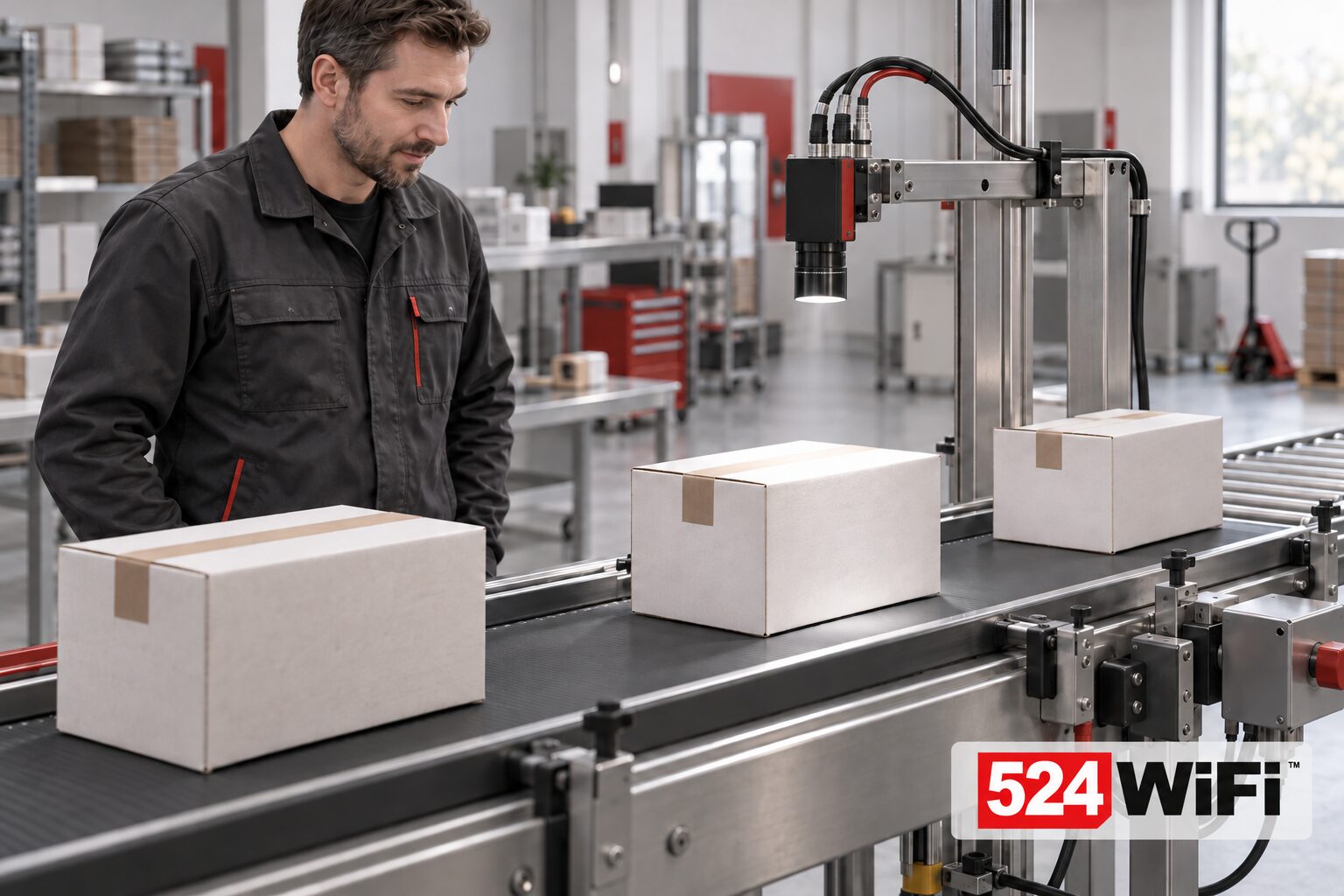
Describe the product, its movement and the result you need. This gives the technical review a concrete inspection task to work with.
AI-generated illustrative scenario · animation highlights the example task.Choose the application area and state the function you have already defined. Explain what enters the system, what processing is required, and what exact result reaches a person, machine or software application. Include the event that triggers the task and how frequently it occurs.
Example brief: “At the packing conveyor, count each closed box crossing the inspection zone. Send the running count to the existing PLC and show an operator alert when a box is missing from an expected position.” This describes a function that can be assessed against the site and equipment information supplied later.
For inputs, identify the camera stream, sensor signal, machine status or API message. Add the expected rate or volume. For outputs, name the recipient, message or action. For acceptance, describe a repeatable test with the relevant sample conditions and a result that the project owner can check.
Illustrative acceptance requirement: “During a 30-minute test at 20 boxes per minute, compare the recorded total with a manually verified reference. Record every mismatch and verify that the operator receives the agreed missing-box alert.” These figures are example requirements, not measured product performance. Set your own thresholds for accuracy, delay, false alarms and permitted missed events where relevant.
Also select your starting stage. A defined first project, an existing prototype and a planned series deployment each provide a different starting point for engineering assessment. The form asks you to confirm that the required function and acceptance test are already defined.
2. Describe the equipment and installation
Tomorrow Systems®AI Automation · 524WiFi™
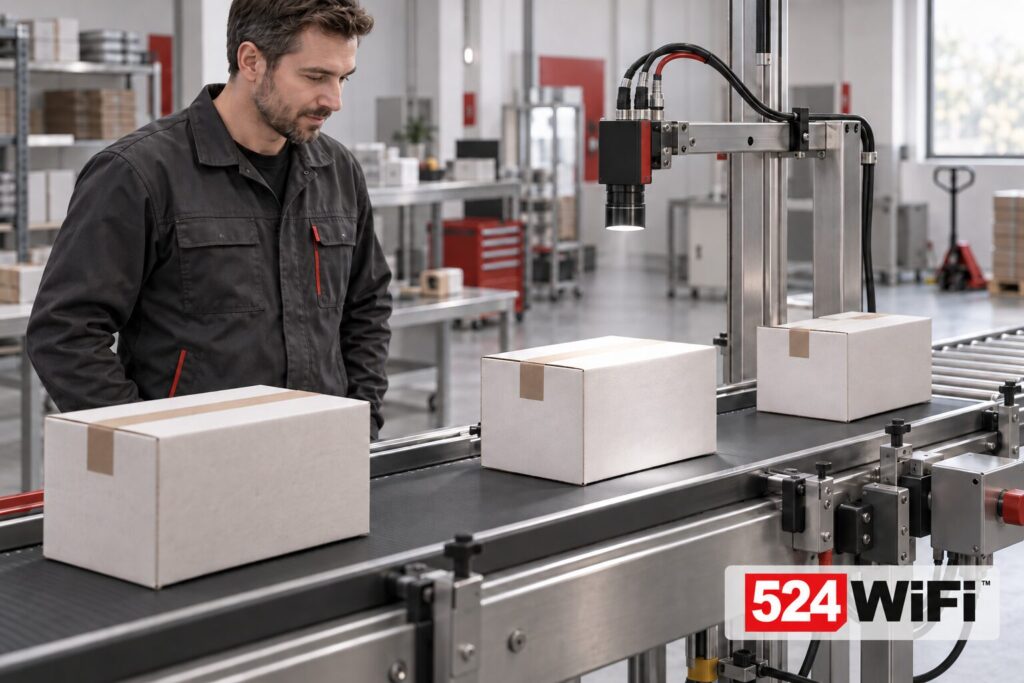
Equipment models, connection points and site conditions help reveal integration work early, so the proposed scope can reflect your installation.
AI-generated illustrative scenario · animation highlights the example task.Explain how the task is performed today and list the equipment and software that the solution will connect to. Give manufacturer and model references where available, plus operating system, application version and available technical documentation. Describe the location and relevant environmental conditions such as temperature, dust, vibration, enclosure requirements and available power.
List the actual interfaces and protocols required by the receiving system. For example, identify the Ethernet connection and the specific PLC protocol or API, including the values to read or write. Describe the required network coverage, access restrictions and integration contact. You can define functional connection requirements while leaving detailed component selection to the technical assessment.
For machine vision and quality inspection
The conditional camera field asks for the inspection context. Describe the object, defect or feature, size, position, viewing distance, movement speed and lighting. State whether cameras and lenses already exist and whether representative sample images are available. Explain how normal variation differs from a reject condition. Keep a short reference in the form; technical file exchange and any NDA can be arranged separately.
For moving robots and wireless systems
Describe the route or working area, obstacles, indoor or outdoor operation, coverage expectations and behaviour at a connection loss. Include the signals carried over the network and any latency or handover requirement. This gives the assessment an operating context for connectivity and edge computing.
3. Choose the delivery scope and application responsibility

Tomorrow Systems®AI Automation · 524WiFi™
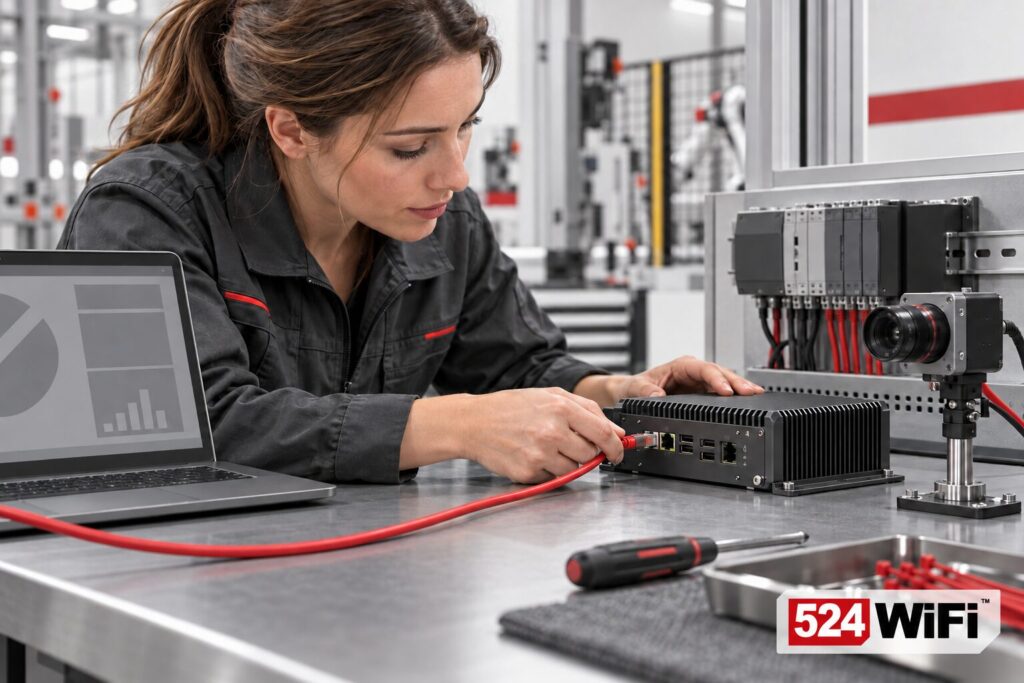
Choose the initial pilot, hardware bundle or integration you want assessed. A defined first step gives both sides a useful basis for discussing effort and delivery.
AI-generated illustrative scenario · animation highlights the example task.The form offers hardware supply, a validated hardware and connectivity bundle, a proof of concept or pilot, hardware and application integration, or a repeatable OEM product or series. Select the deliverable that you want assessed and explain its boundaries in your task description.
Specify who provides the application: your existing team, your development team, an integration partner, or requested development of the application defined in the brief. This separates hardware selection from application work and makes dependencies visible. Name any existing application or partner where appropriate.
Select the initial quantity, indicative project budget and intended start window. The budget ranges in the form cover planning for hardware and engineering; they help align the proposed first step with your resources. Include any deadline that depends on a production shutdown, customer demonstration or external integration. Price, scope and schedule are agreed individually after assessment.
4. Define operating behaviour, data and site requirements
Tomorrow Systems®AI Automation · 524WiFi™
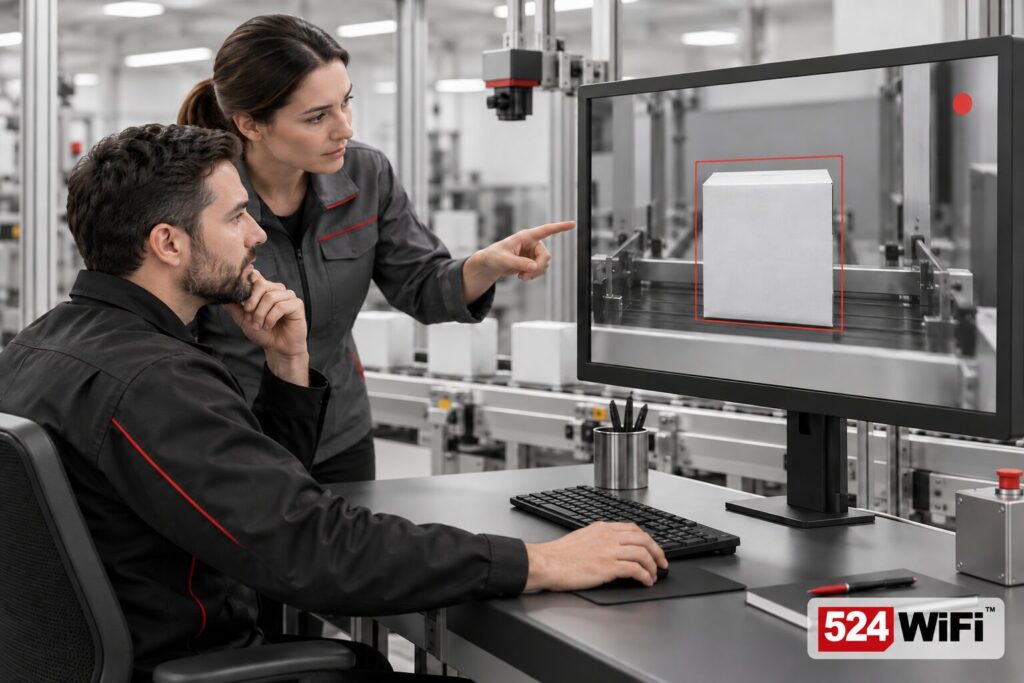
Define who reviews an uncertain result and what response is acceptable. The review can then account for the people, data and process around the equipment.
AI-generated illustrative scenario · animation highlights the example task.Explain what the system should do when data is missing, a result is wrong or a connection is lost. State whether it should request operator review, record a fault, retain an approved state or request a controlled process response. Identify who approves that behaviour and who is responsible for the surrounding machine or process.
Choose the consequence category that matches your application, from correcting information through operator review to production or safety impact. Where machine movement or people’s safety can be affected, describe the relevant safety responsibilities and validation requirements so the project can be scoped appropriately.
Select the data category and deployment country or region. Explain whether images can include people, whether personal or sensitive information is involved, where data should be stored, and who may access it. Add applicable site rules, required compliance documents, remote-access conditions and support expectations. State a required certification or standard precisely if your organisation has specified one; the form does not establish certification or regulatory approval.
5. Review the brief and submit a complete request

Tomorrow Systems®AI Automation · 524WiFi™
Bring the required function, acceptance test and responsibilities together. Check your answers and keep a downloaded copy before submitting your request.
AI-generated illustrative scenario · animation highlights the example task.Provide your business name, contact person and response email. Phone and additional notes are optional. Use “Review all my answers” to check that the function, inputs, outputs, acceptance test and operating conditions tell the same story. The acknowledgement confirms that you are submitting a defined function and acceptance criteria for technical feasibility review.
After a successful submission, keep the displayed reference number with your project records. It identifies the brief for the next technical review.
The assessment can lead to a hardware selection, evaluation kit, validated connectivity bundle or a scoped pilot with application integration. NVIDIA Jetson is one platform option for local AI and machine vision; the stated requirements guide the eventual platform choice. Specific technical clarification questions can then build on the brief you have supplied.
Ready to describe your project? Bring your defined task, equipment information and measurable acceptance criteria into the form.
Submit your AI automation project →
Prepared by Tomorrow Systems® for 524WiFi™. Source: the published five-step AI automation project request form. Scenes are AI-generated illustrations of example situations. Example figures describe requirements, rather than measured product performance.
Plan your project with Tomo AI Automation
Bring your application, enclosure, interfaces, power requirements, software environment and expected quantity into one project brief. Tomorrow Systems® and 524WiFi™ can review the engineering scope with you.