


The rapid rise of AIoT (Artificial Intelligence of Things) and robotics is transforming industries, from smart manufacturing and autonomous logistics to healthcare and consumer robotics. As robots become more intelligent and interconnected, the need for high-speed, low-latency, and reliable wireless communication is greater than ever. WiFi 6 and WiFi 7 are emerging as key enablers of seamless connectivity in the AIoT-driven robotics revolution.

Challenges in Wireless Communication for AIoT and Robotics
AI-powered robots rely heavily on real-time data exchange, cloud processing, and collaborative operations. However, traditional wireless networks face several challenges in meeting these demands:
- High Latency: Robotics applications, such as autonomous mobile robots (AMRs) and industrial automation, require ultra-low latency to ensure precise control and real-time decision-making.
- Interference & Congestion: Dense industrial environments often experience significant wireless interference, affecting communication reliability.
- Bandwidth Limitations: High-resolution sensors, AI-driven vision systems, and cloud-based data processing generate massive data streams that require high-throughput connectivity.
- Seamless Roaming: Robots moving within factories, warehouses, or hospitals need smooth network transitions without disruptions.
How WiFi 6 and WiFi 7 Solve These Challenges
WiFi 6 and WiFi 7 introduce groundbreaking advancements that make them ideal for AIoT and robotic applications:
1. Ultra-Low Latency for Real-Time Control
- WiFi 6: Features OFDMA (Orthogonal Frequency Division Multiple Access) and MU-MIMO, allowing multiple devices to communicate simultaneously, reducing latency.
- WiFi 7: Introduces Multi-Link Operation (MLO), enabling robots to use multiple frequency bands simultaneously, further reducing latency and ensuring stable connectivity.
2. Enhanced Interference Resistance in Industrial Environments
- WiFi 6: Uses BSS (Basic Service Set) Coloring to minimize co-channel interference, improving efficiency in dense environments.
- WiFi 7: Supports Adaptive Preamble Puncturing, allowing devices to avoid interference dynamically and maintain high-speed connections.
3. High Bandwidth for AI-Driven Applications
- WiFi 6: Expands channel width up to 160 MHz, supporting high-throughput applications like AI-powered vision systems.
- WiFi 7: Doubles the bandwidth with 320 MHz channels, significantly boosting data rates for real-time AI processing and high-resolution sensor data transmission.
4. Seamless Roaming for Mobile Robots
- WiFi 6 & 7: Both support enhanced roaming protocols, ensuring robots moving within large-scale environments (factories, warehouses, hospitals) maintain uninterrupted connectivity.

524WiFi™ Pulse Platforms for Robotics & AIoT
Tomo AI Automation by Tomorrow Systems® and 524WiFi™ combines application requirements, wireless hardware and integration planning. The Pulse range includes these distinct platform options:
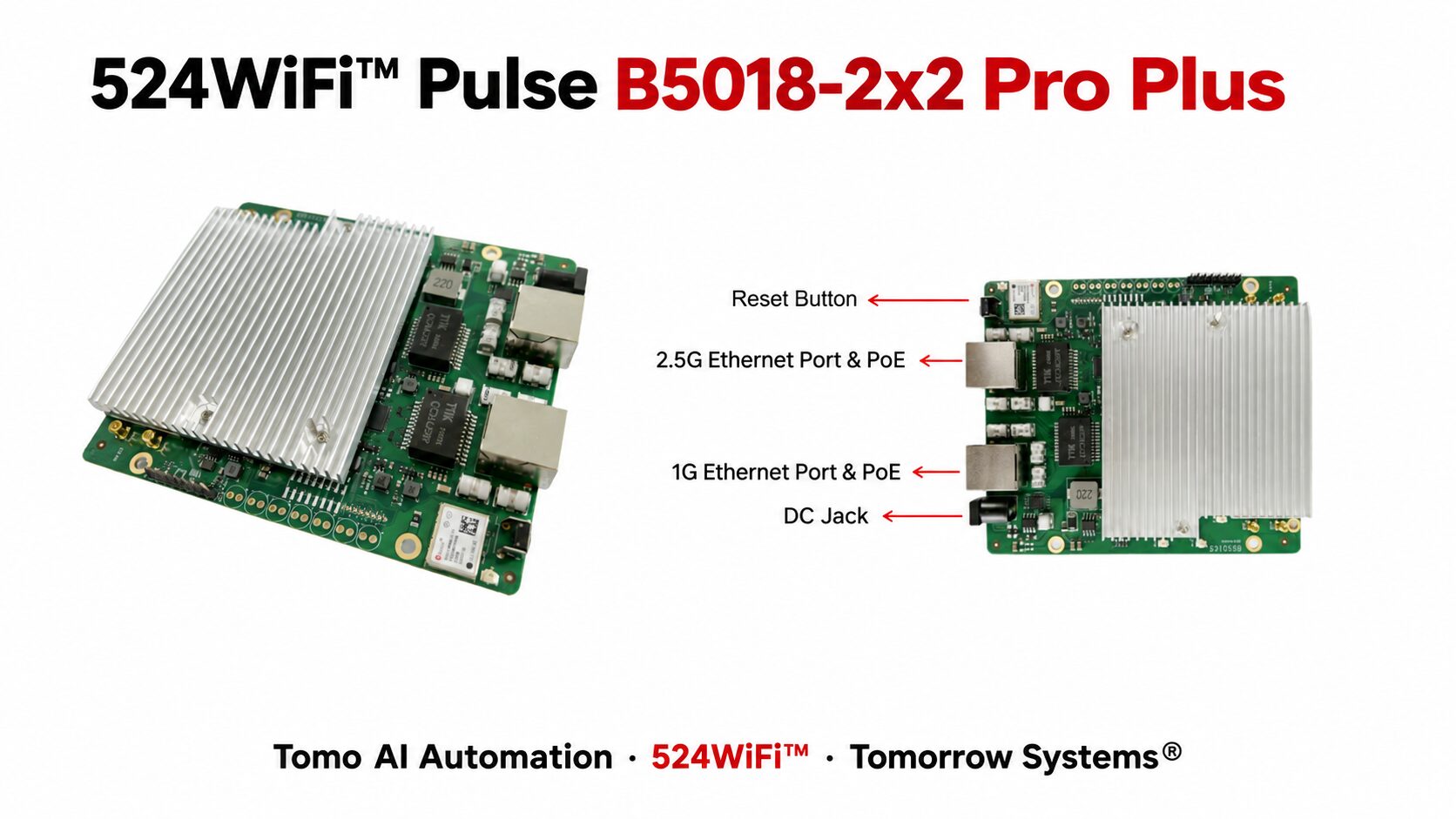
- 524WiFi™ Pulse B5018-2×2 Pro Plus (IPQ5018) – A robust router board featuring Qualcomm IPQ5018, optimized for low-latency and high-speed industrial connectivity.
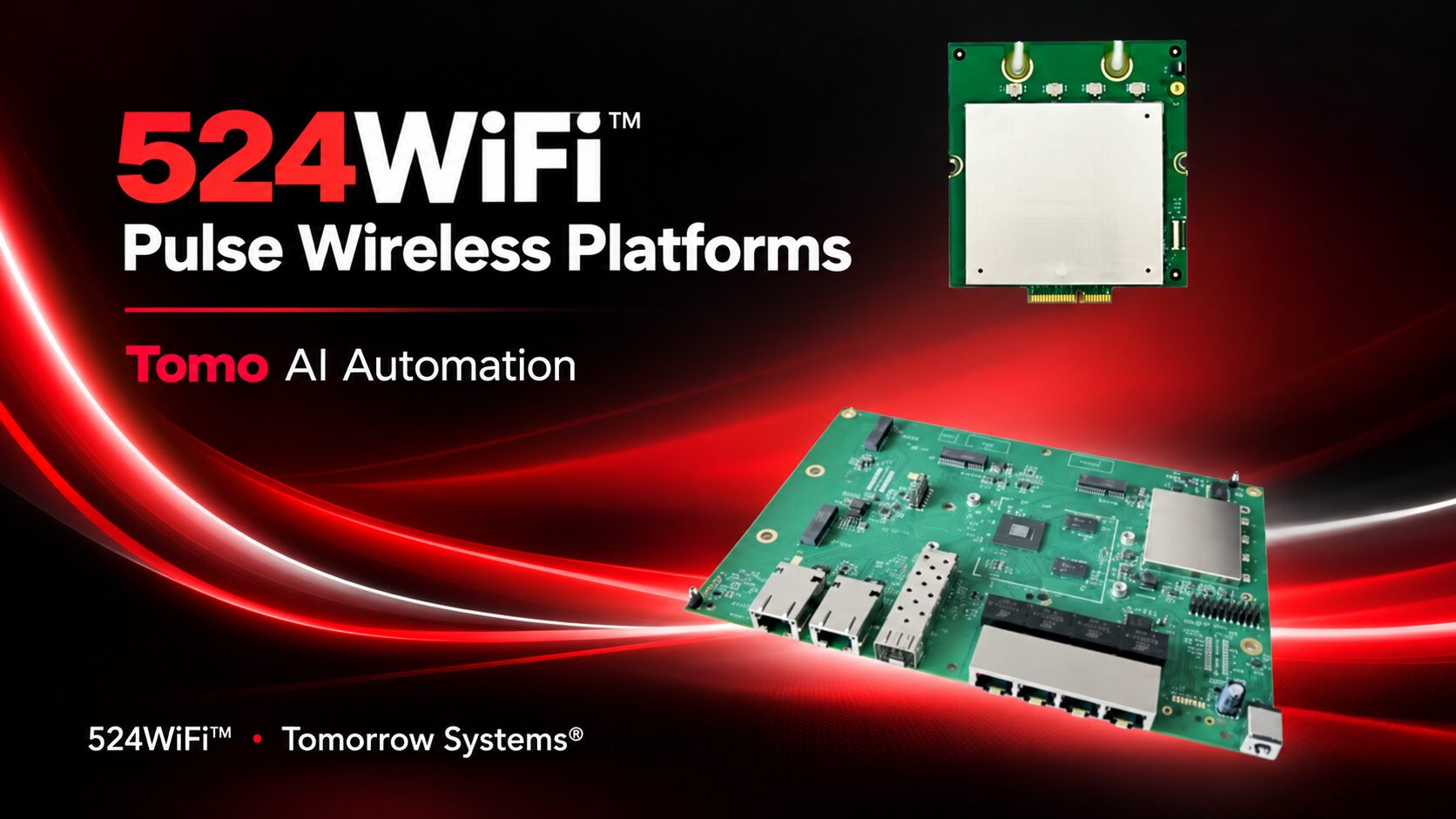
- 524WiFi™ Pulse B9574-4M2 Pro Plus (IPQ9574) – A next-gen WiFi 7 router board powered by IPQ9574, with four M.2 E-Key slots for project-specific radio selection.
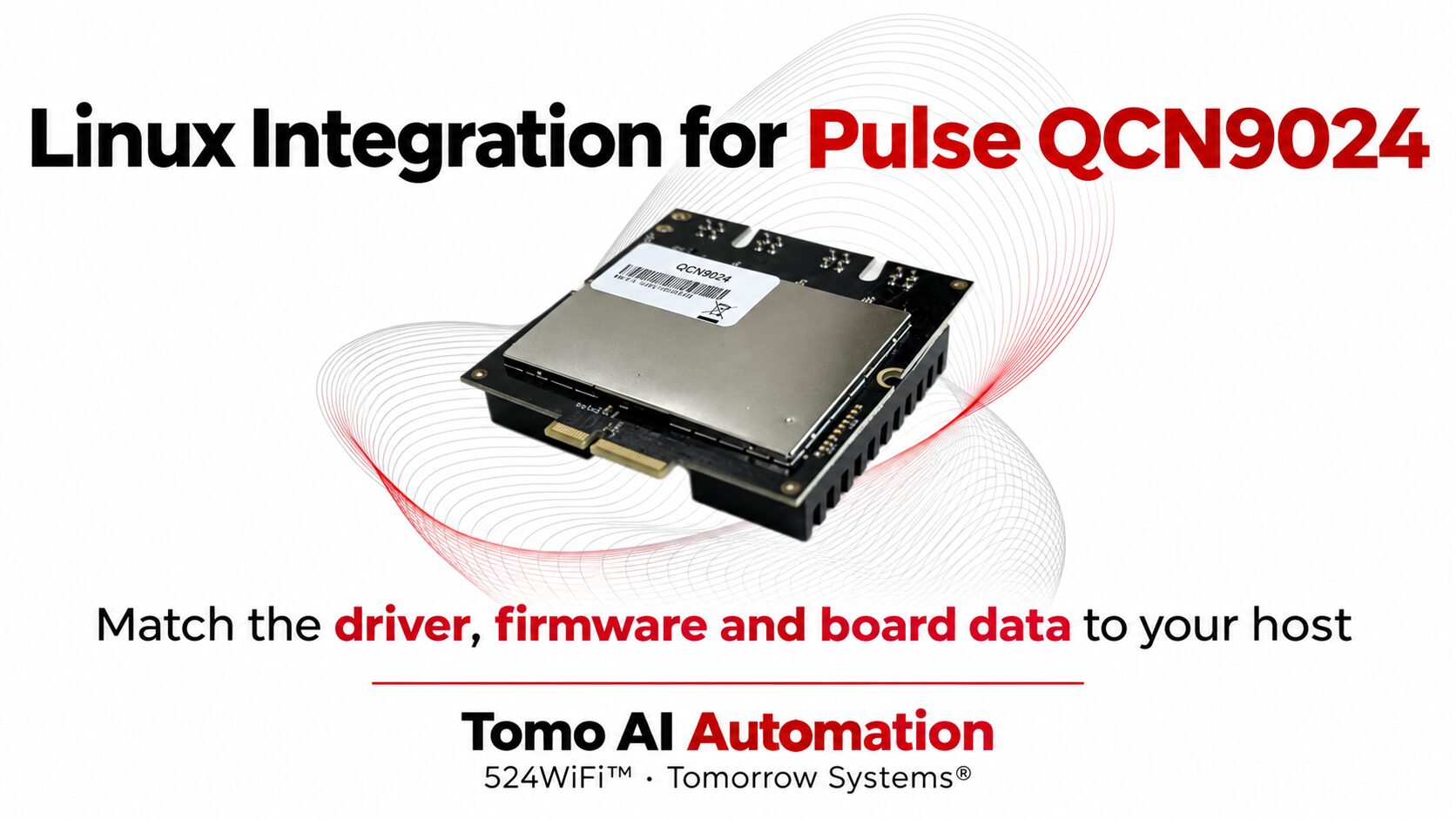
- 524WiFi™ Pulse QCN9074 / QCN9024 Radio Families – Select the exact radio model, band, host interface and matching software for the robotic application.
Conclusion: WiFi 6 & 7—The Future of AIoT and Robotics Connectivity
As AIoT and robotics continue to evolve, reliable and high-performance wireless networks will be the backbone of their success. WiFi 6 and WiFi 7 provide the speed, low latency, and seamless connectivity required for next-generation robotic applications. By integrating cutting-edge WiFi solutions, businesses can unlock the full potential of AI-powered automation and create truly intelligent, interconnected environments.
524WiFi™ Pulse Options for Your Project
These are separate own-brand product variants. Select the model and configuration against your host, software, antenna system and operating requirements.
- 524WiFi™ Pulse B5018-2×2 Pro Plus — Qualcomm IPQ5018 Wi-Fi 6E Tri-Band 2×2 Router Board with 2.5GbE and Gigabit PoE
- 524WiFi™ Pulse B9574-4M2 Pro Plus — Qualcomm IPQ9574 Alder Wi-Fi 7 Development Router Board with Four M.2 E-Key Slots and Dual 10GbE
- 524WiFi™ Pulse P9074-4×4-5G-M2E Pro Plus — Qualcomm QCN9074 Wi-Fi 6 4×4 5 GHz M.2 E-Key Radio Module
- 524WiFi™ Pulse P9024-4×4-TB-M2E Pro Plus — Qualcomm QCN9024 Wi-Fi 6E 4×4 Tri-Band-Capable M.2 E-Key Radio Module, 2.4/5/6 GHz
Plan your project with Tomo AI Automation
Bring your application, enclosure, interfaces, power requirements, software environment and expected quantity into one project brief. Tomorrow Systems® and 524WiFi™ can review the engineering scope with you.