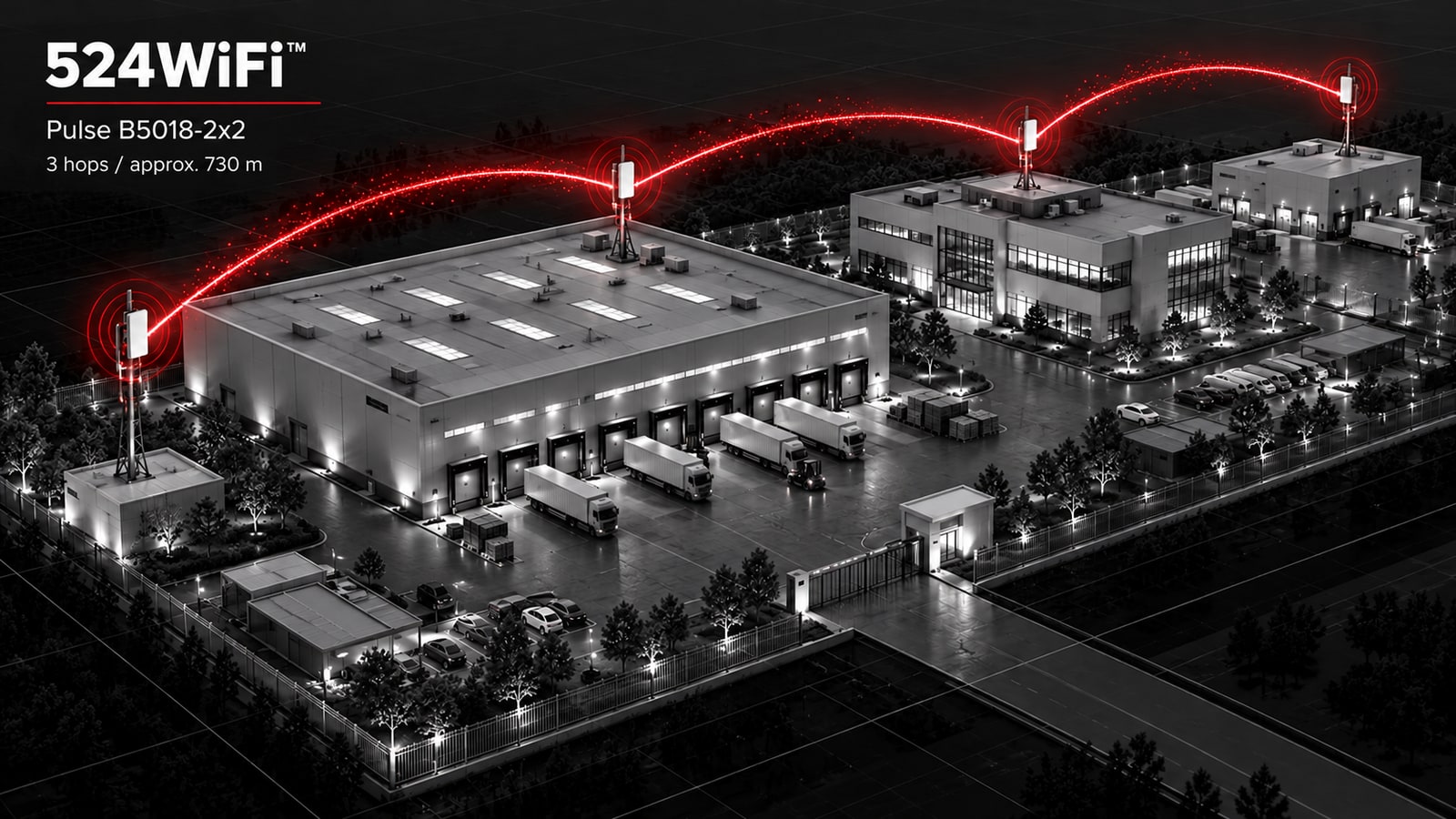
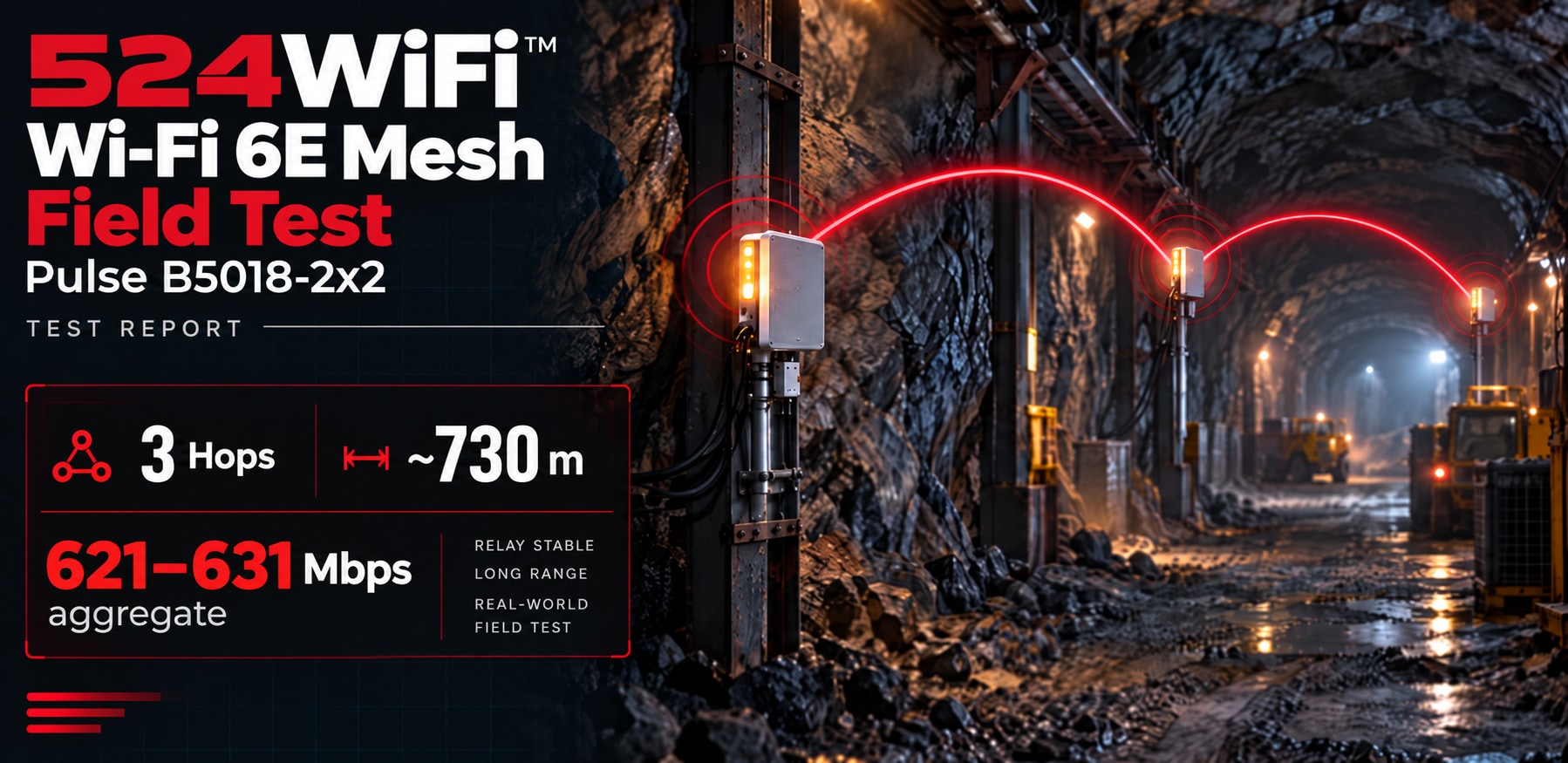
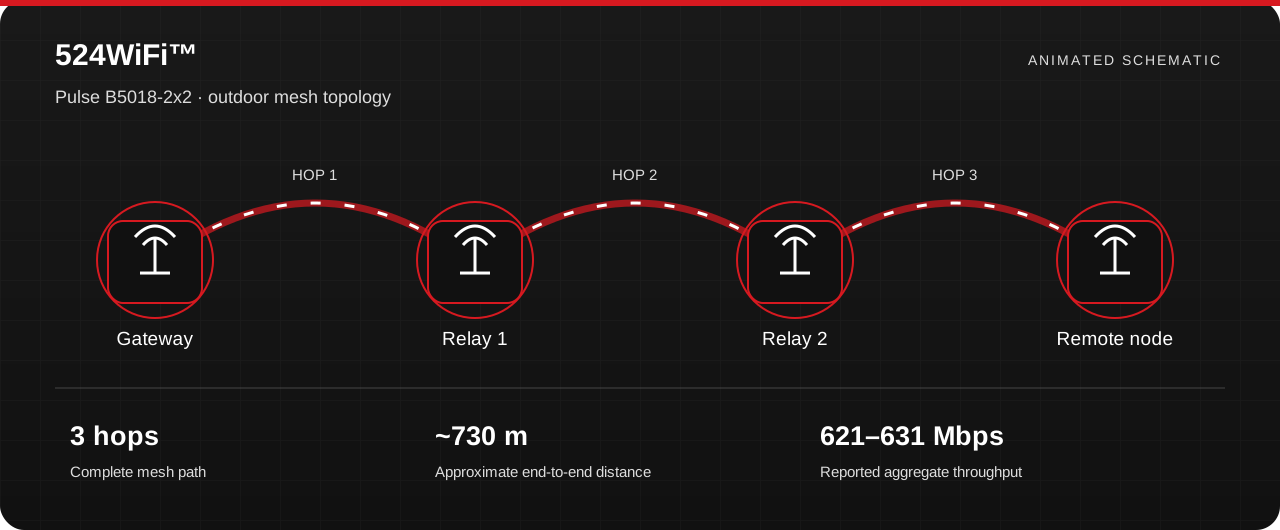
The 524WiFi™ Pulse B5018-2×2 platform brings tri-band connectivity to outdoor mesh designs. This field-test report follows three hops over approximately 730 meters.
The setup
- Hardware: 524WiFi™ Pulse B5018-2×2 board
- Topology: three-hop mesh, outdoors
- Distance: about 730 meters end to end
- Traffic: iperf3, multiple concurrent streams
The result
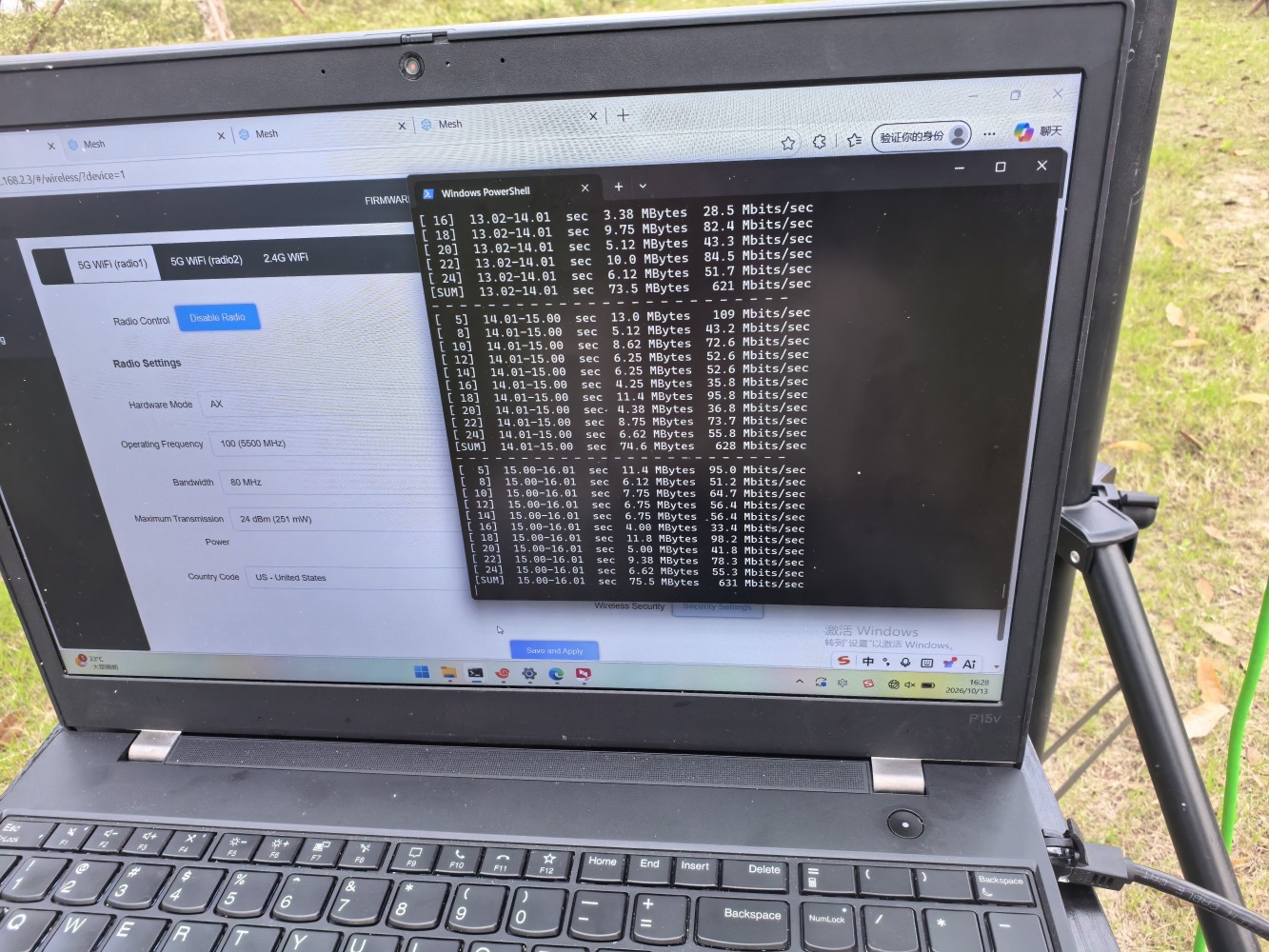
Aggregate throughput: 621-631 Mbps.
Understanding the aggregate result
It is the combined throughput of multiple parallel streams across the whole mesh path.
Use the aggregate result to assess the capacity of the complete mesh path under concurrent traffic.
The reported 621–631 Mbps combines multiple parallel streams across the three-hop path. Plan individual client throughput around its radio capabilities, placement and the traffic sharing that path.
Why we care about multi-hop
Anyone can make one hop look good. The trouble starts at hop two and hop three, where throughput often falls off and the far end of the network becomes the slow end.
This test was about that far end. Three hops and ~730 meters later, the path still carried over 600 Mbps in aggregate. Mesh doesn’t have to mean “slow at the edge.”
Where this matters
- Campuses and industrial sites where running fiber to every pole isn’t realistic
- Temporary or fast-deploy outdoor coverage
- Warehouses, yards and ports where coverage has to follow the operation
- Anywhere a wired backhaul is too slow or too expensive to build
What’s next
This is the first data point, not the last. We’ll keep testing other topologies and share results here under 524WiFi™ News, including the numbers that aren’t flattering.
Building an outdoor mesh, or stuck with a multi-hop design that falls apart past hop two? Send us your topology and your target throughput. We’ll bring the test results.