
DR5332S vs DR5424: What’s the Difference and Which One Fits Your Project?
As Wi-Fi 7 enters the spotlight of next-gen wireless connectivity, developers and OEMs are seeking powerful, cost-effective router boards to power AIoT, edge computing, mesh networking, and enterprise-grade gateways. At Wallys, we provide two flagship tri-band Wi-Fi 7 router boards: the DR5332S and the DR5424. While they share a common mission — delivering ultra-reliable, high-throughput connectivity — they are built on different SoC platforms and tailored for slightly different project needs.
Let’s break down the differences and help you decide which one is the right fit for your application.

1. Chipset Comparison: IPQ5322 vs IPQ5424
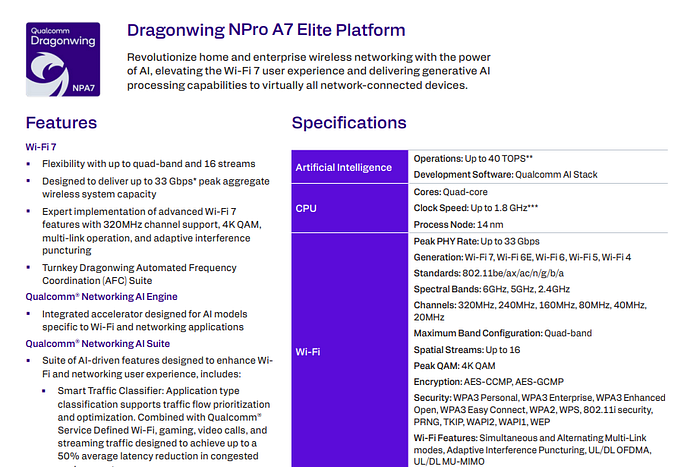
CPU Architecture: A53 vs A55
- The IPQ5424 uses a Cortex-A55 @1.8GHz, which is newer, more efficient, and more powerful than the Cortex-A53 @1.5GHz in IPQ5332.
- A55 supports out-of-order execution, making it significantly better for multitasking and edge workloads.
IPQ5424 offers superior computing performance, making it ideal for intensive processing and multitasking at the edge.
AI Acceleration
- IPQ5424 benefits from its more capable CPU architecture and overall system bandwidth for smoother AI task handling.
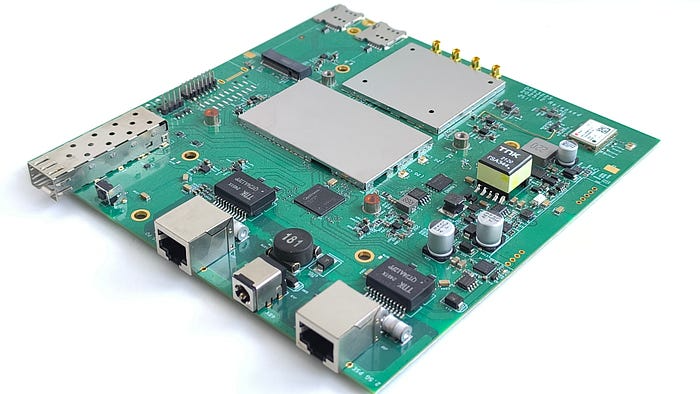
If you’re considering router boards such as Wallys DR5332S (IPQ5332) or DR5424 (IPQ5424):
- 🧩 DR5332S + IPQ5332: Great for budget-sensitive, compact, quick-to-market solutions
- 🚀 DR5424 + IPQ5424: Built for edge intelligence, multi-client environments, and future-proof mesh deployments
🔍 DR5424 offers higher performance and better power efficiency at the same time the costs will be higher than DR5322S.
2. Wireless Capabilities (Tri-Band Wi-Fi 7)
Both boards support tri-band (2.4GHz + 5GHz + 6GHz) Wi-Fi 7, including:
- Multi-Link Operation (MLO) for increased stability
- 320MHz bandwidth support on 6GHz band
- 4096-QAM for enhanced throughput
- Onboard radio modules for space-saving and simplified integration
However, DR5424 has more headroom for advanced use cases involving concurrent client management, AI inference at the edge, or industrial-grade networking.
3. Use Case Suitability
💡 Recommendation:
- Choose DR5332S if your project prioritizes cost, compactness, and moderate throughput.
- Choose DR5424 if you need higher computing power, better future-proofing, and support for intensive applications like edge inference, video analytics, or high-density mesh.
4. Hardware Interface & Customization
Both boards offer:
- 2.5G Ethernet
- Multiple UART, I2C, SPI
- M.2 / USB3.0 / GPIO
- Support for OpenWRT SDK
- Optional expansion for LTE/5G/Storage modules
Customization and ODM services are available for both platforms.
5. Pricing & Availability
Both models are available for sampling, with volume support for OEM/ODM integration. DR5332S is generally more affordable and available sooner for entry-level or mid-range products, while DR5424 is geared for premium products with long-term lifecycle planning.
📬 For pricing, datasheets, or demo kits, contact us at: 📧 info@524wifi dot net or com
🧠 Final Thoughts
Whether you’re building a smart city gateway, an industrial mesh router, or a next-gen enterprise AP, 524WiFi and Wallys’ Wi-Fi 7 router boards offer flexible, powerful foundations.
- DR5332S → Cost-effective, compact, fast-to-market
- DR5424 → High-performance, future-ready, edge-AI capable
Need help choosing or customizing for your unique application?