

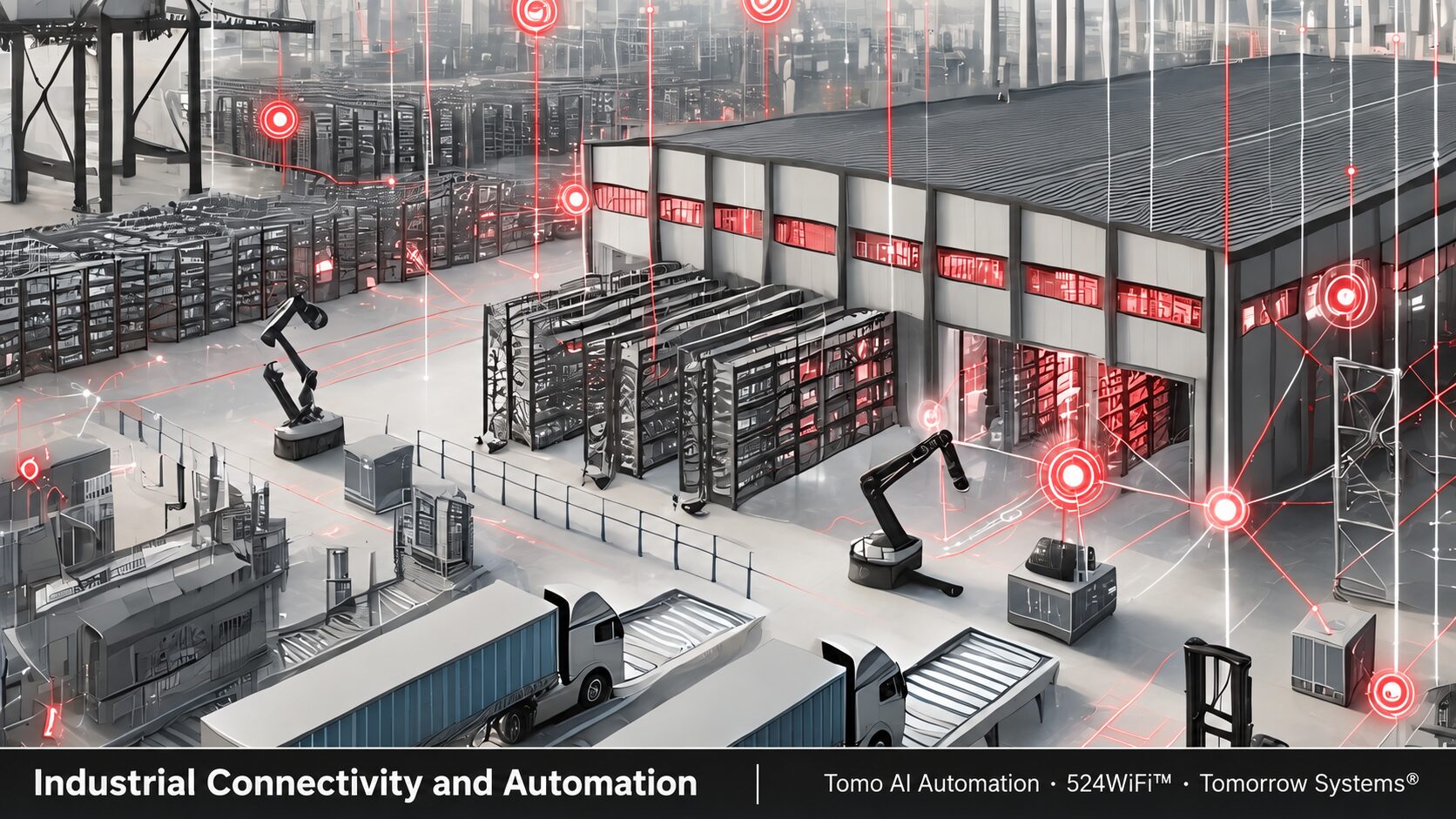
As the logistics industry continues to evolve, there is a growing need for efficient, stable, and flexible networking solutions. Virtual Local Area Networks (VLANs) provide a powerful tool for managing network traffic, optimizing resources, and improving both efficiency and security within logistics operations. Below are several key VLAN application scenarios within the logistics industry.
1. Smart Warehouse & Automation Systems
Smart warehouses, equipped with automated systems like robotic arms, conveyor belts, sensors, and RFID systems, rely on a robust network for seamless data exchange. VLANs can improve network performance by segmenting traffic based on device type.
- VLAN Segmentation:
- VLAN 10 (Automated Guided Vehicle Network): Ensures low-latency, high-priority communication for automated guided vehicles (AGVs).
- VLAN 20 (RFID & Scanners): Provides dedicated bandwidth for RFID systems and scanners, ensuring real-time tracking.
- VLAN 30 (Surveillance Network): Segregates video surveillance data from other traffic to prevent congestion.
VLAN helps ensure that critical devices such as AGVs and RFID scanners can communicate without interference, enhancing warehouse efficiency.
2. Sorting Systems in Distribution Centers
Sorting systems in distribution centers often involve complex automation machinery that requires real-time communication to optimize the sorting of parcels. VLANs help ensure smooth operation by prioritizing the traffic of sorting equipment.
- VLAN Segmentation:
- VLAN 100 (Sorting Equipment Network): Dedicated VLAN for the machinery that handles sorting, minimizing delays caused by high data traffic.
- VLAN 200 (Office Management Network): Separates office traffic from operational machinery, avoiding disruptions to real-time sorting tasks.
- VLAN 300 (Customer Service Interface): Isolates customer-facing systems, ensuring customer data remains secure while other operational processes run smoothly.
VLANs optimize data flow within the sorting systems and prevent network congestion, increasing overall throughput.
3. IoT Devices and Wireless Networks
In the logistics industry, IoT devices such as temperature sensors, GPS trackers, and smart locks play an integral role in monitoring and managing goods during transit and storage. VLANs are essential for managing and securing wireless network traffic.
- VLAN Segmentation:
- VLAN 50 (IoT Device Network): Creates a dedicated VLAN for all IoT devices, ensuring reliable data transfer while isolating traffic from other networks.
- VLAN 60 (Customer Wi-Fi Network): Segregates visitor and employee Wi-Fi access from critical business systems to ensure security.
Using VLANs ensures that sensitive logistics data from IoT devices is protected and prioritized, enabling real-time monitoring and secure communications.

4. Security and Data Isolation
The logistics industry handles sensitive customer data, inventory management information, and delivery details. VLANs are used to isolate these critical data streams from other less sensitive traffic, adding an additional layer of security.
- VLAN Segmentation:
- VLAN 10 (Management and Control Network): Isolates administrative systems and critical control networks to prevent unauthorized access.
- VLAN 20 (Customer Data Network): Protects customer and order information by creating a separate VLAN for processing sensitive data.
- VLAN 30 (Surveillance Network): Ensures video feeds from surveillance cameras are kept within a dedicated network, preventing bandwidth overload.
VLANs improve data security by isolating sensitive systems from regular traffic, reducing the risk of data breaches or unauthorized access.
5. Integration with 5G Networks
As logistics operations increasingly incorporate 5G technology, VLANs help ensure that high-priority devices, such as autonomous delivery vehicles and drones, have dedicated network resources for efficient communication.
- VLAN Segmentation:
- VLAN 70 (Autonomous Vehicle Network): Dedicated VLAN for vehicles and drones that require low-latency and high-bandwidth communication.
- VLAN 80 (Public-facing Network): Provides separate VLANs for external systems, ensuring no interference with mission-critical logistics systems.
Integrating VLANs with 5G allows logistics companies to optimize network performance for high-demand devices, ensuring smooth and efficient operations.
Earlier Platform Reference and Current Pulse Project Options
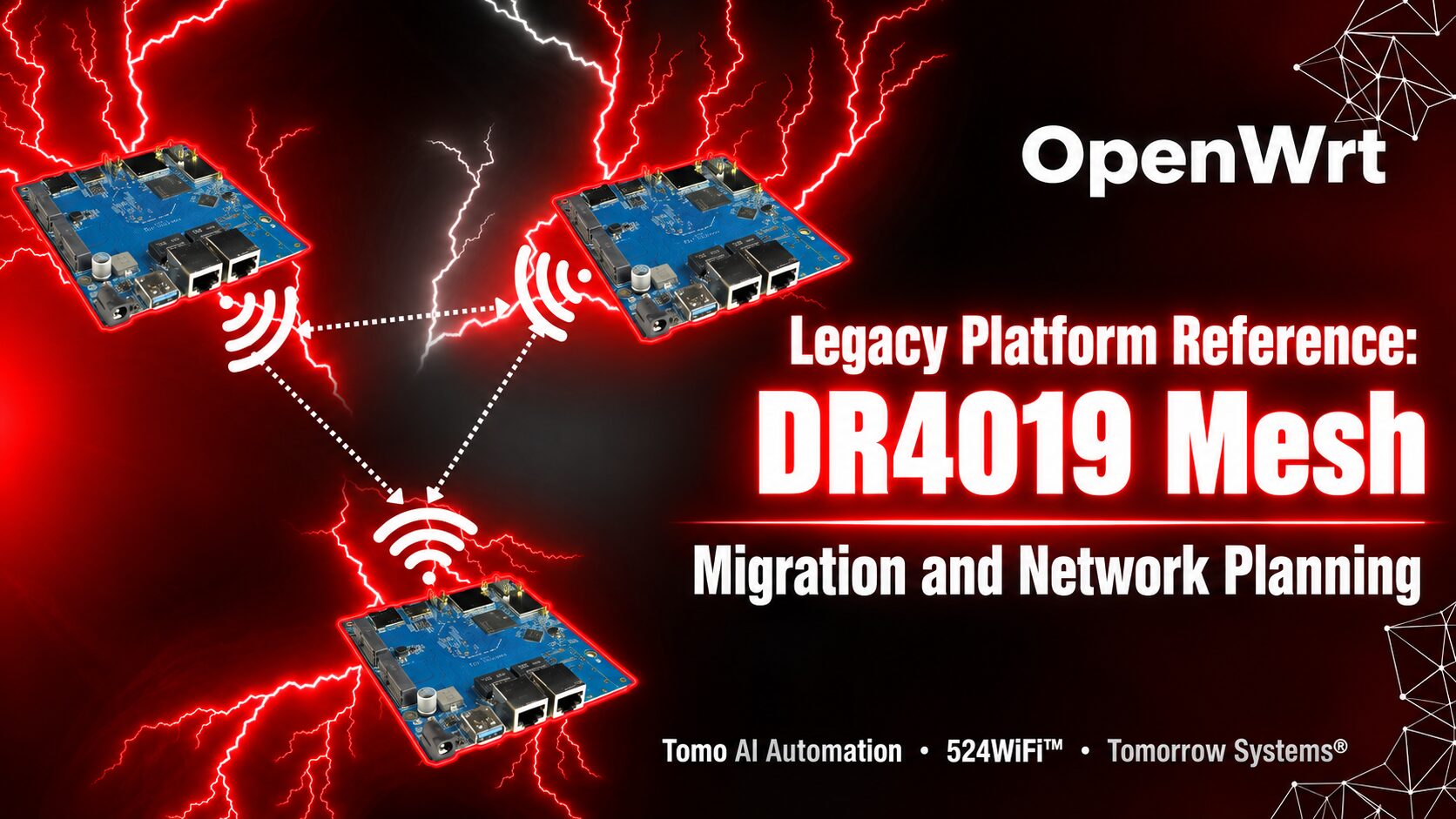
The original DR4019-family board images below are retained as references for an existing installation. Identify the exact chipset, hardware revision, port layout and software image before planning migration; IPQ4019 and IPQ4029 are separate platform identifiers.
For a new Tomo AI Automation installation, assess the current 524WiFi™ Pulse board or complete access point against the required VLANs, wired interfaces and wireless topology. Define VLAN tagging, routing, firewall policy, management access and traffic prioritisation in the software scope, then validate the end-to-end configuration.

Conclusion
VLAN technology plays a crucial role in optimizing network performance, improving security, and supporting the growth of smart logistics systems. By segmenting traffic based on device type and use case, logistics companies can improve data flow, reduce congestion, and ensure secure communication across their networks. As the logistics industry continues to evolve with IoT, automation, and 5G, VLANs will remain a key component in driving efficiency, security, and innovation.
524WiFi™ Pulse Options for Your Project
These are separate own-brand product variants. Select the model and configuration against your host, software, antenna system and operating requirements.
Plan your project with Tomo AI Automation
Bring your application, enclosure, interfaces, power requirements, software environment and expected quantity into one project brief. Tomorrow Systems® and 524WiFi™ can review the engineering scope with you.