Posted on

DR9074 Triband : QCN9074 WiFi 6E Network Card – 23dBm, 4949 Mbps, Industrial-Grade

As wireless technology continues to evolve, the demand for high-performance solutions that can keep pace with increasing connectivity needs has never been greater. At the forefront of this revolution is the Qualcomm QCN9074 chipset, a powerful and versatile component designed to meet the rigorous demands of modern wireless networks. Here’s why the QCN9074 is considered the future of high-performance wireless solutions.

1. Cutting-Edge Wi-Fi 6 Technology

The QCN9074 chipset is built to fully harness the capabilities of Wi-Fi 6 (802.11ax), the latest and most advanced Wi-Fi standard. Wi-Fi 6 brings a host of improvements over previous generations, including faster speeds, greater capacity, and enhanced efficiency. With the QCN9074, you can achieve data rates that are up to four times faster than Wi-Fi 5, making it ideal for bandwidth-intensive applications such as video streaming, online gaming, and virtual reality.

2. Superior Multi-User Performance

One of the standout features of the QCN9074 is its support for OFDMA (Orthogonal Frequency Division Multiple Access) and MU-MIMO (Multi-User, Multiple Input, Multiple Output). These technologies allow the QCN9074 to handle multiple devices simultaneously without a drop in performance. This is particularly beneficial in environments with high device density, such as smart homes, offices, and public spaces, where multiple users need to access the network at the same time.

3. Exceptional Signal Quality and Coverage

The QCN9074 chipset is engineered to deliver superior signal quality and coverage. It supports 4×4 MIMO, which enhances the signal strength and extends the coverage area. Whether you’re deploying a network in a large office, a multi-story building, or an outdoor environment, the QCN9074 ensures that every corner is covered, providing a reliable connection even in challenging conditions.

4. Energy Efficiency

In today’s world, energy efficiency is a critical consideration for any wireless solution. The QCN9074 is designed with power-saving features that reduce energy consumption without compromising performance. This makes it an excellent choice for IoT devices, smart home applications, and other scenarios where power efficiency is crucial.

5. Versatile Frequency Support

The QCN9074 supports a wide range of frequency bands, including 2.4 GHz, 5 GHz, and 6 GHz. This versatility allows it to operate in various environments, from congested urban areas to remote industrial sites. The ability to switch between different frequency bands also ensures that your network can adapt to changing conditions and maintain optimal performance at all times.

6. Robust Security Features

With increasing concerns about cybersecurity, the QCN9074 offers advanced security features to protect your wireless network. It supports the latest WPA3 security protocol, providing enhanced protection against unauthorized access and ensuring that your data remains secure. This is particularly important in enterprise and industrial environments where sensitive information is transmitted over the network.

QCN9074 6E CARD

DR9074-Triband Spes

Symbol: Parameter

Chipset: Qualcomm Atheros QCN9024

WLAN Host Interface: PCI Express 3.0 Interface

System Memory: 2Mbit serial I²C bus EEPROM

Standard Operating Voltage: 3.3V

Operating Systems: QSDK

Host Interface: M.2 E Key

Antenna Cable / Port: 4 x ufl Connectors, 4T4R

Frequency Range: 2.412GHz-2.472GHz & 5.18GHz-5.825GHz & 5.925GHz-7.125GHz

Data Rates: Maximum 23dBm per chain, up to 4804Mbps

Channel Spectrum Widths: Supports 20/40/80/160MHz

Modulation Techniques: OFDMA: BPSK, QPSK, DBPSK, DQPSK, 16-QAM, 64-QAM, 256-QAM, 1024-QAM

Temperature Range: Operating: -20°C to 70°C, Storage: -40°C to 90°C

Humidity: Operating: 5% to 95% (non-condensing), Storage: Max. 90% (non-condensing)

Certification: TBD

Reference Design: PN02

Power Consumption: TBD

Dimensions (WxHxD): 57mm x 63mm x 6mm

Conclusion

The Qualcomm QCN9074 chipset is more than just a component; it’s a gateway to the future of wireless technology. With its advanced features, superior performance, and versatility, the QCN9074 is poised to lead the next generation of high-performance wireless solutions. Whether you’re building a smart home, deploying an enterprise network, or designing an industrial application, the QCN9074 offers the reliability and performance you need to stay ahead in a rapidly evolving digital world.

As the demand for faster, more reliable, and more secure wireless networks continues to grow, the QCN9074 stands out as a future-proof solution that can meet the challenges of tomorrow’s connectivity needs today.

If you’re looking for a QCN9074-based module, consider the 524WiFi DR9074 network card. The DR9074 is a high-performance network card designed by 524WiFi and Wallys, offering multiple configurations to meet the diverse needs of industrial projects.

Posted on

WiFi 7 Chips IPQ 5332 and 9574: In-Depth comparison

In-Depth Analysis of IPQ5332 and IPQ9574: Technical Specifications and Applications of WiFi 7 Chips

Introduction

The advent of WiFi 7 represents a significant leap forward in wireless communication technology. As leading WiFi 7 chip solutions, the IPQ5332 and IPQ9574 are at the forefront of this technological revolution. This article will provide an in-depth analysis of these two chips’ technical specifications and their advantages in real-world applications, helping you understand how they are driving the future of wireless networks.

Overview of IPQ5332 and IPQ9574

IPQ5332 and IPQ9574 are high-performance WiFi 7 chipsets designed to deliver exceptional speed, coverage, and connectivity stability. Each chip is optimized for different application scenarios and needs, making them crucial components for achieving next-generation wireless network performance.

Technical Specifications

1. IPQ5332

  • Frequency Bands: Supports 2.4GHz, 5GHz, and 6GHz bands to meet all WiFi 7 frequency requirements.
  • Channel Bandwidth: Supports up to 320MHz channel bandwidth for higher data transfer rates.
  • Multi-User MIMO (MU-MIMO): Features 8×8 MU-MIMO technology for efficient simultaneous data transfer with multiple devices.
  • OFDMA (Orthogonal Frequency Division Multiple Access): Enhances spectral efficiency, reduces latency, and improves performance in multi-user environments.
  • TWT (Target Wake Time): Supports TWT technology to extend battery life, especially beneficial for IoT devices.
WIFI7 FEATURE:MLO

2. IPQ9574

  • Frequency Bands: Also supports 2.4GHz, 5GHz, and 6GHz bands for comprehensive coverage.
  • Channel Bandwidth: Provides up to 320MHz channel bandwidth for ultra-fast data transfer.
  • Multi-Link Operation (MLO): Utilizes MLO technology for simultaneous connections across multiple frequency bands, increasing bandwidth and stability.
  • Enhanced OFDMA: Improves the efficiency of OFDMA, optimizing network capacity and latency performance.
  • Low Latency Features: Designed for low-latency applications such as AR/VR and high-frequency trading systems.
DR9574 INDOOR AP-524WIFI7

Application Scenarios

1. Enterprise Network Solutions

The high-performance characteristics of IPQ5332 and IPQ9574 make them ideal for enterprise network environments. Enterprises require stable, high-speed wireless connections to support numerous concurrent devices and data-intensive applications. IPQ5332’s high bandwidth and MU-MIMO capabilities effectively handle high-density device environments, while IPQ9574’s MLO and low-latency features ensure exceptional performance for enterprise applications.

2. Smart Home

In smart home scenarios, IPQ5332 and IPQ9574 can support numerous smart devices simultaneously, ensuring reliable operation. IPQ5332’s TWT functionality is crucial for extending battery life of smart home devices, while IPQ9574’s high throughput and low latency features enhance user experience, allowing smart home devices to process data efficiently and respond promptly to user commands.

3. Internet of Things (IoT)

IoT devices require stable connectivity in diverse environments. IPQ5332’s efficient OFDMA technology and TWT features make it an ideal choice for IoT devices, effectively managing multiple device connections while extending battery life. IPQ9574 excels in applications requiring ultra-low latency, such as smart monitoring and real-time data collection.

4. High-Density Wireless Environments

In high-density environments such as large public venues, conference centers, or sports arenas, IPQ5332 and IPQ9574’s high bandwidth and multi-user support features address network congestion issues. IPQ5332’s MU-MIMO and IPQ9574’s MLO technology ensure that users experience stable, high-speed network performance even during peak times.

Conclusion

The IPQ5332 and IPQ9574 represent the cutting edge of WiFi 7 technology, offering superior speed, broader coverage, and reduced latency. Whether for enterprise networks, smart homes, IoT applications, or high-density environments, these chipsets provide outstanding performance.

Posted on

IPQ5332 vs. IPQ4019 : The Best WiFi for Oil and Gas Industries

In the oil and gas industry, selecting the right WiFi solution is crucial for ensuring operational stability and efficiency. Recently, the IPQ5332 and IPQ4019 chips have emerged as prominent choices. This article will compare these two chips to help you determine which WiFi solution best meets the needs of the oil and gas sector.

Performance Comparison

IPQ5332:

Core: The IPQ5332 is a high-performance quad-core processor from Qualcomm, featuring the latest WiFi 6E technology and supporting the 6GHz frequency band. It offers higher bandwidth and lower latency.

Data Transfer Speed: It supports data transfer speeds of up to 10 Gbps, suitable for applications requiring high-speed data transfer, such as real-time monitoring and large-scale data processing.

Applications: Ideal for scenarios demanding extreme stability and data transfer speed, such as real-time monitoring systems and intelligent sensor networks in the oil and gas industry.

IPQ4019:

Core: The IPQ4019 is a mid-to-high-end processor from Qualcomm, supporting WiFi 5 (802.11ac) technology with a quad-core processor.

Data Transfer Speed: It supports data transfer speeds of up to 1.7 Gbps, which is sufficient for most applications but lower compared to the IPQ5332.

Applications: Suitable for applications with less extreme data transfer requirements, such as general wireless communication and less data-intensive tasks.

Interference Resistance

IPQ5332: With support for WiFi 6E technology, the IPQ5332 offers better interference resistance in multi-user and high-density network environments. This is particularly important in the oil and gas industry, where there may be various electronic devices and signal interference sources.

IPQ4019: The IPQ4019 provides good interference resistance but is not as advanced as the IPQ5332. It performs well in environments with fewer interference sources.

Power Consumption and Heat Management

IPQ5332: While delivering high performance, the IPQ5332 may require more power and heat management. In the oil and gas industry, equipment needs to operate reliably in harsh environments, so effective heat dissipation solutions are necessary.

IPQ4019: The lower power consumption of the IPQ4019 means it has less stringent heat management requirements, making it suitable for applications where power consumption is a concern.

Cost-Effectiveness

IPQ5332: Higher performance comes with a higher cost. For applications needing extreme data transfer speeds and low latency, the IPQ5332 offers exceptional performance, though it may be more expensive.

IPQ4019: The IPQ4019 provides a more cost-effective option, making it suitable for scenarios with budget constraints while still requiring efficient wireless solutions.

Conclusion

When choosing a WiFi solution, the IPQ5332 and IPQ4019 each have their advantages. For applications in the oil and gas industry requiring high performance, high bandwidth, and strong interference resistance, the IPQ5332 is undoubtedly the better choice. It provides exceptional data transfer speeds and stability, making it suitable for complex environments. On the other hand, the IPQ4019 is a high-value option for scenarios with less extreme performance requirements or tighter budgets.

Posted on

WiFi 6 vs. WiFi 7: The Game Changers for Crowded Spaces

If you’ve ever been in a packed venue or a bustling office, you know how crucial it is to have a reliable WiFi connection. With more devices than ever connecting to the network, WiFi is under pressure. That’s where WiFi 6 and WiFi 7 come into play, offering some impressive upgrades for high-density environments. Here’s the lowdown:

🔹 WiFi 6 (802.11ax):
OFDMA: This tech slices up the channel into smaller chunks so multiple devices can communicate simultaneously. It means less congestion and faster speeds!
MU-MIMO: This lets multiple devices send and receive data at the same time, cutting down on wait times and improving performance.
TWT: Target Wake Time schedules when devices wake up, reducing network congestion and saving battery life.

🔹 WiFi 7 (802.11be):
Faster Speeds: With wider channels and more spatial streams, WiFi 7 delivers even higher speeds and better performance.
Enhanced OFDMA: It’s like WiFi 6’s OFDMA but turbocharged, optimizing how resources are used.
Better MU-MIMO: Handles even more users at once, making it ideal for ultra-crowded environments.
Lower Latency: Improvements here mean less lag, which is great for real-time applications like AR/VR.
Whether you’re thinking of upgrading or just curious about the latest in wireless tech, both WiFi 6 and WiFi 7 are worth your attention. WiFi 7 is set to lead the way with its higher speeds and lower latency, but WiFi 6 is still a fantastic option for current needs.

💡 Got questions about WiFi solutions or need advice? Feel free to reach out!


hashtag#WiFi6 hashtag#WiFi7 hashtag#TechUpgrades hashtag#NetworkSolutions hashtag#HighDensityWiFi hashtag#Innovation hashtag#WirelessTech

Posted on

Comparing IPQ5332 and IPQ4029 WiFi Solutions for Data Center Efficiency

Comparing IPQ5332 and IPQ4029 WiFi Solutions for Data Center Efficiency

In the modern digital age, data centers are the backbone of countless operations, requiring robust and efficient WiFi solutions to ensure seamless performance. The choice of WiFi chipset plays a pivotal role in meeting the demands of high-density environments, data throughput, and network stability. This article compares two Qualcomm chipsets, the IPQ5332 and the IPQ4029, to determine which one better supports data center efficiency.

1. Performance Overview

IPQ5332

· Processor: The IPQ5332 is equipped with a Quad-Core ARM Cortex-A53 processor running at 1.5 GHz. Part of Qualcomm’s “Miami” series, it delivers superior performance and efficiency, essential for high-demand applications in data centers.

· Memory: Supports up to 2GB of DDR4 memory, providing ample resources for handling multiple data streams and intensive network tasks.

· Network Standard: With WiFi 7 support, the IPQ5332 offers significantly higher throughput, improved latency, and the capability to manage a larger number of devices simultaneously.

IPQ4029

· Processor: The IPQ4029 features a Quad-Core ARM Cortex-A7 processor clocked at 717 MHz. While less powerful than the IPQ5332, it provides reliable performance for a range of network applications.

· Memory: Supports up to 512MB of DDR3 memory, suitable for handling moderate network loads in data centers.

· Network Standard: Supporting WiFi 5, the IPQ4029 delivers solid performance for current networking needs but lacks the advanced capabilities and efficiency enhancements of WiFi 7.

2. Key Features for Data Center Efficiency

IPQ5332

· Advanced MIMO: Supports 8×8 MU-MIMO technology, crucial for high-density environments like data centers where numerous devices require high-speed access simultaneously.

· High-Speed Connectivity: Capable of handling up to 8 data streams, providing superior speed and coverage essential for data-heavy operations.

· Security: Includes WPA3 security protocols, offering enhanced protection against cyber threats, which is critical for safeguarding sensitive data center operations.

· Flexibility: Extensive support for interfaces and peripherals, making it highly adaptable to complex networking scenarios and future expansions.

IPQ4029

· Efficient MIMO: Features 2×2 MU-MIMO technology, effective for environments with moderate device density.

· Stable Performance: Supports up to 4 data streams, delivering reliable performance for typical network usage in smaller data centers or less demanding setups.

· Security: Provides WPA2 security, which is adequate for most current applications but less robust compared to WPA3.

· Cost-Effectiveness: A budget-friendly option that still delivers good performance for many common use cases, making it suitable for cost-sensitive deployments.

3. Best Use Cases

IPQ5332

· Large Data Centers: Ideal for large-scale data centers where high-speed connectivity and the ability to handle numerous concurrent connections are essential.

· High-Demand Applications: Perfect for data centers that require robust performance for real-time data processing, cloud computing, and virtualization.

· Future-Proofing: Best suited for data centers looking to future-proof their networks with the latest WiFi 7 technology and advanced features.

IPQ4029

· Small to Medium Data Centers: Suitable for smaller data centers where the network demand is moderate, and cost considerations are important.

· Cost-Sensitive Deployments: A good choice for data centers looking to balance performance and cost without needing the latest technology.

Conclusion

Selecting between the IPQ5332 and IPQ4029 for optimizing WiFi in data centers depends on specific requirements. For large data centers with high network demands and a need for future-proofing, the IPQ5332’s advanced features and superior performance make it the ideal choice. For more cost-effective solutions with adequate performance for less demanding settings, the IPQ4029 offers a reliable alternative.

Posted on

IPQ5332 vs. IPQ5018: Choosing the Right WiFi Solution for High-Density Environments

IPQ5332 vs. IPQ5018: Choosing the Right WiFi Solution for High-Density Environments

When it comes to high-density environments such as large conference halls, schools, and busy offices, the choice of WiFi chipset can make a significant difference in network performance and user experience. In this comparison, we’ll explore two popular chipsets: the Qualcomm IPQ5332 and the Qualcomm IPQ5018. Understanding their capabilities can help you select the best solution for your specific needs.

1. Performance Overview

IPQ5332

  • Processor: The IPQ5332 boasts a Quad-Core ARM Cortex-A53 processor running at 1.5 GHz. This powerful processor, part of Qualcomm’s “Miami” series, offers impressive performance with a focus on efficiency.
  • Memory: It supports up to 2GB of DDR4 memory, providing ample resources for handling multiple data streams and high-demand applications.
  • Network Standard: Equipped with WiFi 7 support, the IPQ5332 ensures higher throughput, improved latency, and the capability to handle more devices simultaneously.

IPQ5018

  • Processor: The IPQ5018 features a Dual-core ARM 64-bit A53 processor clocked at 1.0 GHz. While less powerful than the IPQ5332, it still offers reliable performance for many network applications.
  • Memory: With support for up to 512MB of DDR3 memory, it’s suitable for handling typical network loads but may fall short for extremely demanding scenarios.
  • Network Standard: Supporting WiFi 5, the IPQ5018 delivers solid performance for current network needs but lacks the advanced features and capacity of WiFi 7.

2. Key Features

IPQ5332

  • Advanced MIMO: The IPQ5332 supports 8×8 MU-MIMO technology, which is crucial for high-density environments where multiple users need simultaneous high-speed access.
  • High-Speed Connectivity: Capable of handling up to 8 data streams, the IPQ5332 offers superior speed and coverage.
  • Security: Includes WPA3 security protocols, providing enhanced protection against network threats.
  • Flexibility: Its extensive support for interfaces and peripherals makes it adaptable to complex networking scenarios.

IPQ5018

  • Efficient MIMO: Features 4×4 MU-MIMO technology, which is effective for less dense environments or smaller network setups.
  • Stable Performance: Supports up to 4 data streams, providing reliable performance for typical usage scenarios.
  • Security: Provides WPA2 security, which is adequate for most current applications but less robust compared to WPA3.
  • Cost-Effectiveness: Offers a more budget-friendly option while still delivering good performance for many common use cases.

3. Best Use Cases

IPQ5332

  • Large Venues: Ideal for large venues like convention centers and auditoriums, where high-speed connectivity and the ability to handle numerous concurrent connections are essential.
  • Educational Institutions: Perfect for schools and universities with high user density and a need for high bandwidth to support various digital learning tools.
  • Future-Proofing: Best suited for environments where future-proofing is a priority, thanks to its support for WiFi 7 and advanced technology.

IPQ5018

  • Home and Small Offices: Suitable for home users or small offices where the network demand is moderate and cost considerations are important.
  • Budget-Friendly Deployments: A good choice for organizations looking to balance performance and cost without needing the latest technology.

Conclusion

Selecting between the IPQ5332 and IPQ5018 hinges on your specific requirements. For high-density environments with high network demands, the IPQ5332’s advanced features and superior performance make it the ideal choice. However, for more cost-effective solutions with adequate performance for less demanding settings, the IPQ5018 offers a reliable alternative.

Posted on

Speed, Efficiency, and Security: IPQ5332 vs. IPQ6010 – Which One is Right for You?

As modern network technology continues to evolve, choosing the right WiFi solution is crucial for both businesses and individual users. Among many wireless chipsets, the IPQ5332 and IPQ6010 stand out as prominent choices. This article delves into a detailed comparison of these two chipsets to help you understand their advantages and suitable applications.

1. Performance Comparison

IPQ5332

  • Processor: The IPQ5332 features a Quad-Core ARM Cortex-A53 processor with a clock speed of 1.5 GHz. This “Miami” series processor offers excellent energy efficiency while providing stable performance.
  • Memory: It supports up to 2GB of DDR4 memory, ensuring fast data transmission and processing capabilities.
  • Network Standard: It supports the latest WiFi 7 standard, offering higher bandwidth and lower latency, ideal for future high-speed network demands.

IPQ6010

  • Processor: The IPQ6010 is powered by a Quad-core ARM 64-bit A53 processor with a clock speed of 1.8 GHz. With a higher clock speed compared to the IPQ5332, the IPQ6010 delivers stronger computing power.
  • Memory: It supports up to 1GB of DDR3 memory, which, while less than the IPQ5332, is still sufficient for most network applications.
  • Network Standard: It supports the WiFi 6 standard, providing high bandwidth and low latency suitable for current mainstream network needs.

2. Features and Capabilities

IPQ5332

  • High-Speed Connectivity: Supports up to 8 data streams, providing faster transmission speeds and wider coverage.
  • Advanced MIMO Technology: Supports 8×8 MU-MIMO, enhancing efficiency when multiple users access simultaneously.
  • Security: Built-in advanced security protocols, including WPA3, ensuring network security.
  • Expandability: Supports more interfaces and peripherals, suitable for various complex network topologies.

IPQ6010

  • Stable Connectivity: Supports 4 data streams, offering stable transmission speeds and coverage.
  • MIMO Technology: Supports 4×4 MU-MIMO, ideal for typical home and small office use.
  • Security: Supports WPA3 protocol, providing good security.
  • Cost-Effective: While providing basic functionality, it offers a higher cost-performance ratio, suitable for budget-conscious users.

3. Suitable Scenarios

IPQ5332

  • Enterprise Networks: Ideal for medium to large enterprises’ internal networks, capable of supporting many devices and providing efficient data transmission.
  • High-Density Environments: Suitable for venues like large conference centers, schools, hospitals, where many concurrent connections are needed.
  • Future Network Demands: Perfect for scenarios requiring support for future high-bandwidth applications, such as 4K/8K video streaming, virtual reality, etc.

IPQ6010

  • Home Networks: Perfect for home users, providing stable and fast WiFi coverage for daily internet needs.
  • Small Offices: Suitable for small business offices, supporting basic office network needs.
  • Budget-Conscious Users: For users with limited budgets, the IPQ6010 offers an economical solution with good performance.

Conclusion

The IPQ5332 and IPQ6010 each have distinct features and suitable applications. The IPQ5332, with its high-performance processor, advanced MIMO technology, and support for the latest WiFi standards, is ideal for users needing high-speed, large-scale network solutions. The IPQ6010, with its cost-effective nature and sufficient performance, is the perfect choice for home users and small businesses. When choosing, users should consider their specific needs and budget to determine the best solution.

Posted on

Which is better for industrial WiFi: IPQ6010 with QCN9074 or IPQ5332 with QCN9274?

Industrial-Grade WiFi Solutions: IPQ6010 with QCN9074 vs IPQ5332 with QCN9274

In industrial-grade applications, reliable and high-performance wireless solutions are critical. Here we compare two advanced options tailored for such demanding environments: the IPQ6010 with QCN9074 and the IPQ5332 with QCN9274. These solutions are designed to meet the rigorous standards of industrial settings, providing robust connectivity and performance.

IPQ6010 with QCN9074

The IPQ6010 chipset paired with the QCN9074 is a powerful WiFi 6E solution suitable for industrial applications. It supports enhanced network capacity and efficiency, making it ideal for environments that demand high performance and reliability.

Key Features:

  • Chipset: Qualcomm IPQ6010
  • Wireless Standard: WiFi 6E (802.11ax)
  • Wireless Configuration: 4×4 MIMO
  • Bands Supported: 2.4GHz, 5GHz, 6GHz
  • Ethernet Ports:Multiple 1Gbps and 2.5Gbps portsSFP interfaces for fiber connections
  • OFDMA Support: Yes
  • MU-MIMO Support: Yes
  • Power Options: Flexible POE support, DC power
  • Memory & Storage: Up to 512MB DDR, various Flash options

Advantages for Industrial Applications:

  • Robust Performance: Enhanced wireless performance with support for the 6GHz band.
  • Versatile Connectivity: Multiple Ethernet ports and SFP interfaces for diverse networking needs.
  • Backward Compatibility: Supports legacy WiFi standards for seamless integration.
  • Enhanced Efficiency: OFDMA and MU-MIMO support ensure efficient network traffic management.

IPQ5332 with QCN9274

The IPQ5332 chipset paired with the QCN9274 is a next-generation WiFi 7 solution designed for industrial-grade applications that require ultra-high-speed network connections with low latency. This setup is future-proof, ensuring top-notch performance for years to come.

Key Features:

  • Chipset: Qualcomm IPQ5332
  • Wireless Standard: WiFi 7 (802.11be)
  • Wireless Configuration:2×2 2.4GHz MIMO4x4 5GHz MIMO4x4 6GHz MIMO
  • Bands Supported: 2.4GHz, 5GHz, 6GHz
  • Ethernet Ports:Multiple 2.5Gbps ports10Gbps SFP interfaces for high-speed fiber connections
  • OFDMA Support: Yes
  • MU-MIMO Support: Yes
  • Power Options: DC Jack, POE support
  • Memory & Storage: 1GB DDR4, 512MB NAND Flash, 8MB NOR Flash

Advantages for Industrial Applications:

  • Future-Proof Technology: Cutting-edge WiFi 7 performance with high bandwidth and low latency.
  • High Capacity: Advanced MIMO configurations for efficient handling of multiple simultaneous connections.
  • Ultra-High-Speed Connectivity: Supports up to 10Gbps Ethernet and SFP interfaces for fiber optic connections.
  • Scalable and Reliable: Designed to meet the rigorous demands of industrial environments with scalable network options.

Comparative Table

Recommendation for Industrial-Grade Applications

For WiFi 6E Triband Solution: The IPQ6010 with QCN9074 is highly recommended. It provides robust performance and supports the new 6GHz band, making it ideal for industrial applications requiring enhanced capacity and efficiency.

For WiFi 7 Triband Solution: The IPQ5332 with QCN9274 is the best choice. It offers cutting-edge performance with high bandwidth and low latency, ensuring it meets the demands of high-performance industrial applications and is future-proof for upcoming wireless technology needs.

Posted on

How High-Performance WiFi is Paving the Way for Smart Mining

In the dynamic and demanding environment of modern mining, high-performance WiFi is proving to be an essential asset for boosting data transmission and communication efficiency. The complex terrain and expansive operational areas in mines pose significant challenges for traditional wired communication methods. Here’s how high-performance WiFi is transforming the mining industry:

Enhanced Data Transmission: High-performance WiFi provides rapid and stable data transfer. This is critical for real-time monitoring of equipment status, environmental conditions, and operational progress. With its high bandwidth and low latency, high-performance WiFi ensures that data is swiftly transmitted to control centers, enabling managers to make informed decisions quickly.

Improved Communication: Reliable and wide-ranging WiFi coverage ensures seamless communication between workers and control centers. This eliminates the limitations posed by traditional communication methods, ensuring smooth operations and better coordination.

Support for Automation and Intelligence: High-performance WiFi is the backbone of mining automation and smart technologies. From remotely operated unmanned mining trucks to intelligent drilling equipment, wireless connectivity facilitates remote control and data sharing, enhancing operational safety and efficiency.

High-performance WiFi not only revolutionizes data transmission and communication in mining but also lays the foundation for the future of intelligent and automated mining operations. As WiFi technology continues to advance, we can expect mining operations to become more efficient, safer, and smarter. 🌟

hashtag#MiningWiFi hashtag#HighPerformanceWiFi hashtag#IndustrialWiFi hashtag#SmartMining hashtag#MiningAutomation hashtag#WallysTech hashtag#EfficiencyInMining hashtag#MiningSolutions hashtag#WirelessTechnology

Posted on

Network Deployment in Industrial Parks: Comparative Analysis of IPQ9574 and IPQ4029

Introduction

As industrial parks evolve into smart, interconnected hubs, the demand for robust and reliable wireless networks has never been greater. Two prominent chipsets that have emerged as frontrunners in this space are Qualcomm’s IPQ9574 and IPQ4029. This article delves into a comparative analysis of these two chipsets, focusing on their application in industrial parks.

Overview of IPQ9574 and IPQ4029

IPQ9574 is a high-performance chipset designed for WiFi 7 solutions, offering advanced features such as higher throughput, improved latency, and enhanced multi-device connectivity. It is particularly suitable for demanding environments where performance and reliability are critical.

IPQ4029, on the other hand, is a versatile chipset that caters to WiFi 5 applications. While it does not boast the latest features of WiFi 7, it remains a solid choice for many industrial applications due to its proven stability and cost-effectiveness.

Performance and Throughput

One of the key differentiators between the IPQ9574 and IPQ4029 is performance. The IPQ9574, with its support for WiFi 7, offers significantly higher throughput, making it ideal for high-density environments commonly found in industrial parks. It can handle multiple high-bandwidth applications simultaneously, ensuring seamless operation of various industrial processes.

In contrast, the IPQ4029, while capable, does not match the throughput levels of the IPQ9574. It is more suited for environments where the demand for data bandwidth is moderate. This makes it a cost-effective solution for less demanding applications.

Latency and Reliability

Latency is a critical factor in industrial applications where real-time communication is essential. The IPQ9574 excels in this regard, providing lower latency compared to the IPQ4029. This translates to faster response times and more reliable communication between devices, which is crucial for automated systems and real-time monitoring.

The IPQ4029, although reliable, has higher latency compared to the IPQ9574. For applications where real-time performance is not as critical, the IPQ4029 remains a viable option.

Scalability and Flexibility

Industrial parks often require scalable network solutions that can grow with their needs. The IPQ9574, with its advanced features, offers greater scalability, supporting a larger number of connected devices without compromising performance. This makes it ideal for large-scale deployments where future-proofing is a priority.

The IPQ4029 offers adequate scalability for smaller to medium-sized deployments. Its flexibility and cost-effectiveness make it a suitable choice for industrial parks that do not foresee rapid expansion in their network requirements.

Power Efficiency

Power efficiency is another crucial consideration in industrial settings. The IPQ9574, despite its high performance, is designed to be power-efficient, ensuring that devices can operate for extended periods without excessive energy consumption. This is particularly important in environments where power availability may be limited.

The IPQ4029 is also known for its power efficiency, though it does not match the levels of the IPQ9574. For applications where power efficiency is a critical factor but extreme performance is not required, the IPQ4029 offers a balanced solution.

Cost Considerations

Cost is always a factor in network deployment decisions. The IPQ9574, with its advanced features and superior performance, comes at a higher price point compared to the IPQ4029. For industrial parks with demanding network requirements and the budget to match, the IPQ9574 represents a sound investment.

The IPQ4029, being more affordable, offers excellent value for industrial parks where budget constraints are a primary concern. It provides reliable performance at a lower cost, making it an attractive option for cost-sensitive deployments.

Wallys Solutions: IPQ9574 and IPQ4029

Wallys offers advanced solutions based on both IPQ9574 and IPQ4029 chipsets, catering to various industrial needs. The DR9574 board leverages the power of the IPQ9574 chipset, providing unparalleled performance and scalability for high-demand environments. It features 4×4 2.4G, 4xM.2 slots, and multiple Ethernet ports, making it a versatile choice for industrial applications. More details can be found here.

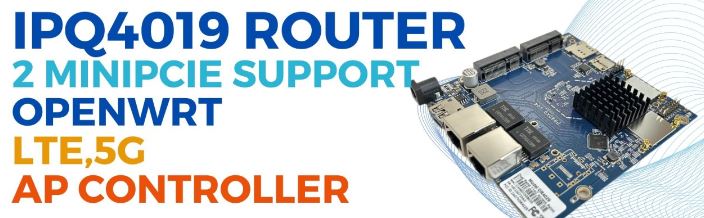
For those seeking a cost-effective solution without compromising on reliability, the DR40X9 board based on the IPQ4029 chipset is an excellent choice. It supports dual-band 802.11AC Wave2 MU-MIMO and onboard WiFi radio, and can be embedded with LTE. This makes it a suitable option for industrial parks with moderate network demands. More information is available here.

For inquiries and custom solutions, contact the 524WiFi sales team please

Conclusion

In summary, both the IPQ9574 and IPQ4029 have their merits when it comes to network deployment in industrial parks. The IPQ9574 is the clear choice for high-performance, scalable, and future-proof networks, suitable for environments with demanding applications and high device density. The IPQ4029, while less powerful, offers a cost-effective and reliable solution for industrial parks with moderate network demands and tighter budgets.

Choosing between these two chipsets ultimately depends on the specific needs and priorities of the industrial park in question. By carefully considering factors such as performance, scalability, power efficiency, and cost, industrial parks can make an informed decision that best meets their current and future networking requirements.