Posted on

Powering the WiFi 7 Era: QCN9274 & QCN6274 Modules in Action

Powering the WiFi 7 Era: QCN9274 & QCN6274 Modules in Action

WiFi 7 isn’t just faster — it’s smarter, more efficient, and built for the future of connectivity. At the heart of this transformation are Qualcomm’s QCN9274 and QCN6274 WiFi 7 modules, engineered for high-throughput, low-latency wireless environments.

These modules are perfect for: ???? Industrial APs and high-density public deployments ???? Mesh systems requiring seamless roaming ???? Ultra-responsive applications like AR/VR, video streaming, and edge AI

???? Pair It with Wallys DR5322 (IPQ5322)

To bring these modules to life, 524WiFi offers the DR5322 router board, a powerhouse based on the IPQ5322 SoC, featuring:

  • ✅ 10G SFP port for fiber uplink
  • ✅ 1GB DDR4 (16-bit) RAM
  • ✅ Mini PCIe & M.2 slots for flexible wireless expansion
  • ✅ Perfectly compatible with QCN9274 / QCN6274 modules
  • ✅ Full support for OpenWrt/QSDK

???? Product details:  https://www.524wifi.com/index.php/catalogsearch/result/?q=5332


???? Coming Soon: IPQ5424 “Marina” Series

Wallys is preparing to release a new generation of boards based on Qualcomm’s IPQ5424 (Quad-core ARM A55 @1.8GHz) — codename Marina — offering enhanced processing power, optimized wireless efficiency, and designed with enterprise-level networking in mind.

Stay tuned for updates on our IPQ5424 platform launch!

Posted on

QCN9274 + IPQ9574: Leading WiFi 7, Watching IPQ5424

As industrial and enterprise wireless demand skyrockets, the need for extreme throughput, multi-link flexibility, and custom firmware capabilities has never been more critical. At the heart of this new era? Qualcomm’s flagship WiFi 7 combo: QCN9274 + IPQ9574.

But what if you could get WiFi 7 performance in a more compact, power-efficient design?

Introducing a sneak peek at the upcoming IPQ5424 — Qualcomm’s Quad-Core ARM Cortex-A55 SoC, clocked at 1.8GHz, and part of the Marina series. Wallys is actively prototyping boards based on this chip.


⚡ QCN9274 (DR9274): The WiFi 7 Gold Standard

  • Qualcomm WiFi 7 radio (successor to QCN9074)
  • 4096-QAM, 320 MHz channels
  • 4×4 MU-MIMO support
  • Ultra-fast 5/6GHz performance
  • Multi-Link Operation (MLO) ready
  • WPA3, DFS, and industrial-grade reliability

Paired with boards like the Wallys DR9574, it’s ideal for future-proof enterprise APs, smart logistics, and ultra-reliable long-range bridges.


🧠 IPQ9574: The Brains Behind Next-Gen Routing

  • High-performance quad-core ARM architecture
  • Native support for QCN9274 in tri-band setups
  • Integrated WiFi 6 radio for unified design
  • Designed for OpenWrt/QSDK 12+
  • Suitable for high-end router boards like DR9574

Perfect for OEMs building advanced gateways, CPEs, or edge routers — capable of handling gigabit WiFi + backhaul + edge computing in one.


👀 On the Radar: IPQ5424

Wallys is currently prototyping new boards based on the IPQ5424 “Marina” Series — a mid-tier SoC with:

  • Quad-core ARM Cortex-A55 @1.8GHz
  • Optimized for compact, efficient WiFi 7 deployments
  • Ideal for SMB routers, mesh APs, edge nodes

While IPQ9574 leads the pack, IPQ5424 fills the cost-performance gap — making WiFi 7 more accessible for scaled applications.


🔧 Compatible SoCs & Modules for QCN9274/QCN9024:

  • IPQ9574 — WiFi 7 flagship
  • IPQ8072/IPQ8074 — WiFi 6 platform
  • IPQ6010 — Mid-range WiFi 6
  • IPQ4019/IPQ4029 — Entry-level WiFi 5/6 bridges
  • Coming soon: DR5424 (IPQ5424-based board)

Wallys modules supporting these platforms include: DR9274–6E, DR9574, DR6018, and DR8074

Posted on

From WiFi 6 to WiFi 7 — Preparing for the Next Leap with IPQ5424

At 524WiFi, we don’t just follow wireless trends — we build ahead of them.

While our QCN9074-based WiFi 6 modules continue to power robust industrial deployments, and IPQ9574 unlocks the full potential of WiFi 7, we’re now preparing the next innovation in between: 🎯 Qualcomm IPQ5424 — the “Marina” series quad-core ARM-A55 SoC.


📶 QCN9074: Trusted WiFi 6 Performance

  • 2×2/4×4 5Ghz, 160MHz channel support
  • Powerful in enterprise APs, outdoor CPEs, industrial mesh
  • PCIe interface, OpenWrt-ready Used today in our DR9074 cards and integrated with boards like IPQ6018 / IPQ5018 / IPQ8072.

⚡ IPQ9574: Advanced Tri-band WiFi 7 Power

  • Multi-Link Operation (MLO) support
  • Tri-band capability (2.4G / 5G / 6G)
  • Up to 10GbE connectivity This is our flagship for ultra-high-performance wireless applications.

🌟 Coming Soon: IPQ5424-Based Platform

  • Quad-core ARM Cortex-A55 @ 1.8GHz
  • Balanced performance and cost
  • Ideal for mid-tier WiFi 7 products
  • Perfect for SMB routers, indoor mesh, and managed APs

We’re integrating this SoC into a new Wallys routerboard now in development — stay tuned!

Posted on

Looking back at 2024 – the most interesting implemented projects

So, we had a very interesting and challenging year 2024, let us share the most interesting projects we have implemented.

Such a typical project for Wi-Fi or PON infrastructure has several parts, the preparatory part lasts a year or two before you move to the first installation phase, and then you spend several more years expanding the installations and maintaining them until the project’s lifetime. So it is key to choose the right solution at the beginning. And that is the essence of our work. Selecting and tuning suitable solutions with our partners.

We enjoy testing and tuning, but this first stage also includes lengthy and demanding certifications CE, FCC, IC, ISO, ROHS, REACH and others, as well as tedious filling out legislative forms regarding the non-use of prohibited and hazardous substances in production – SVHC (substances of very high concern), POP (persistent organic pollutants), Per-and Polyfluoroalkyl Substances – PFAS, LC-PFCAs (Long-chain perfluorocarboxylic acids), MCCP (Medium chain chlorinated paraffins), Chlorpyrifos (also known by the trade names Dursban, OMS 0971, Lorsban, Brodan, Killmaster, Pyrinex, Suscon, Coroban, Terial, Danusban, Durmet, and Eradex). There are new recently added fun forms regarding sustainability and carbon footprint. Yes, we can successfully fill that out too. And thanks to this, we helped our partners to obtain several interesting projects using EU subsidies. And even for projects in the USA and Canada, our certifications and forms went through a demanding approval process. Thanks to this, the difficult year 2024 was ultimately quite successful.

Europe is already quite crowded with Wi-Fi solutions such as hotspots and Wi-Fi connections for passengers and customers. There is probably not a single European country where our Wi-Fi modules have not been used for professional Wi-Fi connection solutions for many years. Our modules are used, for example, in trains and buses all over Europe. Of course, last year we also increased their number and added new projects using Wi-Fi 6. In particular, the Mediatek MT7915 and MT7916 modules have proven themselves for Wi-Fi applications for passengers and customers and, thanks to the new DBDC (dual band dual concurrent) functionality, they have saved implementation costs, as one module can create two independent Wi-Fi networks in the 2.4GHz and 5GHz bands and, newly, in the WiFi6E 6GHz band. These modules offer a very powerful HW AP mode with good signal coverage and support for a large number of simultaneously connected clients.

Our proven 802.11ac WiFi 5 modules with the QCA 9880 / 9882 chip have found application in projects even in faraway Asia. In cooperation with a partner, we successfully launched a Wi-Fi project for passengers on trains in Kazakhstan. This project was mainly interesting due to its relatively large scope and duration. That is why we were forced to ensure a stable supply of these good old proven chips until 2028. That was probably the hardest thing – but we managed to do it too. We can therefore continue to offer the proven 524WiFi 600VX and 900VX pro + modules to all interested parties without any supply restrictions.

These reliable and powerful miniPCIe modules are popular for use in drones due to their long range and sensitivity. And so one of the most important orders is now an arms order from the USA. WLE 900VX Wi-Fi modules will help to precisely and reliably control military drones. The installation of the industrial version of the 524WiFi 900VX Pro + into aircraft is still ongoing, and we are also working with a partner from the USA on this.

As you probably know, our modules can be found, for example, in wind farms, in drones, on ships, in both civil, aerobatic and military aircraft … on land, on water and in the air. NASA has also ordered samples, so the next goal is to get into space! And we worked on that in 2024. Newly, in cooperation with SpaceX, they are currently testing our Mediatek WiFi 6 and 6E modules.

Several projects with Smart city applications, Smart industrial control or AI powered industrial solutions are in the early stages of implementation. Many of them require powerful real time streaming, so we help our partners with the selection and testing of Wi-Fi 6E modules with the Qualcomm QCN 9074 chip. We are also now finalizing support for WiFi 7 modules QCN 9274, the use of which has so far been limited to the QCA IPQ processor platform. We will soon publish how to do it in Linux systems with open source ath12k drivers. So that is our task for the beginning of 2025. We know that the x86 platform with the Linux system or OpenWRT are the most important for our customers for the development of their applications. The OpenWiFi project is also very interesting, we started working with this platform last year and our new HW supports OpenWiFi firmware! You can read more in the individual articles on our blog.

Happy New Year 2025 and all the best from the 524WiFi team!

Ohlédnutí za rokem 2024 -nejzajímavější realizované projekty

Tak nám uplynul velmi zajímavý a náročný rok 2024, dovolte nám se podělit o nejzajímavější námi realizované projekty.

Takový typický projekt pro Wi-Fi či PON infrastrukturu má několik částí , přípravná část trvá i rok či dva než se posunete do fáze první instalace a pak několik dalších let věnujete rozšiřování instalací a údržbě do doby životnosti projektu. Je tedy klíčové si na začátku vybrat vhodné řešení. A to je právě podstata naší práce. Výběr a ladění vhodných řešení s našimi partnery.

Testování a ladění nás baví, ale do této první etapy spadají i zdlouhavé náročné certifikce CE, FCC, IC, ISO, ROHS, REACH a další a také úmorné vyplňování legislativních formulářů ohledně nepoužívání zakázaných a nebezpečných látek při výrobě – SVHC (substances of very high concern), POP (persistent organic pollutants), Per-and Polyfluoroalkyl Substances – PFAS, LC-PFCAs (Long-chain perfluorocarboxylic acids), MCCP (Medium chain chlorinated paraffins), Chlorpyrifos (also known by the trade names Dursban, OMS 0971, Lorsban, Brodan, Killmaster, Pyrinex, Suscon, Coroban, Terial, Danusban, Durmet, and Eradex). Nově nám přibyly zábavné formuláře ohledně udržitelnosti a uhlíkové stopy. Ano, i to umíme úspěšně vyplnit. A díky tomu jsme pomohli našim partnerům získat několik zajímavých projektů s využitím dotací z EU. A i pro projekty v USA a Kanadě naše certifikace a formuláře prošly náročným schvalovacím řízením. Díky tomu byl těžký rok 2024 nakonec celkem úspěšný.

Evropa je jíž Wi-Fi řešeními jako jsou hotspoty a Wi-Fi připojení pro cestující a zákazníky celkem přeplněna. Asi není ani jedna evropská země kde by naše Wi-Fi moduly již řadu let nesloužily pro profesionální řešení Wi-Fi připojení. Naše moduly jezdí například ve vlacích a autobusech po celé Evropě. Samozřejmě i v loňském roce jsem jejich počet navýšili a doplnili i nové projekty s využitím Wi-Fi 6. Zvláště Mediatek MT7915 a MT7916 moduly se osvědčily pro aplikaci Wi-Fi pro cestující a zákazníky a díky nové funkcionalitě DBDC (dual band dual concurrent) ušetřili náklady na implementaci, jeden modul totiž zvládne vytvořit dvě nezávislé Wi-Fi sítě v pásmu 2,4GHz i 5GHz a nově i v pásmu WiFi6E 6GHz. Tyto moduly nabízí velmi výkonný HW AP mod s dobrým pokrytím signálem a podporou velkého množství současně připojených klientů.

Naše osvědčené 802.11ac WiFi 5 moduly s čipem QCA 9880 / 9882 našly uplatnění v projektech i v daleké Asii. Ve spolupráci s partnerem jsem úspěšně zahájili projekt Wi-Fi pro cestující ve vlacích v Kazachstánu. Tento projekt byl hlavně zajímavý poměrně velkým rozsahem a délkou trvání. Proto jsme byly nuceni zajistit stabilní dodávku těchto starých dobrých osvědčeních čipů až do roku 2028. To bylo asi to nejtěžší – ale i to jsme snad zvládli. Můžeme proto všem zájemcům osvědčené moduly 524WiFi 600VX a 900VX pro + nabízet i nadále bez omezení dodávek.

Tyto spolehlivé a výkonné miniPCIe moduly jsou pro velký dosah a citlivost populární o pro použití v dronech. A tak jednou z nejvýznamnějších zakázek je nyní zbrojní zakázka z USA. WLE 900VX Wi-Fi moduly budou pomáhat přesně a spolehlivě ovládat vojenské drony. Stále pokračují i instalace průmyslové verze 524WiFi 900VX Pro+ do letadel, na tom spolupracujeme také s partnerem z USA.

Jak jistě víte tak naše moduly najdete například i ve větrných elektrárnách, v dronech, na lodích, v letadlech jak civilních, akrobatických tak i vojenských …na zemi, na vodě i ve vzduchu. I NASA si objednala vzorky, takže dalším cílem je dostat se do vesmíru! A i na tom jsme v roce 2024 pracovali. Nově ve spolupráci se SpaceX, aktuálně testují naše Mediatek WiFi 6 a 6E moduly.

V počátcích realizace je několik projektů s aplikací Smart city, Smart řízení v průmyslu či AI powered průmyslová řešení. Mnohé z nich vyžadují výkonný real time streaming , pomáháme tedy našim partnerům s výběrem a testování Wi-Fi 6E modulů s čipem Qualcomm QCN 9074. Nově dokončujeme i podporu pro WiFi 7 moduly QCN 9274 jejichž použití bylo zatím omezeno pro platformu QCA IPQ procesorů. Již brzy zveřejníme jak na to v Linuxových systémech s opensource drivery ath12k. Tak to je náš úkol na začátek roku 2025. Víme že x86 platforma s Linux systémem či OpenWRT jsou pro naše zákazníky nejdůležitější pro vývoj jejich aplikací. Velmi zajímavý je také projekt OpenWiFi , s touto platform jsme začali spolupracovat v loňském roce a náš nový HW podporuje OpenWiFi firmware! Více se dočtete v jednotlivých článcích na našem blogu.

Tak pěkný nový rok 2025 a jen to nejlepší všem přeje 524WiFi team !

Posted on

Ath11k Linux and OpenWRT driver for WiFi 6 QCN 9074 COMPEX WLE3002HX card

Hello Linux and OpenWRT users,

Last time we described  the reference guide how to run QCN 9024 / 9074 DR9074-Triband module with our ath11k driver on Rockship board with Ubuntu.

Today we share a guide how to make COMPEX WLE3002HX module work well under Linux 6.1.99 and OpenWRT

LINUX:

1 – Use Linux 6.1.99 kernel version and add ath11k related drivers

2 – Use QCN9074/hw1.0/2.7.0.1/WLAN.HK.2.7.0.1-01744-QCAHKSWPL_SILICONZ-1 firmware version

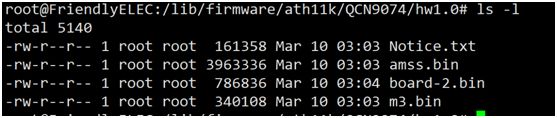
3 – Copy the firmware to the directory/lib/firmware/ath11k/QCN9074/hw1.0/directory, as shown in the following figure

4. Load the ath11k driver successfully, and the kernel prints as follows.

5. Use ifconfig to check that wlan0 has been recognized.

6.Scan external WiFi using the WPA_CLI scan and WPA_CLI scan_desult commands, only 5G band WiFi can be scanned

7.Connect to the scanned 5G frequency band WIFI for normal communication.

8. According to the previously provided document, replace the relevant firmware. The document content is as follows, please use serial console:

1.cd /lib/firmware
2.mkdir ath11k && cd ath11k
3.mkdir QCN9074 && cd QCN9074
4.mkdir hw1.0 && cd hw1.0
5.cp /directory/of/bdf.bin ./ (repeat this step for all above files)
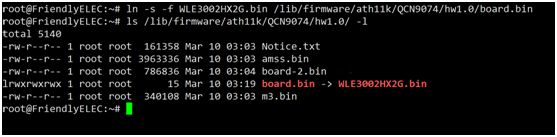
6.ln -s WLE3002HX_SPF11_4_2G.bin board.bin (for first attempt on symbolic link)

To change board data files after first attempt:
Change to 2G: ln -s -f WLE3002HX_SPF11_4_2G.bin board.bin
Change to 5G: ln -s -f WLE3002HX_SPF11_4_5G.bin board.bin

Please replace DBF completely, the file name needs to be changed to the name in your system as described in this file.

Please contact us and we will sned these files to our customers by email.

9. According to the understanding, WLE3002HX_SFP11_4_2G.bin needs to be soft connected to

/lib/firmware/ath11k/QCN9074/hw1.0/board.bin

OpenWRT:

Ultimately what we did was:

1. Deactivate ath11k-firmware from my openwrt custom builds

2. Get the verified firmware version from git – WLAN.HK.2.7.0.1-01744-QCAHKSWPL_SILICONZ-1 e.g. 2 files amss.bin and m3.bin

3. Never download/use board-2.bin from qualcomm firmware

4. cp WLE3002HX5G.bin /lib/firmware/ath11k/QCN9074/hw1.0/board.bin (instead of symlinking)

bonus – cron to recreate the fw folder with files from backup location if missin

so the /lib/firmware/ath11k/QCN9074/hw1.0 folder contains only 3 files: amss.bin   board.bin  m3.bin

bonus – startup cron to recreate the fw folder with files from backup location if missing

This way the adapter works fine.

Thank you for reading. Hope that this can help you too.

Posted on

Support 524 wifi 6 DR9074 Tri-band card on rockchip-5b

Dear Linux users,

Please see our reference guide how to run QCN 9024 / 9074 DR9074-Triband module with our ath11k driver on Rockship board .

The driver is sensitive to the hardware, so we refer you to use the Rockchip board to try these driver. If you have a bigger project, then lets discuss on the driver issues or send us the hardware description and we would help you to develope the ath11k driver for your application.

First step, download development for rockchip-5b:

you can get source code by

git clone https://github.com/Joshua-Riek/ubuntu-rockchip

Use -ko compilation option can only build the kernel to deb, -uo can only build uboot and -ro can only build rootfs.

Then, you can move to development create you img by

./build.sh –board=rock-5b –suite=oracular –flavor=desktop

Then download our ath11k driver from our ftp, dowload teh DR9074 rockchip.rar file :

https://wifi5.eu/dls/Wallys/DR9074

In order to support tri band cards, modifications need to be made to the kernel module.

Firstly, the ath11k_pci module needs to be added to support QCOM PCI cards. Move config.common.ubuntu to

build/linux-rockchip/debian.rockchip/config/config.common.ubuntu

in the compiled environment. This directory may not be available in the newly downloaded environment. You can compile the kernel to obtain this directory.

Move mac.c to

build/linux-rockchip/drivers/net/wireless/ath/ath11k/mac.c

Move reg.c to

build/linux-rockchip/drivers/net/wireless/ath/ath11k/reg.c

Compile the kernel so you can get a new kernel deb with ath11k_pci.

Secondly, the correct firmware of the WiFi card is also required to activate it, you can move our firmware (amss.bin, board-2.bin) to:

/lib/firmware/ath11k/QCN9074/hw1.0

and delete the amss.bin.zst and board-2.bin.zst from the directory.

Setup wireless on ubuntu

Download hostapd

 you can download hostapd by use command:

sudo apt-get install hostapd

Use hostapd to create a wireless access point

First, you should turn off ubuntu’s wifi tool by this command:

sudo nmcli radio wifi off

it will block you wifi function unblock wifi by use this command:

sudo rfkill unblock wifi

You can setup an access point by using command:

sudo hostapd hostapd.conf

hostapd.config is a configuration which has set the type of wi-fi you want to enable and the following figure shows its typical structure:

I have marked the most important part with a red box, where ssid represents the name of the wifi and interface represents the device selected to enable wifi. By the way if you don’t know your interface name, you can use command: ip addr    which can show you the information about the interface, the wireless interface always seem like wlan* or wlp*.

If you see following output after you use hostapd command:

this means you have successfully started the AP.

And when you see this:

it means a device connected to you access point.

This also means connect if you not set password:

Use wpa_supplicant to connect a access point

First, you should turn off ubuntu’s wifi tool by this command:

sudo nmcli radio wifi off

it will block you wifi function unblock wifi by use this command:

sudo rfkill unblock wifi

You can connect an access point by using command:

sudo wpa_supplicant  -Dnl80211 -iwlp1s0 -c wpa.conf

-i can set the interface you want to use to connect. wpa.config is a configuration which has set the type of wi-fi you want to connect and the following figure shows its typical structure:

you can change the ssid to which access point you want.

If you see following output after you use hostapd command:

this means connect successful.

If you want to connect a access point which has a password you should change the wpa_supplicant configuration like this:

the psk is the password proto and key_mgmt is the encryption options.

FAQ

when you see this output you can use: sudo rfkill unblock wifi

when you see this output that means you may run another wpa_supplicant, you should close it then you can run another wpa_supplicant if you don’t know where is it, you can use command: sudo killall wpa_supplicant to kill all wpa_supplicant.

Posted on

QCN9274 / QCN6274 Chip | x86 & Ubuntu Support | Enterprise Grade Networking

524WiFi DR9274 Wi-Fi 7 PCIe Card

QCN9274/QCN6274 Chip | x86 & Ubuntu Support | Enterprise-Grade Networking

High-Density, Low-Latency Wireless Solutions for Industrial IoT & Enterprise WiFi 7 Deployments

Introduction: The Next Era of Enterprise Wireless Connectivity

The rapid evolution of Wi-Fi 7 (IEEE 802.11be) is revolutionizing enterprise networks, demanding hardware that combines cutting-edge performance with seamless integration. The 524WiFi DR9274 PCIe Wireless Card, powered by Qualcomm QCN9274/QCN6274 chips, emerges as a game-changer. Designed for x86 architecture and fully compatible with Ubuntu systems, this module delivers multi-gigabit speeds, industrial-grade reliability, and future-proof scalability — ideal for high-stakes environments like smart factories, dense office networks, and mission-critical IoT deployments.

5 Key Advantages of 524WiFi DR9274 Wi-Fi 7 Modules

1. x86 & Ubuntu Compatibility: Unleash Developer Flexibility

  • Native x86 Support: Seamlessly integrates with Intel/AMD-based servers, industrial PCs, and edge gateways, eliminating driver conflicts.
  • Ubuntu 22.04 LTS Optimization: Pre-certified drivers and SDKs enable rapid deployment on Linux environments, with full access to OpenWRT/OpenWiFi for custom network policies.
  • Use Case: Deploy as a software-defined access point (SDAP) or cloud-managed wireless controller on existing x86 infrastructure.

2. Wi-Fi 7 Performance: Redefining Wireless Limits

  • 320MHz Channel Bandwidth: Achieves ~40Gbps aggregate throughput — 2x faster than WiFi 6E.
  • 4K QAM Modulation: Boosts data density by 20%, enhancing bandwidth-hungry applications like 8K video streaming and AR/VR.
  • Multi-Link Operation (MLO): Transmits data across 2.4GHz, 5GHz, and 6GHz bands, reducing latency to <1ms for industrial automation.

3. Flexible Deployment: Single/Dual-Band Configurations

  • Single-Band Models: Optimized for interference-free 6GHz backhaul or dedicated 5GHz IoT sensor networks.
  • Dual-Band Models: Combine 5GHz+6GHz for enterprise-grade mesh networks or 2.4GHz+5GHz for legacy device compatibility.
  • Example: Deploy 5GHz+6GHz dual-band cards in stadiums to handle 10,000+ concurrent users with zero packet loss.

4. Industrial Durability: Built for Harsh Environments

  • Extended Temperature Range: Operates at -40°C to +85°C, certified for outdoor smart grids and factory floors.
  • Hardened Security: Supports WPA3-Enterprise, AES-256 encryption, and Secure Boot to meet NIST compliance.
  • Open-Source Firmware: Customize QoS rules, VLAN tagging, and spectrum analysis via OpenWRT.

5. Qualcomm QCN9274/QCN6274: A Proven Silicon Foundation

  • 16-Stream MU-MIMO: Supports 500+ devices per card with dynamic beamforming.
  • Hardware Accelerators: Offloads CPU load for tasks like packet prioritization and intrusion detection.

Application Scenarios: Where Wi-Fi 7 Drives Transformation

1. Enterprise Wi-Fi 7 Networks

  • High-Density Offices: Support 200+ users per AP with zero buffering in 4K video conferencing.
  • HD Telemedicine: Enable real-time transmission of MRI/CT scans over 6GHz wireless links.

2. Industrial IoT & Automation

  • AGV Fleet Control: Achieve sub-millisecond latency for robotic coordination in smart warehouses.
  • Wireless PLCs: Replace wired EtherCAT networks with secure 5GHz wireless loops.

3. Carrier & Smart City Infrastructure

  • Wireless Backhaul: Replace fiber with 6GHz point-to-point links for 5G small cell aggregation.
  • Public Wi-Fi 7 Hotspots: Deploy in airports or malls with captive portals and AI-driven traffic shaping.

4. Defense & Mission-Critical Systems

  • Tactical Mesh Networks: Build self-healing wireless grids using MLO and 4K QAM.
  • Drone Command Centers: Stream 360° LiDAR data via 320MHz channels.

Conclusion: Future-Proof Your Wireless Infrastructure Today

The DR9274 Wi-Fi 7 PCIe Card transcends traditional wireless limitations by merging Qualcomm’s silicon excellence, x86/Ubuntu adaptability, and industrial resilience. Whether upgrading enterprise networks, automating factories, or building smart city backbones, this module delivers unparalleled speed, reliability, and control.

Posted on

IPQ4019/IPQ4029 Work with Fast Roaming Technology

Introduction to Fast Roaming

In modern wireless networks, seamless connectivity is a crucial requirement, especially in environments where users or devices move frequently between access points (APs). Fast Roaming technology ensures minimal latency and disruption during these transitions, making it an essential feature for industrial, enterprise, and smart city applications.

Understanding IPQ4019/IPQ4029

Qualcomm’s IPQ4019 and IPQ4029 are high-performance networking SoCs designed for dual-band Wi-Fi applications. These chipsets support advanced networking features, including MU-MIMO, DFS, and WPA3, making them ideal for both consumer and industrial applications.

One of the standout features of these chipsets is their ability to work efficiently with Fast Roaming technology, ensuring reliable and low-latency handovers in complex network environments.

How IPQ4019/IPQ4029 Enhance Fast Roaming Performance

  1. 802.11k (Radio Resource Management) – These chipsets support the 802.11k standard, allowing devices to quickly identify the best available AP by gathering neighboring AP information. This significantly reduces scanning time and improves handoff efficiency.
  2. 802.11v (Network-Assisted Roaming) – By leveraging 802.11v, the network can optimize client steering, ensuring that devices connect to the most suitable AP based on real-time conditions.
  3. 802.11r (Fast BSS Transition, FT) – This feature enables fast authentication handshakes between APs, minimizing latency and ensuring seamless connectivity during movement.
  4. Optimized Packet Handling – With integrated hardware acceleration, IPQ4019/IPQ4029 can process roaming requests with minimal delay, crucial for applications requiring uninterrupted communication, such as industrial automation and security surveillance.

Industrial Applications of Fast Roaming with IPQ4019/IPQ4029

  • Smart Manufacturing: Ensures stable wireless connections for automated machinery moving between different zones.
  • Logistics & Warehousing: Enables real-time tracking of goods and seamless connectivity for handheld scanners and IoT devices.
  • Transportation Systems: Provides uninterrupted Wi-Fi connectivity in public transit systems, ensuring passenger experience and operational efficiency.
  • Security & Surveillance: Supports continuous video streaming for mobile security units and smart surveillance systems.

Why Choose 524WiFi and Wallys for Industrial Wireless Solutions?

524WiFi and Wallys Communications specialize in developing high-performance industrial Wi-Fi solutions, focusing on custom protocols for enhanced reliability in challenging environments. Our expertise in Fast Roaming optimization ensures seamless wireless transitions for mission-critical applications.

Posted on

Device as a Service – Your Brand DNA in Every Touchpoint

In today’s competitive industrial landscape, your brand needs to stand out at every interaction. With the right tools and customization, you can transform a simple device into a powerful extension of your brand. That’s where Device as a Service comes in, ensuring that your brand identity permeates every touchpoint with your products.

Take your industrial router management interface as an example. What if the LUCI interface of your routerboard could be fully tailored to reflect your brand’s identity? Here’s how Wallys can help:

🔹 HMI System Aligned with Your Company’s Visual Standards – Ensure consistency across all your product interfaces, matching your brand’s visual language. 🔹 User Role-Specific Adaptation Logic – Provide a seamless, personalized experience for different user roles, enhancing the usability of your devices. 🔹 Dynamic Data Dashboard Architecture – Offer real-time data insights through an intuitive and customizable dashboard, keeping your users informed and in control.

At 524WiFi and Wallys, we provide customized webpage UI solutions for RouterBoards, giving you the ability to personalize your logo, theme, and more. This means that not only do you get a high-performance industrial router, but you also get a product that truly embodies your brand’s values and aesthetic.

Your device is more than just hardware – it’s a reflection of your business and an opportunity to enhance your customer experience.

For more details on how we can help you customize your RouterBoard’s LUCI interface, reach out to our sales team !

Posted on

Why IPQ5322 is the Best Cost-Effective Industrial Wireless Solution?

In the fast-evolving world of industrial wireless communication, reliability, performance, and cost-efficiency are crucial factors for businesses seeking WiFi 7 solutions. Qualcomm’s IPQ5322 stands out as an affordable yet powerful option for industrial applications such as smart cities, logistics, surveillance, and factory automation.

Let’s explore why IPQ5322 is the ideal choice for high-performance yet budget-friendly industrial WiFi 7 networks.


1. WiFi 7 Performance at a Lower Cost

IPQ5322 is a dual-core WiFi 7 networking processor that offers many of the latest WiFi 7 enhancements, including:

✅ Multi-Link Operation (MLO) – Simultaneously connects to multiple frequencies for improved reliability.

✅ 4×4 MU-MIMO – Increases capacity, ensuring smooth connections in dense industrial environments.

✅ OFDMA – Reduces latency, improving real-time data transmission for industrial automation and surveillance.

Unlike high-end WiFi 7 chips such as IPQ9574, IPQ5322 offers a balanced approach – providing key WiFi 7 advantages at a lower cost, making it perfect for industrial projects with budget constraints.


2. Designed for Industrial-Grade Stability

In industrial environments, WiFi networks must withstand harsh conditions, high interference, and long-distance transmission challenges.

How IPQ5322 ensures stability:

🔹 Supports external high-gain antennas – Essential for long-range coverage in outdoor and factory applications.

🔹 Enhanced interference mitigation – Ensures smooth connectivity even in crowded RF environments.

🔹 Low power consumption – Reduces operational costs for industrial deployments requiring 24/7 uptime.

These features make IPQ5322 ideal for industrial applications such as remote monitoring, industrial IoT (IIoT), and smart infrastructure.


3. Cost-Effective vs. Other Industrial WiFi Solutions

IPQ5322 delivers WiFi 7 at a fraction of the cost of premium enterprise chips like IPQ9574 or networking solutions based on x86 hardware.

Why choose IPQ5322?

✅ More powerful than WiFi 6 solutions (IPQ5018), yet much more affordable than premium WiFi 7 chips.

✅ Offers a great balance between cost and performance for industrial networks.


4. Customization & Scalability with IPQ5322 Solutions

At 524WiFi and Wallys, we provide custom-built IPQ5322-based solutions tailored for industrial WiFi deployments.

🔹 Custom PCB and RF design for industrial applications.

🔹 OEM/ODM services – Tailor-made solutions to fit your specific requirements.

🔹 Pre-configured firmware with industrial-grade security and remote management features.

🚀 Featured Product: Dream DR5322

We offer DR5322, an IPQ5322-based router board built for industrial-grade WiFi 7 applications.

✔ Supports long-range industrial WiFi networks

✔ Flexible RF customization for different industrial needs

✔ Optimized firmware for secure and stable performance